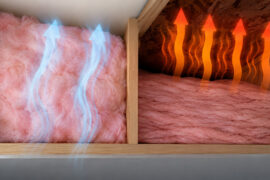
Electricians point them at breaker panels. Firefighters carry them into smoke. And every winter, home energy auditors walk one along the outside wall of somebody’s living room, hunting for the gap nobody sealed.
A thermal imaging camera is a non-contact imaging device that converts infrared radiation into a visible map of surface heat. Nobody has to touch the panel or step into the room. What lands on screen depends on the palette you picked and on the emissivity of the material you’re aimed at, not on visible light at all.
Almost every camera you can actually buy runs an uncooled sensor. Cooled detectors exist, but they’re built for long range military detection and they mostly stay there. The pixels keep shrinking, though. LYNRED introduced an 8.5 micrometer pixel pitch microbolometer in January 2026, packing 2.5 times more pixels into the same sensor footprint as a standard 12 micrometer array.
What Is a Thermal Imaging Camera?

Regular cameras collect light that bounced off something. This one collects the infrared radiation an object gives off on its own, and that single swap accounts for everything else about how it behaves.
The naming is loose. Depending on the trade or the country, you’ll see the same box called any of these.
- infrared camera
- IR camera
- thermal imager
- thermographic camera
Same hardware in every case. There’s no separate product hiding behind any of those labels.
It’s also not night vision gear, and it isn’t a single-point infrared thermometer. Those two read the world through a much narrower window, and I get into where the lines sit further down.
How Does a Thermal Imaging Camera Work?

Every object above absolute zero radiates infrared, and the hotter it runs the more it puts out.
That’s Planck’s law of blackbody radiation doing its thing in the field. Hotter surfaces radiate more energy, and the emission shifts toward shorter wavelengths as temperature climbs.
Getting from raw radiation to a picture takes a chain of conversions.
- An external lens focuses incoming infrared radiation onto the detector
- The detector converts that radiation into an electrical signal, pixel by pixel
- Onboard electronics amplify and process the signal into a temperature map
- Software applies a color palette to the map, producing the final thermal image
Some manufacturers bolt an extra step onto the end. Teledyne FLIR’s MSX feature blends fine edge detail from a built-in visible-light camera onto the thermal image, which makes shapes far easier to recognize. It’s the difference between seeing a warm blob and seeing a warm outlet cover.
What Sensor Technology Powers a Thermal Imaging Camera?

Detectors fall into cooled quantum types on one side and uncooled microbolometers on the other, and the two barely resemble each other in price, size, or intended buyer.
Seeing that whole range inside one catalog is partly an accident of consolidation. Teledyne Technologies completed its acquisition of FLIR Systems in 2021 for close to $8 billion, folding two of the largest sensor makers in the industry into a single product line.
| Detector Type | Sensing Material | Typical NETD | Cooling Needed |
|---|---|---|---|
| Cooled quantum | Indium antimonide or mercury cadmium telluride | Below 20 mK | Yes, cryocooler |
| Uncooled, mid tier | Vanadium oxide or amorphous silicon | Around 30 mK | No |
| Uncooled, entry tier | Vanadium oxide or amorphous silicon | Around 70 mK | No |
Those figures come from Teledyne FLIR’s published camera specifications across its cooled and uncooled product lines.
Cooled Detectors
Cooled quantum detectors use semiconductor materials like indium antimonide or mercury cadmium telluride, chilled by a built-in cryocooler.
Cooling suppresses internal electronic noise. That’s what lets these detectors reach a NETD below 20 mK.
You pay for it in bulk and power draw, then you pay for it again at the register. Which is why cooled cameras stay parked in defense work and research labs, plus the long-range detection jobs that need to resolve something small from very far away.
Nobody straps a cooled camera to a home inspection kit.
Uncooled Microbolometers
Commercial and industrial cameras mostly run vanadium oxide (VOx). Amorphous silicon (a-Si) shows up as the cheaper alternative, with slightly different performance behavior depending on the build.
Either way, the sensor is a focal plane array. A grid of thousands of individual heat-sensing pixels, with no active cooling behind any of them.
That’s why uncooled dominates building inspection, electrical work, and the consumer shelf. For almost everyone buying one, size and price beat squeezing out the last few millikelvin of sensitivity.
Spectral Bands (LWIR, MWIR and SWIR)
Imaging work splits the infrared spectrum into bands, and which band a camera uses tells you a lot about what it was built for.
- Long-wave infrared (LWIR), roughly 8 to 14 micrometers, the band most uncooled cameras use
- Mid-wave infrared (MWIR), roughly 3 to 5 micrometers, common in cooled detectors and gas-leak imaging
- Short-wave infrared (SWIR), roughly 1 to 3 micrometers, closer to reflected light than true heat radiation
SWIR imaging usually needs an external light source at night, which is the exact problem LWIR and MWIR cameras were built to avoid.
How Do You Read a Thermal Image?
Color maps to temperature. Warmer areas usually render yellow, orange or white, while cooler areas drift toward blue, purple or black. Swap the palette and all of that changes, so the first thing worth confirming is which palette you’re actually looking at.
Beyond the colors, most cameras ship with a handful of reading tools.
- Isotherm paints every pixel inside a chosen temperature band in one flat color
- a spot meter hands you a single numeric reading at one point on the image
- a radiometric image stores a temperature value behind every pixel, so what you’ve saved is data and not just a picture
Emissivity will lie to you if you let it. A shiny metal surface reads low, and the palette still displays a confident number right on top of it.
A cold streak running along a stud line or a window frame is a textbook sign of a thermal bridge in the wall assembly, and it jumps out the moment the palette is applied.
Building-inspection models sometimes go further. Teledyne FLIR’s T-series includes a built-in insulation alarm and a moisture alarm that flag suspect readings on their own, on top of the usual isotherm and spot meter.
What Specifications Determine Thermal Camera Performance?
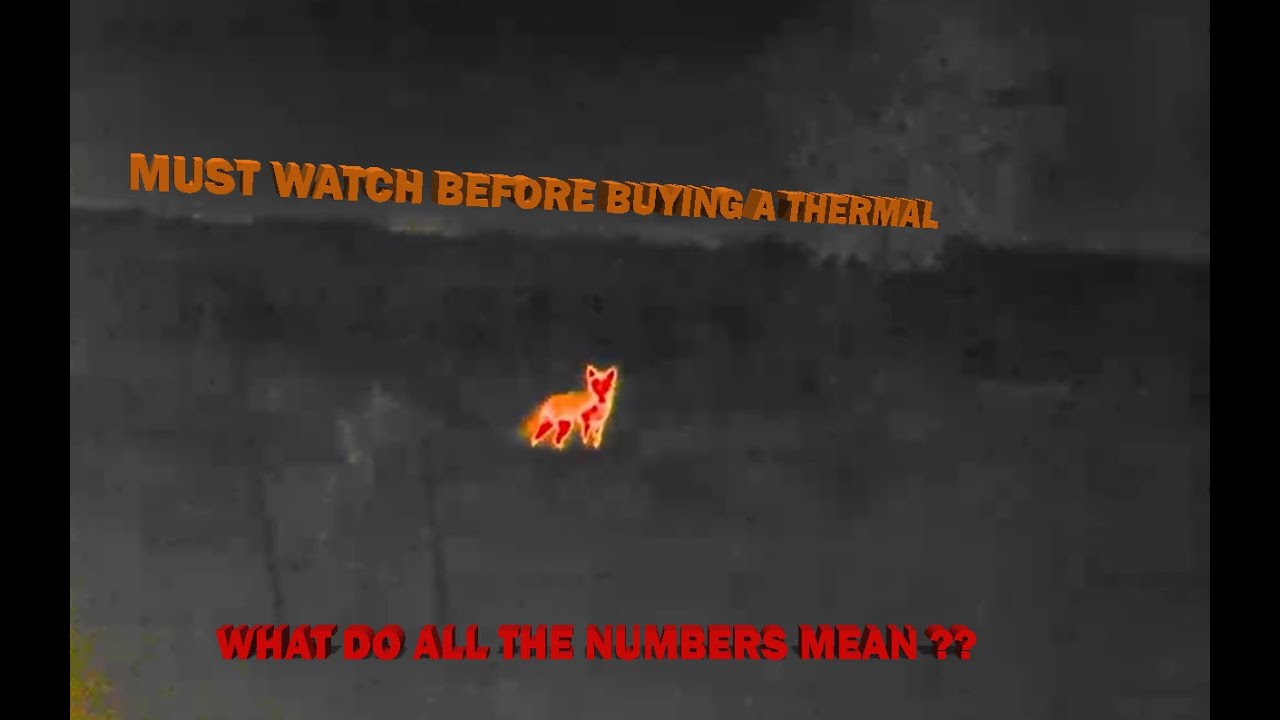
Resolution, thermal sensitivity, frame rate and temperature range are the numbers that decide whether a camera is good enough for a given job. Most of the rest of the spec sheet is noise.
Here’s how those numbers spread across one manufacturer’s catalog.
- The entry-level uncooled FLIR C5 runs 160 x 120 pixels, a -20°C to 400°C range, and an 8.7 Hz frame rate
- Mid-tier uncooled T-series cameras reach up to 464 x 348 pixels and up to 1,500°C with optional calibration, at 30 Hz
- The cooled indium antimonide A6751sc sits at 640 x 512 pixels, up to 1,500°C, with frame rates programmable up to 125 Hz
Higher resolution buys more individual temperature points across the same scene, which matters most when the hot spot is small. A loose lug on a breaker is small.
NETD works backwards from what you’d expect. Lower is better, because a lower number means the camera can pull finer temperature differences out of the background noise.
Frame rate only earns attention when something in the frame moves, like a person or a vehicle. Scanning a static wall, it’s close to irrelevant.
Range is the same story. Building diagnostics rarely need more than a few hundred degrees, while an industrial furnace inspection wants a range stretching into the thousands.
Two cameras with identical pixel counts can still differ in spatial resolution. A wider lens spreads those pixels across a bigger scene, and that one trips people up constantly.
Is a Thermal Imaging Camera the Same as Night Vision or an Infrared Thermometer?

No. Three different tools, three different problems, and people reach for the wrong one all the time.
Night vision amplifies whatever small amount of visible or near-infrared light already exists in a scene, so it still struggles in absolute darkness and it’s useless through smoke. An infrared thermometer reads a single point and reports one number, with no image behind it at all.
The thermal camera’s case for itself is short. It works in total darkness, in smoke, and through light fog. It shows a full scene instead of one point. It also costs more than either alternative, and it cannot see through glass, which surprises people the first time they try.
Night vision wins on detail. A face, printed text, the fine visual stuff, that’s where it beats thermal and always will. It needs ambient light or an infrared illuminator to function, and it offers no temperature data of any kind.
The infrared thermometer is the cheapest of the three and the simplest to operate. One accurate number, fast. But it finds nothing you haven’t already pointed it at, which is the whole limitation in one sentence.
Fluke sells single-point infrared thermometers and full thermal imaging cameras under the same brand, marketed for distinctly different jobs.
What Is a Thermal Imaging Camera Used For?

Anywhere a temperature difference is hiding, one of these pays for itself. The list of industries that figured that out is longer than you’d guess.
Industrial and Building Applications
Electricians and maintenance techs use it to catch a loose connection or an overloaded breaker before it fails. Both run hotter than a healthy connection sitting right beside them, and that comparison is the entire diagnostic.
Home energy auditors work the same principle. The U.S. Department of Energy’s Weatherization Assistance Program lists a thermal scan among its standard diagnostic steps for qualifying homes.
A home energy audit almost always pairs that scan with a walk-through of the walls, windows, and attic, since gaps and leaks show up as clear temperature streaks.
Pairing the scan with a blower door test makes the pattern easier to read still. Depressurizing the house widens the temperature gap at every leak point.
Weather matters more here than people expect. ASTM E1186 sets the bar for this kind of inspection at a minimum indoor-outdoor temperature difference of 9°F, so auditors wait for colder or hotter weather to clear that threshold.
Safety and Emergency Applications
Emergency work is where the time savings stop being theoretical.
- firefighters tracking a person through smoke that blocks normal vision entirely
- search and rescue teams sweeping a wide area for a warm body against a cold background
- utility crews confirming a downed line is no longer live before they approach it
None of those situations allow a second look. Which is exactly why a full-scene thermal image beats a single spot reading in this setting.
Security and Consumer Applications
By volume, security is the largest consumer-facing use case.
Perimeter cameras pick up an intruder in total darkness well before a standard security camera would, since they don’t depend on a light source at all.
Smaller markets stack up behind it.
- automotive night-driving assist systems
- wildlife observation and hunting
- veterinary exams for inflammation or circulation issues
Fever-screening cameras, the ones that showed up in every airport and office lobby in 2020, are the same core technology tuned to a narrow band around normal body heat.
When Does a Thermal Imaging Camera Not Work Well?

These cameras fail in predictable ways, and knowing them ahead of time saves a wasted trip.
Glass and water both block long-wave infrared. The camera reads the surface temperature of the glass or the water itself, never what’s sitting behind it.
Reflective metal runs into the low-emissivity problem already mentioned, with real numbers below.
Heavy rain and dense fog scatter and absorb the infrared signal before it ever reaches the detector.
And if the temperature difference sits below the camera’s NETD, two genuinely different surfaces will look identical on screen even though they aren’t.
Fluke’s own emissivity reference lists glass at roughly 0.92 and polished aluminum at roughly 0.05.
That spread explains why the same camera nails a window reading and then misses badly on a shiny duct hanging right next to it.
Rain degrades range fast. A 2016 study in the Journal of Applied Optics found detection distance dropped 76.8% as rainfall climbed from 0 to 4.0 millimeters per hour.
Pulsar, which builds thermal scopes for hunters, gives the same warning in its own field guidance. Expect a shorter recognition range in heavy rain or thick fog, even with a perfectly functional camera.
None of this makes the camera unreliable. The reading is only ever as good as the conditions it was taken in.
Do You Need Certification or Clearance to Use a Thermal Imaging Camera?
For casual use, no. Professional and export contexts both carry real requirements, and the two have nothing to do with each other.
Professional Training and Certification
Thermography certification runs in tiers. Level I covers camera operation, basic image interpretation, and safe data collection. Level II adds root-cause analysis plus the authority to direct Level I technicians on a job. Level III is the program-manager tier, where you’re writing inspection procedures and severity criteria instead of holding the camera.
The Infrared Training Center and the Infraspection Institute are the two most recognized providers in North America, and both build their curriculum around ASNT’s SNT-TC-1A guidelines.
Outside North America, ISO 18436 and ISO 9712 cover the same ground. NETA accredits Level I and Level II coursework for electrical-testing credit in the US.
None of it is legally mandated in the United States. It’s an industry standard that employers and insurers increasingly expect anyway, which in practice works out to about the same thing.
Export Restrictions and Classification
U.S. export law actually applies two separate thresholds, and conflating them is the usual mistake. The first decides which of two ECCN classifications a camera falls under: a frame rate at or below 9 Hz keeps a camera under the lightly controlled ECCN 6A993, while anything faster puts it under the more tightly controlled ECCN 6A003.b.4.b. The second threshold then decides, for cameras already classified under 6A003.b.4.b, whether an export license is actually required to most destinations: a frame rate above 60 Hz, or a detector array bigger than 111,000 elements.
| Frame Rate / Array Size | Typical Classification | License to Most Countries |
|---|---|---|
| 9 Hz or less | ECCN 6A993 | Generally not required |
| Above 9 Hz, 60 Hz or less, 111,000 elements or fewer | ECCN 6A003.b.4.b | Generally not required |
| Above 9 Hz, 60 Hz or less, over 111,000 elements | ECCN 6A003.b.4.b | Required |
| Above 60 Hz, any array size | ECCN 6A003.b.4.b | Required |
That threshold comes straight from 15 CFR 742.6, the Commerce Department regulation covering ECCN 6A003.b.4.b.
Axis Communications’ own export documentation shows the split working in practice. An 8.3 frames-per-second version of its Q86 camera series clears export under the lighter ECCN 6A993, while the 30 frames-per-second version of the same series falls under the restricted 6A003.b.4.b.
Price has nothing to do with which category a camera lands in.
FAQ on What Is A Thermal Imaging Camera
Is FLIR the Same Thing as a Thermal Imaging Camera?
No. FLIR is a brand, not the technology.
Teledyne FLIR is one manufacturer among several, alongside Fluke, Seek Thermal, and Hikvision. The name stuck the way Kleenex did for tissues, though every thermal imaging camera works the same way underneath.
How Much Does a Thermal Imaging Camera Cost?
Entry-level handhelds start around 250 to 800 dollars. Teledyne FLIR’s C5, aimed at building inspection, lists near 799 dollars.
Mid-tier industrial cameras run into the low thousands, and cooled or radiometric research-grade units climb past 20,000 dollars.
Can a Smartphone Use a Thermal Imaging Camera?
Yes, through a clip-on accessory. FLIR ONE and the Seek Thermal Compact attach to a phone’s USB-C or Lightning port and borrow its screen and battery.
Resolution trails a dedicated handheld. Fine for a quick check, not for a report you’re handing a client.
What Should You Check Before Buying a Thermal Imaging Camera?
Match resolution and thermal sensitivity to the job first, then look at frame rate. Detector type and export status only start to matter once those numbers already fit the work you’re doing.
After that it comes down to budget and portability deciding cooled versus uncooled, plus a classification check if the camera is crossing a border.
Going with an uncooled microbolometer over a cooled detector also tends to keep frame rate and array size under the threshold that triggers a stricter export license, since consumer and industrial models rarely run anywhere near that line.
And once a scan flags a cold or hot spot, understanding what home insulation actually does explains why that spot formed in the first place.