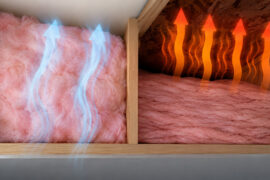
Most homeowners have no idea where 30% or more of their heating and cooling energy actually goes. It leaks out through gaps, cracks, and poorly insulated surfaces they can’t see or feel.
A home energy audit finds those hidden problems. It’s a professional assessment that measures exactly how much energy a house wastes and where, using diagnostic tools like blower doors and infrared cameras.
This article breaks down how the audit process works, what tests are involved, how much it costs, and what kind of recommendations you’ll get in the final report. Whether you’re dealing with high utility bills or planning efficiency upgrades, understanding what a home energy audit covers is the first step toward fixing the right things in the right order.
What Is a Home Energy Audit

A home energy audit is a professional evaluation of a residential building’s energy consumption, thermal performance, and efficiency. Certified energy auditors use diagnostic tools and visual inspections to identify where a house wastes energy and how to fix it.
The process has three core phases: evaluation, testing, and efficiency recommendations.
During the evaluation, an auditor reviews 12 to 24 months of utility bills and conducts a room-by-room inspection of the building envelope, HVAC systems, and appliance performance. Testing follows with equipment like blower doors and infrared cameras to measure air leakage rates and detect heat loss through walls, ceilings, and floors.
According to the U.S. Energy Information Administration (EIA), heating and cooling alone account for over 51% of a typical home’s total energy use. A residential energy assessment pinpoints exactly where that energy goes and what percentage gets wasted through drafts, poor home insulation, or outdated equipment.
The final phase produces a detailed home energy audit report. This report includes prioritized upgrade recommendations, estimated costs, and projected savings based on local climate data and current energy rates.
Both the U.S. Department of Energy (DOE) and the Building Performance Institute (BPI) recognize professional home energy assessments as the first step before any energy-saving home improvements or renewable energy system installations.
How Does a Home Energy Audit Work
A whole-house energy analysis follows a structured sequence. The auditor collects data, runs diagnostic tests, and produces a report with actionable findings. Most professional audits take between 2 and 4 hours depending on the size of the property and the number of tests performed.
The entire process relies on specialized building energy diagnostics. No guessing involved.
What Happens During the Evaluation Phase
The auditor starts by reviewing past utility bills (12 to 24 months minimum) to establish a home energy baseline. Then comes a physical walk-through covering every room, the attic, basement, crawl spaces, and exterior walls.
Here’s what gets checked:
- Building envelope condition, including walls, windows, doors, and roof
- Insulation levels in the attic, walls, and foundation (compared against current recommended R-values)
- HVAC system age, type, and visible condition
- Ductwork routing, especially through unconditioned spaces
- Lighting fixtures and major appliance inventory
- Occupant interview about comfort complaints, cold spots, drafts, and energy usage patterns
The evaluation phase establishes what the auditor is working with before any equipment comes out.
What Happens During the Testing Phase
Testing is where the real data comes from. Auditors use calibrated equipment to measure things you can’t see or feel during a walk-through.
A blower door test depressurizes the home using a powerful fan mounted in an exterior door frame. This measures the total air leakage rate in air changes per hour (ACH) and reveals hidden gaps in the building envelope.
A thermal imaging camera scans walls, ceilings, and floors for temperature variations. Cold spots indicate insulation gaps, thermal bridging, or moisture intrusion behind surfaces. Completely non-invasive.
Other common tests include:
- Duct leakage testing to measure air loss in the HVAC distribution system
- Combustion safety testing on gas furnaces, water heaters, and boilers
- Carbon monoxide detection around combustion appliances
- Furnace efficiency metering
These tests produce hard numbers. The auditor doesn’t estimate, they measure.
What Does a Home Energy Audit Report Include
After the on-site work, the auditor compiles everything into a comprehensive energy audit report. Data from the evaluation and testing phases gets run through approved energy audit software that factors in local climate, energy rates, and material costs.
A typical report covers:
- Summary of current home energy consumption and performance
- Prioritized list of recommended improvements ranked by cost-effectiveness
- Estimated cost for each upgrade
- Projected annual energy savings in dollars and kilowatt-hours
- Health and safety flags (mold, ventilation problems, gas leaks, backdrafting risks)
- Available rebates, insulation tax credits, or utility incentive programs
The report gives homeowners a clear picture of where money is being lost and which fixes deliver the fastest payback period.
What Is the Difference Between a Professional and DIY Home Energy Audit
A professional energy audit and a DIY energy audit serve the same general purpose but differ in depth, accuracy, and what you can actually do with the results.
Professional audits are performed by certified auditors (BPI, RESNET, or AEE-credentialed). They use blower doors, infrared cameras, duct testers, and combustion analyzers. The findings qualify homeowners for the Section 25C tax credit and state-level weatherization rebates.
A DIY home energy assessment is a visual walk-through you do yourself. It covers the basics:
- Checking for obvious air leaks around windows, doors, baseboards, and electrical outlets
- Inspecting visible insulation in the attic and basement
- Reviewing appliance ages and checking for ENERGY STAR ratings
- Noting drafty areas and cold spots room by room
A DIY audit catches surface-level issues. It does not measure ACH, detect hidden moisture intrusion, or quantify duct leakage. Think of it as a useful starting point that helps a professional auditor focus their inspection later.
The DOE recommends starting with a self-assessment, then scheduling a professional energy evaluation for a complete picture.
What Does a Blower Door Test Measure in a Home Energy Audit
A blower door test measures the airtightness of a home by calculating how much air leaks through the building envelope under controlled pressure.
The setup is straightforward. A calibrated fan gets mounted into an exterior door frame with an adjustable panel. The fan pulls air out of the house, lowering the indoor air pressure. Outside air then rushes in through every crack, gap, and unsealed penetration in the structure.
Sensors measure the airflow rate needed to maintain a specific pressure difference (typically 50 Pascals). The result is expressed in air changes per hour (ACH50), which tells you how many times the entire volume of air inside the home gets replaced in one hour under test conditions.
Lower ACH50 numbers mean a tighter building envelope. Higher numbers mean more air leakage and more wasted energy on heating and cooling.
The Department of Energy reports that reducing air leaks through proper air sealing can cut annual energy costs by 10% to 20%. That makes the blower door test one of the most cost-effective diagnostic steps in any residential energy evaluation.
During the test, auditors often walk through the home with a smoke pen or infrared camera to pinpoint exactly where air enters. Common leak locations include attic hatches, recessed lighting, plumbing penetrations, electrical outlets on exterior walls, and gaps where different building materials meet.
These findings feed directly into the air sealing and insulation improvement recommendations in the final audit report.
What Does Infrared Thermographic Imaging Detect

Infrared thermographic imaging detects temperature differences across surfaces inside and outside a home. Energy auditors use handheld thermal cameras that display heat signatures as color-mapped images, making invisible energy loss visible in real time.
The camera does not see through walls. It reads surface temperatures and highlights variations that indicate problems behind those surfaces.
Thermal imaging commonly detects:
- Missing or compressed insulation inside wall cavities, ceilings, and floors
- Thermal bridging through studs, joists, and other structural framing members
- Moisture intrusion that changes the thermal conductivity of building materials
- Air leaks around windows, doors, and penetrations that the blower door test pressurizes
- Hot or cold spots caused by ductwork problems in unconditioned spaces
The scan is completely non-invasive. No holes, no removal of drywall, no disruption. Auditors typically run the thermographic scan while the blower door is operating, because the pressure difference amplifies temperature contrasts at leak points.
Infrared imaging is especially useful in older homes where original insulation performance has degraded over time or where insulation has settled inside wall cavities, leaving gaps at the top of stud bays.
How Much Does a Home Energy Audit Cost
A professional home energy audit typically costs between $150 and $700, depending on the size of the home, location, and depth of testing involved. Audits that include a full blower door test, duct leakage testing, and infrared thermographic scans fall on the higher end.
Many utility companies offer free or subsidized energy assessments to their customers. Programs like NYSERDA in New York provide no-cost energy assessments for homeowners and renters in 1-to-4-family homes. Massachusetts runs Mass Save, which covers the full cost of a home energy evaluation for eligible residents.
The DOE’s Home Energy Score program connects homeowners with certified assessors who rate a home’s efficiency on a 1-to-10 scale and recommend cost-effective upgrades.
Some audits qualify for the Section 25C tax credit under the Inflation Reduction Act, which offsets a portion of the assessment cost. Check with your auditor before scheduling to confirm eligibility.
What Are Common Recommendations From a Home Energy Audit
Every audit report is different because every house is different. But certain recommendations show up consistently across residential energy evaluations, especially in homes built before current International Energy Conservation Code (IECC) standards.
Air Sealing and Draft Reduction
Sealing air leaks is almost always the top recommendation. Common leak points include baseboards, wall-ceiling junctions, electrical outlets on exterior walls, plumbing penetrations, recessed lighting, and areas where two different building materials meet. Caulking, weatherstripping, and expanding foam handle most of these.
Reducing drafts through whole-home air sealing can lower annual energy costs by 10% to 20% according to the Department of Energy.
Insulation Upgrades
Auditors frequently flag insufficient insulation in attics, basements, crawl spaces, and exterior walls. Older homes often fall well below current recommended R-values for their climate zone.
Attic insulation is usually the highest-priority fix because heat rises and escapes fastest through the roof assembly. Options range from loose-fill insulation (blown-in cellulose or fiberglass) to batt insulation rolls placed between joists.
For basement walls, auditors may recommend insulating basement walls with rigid foam board or spray foam to reduce heat loss through the foundation and prevent moisture problems.
The right material depends on the application. An auditor’s report typically specifies the type of insulation material and target R-value for each area flagged.
HVAC System Improvements
Heating and cooling equipment accounts for over half of residential energy consumption. Auditors check system age, efficiency ratings, and ductwork condition.
Common HVAC-related recommendations include sealing and insulating ducts in unconditioned spaces, replacing filters on schedule, tuning up older systems, and upgrading to ENERGY STAR-rated equipment when current units are past their expected lifespan.
Lighting and Appliance Efficiency
Swapping incandescent or CFL bulbs for LEDs, installing smart power strips to eliminate phantom loads, adding a programmable or smart thermostat, and replacing aging appliances with ENERGY STAR-certified models. Small changes that compound over time.
Ventilation and Indoor Air Quality
Tightening a home without addressing ventilation creates indoor air quality problems. Auditors recommend mechanical ventilation for kitchens and bathrooms, vapor barriers on dirt-floored crawl spaces, and smoke and carbon monoxide detectors in required locations.
Backdrafting is a real risk in tightly sealed homes with combustion appliances. The audit flags this and specifies what corrective measures are needed to keep occupants safe.
How to Prepare for a Home Energy Audit

A little preparation makes the audit faster and more accurate. Do these things before the auditor arrives:
- Gather 12 to 24 months of gas and electric utility bills
- Write down specific comfort complaints: drafty rooms, cold floors, hot upstairs, high bills in certain months
- Clear access to the attic, crawl spaces, basement, HVAC equipment, electrical panel, and water heater
- Close and lock all windows and exterior doors (required for building envelope testing)
- Do not burn wood in a fireplace for 48 hours before the appointment
- Clean fireplace ashes and close the flue damper
The occupant interview matters more than most people realize. Auditors use your firsthand observations about energy usage patterns and comfort issues to pinpoint problem areas faster.
Who Performs a Home Energy Audit
A qualified home energy auditor holds one or more industry certifications that verify their training in building science, diagnostic testing, and energy conservation measures.
The most recognized credentials:
- Building Performance Institute (BPI) – Building Analyst certification, the most widely accepted standard for residential energy auditors
- Residential Energy Services Network (RESNET) – HERS Rater certification, commonly used for Home Energy Rating System scores
- Association of Energy Engineers (AEE) – Certified Energy Auditor (CEA) and Certified Energy Manager (CEM) designations
- ASHRAE Building Energy Assessment Professional (BEAP)
- DOE Home Energy Score Certified Assessor
Before hiring, get several references, check the Better Business Bureau for complaints, and confirm the auditor’s certification is current. Ask whether the audit qualifies for the 25C tax credit, because not all assessments meet the IRS requirements.
Your utility provider often maintains a list of approved contractors. State energy offices and the Weatherization Assistance Program (WAP) are other reliable sources for finding credentialed professionals in your area.
How Long Does a Home Energy Audit Take
A basic walk-through assessment takes 30 minutes to an hour. A full professional audit with blower door testing, duct leakage testing, infrared scanning, and combustion safety checks runs 2 to 4 hours.
Larger homes and older properties take longer. A 3,000-square-foot house built in the 1960s with original insulation and ductwork requires more inspection time than a 1,200-square-foot home built to current code.
The on-site visit is only part of it. Report preparation, data analysis through energy audit software, and compiling recommendations typically add another few days before you receive the final document.
What Is a Home Energy Score
The Home Energy Score is a rating system developed by the U.S. Department of Energy that grades a home’s energy efficiency on a scale of 1 to 10. A score of 1 means high energy use. A score of 10 means the home performs at a very high efficiency level.
The score works similarly to a vehicle’s miles-per-gallon rating. It gives buyers, sellers, and homeowners a standardized way to compare the energy performance of different properties.
A Home Energy Score Certified Assessor performs the evaluation, which takes roughly 30 to 60 minutes. The resulting report includes the current score, a potential score showing what the home could achieve with recommended upgrades, and a list of cost-effective improvements ranked by impact.
The program is managed through the DOE and available in participating regions across the United States. Some local governments require a Home Energy Score at the time of sale.
Are Home Energy Audits Worth the Cost
The typical return on insulation and efficiency upgrades identified by a professional audit pays for itself within 6 months to 4 years, depending on which improvements get implemented and local energy rates.
A $300 to $500 audit that identifies $800 or more in annual energy savings is not a hard decision. And most homeowners find at least one low-cost fix (like air sealing or adding attic insulation) that delivers immediate results on the next utility bill.
Financial incentives reduce the upfront cost further. The Inflation Reduction Act expanded the Section 25C energy efficiency tax credit. Many states run additional rebate programs through their utility providers. NYSERDA, Mass Save, and the Weatherization Assistance Program all offer free home energy assessments or subsidized audits for qualifying households.
The benefits of proper insulation and efficiency upgrades go beyond dollar savings. Reduced drafts, more consistent room temperatures, better indoor air quality, and lower carbon emissions are all documented outcomes of acting on audit recommendations.
The American Council for an Energy-Efficient Economy (ACEEE) and the National Renewable Energy Laboratory (NREL) both support residential energy audits as one of the most effective first steps toward reducing household energy waste.
How to Choose a Home Energy Auditor
Start with credentials. A qualified auditor holds a current BPI Building Analyst certification, RESNET HERS Rater designation, or equivalent from AEE or ASHRAE. Ask to see proof.
Then check these boxes:
- Get at least three references from past clients and actually call them
- Verify there are no complaints through the Better Business Bureau
- Confirm the audit includes a blower door test and infrared scan (not just a visual walk-through)
- Ask whether the audit meets IRS requirements for the 25C tax credit
- Check if your utility company has a list of pre-approved auditors
- Contact your state energy office or local Weatherization Assistance Program for referrals
Avoid auditors who push specific products or contractors before completing the assessment. A good auditor gives you data and options. The decision on what to upgrade, and who does the work, stays with you.
Programs like Home Performance with ENERGY STAR maintain directories of participating contractors who meet federal quality standards. The DOE’s Home Energy Score program also lists certified assessors by region, which makes the search easier depending on where you live.
FAQ on Home Energy Audits
What is the purpose of a home energy audit?
A home energy audit identifies where a house loses energy and wastes money. The auditor measures air leakage, insulation performance, and HVAC efficiency, then delivers a prioritized report with energy-saving recommendations ranked by cost-effectiveness.
How long does a home energy audit take?
A basic walk-through takes 30 to 60 minutes. A full professional audit with blower door testing, infrared scanning, and combustion safety checks runs 2 to 4 hours depending on property size and the number of diagnostic tests performed.
How much does a professional energy audit cost?
Professional audits range from $150 to $700. Many utility companies offer free or reduced-cost assessments. Programs like NYSERDA and Mass Save cover the full cost for eligible homeowners. The Section 25C tax credit can offset expenses further.
Can I do a home energy audit myself?
A DIY energy audit covers basics like checking for visible air leaks, inspecting attic insulation, and reviewing appliance efficiency. It catches surface-level issues but cannot measure air changes per hour or detect hidden moisture intrusion behind walls.
What tools do energy auditors use?
Certified auditors use blower doors, infrared thermal cameras, duct leakage testers, furnace efficiency meters, combustion analyzers, carbon monoxide detectors, and surface thermometers. These tools produce measurable data that visual inspections alone cannot provide.
What certifications should a home energy auditor have?
Look for BPI Building Analyst certification, RESNET HERS Rater designation, AEE Certified Energy Auditor (CEA), or ASHRAE BEAP credentials. The DOE also certifies Home Energy Score Assessors. Always verify the credential is current before hiring.
What does a home energy audit report include?
The report covers current energy consumption data, a prioritized list of recommended upgrades, estimated improvement costs, projected annual savings, and health or safety flags like mold, poor ventilation, or carbon monoxide risks from combustion appliances.
Is a home energy audit worth it?
Most efficiency upgrades identified by an audit pay for themselves within 6 months to 4 years. A single audit often uncovers low-cost fixes like air sealing or adding attic insulation that deliver immediate savings on the next utility bill.
What is the difference between a home energy audit and a Home Energy Score?
A home energy audit is a detailed diagnostic assessment with testing and recommendations. A Home Energy Score is a DOE rating system that grades a home’s efficiency from 1 to 10, similar to a vehicle’s miles-per-gallon rating.
How often should a home energy audit be done?
Every 5 to 10 years, or after major renovations, HVAC replacements, or noticeable changes in utility bills. Homes that have never been audited benefit the most, especially older properties built before current energy code standards took effect.
Conclusion
A home energy audit is the most direct way to understand where your house wastes energy and what to do about it. Without one, every upgrade is a guess.
The combination of a blower door test, thermographic imaging, and a thorough building envelope inspection gives you hard data on air leakage, insulation gaps, and HVAC performance. That data turns into a ranked list of fixes with real cost estimates and projected savings.
Programs from the Department of Energy, BPI-certified contractors, and state-level initiatives like the Weatherization Assistance Program make professional assessments accessible to most homeowners.
Whether you’re chasing lower utility bills, better indoor air quality, or a smaller carbon footprint, the audit report tells you exactly where to start. Act on the findings and the energy savings follow.