Insulation problems are usually local. The attic is bare while the walls are fine, or the walls are packed tight and the rim joist has nothing in it at all. So the first question is which part of the building envelope is actually short on material, because attics, walls, and floors don’t take the same product at the same depth.
What insulation does is add thermal resistance to floors, walls, and roofs, which slows heat moving between inside and outside.
How much resistance you need is set by the International Energy Conservation Code, and the targets shift with climate zone. R30 in the mildest regions. R60 in the coldest.
The average project costs $1,852 including labor and materials, according to HomeAdvisor’s 2025 national pricing data.
What Is Home Insulation?

The job is simple enough. Material fills the cavities in floors, walls, and roofs, and heat crosses it slower than it would cross an empty stud bay.
It does not block heat entirely. It just makes the process slower, and the physics behind how insulation works comes down to trapped air pockets that resist conduction.
Almost everything installed in American homes falls into a handful of material families:
- Fiberglass batts and rolls
- Blown-in cellulose
- Spray polyurethane foam
- Mineral wool, also called rock wool
- Rigid foam board
They resist heat flow differently, and the right pick depends on where in the envelope it goes. Attics, walls, floors, and rim joists each want something a little different.
What R-Value Do You Need for Your Climate Zone?
Attic targets run from R30 to R60 under the 2021 International Energy Conservation Code. Which end you land on depends on where you live.
Walls need less, usually somewhere between R13 and R20.
R-value measures how well a material resists heat flow, and the number climbs with insulation thickness and density. Higher is better, no matter which material you’re looking at.
2021 IECC minimum R-value by climate zone (U.S. Department of Energy):
- Zone 1: R30 ceiling, R13 wall
- Zone 2: R49 ceiling, R13 wall
- Zone 3: R49 ceiling, R20 wall, or R13 plus R5 continuous insulation
- Zones 4 through 8 (and Marine 4): R60 ceiling, with walls requiring R20 plus R5 continuous insulation, R13 plus R10 continuous insulation, or R20 of continuous insulation alone
Windows and skylights sit outside this scale entirely. They get rated in U-value, where a lower number means better performance, which trips people up constantly when they’re comparing quotes.
Going from R38 to R49 looks like a rounding error on paper. In a cold zone that extra depth is doing real work on your ceiling heat loss.
Signs Your Home Needs Better Insulation

The house tells you before the utility bill does.
Uneven room temperatures, cold walls, and ice damming along the roof edge are the usual physical tells.
Visual and Comfort Signs
Things homeowners notice first:
- Rooms that stay cold no matter how high the thermostat runs
- Ice dams forming along the roof edge in winter
- Walls or ceilings that feel cold to the touch
- Heating and cooling costs that climb faster than local utility rates
None of it pinpoints where the failure is. That takes measurement.
Professional Testing Methods
Visual checks only go so far.
A home energy audit combines several diagnostic tools to find exactly where a house is losing conditioned air. Air leakage rate gets measured with a pressurized fan test. Insulation depth and coverage get checked area by area. An infrared scan maps the thermal patterns across ceilings and walls.
The blower door test is the centerpiece of most audits. It measures exactly how much air leaks through the building envelope under pressure.
Auditors credentialed through the Building Performance Institute typically hold the reading against a RESNET HERS Index score, where a lower number signals better whole-house performance.
Which Areas of a Home Lose the Most Heat?

Heat does not escape evenly across a house.
The attic typically accounts for the single biggest share of loss in an under-insulated home, with exterior walls a close second.
Attic and Roof
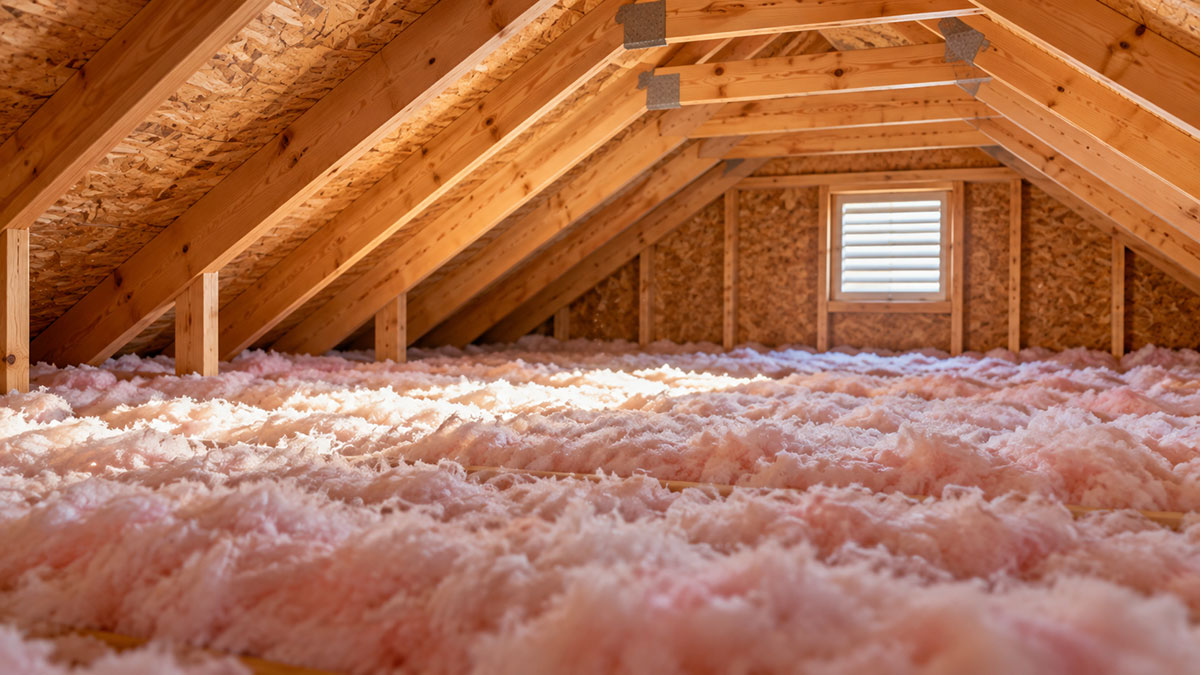
This is where insulation upgrades pay off fastest. Heat rises, and an under-insulated attic lets it leave straight through the ceiling and roof deck.
Depth targets vary by material and climate zone, and a full breakdown of how much insulation you need in your attic covers the inch-by-inch numbers for each zone.
- Top off existing material to the R-value your climate zone requires
- Keep soffit vents clear with baffles so airflow is not blocked
- Air seal penetrations before adding new material
Exterior Walls
Walls lose heat differently than attics do.
Wood studs conduct heat faster than the insulation between them. That’s thermal bridging, and on an infrared scan it shows up as faint cold stripes marching across the wall at 16 inches on center. Once you’ve seen it you can’t unsee it.
- Blown-in dense-pack insulation for finished wall cavities
- Exterior rigid foam board for full-wall coverage
- Drill-and-fill installation when walls cannot be opened up
Floors and Crawl Spaces
A floor over an unheated crawl space or garage acts like a cold plate under the whole room in winter.
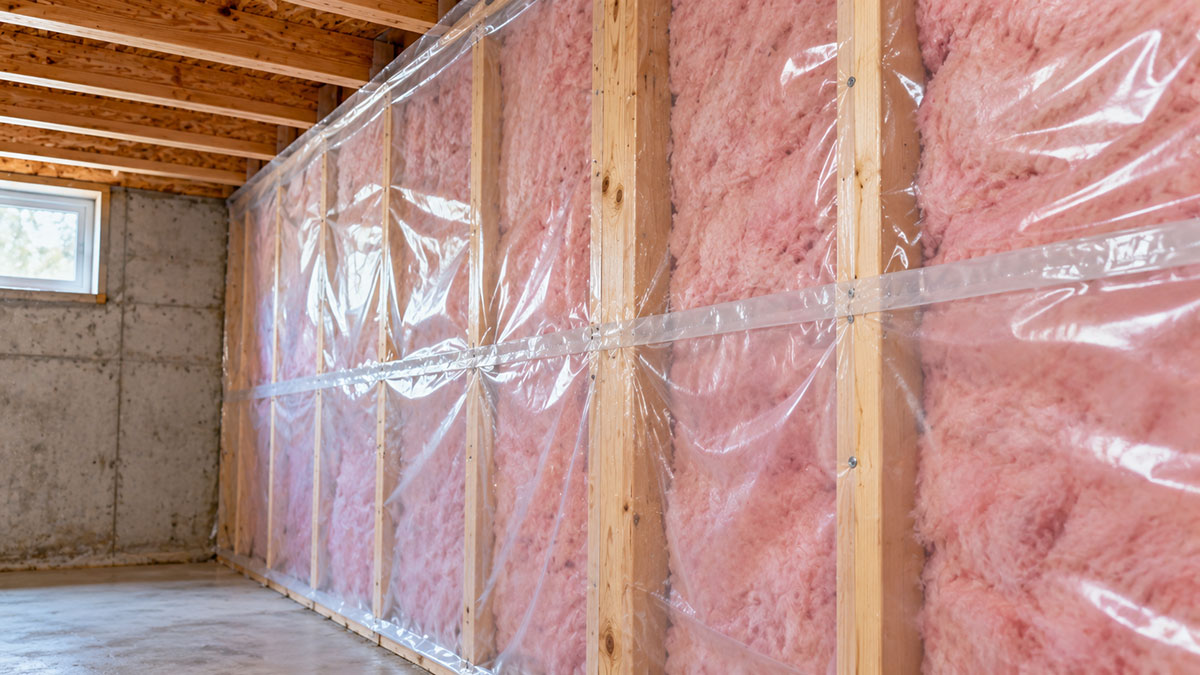
For crawl space floors, insulate between the joists with batts or rigid foam. A full basement is a different situation. There it usually makes more sense to insulate the foundation wall itself and treat the space as conditioned, rather than trying to separate it from the house above.
Rim Joists
The rim joist, where the floor framing meets the foundation, is one of the most commonly skipped areas in an insulation retrofit. It’s also one of the leakiest. Small area, outsized effect.
Windows and Doors
Quick wins around openings:
- Weatherstripping around door and window frames
- Caulking gaps where trim meets drywall or siding
- Door sweeps to block drafts at the threshold
Weatherization steps like these do not raise a window’s R-value. They stop air from moving around the frame, which is often where the real heat loss is happening anyway.
Which Insulation Material Works Best?
Fiberglass, cellulose, spray foam, mineral wool, and rigid foam board cover almost every insulation job in a home.
Each inch of material provides an R-value of roughly 3 to 8, depending on which one is used, according to HomeAdvisor’s 2025 cost data.
A closer look at each option, along with where it fits best, is covered in this breakdown of insulation material types.
Cost and performance figures below come from HomeAdvisor’s 2025 installation data and published manufacturer specifications for spray foam.
| Material | R-Value per Inch | Installed Cost per Sq Ft | Best For |
|---|---|---|---|
| Fiberglass | Lower to mid range | $1 to $1.50 (batt) | Attics, standard wall cavities |
| Cellulose | Mid range | $1.75 to $7.50 (blown-in) | Attics, irregular cavities |
| Spray foam | 3.5 to 7 (open to closed-cell) | $1 to $2 | Rim joists, air sealing plus insulating |
| Mineral wool | Similar to fiberglass | Varies by supplier | Fire-prone areas, sound control |
| Rigid foam board | Higher range | Varies by thickness | Basement walls, exterior sheathing |
Batts and Rolls
Fiberglass batts are still the most common insulation material sold at hardware stores, and there’s a reason for that.
- Cut to fit standard stud and joist spacing
- No special equipment required for installation
- Lowest material cost of the major options
It performs worse when compressed or installed with gaps, since trapped air is what does the work. That sensitivity to sloppy installation is the tradeoff you accept for how cheap and available it is, and it’s still the default pick for a DIY attic project.
Blown-In and Loose-Fill
Irregular spaces are where loose-fill earns its keep:
- Cellulose, made from recycled paper treated with fire retardant
- Loose-fill fiberglass, blown to a target depth with a machine
- Loose mineral wool, used where fire resistance matters most
A GreenFiber cellulose bag or an Owens Corning fiberglass roll both end up doing the same job once installed, filling gaps that batts leave behind around wiring and framing.
Spray Foam
Spray foam air seals and insulates in a single application.
Choosing between spray foam or cellulose insulation usually comes down to budget versus air sealing performance, since foam costs more but closes gaps cellulose cannot reach.
Open-cell foam costs less per board foot, gives you less R-value per inch, and stays flexible. Closed-cell runs higher on both cost and R-value, and it adds rigidity to the assembly, which matters in some retrofit situations more than others.
Icynene and Demilec are two manufacturers homeowners commonly see quoted by spray foam contractors.
Rigid Foam Board
Rigid foam board is the go-to choice below grade.
Basement walls and exterior sheathing both benefit from its resistance to moisture, something batts and loose-fill cannot match in a damp environment.
How Much Does It Cost to Insulate a Home?
A typical insulation project runs about $1,852 total, with most homeowners spending between $1,066 and $2,639, according to HomeAdvisor’s 2025 pricing data.
Typical cost ranges (HomeAdvisor, 2025):
- Per square foot, installed: $0.40 to $6.75 depending on material and labor
- Batt insulation: $1 to $1.50 per square foot installed
- Blown-in insulation: $1.75 to $7.50 per square foot installed
- Spray foam insulation: $1 to $2 per square foot installed
- Average full project total: $1,852
Breaking the cost down per square foot makes it easier to compare bids from different insulation contractors, since total project price swings a lot with home size.
Federal tax credits could once offset part of the bill. The IRS Section 25C credit covered the cost of insulation material itself, though not installation labor, for projects placed in service through December 31, 2025. A 2025 federal budget law accelerated the credit’s expiration, so it no longer applies to insulation installed in 2026 or later. Homeowners planning a project now should check for state and utility rebates instead.
Labor typically makes up roughly a third to half of the total on a professional job, which is part of why DIY-friendly materials like batts cost less installed than spray foam.
How Much Does Insulation Save on Energy Bills?
Sealing air leaks and adding insulation can cut total annual energy bills by an average of 11 percent, according to ENERGY STAR. Narrow it to heating and cooling costs specifically and the average is 15 percent.
Savings scale with climate severity and how under-insulated the home was to start. A cold-zone house with a bare attic sees a much bigger jump than a house that just needs a few inches added on top of what’s already there.
Most homeowners want to know how long it takes to get that money back.
The payback period for insulation depends on local energy prices, project cost, and the size of the R-value increase, but attic upgrades tend to pay back faster than any other area of the house.
The utility bill isn’t the whole return, either. Room-to-room temperatures even out. The HVAC system runs less, which tends to extend its working life. And insulation quiets a house down noticeably, which nobody thinks about until they’ve done it and the road noise drops.
A fuller look at the full range of benefits of home insulation covers comfort, resale value, and moisture control in more depth.
How Moisture Affects Insulation Performance
Wet insulation loses R-value fast.
Once fiberglass or cellulose gets damp, it usually needs full replacement rather than just drying out.
Two separate tools control that moisture. Vapor barriers handle diffusion, ventilation handles the rest.
Vapor Barriers and Perm Ratings
A vapor barrier controls how much moisture diffuses through a wall or ceiling assembly, rated in perms.
| Class | Perm Rating | Example Materials |
|---|---|---|
| Class I | 0.1 perm or less | Polyethylene sheet, sheet metal, glass |
| Class II | 0.1 to 1.0 perm | Kraft-faced batts, foil-faced rigid foam |
| Class III | 1.0 to 10 perm | Latex paint, plywood, unfaced fiberglass |
The International Residential Code requires Class I or II protection on the interior side of frame walls in Zones 5 through 8 and Marine 4, with exceptions for basement walls.
Vapor barrier insulation usually refers to facings like kraft paper or foil bonded directly to batts, which handle Class II duty without needing a separate membrane.
CertainTeed’s MemBrain product is one example of a smart vapor retarder that shifts its perm rating with seasonal humidity, rather than staying fixed at a single class.
Preventing Mold and Trapped Moisture
Crawl spaces and basements trap moisture more than any other part of a house.
Ground moisture rises through a dirt floor constantly, and learning how to install a vapor barrier in a crawl space matters more there than the insulation choice itself.
Mold risk climbs when insulation sits directly against a cold, damp foundation wall. Same when batts get compressed against sheathing with no air gap left behind them, or when a poorly ventilated attic holds humid indoor air against a cold roof deck all winter.
How to Insulate an Attic Step by Step

Adding insulation to an existing attic follows a fixed order, and skipping a step is the most common reason a project underperforms.
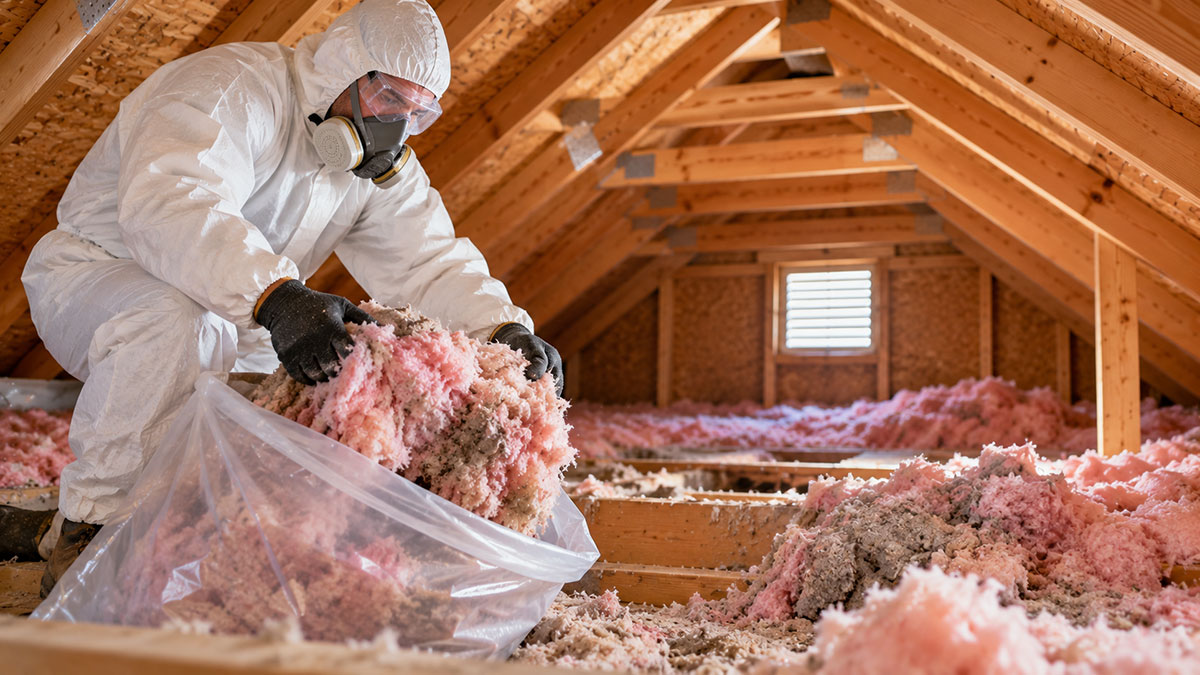
This counts as retrofit insulation work, material added to a home that already exists rather than installed during new construction.
- Air seal every penetration first, including wiring holes, plumbing stacks, recessed light housings, and the attic hatch.
- Install or check baffles at the soffits so new material cannot block intake airflow.
- Measure existing insulation depth against the R-value target for the climate zone.
- Fit batts around joists, wiring, and obstructions rather than compressing them into place.
- Run the new layer perpendicular to any existing batts to cover the framing members.
- Leave clearance around recessed lights and flues unless they are rated for direct insulation contact.
Cutting batts cleanly around wiring and framing matters more than most homeowners expect.
Learning how to cut fiberglass insulation properly avoids the gaps that let air currents bypass the material entirely.
Two mistakes come up over and over. Stopping at the code minimum instead of the target R-value, and burying a soffit vent under loose material that had nowhere else to go.
DIY Insulation vs Hiring a Contractor
Batts and small blown-in jobs are realistic do-it-yourself projects. Spray foam and dense-pack retrofits usually call for a licensed contractor instead.
When DIY Works
Fiberglass batts remain the easiest starting point for a first attempt.
- Standard attic floors with clear joist access
- Small crawl space floor sections
- Adding a second layer over existing attic insulation
A step-by-step walkthrough of how to install fiberglass insulation covers the tools and safety gear needed before starting.
When to Hire a Contractor
Spray foam is not a weekend project.
The chemicals require a heated spray rig setup that pressurizes and mixes two components on site, along with respiratory protection during application.
What a contractor brings is equipment access for dense-pack and foam work that nobody rents to homeowners, warranty coverage on material and workmanship both, and the ability to finish a whole house in a day or two instead of a month of weekends.
The DIY case is mostly about money, since labor is the largest line item on most bids. You also get to work on your own schedule, and if a section comes out badly you can pull it and redo it without calling anyone.
When Adding Insulation Does Not Help
More insulation does not always mean better performance. In some homes it wastes money. In a few it cannot legally be installed at all.
Cases where it does not pay off:
- Unsealed air leaks are still open, since moving air wastes more energy than low R-value does
- The attic or wall already meets the IECC target for its climate zone
- Moisture or mold is present and has not been fixed first
- Concealed knob-and-tube wiring runs through the space
Each added inch saves less than the one before it. Building scientists call this diminishing returns (Energy Vanguard), and once an attic or wall already meets its climate zone’s IECC target, more material adds cost without a matching drop in heating and cooling bills.
The wiring issue is a hard stop rather than a judgment call. The National Electrical Code has prohibited covering concealed knob-and-tube wiring with insulation since 1987, under NEC Article 394.12. A home with this wiring still active needs an electrical upgrade before any insulation goes in around it, not after.
Materials also fail in two opposite directions. Loose-fill settles over time and loses depth, a process called insulation settlement that can cut effective R-value well below what was originally installed.
Batts stuffed too tightly into a cavity have the reverse problem. Insulation compression crushes the air pockets that create R-value in the first place, so a compressed batt performs worse than the same material installed loose to its full thickness.
None of this means insulation stops working. It means the next dollar is often better spent on air sealing, wiring, or a moisture problem.
FAQ on How To Improve Home Insulation
What Is the Difference Between Insulation and Air Sealing?
Insulation slows heat flow through material resistance, measured in R-value. Air sealing blocks air movement through gaps in the building envelope instead.
An insulated attic with open gaps still leaks conditioned air, so air sealing and insulation work as partners, not substitutes.
What Causes Heat Loss in a Home Besides Missing Insulation?
Duct leaks in unconditioned attics or crawl spaces waste conditioned air before it reaches a room. Bathroom and kitchen exhaust fans pull heated air outside every time they run.
Fireplace flues and non-rated recessed lights bypass the building envelope regardless of R-value.
Is Spray Foam Better Than Fiberglass Insulation?
Spray foam air seals and insulates in one step, with a higher R-value per inch than fiberglass. Fiberglass costs less and suits standard stud bays without air-sealing needs.
The right pick depends on budget, cavity shape, and existing air sealing.
Are There Tax Credits or Rebates for Insulation Upgrades?
Federal tax credits under IRS Section 25C covered a share of insulation material costs, though not labor, for projects placed in service through the end of 2025. A 2025 federal law ended the credit early, so it no longer applies to insulation placed in service in 2026 or later. Many utilities and states still offer a separate weatherization rebate, often tied to a completed home energy audit.
Can a Home Have Too Much Insulation?
Adding excess insulation rarely causes direct harm, but pairing it with poor ventilation traps moisture inside the building envelope. Trapped humidity condenses on cold surfaces and feeds mold growth.
The real limit is airflow management, not the R-value itself.
Does Insulation Reduce Noise Between Rooms?
Dense materials like mineral wool or cellulose absorb sound better than open fiberglass batts, cutting mid-range noise transfer through a wall cavity. Low-frequency bass and footsteps still pass through easily.
Interior partition walls benefit the most from this effect.
How Long Does Insulation Last Before It Needs Replacing?
Fiberglass batts can last 80 to 100 years under ideal, dry conditions, according to industry estimates from insulation manufacturers and independent testing labs. Real-world lifespan drops sooner once insulation gets compressed, wet, or pest-disturbed.
Loose-fill materials settle over time too, so periodic depth checks matter more than a fixed replacement date.
What Should You Fix First in How To Improve Home Insulation?
Order matters more than product choice. Insulating before you seal air leaks throws away part of the new material’s R-value on air that was never going to stay put.
- Seal air leaks throughout the building envelope
- Insulate the attic to the climate zone target
- Finish walls, floors, and rim joists
Check your local code before ordering material. The 2024 IECC edition already lowered the Zone 3 attic minimum from R49 back to R38, current as of September 2026, and that kind of change moves faster than most contractor spec sheets do.
One consequence of putting the attic and air sealing first is that the basement usually waits, sometimes for years, even though insulating basement walls closes the moisture gap that undoes savings made everywhere else.