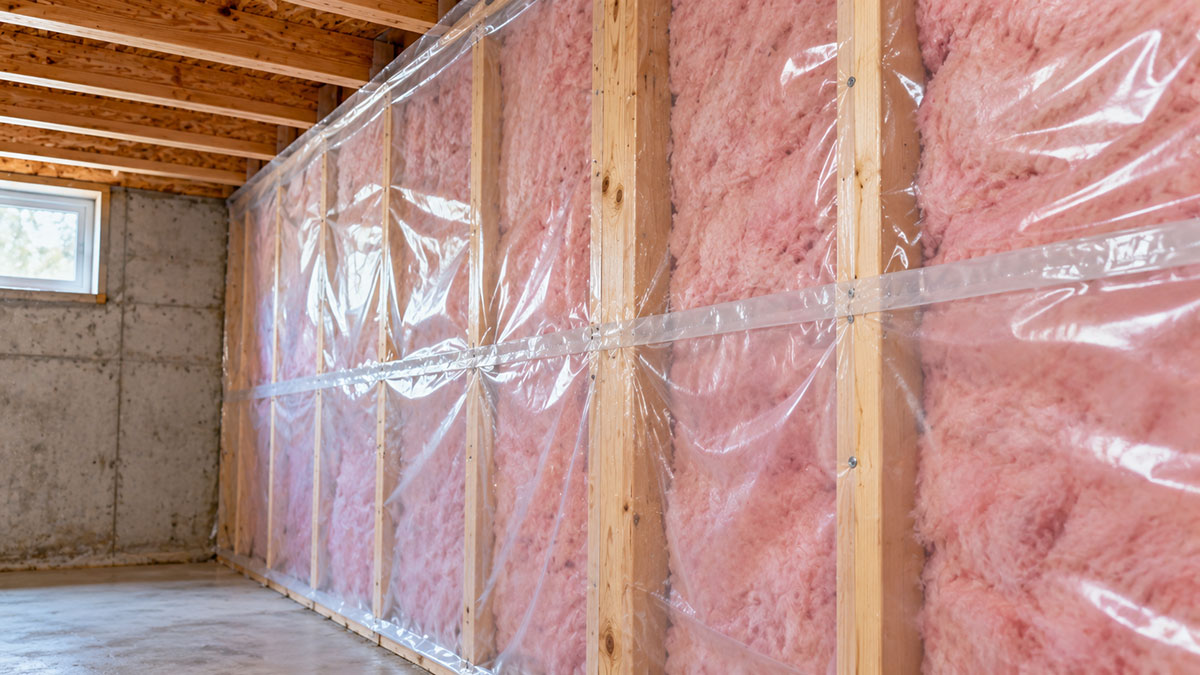
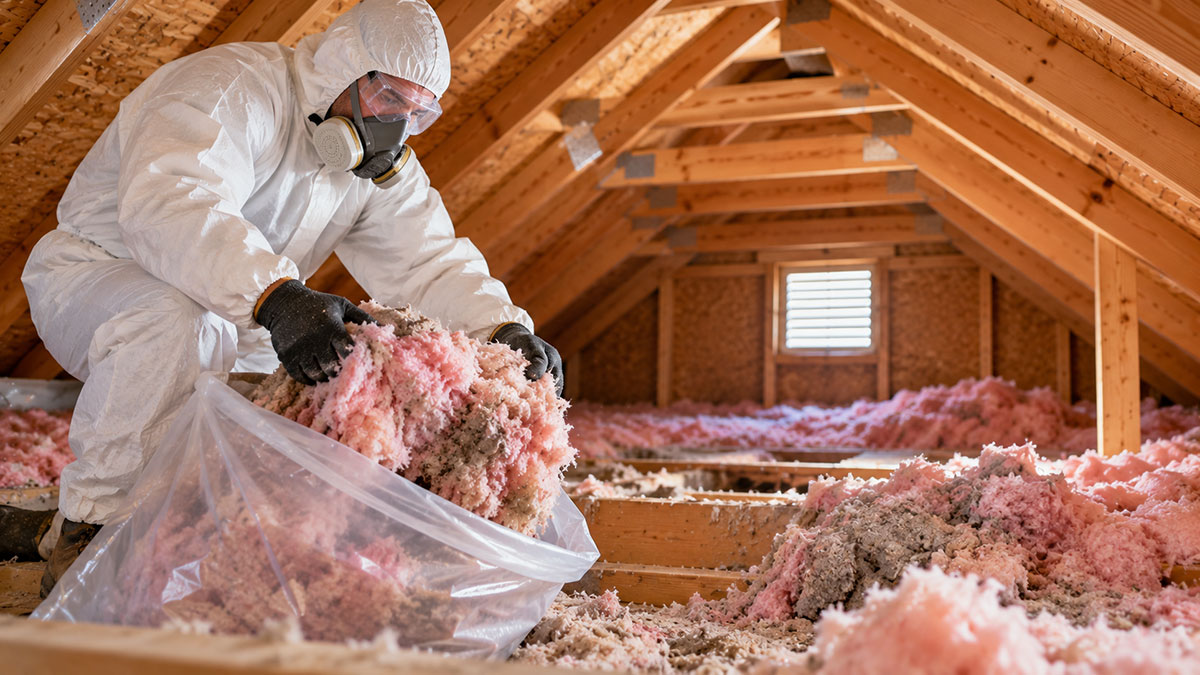
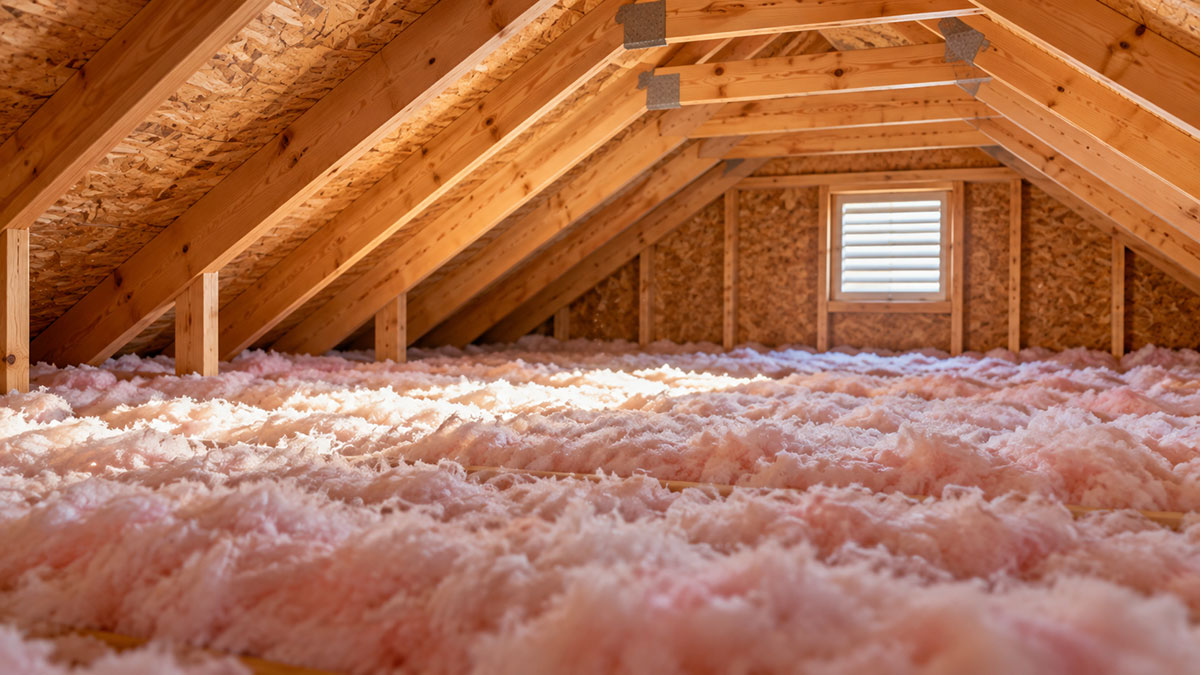
Every batt, roll, and bag of insulation sold in this country has a number stamped somewhere on the packaging. That number is the R-value, and it comes from dividing the material’s thickness by its thermal conductivity.
Bigger number, more resistance to conductive heat flow.
Building codes set their minimums with it. Manufacturers print it on the label. The Federal Trade Commission polices how it gets advertised.
Penn State’s Building Research Institute proposed the scale in 1945 under director Everett Shuman, replacing the earlier u-factor system, which rated materials by how much heat passed through rather than how much they resisted (Building Science Corporation).
What Is R-Value?

The math is short. R = L / k, thickness over thermal conductivity.
What that tells you is how slowly heat conducts through the material, which works the same in January and in July. Higher number, better insulating performance in either direction.
Imperial ratings are expressed in ft2-F-h/Btu. Metric ratings use m2-K/W, and one imperial unit converts to roughly 0.176 metric.
Thermal conductivity, the k in that formula, describes how fast heat passes through a specific material. Low conductivity means the material fights heat transfer, so it earns a higher R-value per inch than something that moves heat easily.
Here’s the catch that trips people up. R-value only accounts for conduction. Air leakage and radiant heat play by entirely different rules, which matters more than you’d think later on.
Still, most decisions around home insulation start with this one number, because it’s the one printed on the bag.
R-Value vs U-Factor: What Is the Difference?
Both describe the same physics. U-factor counts how fast heat actually moves through an assembly, and R-value works from the other end, measuring the resistance slowing it down.
U = 1 / R. That’s the whole relationship.
So a high R-value and a low u-factor are saying the same thing about the same wall, just read in opposite directions.
Windows, skylights, and doors get rated by u-value instead. Glass and framing combine several materials and air gaps that never behave like one uniform layer, so a single R-number doesn’t hold up the way it does for a batt.
Opaque assemblies stay with R-value, since individual material R-values can be summed straight across the layers.
Higher is better for insulation. Lower is better for windows. Easy to mix up when two spec sheets are sitting side by side.
How Is R-Value Tested and Measured?
No manufacturer gets to decide its own R-value. The number comes out of a laboratory, under ASTM standards written for different kinds of samples.
A small chunk of manufactured material, a reference-grade specimen, and a full wall assembly each have their own accepted method.
| Standard | Apparatus | What It Tests |
|---|---|---|
| ASTM C518 | Heat flow meter | Manufactured insulation samples |
| ASTM C177 | Guarded hot plate | Reference-grade material samples |
| ASTM C1363 | Hot box | Full wall, roof, and floor assemblies |
ASTM C518
Most commercial insulation gets its printed R-value from this one, run on a heat flow meter apparatus.
A sample sits between two plates held at different temperatures, and the equipment measures heat passing through once conditions settle.
It’s fast enough for routine quality control, which is why it turns up on more product data sheets than the other two combined.
ASTM C177
The guarded hot plate method is slower and more precise, and it’s treated as the reference that other tests get calibrated against.
Labs generally reserve it for setting standard values rather than checking batch after batch.
ASTM C1363
Intertek and similar accredited labs run this one inside a hot box apparatus, with the cold chamber dropping toward -22 F and the warm chamber climbing to 100 F, fans simulating wind speeds up to 15 mph.
The difference from C518 or C177 is scope. This method rates a complete assembly, studs and sheathing and drywall included, not a single material sample sitting in isolation.
It’s the standard behind whole-wall R-value figures, the number that accounts for framing instead of just the insulation between the studs.
Do R-Values Add Up Across a Wall or Attic Assembly?
They do. Sheathing, insulation, and drywall each contribute toward one combined total, and you simply add the layers.
What you get is the assembly’s nominal R-value, the figure before framing and gaps enter the picture.
A standard 2×4 wall stacks half-inch drywall at roughly R-0.45, an R-13 fiberglass batt, and half-inch plywood sheathing at about R-0.6. Nominal total lands somewhere near R-14.
Studs aren’t in that number yet.
Nominal R-Value vs Effective R-Value
Nominal R-value is the printed, added-up figure for the insulation layer alone.
The effective R-value, which some people call whole-wall R-value, is what the assembly actually delivers once framing, corners, and the connections between wall and roof get counted.
The gap between them is rarely small.
What Lowers Effective R-Value in a Real Wall or Attic?
The printed number assumes conditions a real wall almost never provides. Framing conducts heat around the insulation. Batts get squashed against wiring. Water finds its way in. Someone leaves a void behind a junction box and nobody notices until the drywall is up.
Most walls are dealing with more than one of these at once.
Oak Ridge National Laboratory tested a 2×4 wood-frame wall insulated with fiberglass batt and found the clear-wall value of R-10.55 dropped to a measured whole-wall value of R-9.58 once studs, plates, and connections were included (Oak Ridge National Laboratory, 1999).
That’s a real wall in a guarded hot box, not an estimate somebody sketched out.
Thermal Bridging
Wood and steel both conduct heat far faster than the insulation packed next to them.
That mismatch creates thermal bridging, a direct route for heat around the insulation instead of through it.
A standard wood stud carries roughly R-1 per inch. Nowhere close to the R-13 batt filling the rest of the cavity.
Metal framing is considerably worse. Steel conducts heat many times faster than wood, so metal-framed walls need continuous exterior insulation just to approach their rated performance.
Insulation Compression
Squeezing a batt into a cavity it wasn’t sized for backfires right away.
That’s insulation compression, and it lowers R-value rather than raising it. Fiberglass and mineral wool depend on trapped air pockets for their resistance. Flatten the material and the pockets go with it.
Usually the culprit is wiring, boxes, or plumbing forcing the batt to bunch. Sometimes it’s someone stuffing standard-depth batts into shallower cavities to save a little money on the order.
Moisture and Air Gaps
Wet insulation loses R-value fast, because water conducts heat far better than the trapped air the material relies on. Fiberglass that’s absorbed moisture can lose a real chunk of its rating until it dries out completely.
Gaps around wiring, top plates, and odd corners do similar damage through moving air instead of standing water.
Keep the material dry, seal the gaps, and only then judge a product on its printed number.
Which Insulation Material Has the Highest R-Value Per Inch?
Closed-cell spray foam delivers the highest R-value per inch of any common insulation material, at roughly R-6.0 to R-6.5 once aged, the figure manufacturers report under ASTM C518 testing at 180 days (Spray Polyurethane Foam Alliance industry data).
Fiberglass and cellulose sit well below that. They also cost a fraction as much per square foot, which is why they’re in most houses.
Fiberglass Batts and Rolls
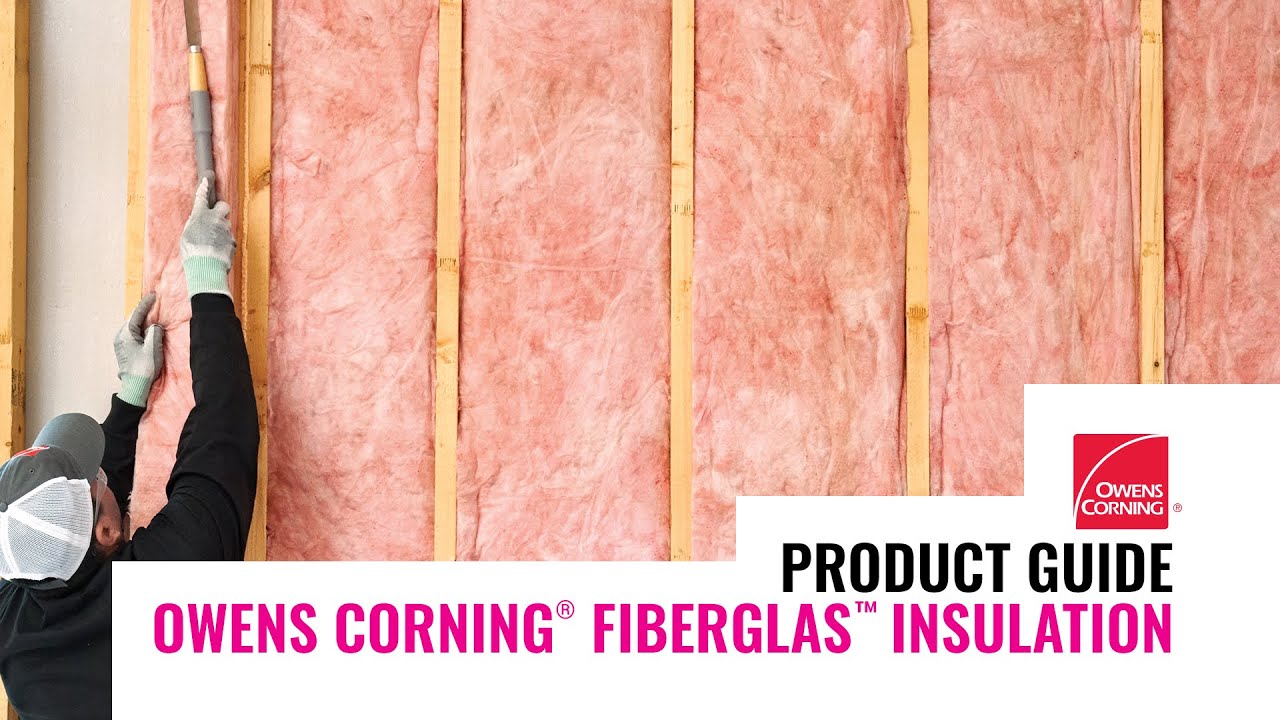
Blown fiberglass runs about R-2.8 per inch, and batts land a bit higher, closer to R-3.2 to R-3.8 depending on density (Department of Energy insulation data).
Fiberglass insulation is still the most common material in U.S. attics and walls, almost entirely on price.
It’s the cheapest option per square foot, it’s available everywhere, and any crew can install it. There’s no off-gassing and no curing time to schedule around.
The downside shows up in the field. It loses R-value quickly when compressed or wet, and careless installers leave gaps around wiring and boxes that nobody sees once the drywall goes on.
Cellulose Insulation
Blown attic cellulose comes in around R-3.7 per inch, toward the high end for loose-fill materials (Department of Energy insulation data).
Cellulose insulation is mostly recycled paper treated with fire retardant, and it packs densely enough to cut air movement inside a cavity. That density is its real advantage over fiberglass.
Settling is the tradeoff. Loose-fill cellulose settles over the years, so installers over-fill attics to compensate for what they know is coming.
Good material for an open attic where depth isn’t a constraint.
Mineral Wool
Mineral wool runs R-3.1 per inch as batt or blown product, close to fiberglass but denser and naturally fire-resistant (Department of Energy insulation data).
You’ll see it labeled rock wool sometimes. Same material, different name depending on who made it.
It holds its shape without settling and handles fire and moisture better than fiberglass does. It also costs more per square foot and it’s heavier to move around a job site, which crews notice by the end of the day.
Rigid Foam Board
Rigid boards split into families. Polystyrene sits at roughly R-4.0 per inch, XPS around R-5.0, and polyiso at R-5.6 to R-6.5.
Polyiso’s rating drops over time as its blowing agent diffuses out. The industry calls that thermal drift, and it means long-term ratings run lower than the number printed on a fresh board.
Cold-weather performance on polyiso deserves a closer look too, since it softens more than its room-temperature rating suggests.
Most rigid board ends up as continuous exterior insulation over sheathing, under a slab, or laid over a roof deck.
Spray Foam Insulation
Closed-cell spray foam tops the per-inch chart, and specific formulations push even higher under ideal conditions. Icynene’s ProSeal line has hit R-21 in a single three-inch pass in manufacturer testing.
Open-cell foam trades some of that density for cost, landing closer to R-3.5 per inch. Similar territory to cellulose.
Choosing between spray foam or cellulose insulation usually comes down to budget against available depth. Both fill a cavity, at very different price points and thicknesses.
Foam earns its cost by doubling as an air barrier. It’s also the most expensive option per square foot and it needs professional application, so it’s not a weekend project.
What R-Value Do You Need for Your Climate Zone?
Minimum R-value requirements rise with colder climate zones, ranging from R-30 ceilings in Zone 1 up to R-60 across Zones 4 through 8 under the current federal building code (2021 IECC, U.S. Department of Energy, 2024).
Wall requirements climb the same way, only slower.
| Climate Zone | Ceiling R-Value | Wall R-Value |
|---|---|---|
| Zone 1 | R-30 | R-13 |
| Zone 2 | R-49 | R-13 |
| Zone 3 | R-49 | R-20 |
| Zones 4-5 | R-60 | R-30 |
| Zones 6-8 | R-60 | R-30 |
These are code minimums. A house built to hit them exactly will pass inspection, which is not the same as performing well.
Local code can also set the bar higher than the federal chart, so check with the building department before assuming the national table applies to a specific address.
New construction and retrofit work sometimes carry different targets inside the same zone, since a retrofit has to work around whatever is already sitting in the walls.
Warmer zones get away with less. Colder ones don’t.
Is a Higher R-Value Always Better?
No, and the reason is scope. R-value measures conductive heat flow and nothing else, which leaves radiant heat, solar gain, and the point of diminishing returns entirely outside the number.
Cooling-Dominated Climates
Southern climate zones aren’t fighting heat loss through the walls in winter. They’re fighting heat gain through the roof from direct sun, which is a different problem.
Radiant barriers and reflective insulation systems aren’t part of the IECC’s prescriptive R-value tables, but they’re built on ASTM-tested performance and can be credited through the code’s performance path, most relevant in southern, cooling-dominated Climate Zones 1 through 3, where solar attic heat gain drives most of the energy use (RIMA International).
R-value doesn’t capture any of that. A radiant problem wants a radiant solution.
Radiant Heat and Reflective Barriers
A bare foil radiant barrier carries no standalone R-value under ASTM C518 or ASTM C177 testing. It reflects radiant energy rather than resisting conduction, so there’s nothing for those methods to measure.
Add an enclosed airspace and the assembly becomes reflective insulation, which can be assigned a real R-value under ASTM C1224. Testing by RIMA International puts those systems in the R-4 to R-7 range.
Reflectix, a manufacturer certified under the ASTM/RIMA-I Verification Program, builds its whole product line around exactly this distinction.
Diminishing Returns Beyond Code Minimums
Run the math on U = 1 / R and the curve shows itself quickly. Moving from R-1 to R-19 eliminates roughly 95 percent of the original heat flow through that surface.
R-19 to R-38 cuts the remaining loss roughly in half again.
R-38 to R-60, the jump code demands in the coldest zones, shaves off less than one more percentage point of the original total.
Before spending money chasing R-value past the point where it stops mattering, a home energy audit will show where the house is actually losing heat.
How Is R-Value Regulated on Product Labels?
The Federal Trade Commission regulates R-value claims under 16 CFR Part 460, the R-value Rule, in effect since September 1980.
Manufacturers, installers, retailers, and new home sellers each carry their own disclosure duties under it.
| Who | Requirement |
|---|---|
| Manufacturers | Label packaging with tested R-value |
| Installers and retailers | Provide a fact sheet before sale |
| New home sellers | Disclose type, thickness, and R-value in the sales contract |
R-values on labels, fact sheets, and ads must round to the nearest tenth, or to the nearest whole number once the R-value reaches 10, under the rule’s rounding requirement (eCFR, 16 CFR 460 § 460.11).
Sellers also can’t advertise a flat R-value per inch unless testing proves the rating holds as the material gets thicker. Same thickness-based effect that gives long-term polyiso ratings a lower number than the fresh board.
The largest civil penalty in a home insulation R-value case ran to $350,000, levied against a marketer selling a reflective coating advertised as “R-100 paint” with no testing behind the number (FTC v. Sumpolec, 2013).
Worth knowing the difference between that rule and a label you might see next to it. The R-value Rule is mandatory and carries civil penalties. Energy Star insulation guidance is voluntary, aimed at steering consumers toward efficient choices rather than policing false claims.
How Do You Install Insulation to Actually Hit Its Rated R-Value?
Order matters more than product selection here. Seal the air first, handle the vapor barrier, fill the cavity properly, then check the work before it disappears behind drywall.
Skip a step and the number on the bag stops meaning much.
- Caulk and foam every penetration, top plate, and wiring hole before any insulation goes in. Insulation does not stop moving air on its own.
- Place a vapor barrier on the correct side of the assembly for the local climate, where the assembly calls for one.
- Fill the cavity to its full depth without compressing the material against wiring, boxes, or framing.
- Split batts cleanly around obstructions instead of stuffing them in whole.
- Inspect the finished work against RESNET’s Grade I standard before drywall goes up.
RESNET’s grading standard flags an installation as Grade III, the lowest tier, once gaps and voids cover more than 2 percent of the surface area, or compression exceeds 30 percent of the intended thickness across more than 10 percent of the surface (RESNET HERS Standards).
That spread between Grade I and Grade III is the difference between an R-38 batt performing like R-38 and performing like something considerably less.
Sealing leaks pays for itself even without new insulation. Homeowners who combine air sealing with added attic, floor, and basement insulation save an average of 15 percent on heating and cooling costs (ENERGY STAR).
Full step-by-step coverage lives in our guide on how to install insulation in attic spaces, which walks through baffles, hatch covers, and recessed light clearances in more depth than fits here.
Common Installation Mistakes That Lower R-Value
Adding R-38 of loose-fill over unsealed top plates and can lights leaves conditioned air a clear path out of the house. The insulation is doing its job. Nothing is doing the other job.
Batts jammed flat around a junction box deliver a fraction of their rating right at that spot, and there are usually a dozen such spots per wall.
Loose-fill blown in without baffles at the eaves blocks soffit ventilation and buries the edges in material that never reaches full depth anyway.
Then there’s the vapor barrier installed on the wrong side of the assembly for the climate, which traps moisture rather than blocking it. That one is expensive to discover later.
NAIMA’s installation guidelines, referenced directly in the RESNET manual, cover these fitting techniques around wiring and piping for fiberglass and mineral wool products.
FAQ on What Is R-Value
What Does a Higher R-Value Number Mean in Plain Terms?
More heat gets blocked, so the house holds its temperature using less energy for heating or cooling.
The scale is open-ended. R-13 wall insulation resists far less heat flow than R-49 attic insulation.
Does R-Value Measure Air Leakage or Only Conductive Heat Flow?
Conduction only. Air leakage is a separate mechanism and R-value says nothing about it.
Moving air carries heat through gaps, cracks, and penetrations, and no rating, however high, stops that on its own.
How Much More Does Higher R-Value Insulation Cost Per Square Foot?
Cost tracks R-value per inch rather than the rating itself.
Fiberglass sits at the low end per square foot, cellulose runs a bit higher, and closed-cell spray foam costs the most, since it packs the highest resistance into the least thickness.
What Is the R-Value of Windows and Doors?
Double-glazed windows typically carry an R-value between 1.7 and 2.3, far below wall insulation, while triple-glazed units reach roughly R-3.3 to R-6.7 (Penn State EGEE 102).
Most window labels list u-factor instead, so you’ll have to calculate the inverse yourself.
Does R-Value Decrease Over Time as Insulation Ages or Settles?
Depends on the material. Fiberglass and mineral wool hold their rating for decades as long as they stay dry.
Loose-fill cellulose settles and loses loft. Polyiso rigid foam loses R-value as its blowing agent diffuses out, a process called thermal drift.
What Do the R-13, R-30, and R-49 Labels on Insulation Packaging Mean?
Each is the tested R-value for that specific product at its stated thickness, set under the FTC’s R-value Rule.
R-13 typically fits a 2×4 wall cavity, R-30 to R-49 covers attic floors, and higher numbers mean thicker or denser material.
How Do You Convert R-Value to the Metric RSI Value?
Multiply the imperial R-value by 0.176 to get RSI, expressed in square meter-kelvin per watt.
Going the other way, divide RSI by 0.176, or multiply by 5.678, to recover the original ft2-F-h/Btu figure.
What Should You Fix First When R-Value Falls Short?
Performance usually falls short at the installation layer, not the material layer. Which means the fix starts with air sealing, moves to correcting gaps and compression, and only then considers a higher-rated product.
That sequence also happens to run from cheapest to most disruptive.
- Seal air leaks at top plates, penetrations, and rim joists
- Correct compression and gaps in the existing cavity fill
- Upgrade to a higher R-value material only if the cavity still underperforms
Sealing and correcting what’s already in the wall costs far less than tearing it out, though it caps out at whatever depth the cavity allows.
Once the cavity performs to spec, the remaining gains come from broader envelope work, which is the ground covered in our guide on how to improve home insulation.