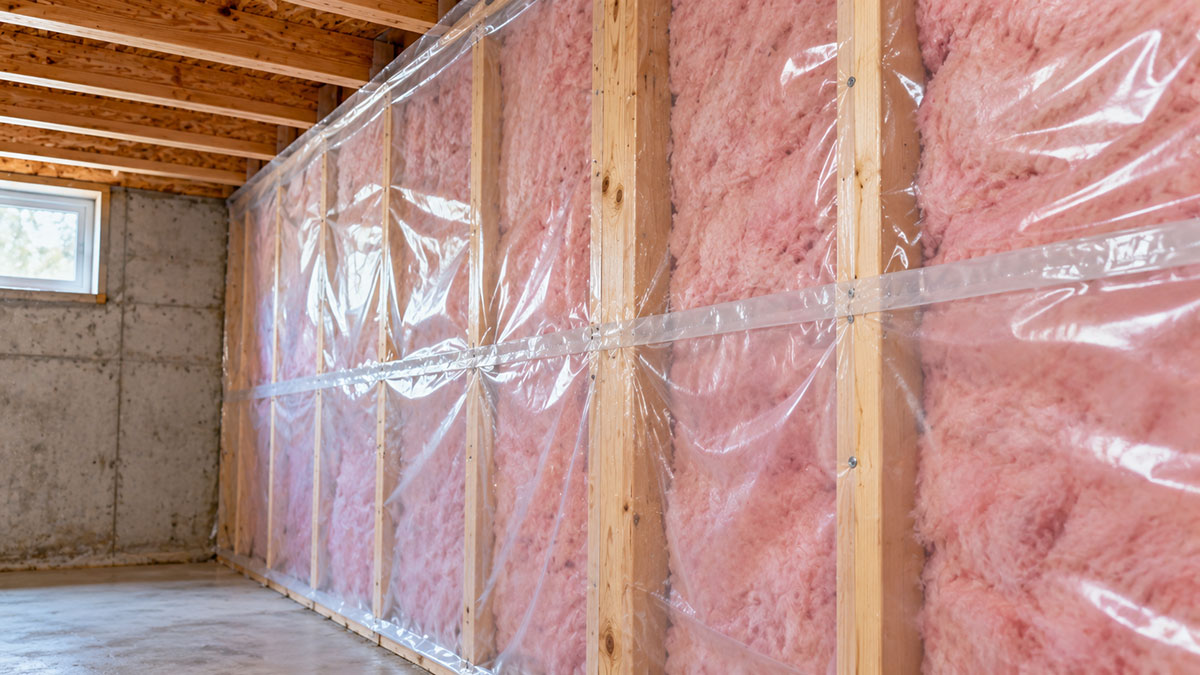
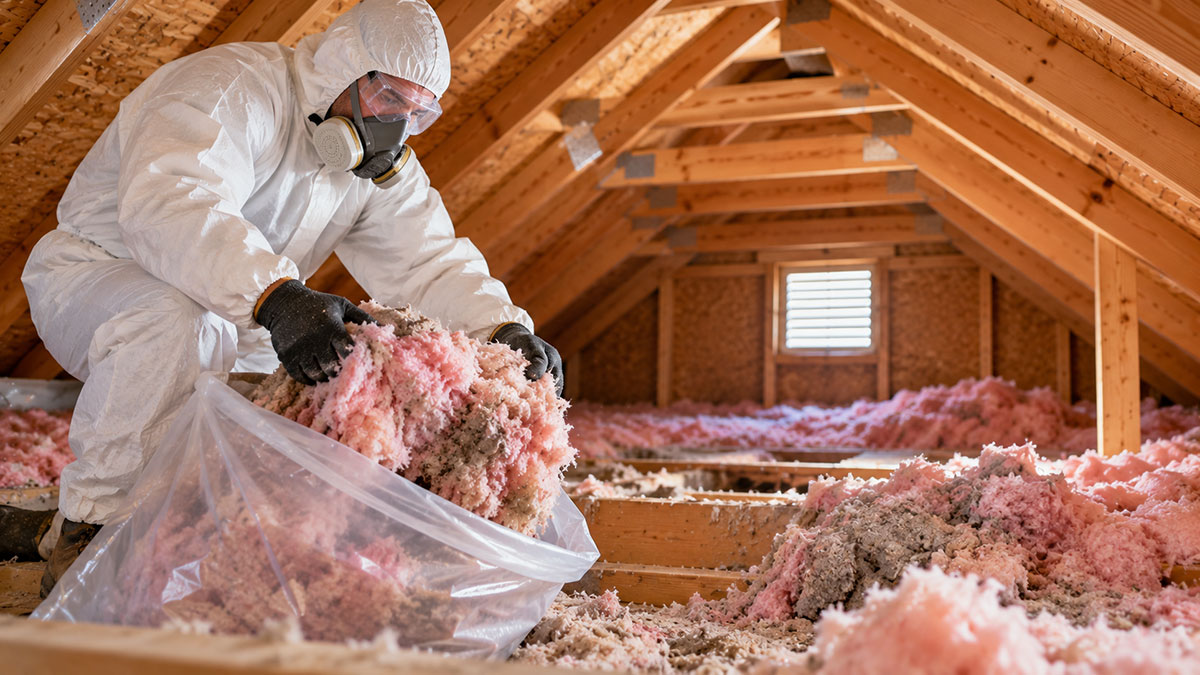
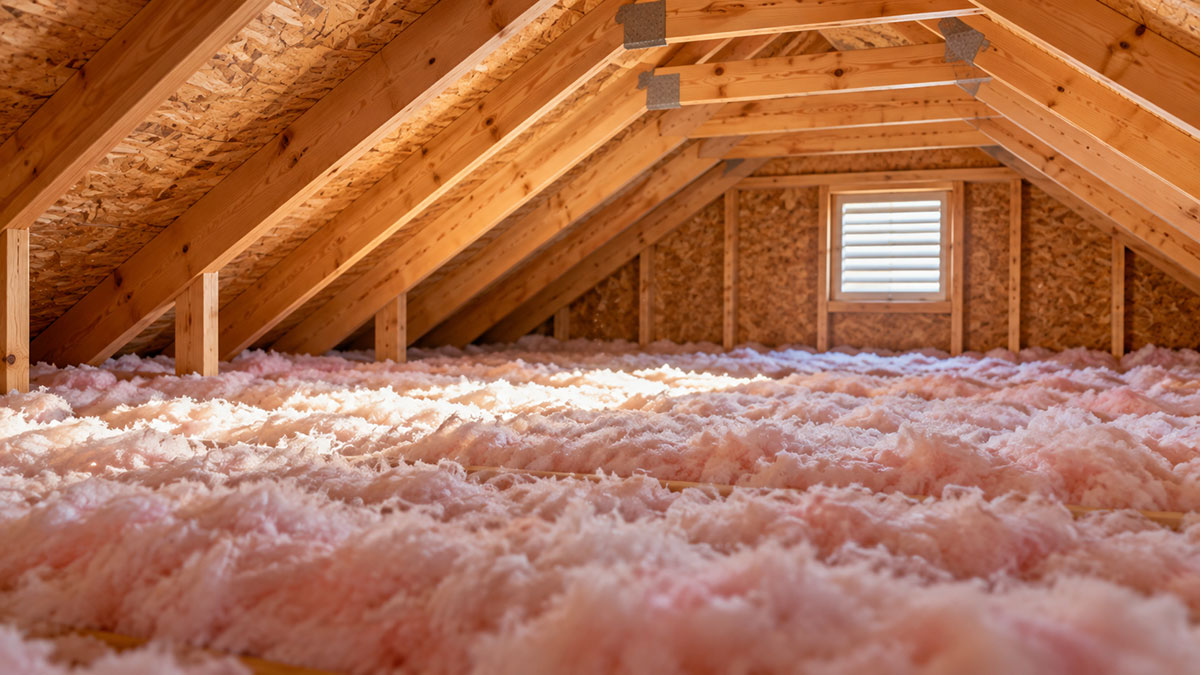
Most attics get cleared with a hose these days rather than a shovel. The machine stays outside, on a trailer or in the truck bed, and the loose-fill material gets pulled out under negative air pressure. Crews call it insulation vacuum removal.
Insulation contractors and restoration companies run it during energy retrofits, pest cleanups, and fire or water damage jobs. Residential attics, mostly.
Rodents are behind a lot of the calls. The National Pest Management Association reports that rodents invade an estimated 21 million American homes each winter (NPMA, 2024), and the attic is usually where they settle first.
What Is Insulation Vacuum Removal?

The equipment does one thing. It creates suction strong enough to move old, damaged, or contaminated loose-fill material out of an attic, wall cavity, or crawl space and into a sealed bag, without anyone carrying it down the stairs.
A gas or electric vacuum unit handles the pull. Fiber and dust stay inside the hose and the collection bag instead of drifting into the rooms below, which is the part homeowners actually care about.
Worth separating from two jobs it gets confused with. Cutting out cured spray foam is not this. Neither is blowing a few extra inches over existing material that is still fine. Both call for a different approach entirely.
Wm. W. Meyer and Sons, a Libertyville, Illinois manufacturer, is one of the older names building this class of equipment.
Insulation Materials It Handles
Anything poured or blown in. Sheets and batts are a different story.
- Cellulose, shredded recycled paper fiber, which is what vacuum rigs were built for in the first place
- Blown-in fiberglass, lighter than cellulose and quicker to pull
- Rock wool, denser mineral fiber, common in older homes, slower going
- Vermiculite, a pebble-like pour-in product that gets its own section further down this page
This pour-in and blown-in category is generally described as loose-fill insulation, since it pulls loose rather than needing to be sliced or peeled.
Knowing which of the common attic insulation types is overhead before a crew shows up saves a wasted site visit. A couple of photos from the hatch usually settle it.
How Does Insulation Vacuum Removal Work?

Negative air pressure is the whole mechanism. A vacuum unit pulls fiber through a hose into a sealed chamber instead of leaving it loose in the attic.
Everything else on the machine exists to make that pull stronger or cleaner. Engine size, hose width, filter stage.
Vacuum Equipment and Horsepower
Most rigs run gas engines somewhere between 15 and 25 HP.
- The Meyer 422A-153, a common rental unit, is rated at 19 HP and weighs 330 pounds (Sunbelt Rentals spec sheet)
- Krendl’s GV-180 package pairs an 18 HP engine with a 6-inch hose, aimed at contractors starting out
- Horsepower matters most on densely packed or settled cellulose, where a weak pull stalls mid-hose
Underpowered units are the single biggest reason a removal job runs long. Renting the cheapest machine on the lot tends to cost more in hours than it saves in fees.
Hose Length, Containment, and HEPA Filtration
| Feature | Typical Range | Effect |
|---|---|---|
| Hose diameter | 4 to 10 inches | Wider hose clears dense material faster |
| Hose length | Up to 150 feet | Machine stays outside while the hose reaches every corner |
| Exhaust filtration | HEPA stage | Traps fine fiber instead of recirculating it |
The HEPA stage is what separates a purpose-built insulation vacuum from a shop vac. A shop vac recirculates fine dust back into the room, which on a rodent job is exactly the wrong outcome.
What Causes the Need for Insulation Vacuum Removal?

Either something got into the insulation, or it simply wore out. Same hose, slightly different handling.
CDC surveillance recorded 890 laboratory-confirmed hantavirus cases in the United States between 1993 and the end of 2023. Rodent-contaminated attics are exactly the kind of enclosed space where that exposure happens.
Rodent and Pest Contamination
Droppings and nesting material are what turn a partial top-up into a full clearance. Once they are spread through the fiber, there is no selective removal.
Mice and rats also compress insulation into tunnels and nests, which destroys its loft. Material that has been tunneled through stops performing long before it looks bad from the hatch.
The airborne part is the real concern. Dried droppings can carry hantavirus, and disturbing them dry, by sweeping or standard vacuuming, is exactly how the virus gets into the air, per CDC guidance.
Pest control operators like Skedaddle Humane Wildlife Control regularly flag attics that need a full insulation clearance rather than a simple exclusion visit.
Mold, Moisture, and Fire or Smoke Damage
Water from a roof leak, or a condensation problem nobody caught, mats insulation down and lets mold take hold inside the fiber.
- Smoke residue after a fire soaks into cellulose especially, leaving an odor no amount of air sealing fixes
- Compressed, wet insulation loses most of its effective thermal performance long before it looks obviously ruined
Age does it too, without any help from a pest or a leak. Insulation settles and compresses over the years, and that kind of insulation settlement is a documented cause on its own.
Either way, thinning material erodes the R-value a homeowner installed the insulation to maintain in the first place.
When Does Insulation Vacuum Removal Not Apply?
There are real limits here. Hauling a vacuum rig out to the wrong job wastes a trip.
Vermiculite gets treated as asbestos-containing until testing proves otherwise. Roughly 70 percent of vermiculite sold in the US between 1919 and 1990 traced back to a single mine in Libby, Montana, once operated by W.R. Grace and Company (EPA).
Standard insulation vacuums are not the tool for that. Polarized light microscopy or transmission electron microscopy testing has to clear the material first, and anything that fails goes to a licensed asbestos abatement crew, not a general insulation contractor.
Cured spray foam insulation cannot be vacuumed at all. It bonds to the substrate rather than sitting loose, so it comes off with mechanical cutting and prying.
Fiberglass or mineral wool batt insulation comes out by hand, in sheets. Nothing goes through a hose.
And if exposed knob-and-tube wiring turns up mid-job, work stops until an electrician clears it. Disturbing insulation around live wiring is a fire risk, not just an inconvenience.
Is Insulation Vacuum Removal Better Than Manual Removal?
For anything past a small crawl space, yes, on both speed and dust control. It is not the only method in play though.
| Method | Best Suited For | Dust Control | Typical Speed |
|---|---|---|---|
| Vacuum removal | Large attics, loose-fill cellulose or fiberglass | High, sealed hose to bag | Fast on open attic space |
| Manual removal | Small jobs, tight crawl spaces | Low, dust escapes into the room | Slow, labor heavy |
| Cut-and-bag removal | Spray foam, degraded batts | Moderate, depends on technique | Slow, done in sections |
Material decides this more than square footage does.
Cellulose and blown-in fiberglass are built for the hose. Batts and cured foam are not, which makes it a question about the underlying types of insulation materials rather than a preference for one tool over another.
Vacuum removal beats manual work on anything loose-fill. On batts or foam it does nothing at all.
How Much Does Insulation Vacuum Removal Cost?
Attic insulation removal runs $600 to $1,200 on average, with most homeowners landing around $900 total (HomeAdvisor, 2025).
Per square foot that works out to roughly $1 to $2. Labor gets billed separately at $35 to $85 an hour depending on region.
The numbers in one place:
- Typical job range: $600 to $1,200
- National average: around $900
- Per square foot: $1 to $2
- Hourly labor rate: $35 to $85
Contaminated material pushes past that range fast, especially anything treated as presumed asbestos, since testing and abatement handling get added on top.
Removal cost is only half the math anyway. It has to be weighed against the payback period for insulation once new material and air sealing actually go in.
How Long the Job Takes
Attic size and material density drive labor hours more than anything else does.
| Attic Condition | Typical Duration |
|---|---|
| Small, dry cellulose | 2 to 3 hours |
| Large, compacted or contaminated | Full day or more |
Whenever asbestos is even a possibility, testing delays stack on top of the extraction time itself.
Where the Removed Insulation Goes
Straight from the hose into sealed collection bags. No loose piles in the yard.
- Clean, uncontaminated cellulose sometimes goes to a recycling stream instead of a landfill
- Contaminated or wet material gets bagged and disposed of as construction waste, or as regulated waste if asbestos testing comes back positive
Disposal fees usually get folded into the quoted price rather than billed as a separate line. That is part of why totals vary so much between contractors, and why comparing two quotes by headline number alone tends to mislead.
What Safety Requirements Apply to Insulation Vacuum Removal?

PPE is not optional on this job. What you need depends on what is actually up there.
NIOSH-certified N95 masks filter at least 95 percent of airborne particles, which is the baseline for routine cellulose or fiberglass work.
Once vermiculite or any suspected asbestos is in play, crews step up to 3M P100 cartridges, rated to filter at least 99.97 percent of particles (NIOSH).
- Eye protection with an anti-fog coating
- Hooded, disposable coveralls to keep fiber off skin and clothing
- Gloves rated for handling fiberglass and rock wool without cuts or irritation
OSHA’s respiratory protection standard, 29 CFR 1910.134, governs how crews get fitted and trained for this gear, whether the job is routine cellulose or a contamination cleanup.
Rodent-contaminated material adds one more rule on top. The CDC specifically advises against dry sweeping or dry vacuuming droppings, since that disturbance is how hantavirus particles become airborne in the first place.
Wetting the material with a disinfectant before extraction is the safer sequence. A crew that skips that step on a known rodent job is cutting a corner that matters.
What Is the Step-by-Step Process for Insulation Vacuum Removal?

Order matters more than the individual tasks. Skip ahead and you usually end up redoing something later.
- Cover floors and hallways along the path from the attic access to the outdoor collection unit.
- Run the hose from the machine outside into the attic, keeping the run as straight as the framing allows.
- Work in sections, pulling insulation toward the hose opening instead of chasing it across the whole attic at once.
- Seal collection bags on site, not left open for a second trip.
- With the insulation gone, check the deck for moisture stains, damaged wiring, and gaps in the air barrier.
- Haul the bagged material to a landfill, a recycling stream, or regulated disposal, depending on what it turned out to be.
Jon-Don’s Versa-Vac OS, built specifically for blown-in material in attics and wall cavities, is one example of equipment marketed around this exact workflow rather than as a general shop vac.
Where Jobs Commonly Go Wrong
A narrow hose on dense, settled cellulose stalls constantly. That alone turns a half-day job into a two-day one.
The other one is the skipped inspection. A crew that bags and leaves without checking the deck misses moisture stains or exposed wiring the insulation had been hiding.
Neither mistake shows up on the invoice. Both show up months later as a callback.
Should You Do Insulation Vacuum Removal Yourself or Hire a Professional?
Rental counters put the equipment within reach of almost anyone. Reach is not the same as readiness.
Doing it yourself
- Lower up-front cost, since labor is the biggest line item on any professional quote
- No scheduling wait. The job happens on your timeline
- You own the PPE, the hose handling, and the trip to disposal
- No fallback if hidden contamination turns up halfway through
Hiring a crew
- HEPA-rated equipment, already sized for the job
- Faster hose handling in tight, hot attic conditions, which is mostly repetition
- Liability coverage if something goes wrong mid-extraction
- Higher total cost, since labor and equipment overhead are built into the quote
Physical risk is the part people underestimate most.
Clearsurance’s analysis of Consumer Product Safety Commission injury data found more than 290,000 home improvement DIYers ended up in the emergency room in 2020, with lacerations and finger injuries topping the list. Exactly the kind of injury a hose, a ladder, and a hot attic tend to produce.
A cramped attic in August, with a running vacuum engine and a heavy hose, is not the same job as hanging a shelf.
Does Insulation Vacuum Removal Improve Energy Efficiency?
Removing degraded insulation is rarely the end goal by itself. It is the step that makes a real R-value upgrade possible afterward.
The DOE-led Energy Star program estimates that better attic insulation cuts heating and cooling costs by an average of 15 percent.
| Climate Zone | Recommended Attic R-Value (Empty Attic) |
|---|---|
| Zone 1 | R30 |
| Zone 2 and 3 | R49 |
| Zone 4 through 8 | R60 |
Owens Corning’s own in-home job estimation guide cites this same Energy Star chart, noting most zones now call for up to R60, up from the older R49 recommendation.
New material only performs at that R-value if the attic is empty and clean first. Which is the entire point of the removal step.
Confirming the Upgrade Worked
A new R-value on paper does not guarantee the attic performs that way in practice, so checking the work matters about as much as doing it.
A blower door test is the standard way a crew confirms the upgrade actually tightened the building envelope.
The International Residential Code has required this kind of testing on new construction since 2012, with most climate zones capped at 3 air changes per hour at 50 pascals.
- An older, uninsulated home commonly tests far leakier than that baseline before any air sealing work happens
- Post-removal testing gives a number to compare against once new insulation and sealing go in
A home energy audit typically bundles this test with an infrared scan, which gives a fuller picture than the blower door number alone.
Certifications from RESNET or the Building Performance Institute separate a casual contractor from someone trained to run and interpret that audit correctly.
FAQ on What Is Insulation Vacuum Removal
Is Insulation Vacuum Removal the Same as Insulation Replacement?
No. Removal is only the extraction step. Replacement covers the full cycle: pulling out old material, inspecting the deck, and installing new loose-fill insulation to the attic’s target R-value. Most contractors quote both as one job.
Do You Need a Permit for Insulation Vacuum Removal?
Usually not. Most cities do not require a permit to remove and replace existing attic insulation, since no structural work is involved. Projects that cut open drywall or fall under a larger renovation often do need one. Check with the local code office first.
How Soon After Removal Can New Insulation Go In?
Often the same day. Once the deck is inspected, dry, and any wiring or moisture issues are addressed, new material can go in immediately. Jobs involving mold treatment, asbestos testing, or repairs to the attic deck add a waiting period before installation starts.
Where Does Insulation Vacuum Removal Break Down?
It breaks down once material in the attic is too compacted for the hose’s suction to move it. Usually that means cellulose that absorbed enough moisture to cake into solid clumps a standard hose cannot pull.
When suction stalls mid-job, work through the checks in this order before blaming the machine:
- Hose diameter against material density
- Moisture content in the clogged section
- Engine airflow against hose length
That sequence catches the cheapest fix first.
Choosing vacuum removal over a full attic rebuild keeps the job to hours instead of days. The trade-off is that hidden rot or undersized joists stay hidden unless the inspection pass catches them.
Once the deck passes inspection, the next step is learning how to install insulation in the attic at the R-value the space needs.