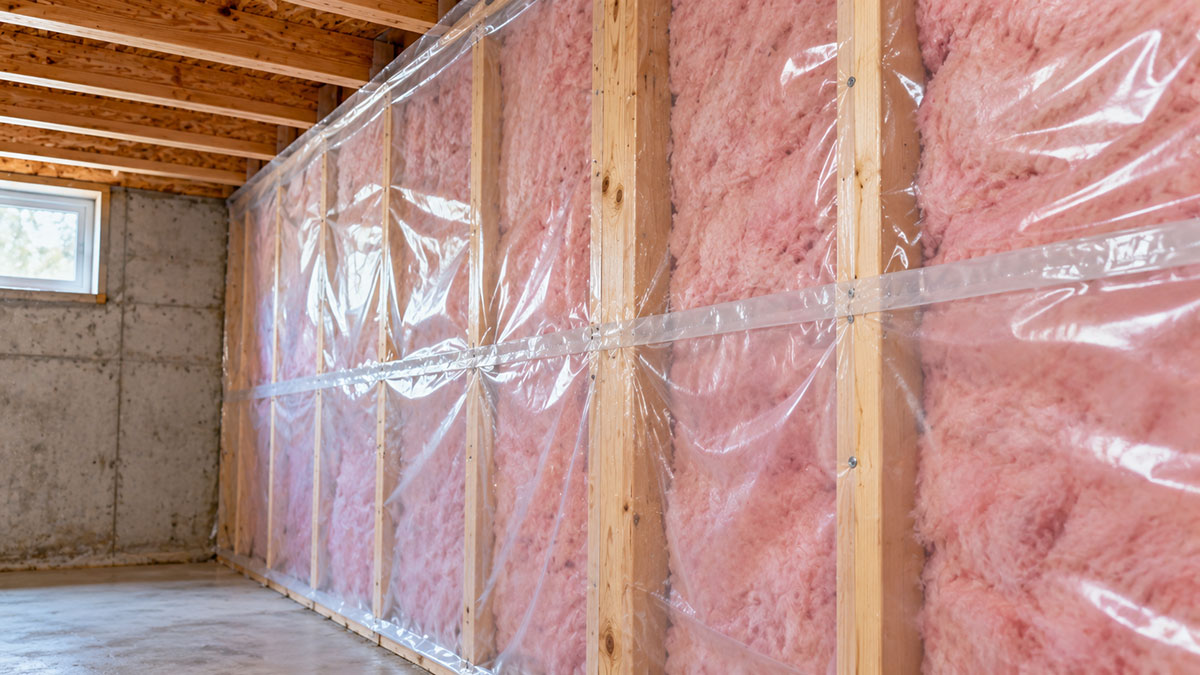
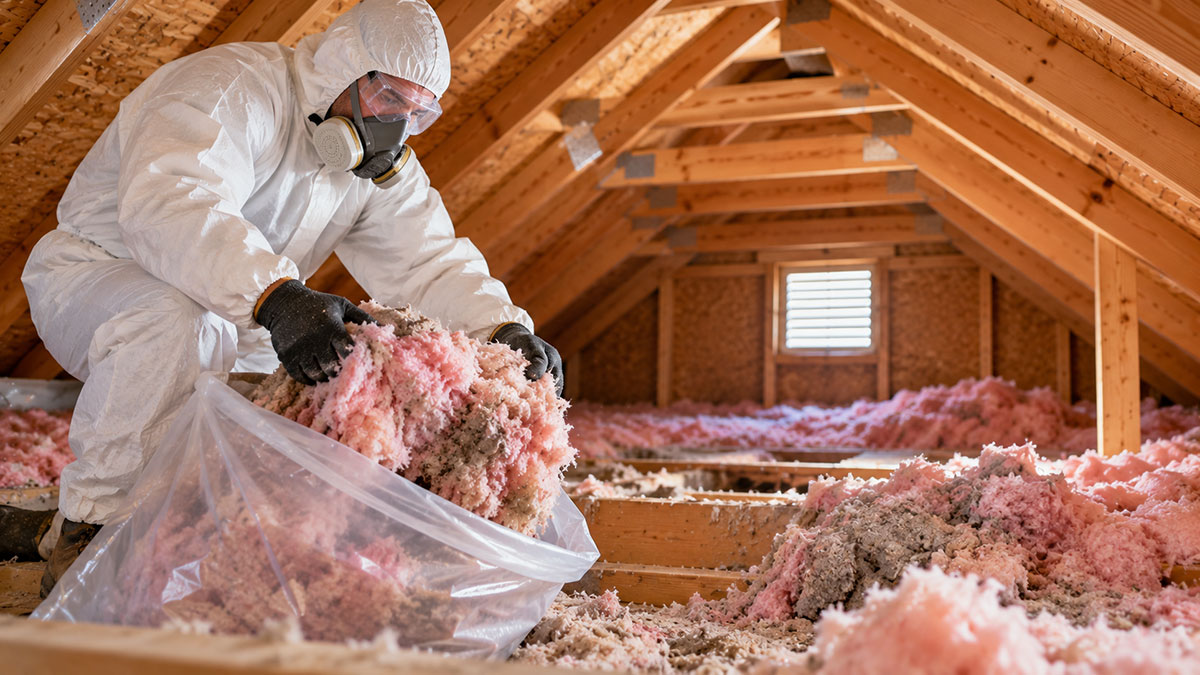
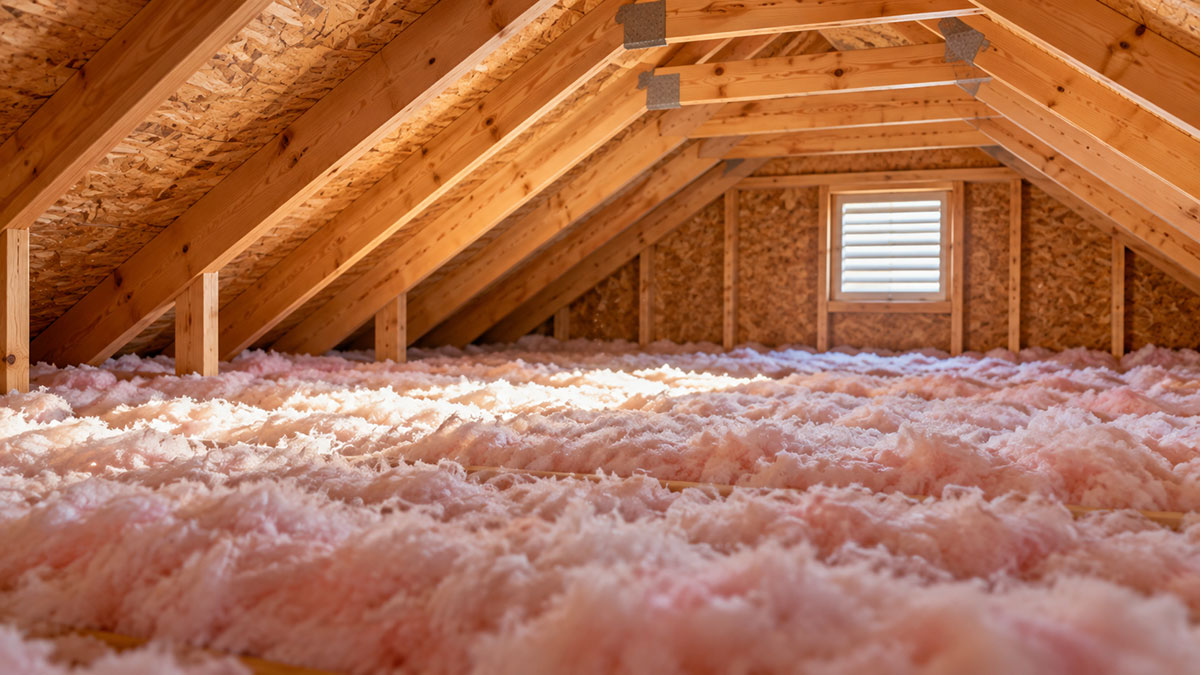
Some insulation burns. Some of it will not, no matter how hot the room gets. Which kind sits in your walls is a question most homeowners never think to ask until a contractor opens a cavity.
Insulation, as a category, is just the material that slows heat moving through walls, attics, and floor cavities. That is the whole job description. Whether it also feeds a fire is a completely separate property, and it varies wildly across the products sold under that one word.
Every product on the market gets run through a flame spread test before it ships. ASTM International’s E84-26a standard, current as of April 2026, fires two burners pushing 89 kilowatts into a 25-foot tunnel and clocks how far flame travels across the sample. Code officials take that number and sort the product into one of three tiers.
Is Home Insulation Flammable?

The split is cleaner than you would expect. Glass and stone do not burn. Paper and plastic do.
Fiberglass and mineral wool come from molten glass and stone, spun into fiber. Neither ignites at temperatures a residential fire produces. Cellulose is shredded newsprint. Spray foam and rigid boards are petrochemical plastics. Those combust unless treated with fire retardant or covered by a code-required barrier.
Most of the confusion here traces back to two words people swap without thinking. Fireproof would mean immune, under any condition. Fire-resistant only means slower to catch and slower to carry flame once it does catch.
Nothing sold as home insulation is fireproof in that strict sense. Not one product.
Once you see the full spread of material options, laid out in our breakdown of types of insulation materials, it becomes obvious why one blanket answer never fits the whole category.
For a full walkthrough of what home insulation is built from and how each material performs, the material-by-material breakdown below covers ignition point, smoke output, and code status.
What Determines Whether Insulation Catches Fire
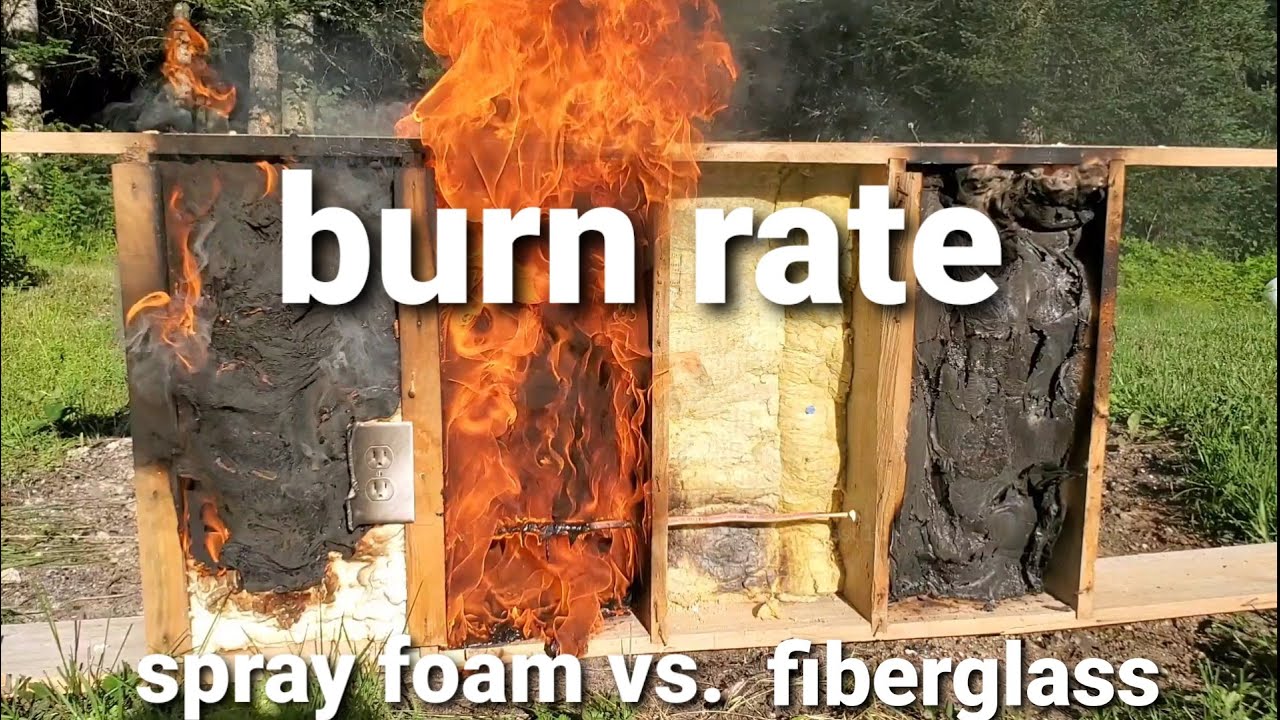
Thickness does not decide this. Neither does brand. It comes down to chemistry at the base of the material.
Minerals carry no fuel of their own. Wood fiber, cotton, and foam plastic carry plenty, and fire needs fuel to travel.
Organic Versus Inorganic Insulation Base Materials
Inorganic products start as molten glass or basalt rock. There is no carbon backbone in them to sustain a flame, so they sit in direct heat without adding anything to it.
Organic and petrochemical products are a different story. Recycled paper, cotton fiber, polymer foam. Each one carries the fuel load a fire needs to spread, which is why code will not let them through untreated or uncovered.
Fiberglass insulation lands in the first group by default, since glass does not burn at residential fire temperatures.
Cellulose insulation sits in the second. It is shredded paper, and it would burn readily if a retardant were not added during manufacturing.
What Insulation Releases When It Burns
Polyurethane spray foam has an autoignition temperature above 500 F, according to manufacturer safety data sheets for cured spray foam products. Below that line the material stays stable.
Above it, things get ugly, and the byproducts matter more than the flame.
Burning foam throws off dense black smoke carrying carbon monoxide and hydrogen cyanide. Those are the same combustion gases behind most fire deaths in enclosed spaces. People rarely die of burns in a house fire. They die of what they breathed.
- Treated closed-cell foam forms a char layer that slows further burn
- Open-cell foam melts and drips instead of charring
- Treated cellulose tends to smolder rather than flash into open flame
How Fire Ratings and Flame Spread Standards Classify Insulation
Insulation fire ratings come out of ASTM E84, better known as the Steiner Tunnel Test. It measures two things: how fast flame travels across a material’s surface, and how much smoke comes off it.
Every sample gets scored against two fixed reference points. Fiber-cement board sits at zero. Red oak lumber sits at 100.
Lower number, slower fire. That is the entire logic behind the tiers building codes use.
Anything sold with an insulation fire rating went through this tunnel, foam and batt and loose fill alike.
Flame spread classifications under ASTM E84 (International Code Council, IBC Section 803) break down like this:
- Class A: flame spread index 0 to 25
- Class B: flame spread index 26 to 75
- Class C: flame spread index 76 to 200
- Smoke developed index capped at 450 for all three classes
Class A is the best score the test hands out. It does not mean a material cannot burn. It means the material burns slowly enough to clear the strictest tier, which is a much narrower claim than most product marketing implies.
Flammability Ratings by Insulation Material Type

Performance ranges from materials that will not ignite at any residential fire temperature to foams that need a barrier before code will let them near a living space.
| Material | Flame spread class | Ignition behavior | Typical treatment |
|---|---|---|---|
| Fiberglass | Class A | Does not sustain flame | None required |
| Mineral wool | Class A | Melts above 1,832 F | None required |
| Cellulose | Class A when treated | Smolders, self-extinguishes | Borate or sulfate additive |
| Closed-cell spray foam | Class 1 typical | Chars, minor melt-drip | Chemical retardant plus barrier |
| Open-cell spray foam | Class 1 typical | Ignites more readily | Chemical retardant plus barrier |
Rock wool insulation holds its melting point above 1,832 F (1,000 C), according to ROCKWOOL product data sheets. That is why the same material shows up as firestop packing around pipe penetrations.
Fiberglass gives up structural integrity at far lower temperatures, even though the glass fiber itself never sustains a flame. The batt slumps and the R-value goes with it.
Closed-cell insulation chars instead of dripping, which is one reason installers reach for it on exposed rim joists where open-cell would be a liability.
Pros and Cons of Each Insulation Type for Fire Safety

Nothing here comes free. Better fire performance costs you somewhere else, usually in R-value per inch, material price, or how complicated the install gets.
Owens Corning fiberglass batts, for instance, come out of the bag already Class A rated. No fire retardant added during manufacturing, because the glass never needed any.
Fiberglass
Cheap, non-combustible by nature, and requires no chemical treatment to get there. Hard to argue with on cost per square foot.
The downsides are real though. Sustained heat softens it and the R-value drops. And the paper or foil facing stapled to some batts will burn even when the glass underneath will not, which catches people off guard.
If fiberglass is the material you are actually weighing, the detailed page on whether fiberglass insulation ignites gets into facing types and edge cases this overview skips.
Cellulose
Treated cellulose hits Class A, but only because fire retardant was blended in at the plant. Take the chemicals away and you have a wall full of newspaper.
- Dense fill closes the air gaps that would otherwise feed a fire
- Settles into cavity corners that batts never reach
- Retardant can settle out or leach away across a few decades
- No one sells untreated recycled paper as insulation, so this is not a shopping decision
Spray Foam
Thermally, foam beats everything on this list. On an open flame test it loses to every mineral-based product, and it is not close.
You get the highest R-value per inch on the market, an air seal that happens during install rather than after, and with closed-cell, some added rigidity to the assembly. Those are genuine advantages and I would not talk anyone out of them.
The cost side is combustibility without a code-required barrier, dense toxic smoke if it does burn, and a price per board foot well above fiberglass or cellulose.
The dedicated page on whether spray foam insulation is flammable works through the barrier requirement in more depth than fits here.
How Fire Retardant Treatments Reduce Insulation Flammability
Retardant treatment works by interrupting the chemical reaction that lets flame spread. What it does not do is change what the base material is.
Cellulose insulation runs 15 to 20 percent fire retardant chemicals by weight, according to Environmental Building News research compiled by BuildingGreen. That is a substantial fraction of what goes into the wall.
Boric acid, borax (sodium borate), and ammonium sulfate handle most wood-fiber and cotton insulation treatment.
Treatment interrupts combustion before it becomes self-sustaining, pushes the material toward smoldering and char instead of open flame, and in cellulose it throws in pest and mold resistance as a bonus nobody asked for but everyone appreciates.
What it will not do is more important to understand:
- Turn the base material non-combustible
- Substitute for proper clearance during installation
- Last forever without degrading
Questions about the chemicals themselves come up constantly, and the page on cellulose insulation safety handles exposure limits and handling separate from the flammability question.
What Building Codes Require for Insulation Fire Safety
Foam plastic insulation has to sit behind an approved thermal barrier before it faces occupied interior space. No exceptions in standard construction.
IRC Section R316.4 sets the bar: the barrier must delay ignition for at least 15 minutes under standardized fire exposure, per the International Code Council.
Half-inch gypsum wallboard clears that. Ordinary drywall, in other words, satisfies the requirement in nearly every residential application.
Spray foam insulation is what this rule was written for. Fiberglass and mineral wool rarely trigger a barrier requirement at all.
Where the Barrier Rule Loosens
Attics and crawl spaces get different treatment, mostly because nobody lives in them.
- An ignition barrier can stand in for a full thermal barrier in unoccupied spaces
- Certain foam products tested under Section R316.6 skip the barrier entirely
- Local jurisdictions are free to pile stricter requirements on top of the model code
Looking at the range of products covered under attic insulation types makes it clear why the same foam can be compliant in one spot and a violation a few feet away.
Does Installation Placement Affect Insulation Fire Risk
Placement matters more than the rating on the label. The same material sealed behind drywall and left bare in a crawlspace are two different risk profiles.
Covered insulation has a buffer slowing heat and flame before either reaches it. Exposed insulation has nothing. Code treats them as separate categories for exactly that reason.
| Placement | Barrier status | Typical location | Code treatment |
|---|---|---|---|
| Covered | Behind drywall or sheathing | Living space walls, ceilings | Standard thermal barrier rules apply |
| Exposed | No barrier, open to air | Attics, crawlspaces, rim joists | Ignition barrier or tested exemption required |
Then there is the question of what sits next to the insulation, which raises the stakes either way.
- Recessed lighting fixtures not rated for insulation contact
- Masonry chimneys and metal flue pipes running through framed cavities
- Electrical junction boxes and wiring splices inside wall cavities
Non-IC rated recessed fixtures need a 3-inch clearance from insulation on every side, per National Electrical Code Section 410.116. That one gets violated constantly by well-meaning homeowners topping off an attic.
Chimneys have their own rule. IRC Section R1003.18 requires a 2-inch air space around a masonry chimney, and that space cannot be filled with insulation at all. Fireblocking is the only thing allowed in it.
Loose-fill and blown-in materials make both rules harder to hold over time, because they drift. A cavity that was compliant at install can creep toward a flue years later. The page on insulation settlement covers how much coverage loss to expect and when topping off makes sense.
When Insulation Flammability Does Not Matter
There are situations where this whole question stops being a practical concern. Either the material cannot burn, or it is fully cut off from any path a flame could take.
- The material is mineral-based (fiberglass or mineral wool), with no organic fuel in it to ignite
- Treated cellulose rated Class A sits behind standard drywall
- Foam is fully enclosed by a code-compliant thermal barrier, with no exposed surface anywhere
- Every material stays clear of recessed lights, flues, and wiring at code-minimum distance
Johns Manville markets several of its fiberglass batt lines as inherently Class A rated, with no separate fire retardant added during manufacturing.
Exposed foam can skip a barrier too, but only after passing a specific test.
Under Appendix X testing recognized by the ICC Evaluation Service, exposed foam earns an ignition barrier exemption if flame does not spread past a set point within 4 minutes and 18 seconds of a room-corner burn test.
Worth stressing: that exemption covers the exact product at the exact thickness tested. It does not transfer to foam in general, and installers occasionally act like it does.
Material choice still shapes how much margin you have. Picking between spray foam or cellulose insulation for a given cavity decides whether a barrier is mandatory or optional before anything else gets decided.
How to Reduce Fire Risk From Home Insulation

Electrical distribution and lighting equipment caused an average of 35,100 home fires a year, resulting in $1.3 billion in direct property damage annually, according to NFPA Research (Ahrens, 2018). Insulation almost never starts a fire on its own. It just tends to sit a few inches from the equipment that does.
- Match the material to the location: mineral-based products for exposed spaces, treated or barrier-covered products for enclosed cavities
- Install the required thermal or ignition barrier over any foam product before it faces occupied space
- Keep insulation clear of recessed lighting, flue pipes, and electrical junction boxes at the code-minimum distance
- Hire a certified installer for spray foam rather than treating it as a weekend project
- Check exposed attic and crawlspace insulation periodically for shifted or missing coverage
That fourth point deserves more than a line. Spray foam behaves nothing like batts or loose fill during install, because mixing ratios and pass thickness affect both cure quality and fire performance. Get the ratio wrong and you have a material that does not perform the way its rating says it should.
The Spray Polyurethane Foam Alliance runs a Professional Certification Program that trains and tests installers on handling and application practices tied directly to how the cured product performs.
None of which means you cannot handle batts yourself. Plenty of people do. The guide on how to install insulation in attic spaces covers the batt and loose-fill side of the job properly.
FAQ on Is Home Insulation Flammable
How Can You Tell If Insulation Is a Fire Hazard
Exposed foam with no drywall or barrier over it is the clearest sign, and it is a code violation on its face. Also watch for scorch marks, a chemical odor, or insulation packed straight against a recessed light, flue, or wiring splice without the required clearance.
What Should You Do If Insulation Catches Fire
Get everyone out and call 911 immediately. Insulation burning inside a wall or attic cavity puts out dense, toxic smoke and spreads where you cannot see it, so do not open the cavity further and do not try to fight it yourself.
Are Insulation-Related House Fires Common
Thermal insulation rarely ignites on its own. National fire data points to cooking, heating equipment, and electrical distribution as the leading causes, not fiberglass or cellulose or foam sitting inertly inside a cavity.
Can Homeowners Install Fire-Resistant Insulation Themselves
Fiberglass batts, mineral wool, and pre-treated cellulose are all straightforward do-it-yourself materials, no certification needed. Spray foam is the exception. It needs a certified installer, because mixing ratio and pass thickness feed directly into both cure quality and fire performance.
Does Homeowners Insurance Cover Insulation Fire Damage
Standard policies cover fire damage to insulation under dwelling coverage, same as any other structural material. The catch is that insurers can deny a claim if the fire traces back to a code violation, such as foam installed without its required barrier.
What Should You Prioritize First With Insulation Fire Safety?
Fix barrier gaps before anything else. Exposed foam without its required covering is the one failure mode building code treats as an outright violation rather than a manageable risk.
IRC Section R316.4 only asks that barrier to hold for 15 minutes under fire exposure, and it is a decision made once, at construction. The National Electrical Code’s 3-inch clearance rule in Section 410.116 is different. That one has to hold for the life of the house, because loose-fill drifts and any later attic project can quietly undo it.
Going with a mineral-based material instead of a treated organic one removes that ongoing dependency altogether. You pay more per square foot for the privilege.
With the fire question settled, the broader case for insulating at all comes down to the benefits of home insulation that have nothing to do with how any of it burns.