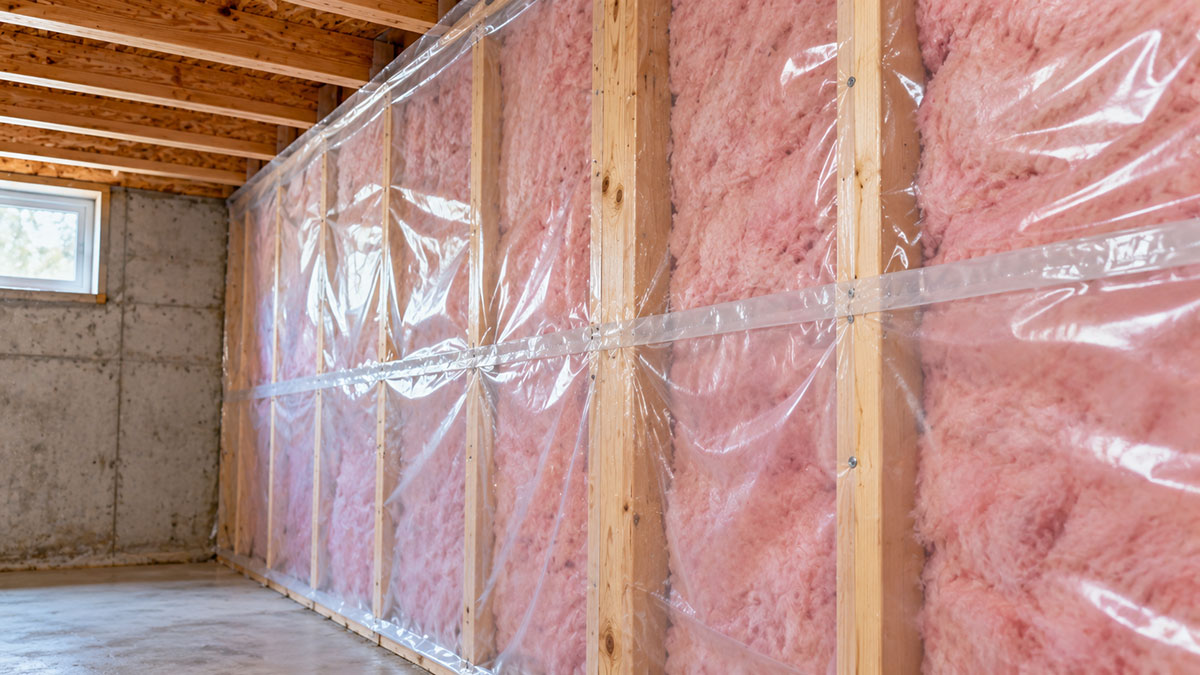
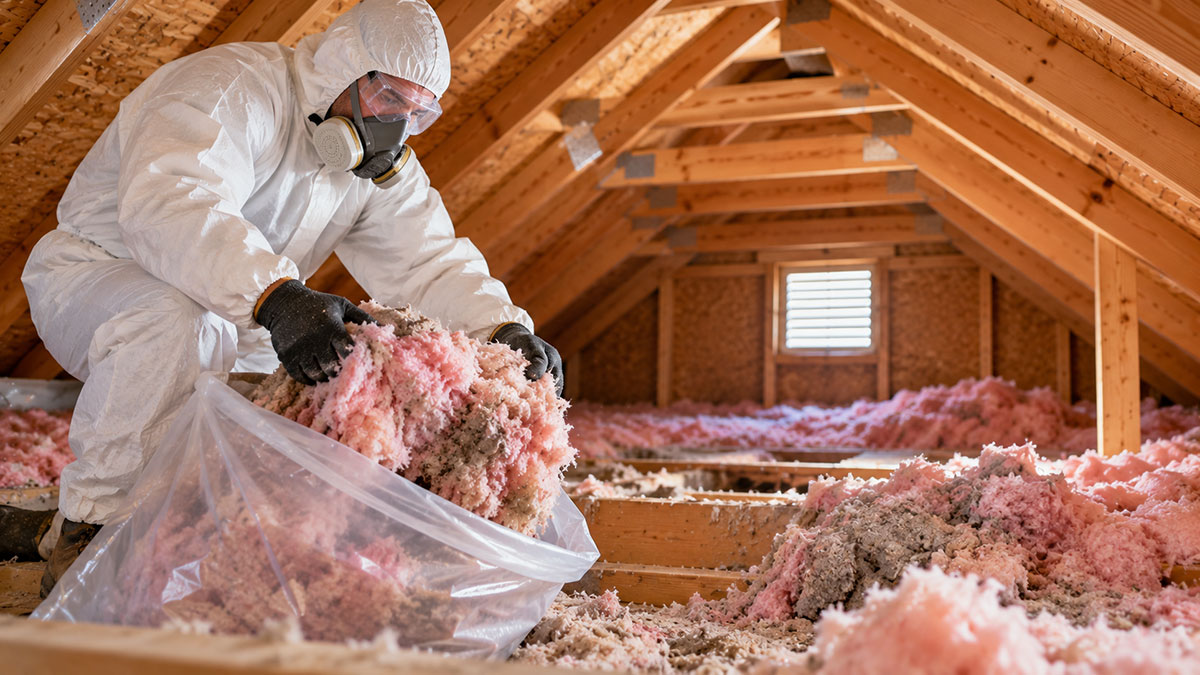
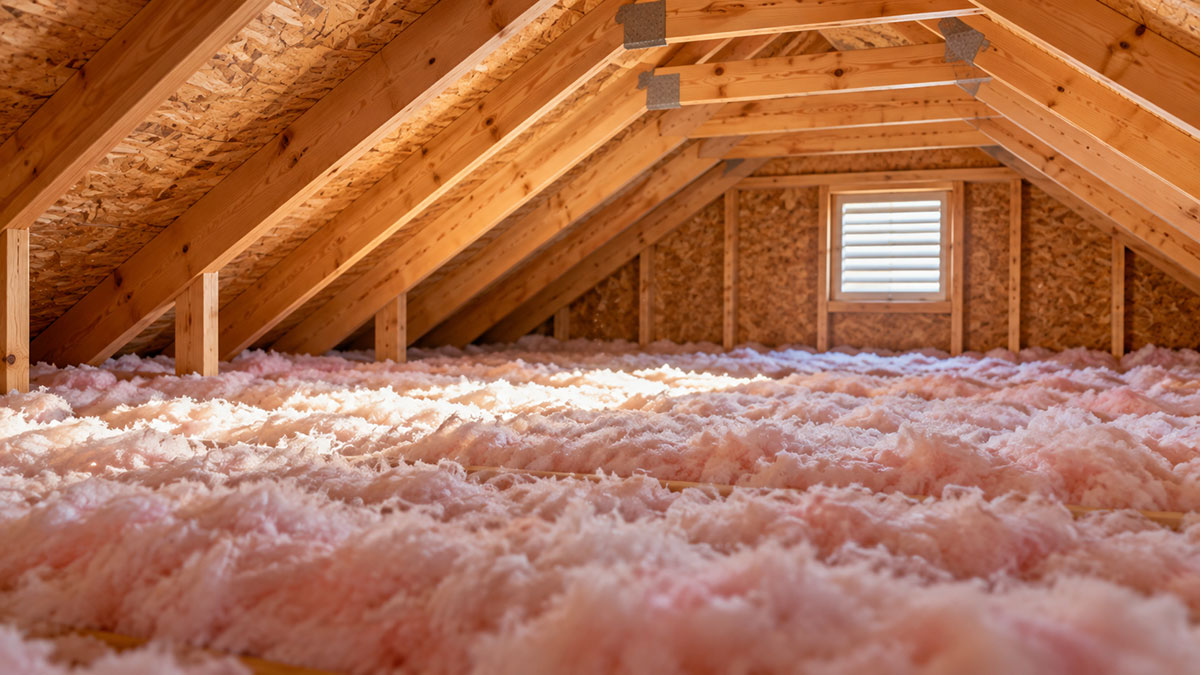
Cured spray foam will burn if it gets enough heat or a direct flame, but it doesn’t catch from a spark the way most people assume. The Spray Polyurethane Foam Alliance’s 2012 formulation data show flame retardants making up about 10 percent of the reactive polyol blend, added to slow flame spread rather than stop combustion outright.
Installers spray it as a liquid into framed walls and attic cavities, and it expands and cures in place, sealing air leaks and insulating in a single application. Rim joists and roof cavities get it too. Code officials grade its surface burning behavior with the same tunnel furnace test used on most other interior finishes.
Is Spray Foam Insulation Flammable or Combustible?

The accurate word is combustible, not flammable, though people use the two interchangeably and building codes don’t.
Gasoline and dry paper are flammable. They ignite easily and burn fast. Combustible material will burn under sustained heat or direct flame contact but won’t ignite on its own, and cured spray foam belongs there, next to wood framing and plywood and pretty much every other organic building material.
The same question comes up for every insulation type, not just foam. There’s a broader answer on whether home insulation catches fire.
Properly formulated spray foam passes fire testing with a Class 1 or Class A rating, the top tier available under building code. That grade is also what determines how a fire rating gets assigned to insulation in the first place.
Under ASTM E84, Class 1 or Class A means a flame spread index of 25 or less and a smoke developed index of 450 or less, per IBC Section 803.1.1. Tiger Foam’s E-84 Fire-Rated SPF Class 1 spray foam posts a flame spread index of 25 or less and a smoke developed index of 450 or less at a 2 inch thickness and 2.0 pcf density (ICC-ES ESR-3183).
Foam plastic used inside a home only has to hit a flame spread index of 75 or less and a smoke developed index of 450 or less under IRC Section R316.3. That’s a looser bar than the Class 1 cutoff. For scale, ASTM E84’s reference scale fixes red oak lumber at a flame spread index of 100 and fiber cement board at 0.
What Is Spray Foam Insulation Made Of?
The foam comes from two liquids kept in separate drums until they meet in the spray gun.
The A-side is a blend of monomeric and polymeric MDI, the reactive isocyanate that drives the chemistry. Everything else sits in the B-side, a polyol blend carrying the blowing agent, flame retardant, catalyst and surfactant additives. Fire performance gets built in on the B-side.
| Component | Typical Share of B-Side Blend |
|---|---|
| Polyols | 65 percent |
| Blowing agents | 20 percent |
| Flame retardants | 10 percent |
| Catalysts | 3 percent |
| Surfactants | 2 percent |
That breakdown comes from the Spray Polyurethane Foam Alliance’s own formulation overview. Installers repeat one point from it a lot: without the flame retardant share, foam plastic wouldn’t clear the flame spread limits building codes set.
There’s a longer walkthrough of the two-part chemistry in what spray foam insulation actually is.
Formulators have also been moving blowing agents away from older HCFC chemistry and toward hydrofluoroolefins. Environmental rules drove that change, not fire performance, and it hasn’t required a redesign of the flame retardant package.
Closed-Cell vs Open-Cell Spray Foam: How Fire Performance Differs
Closed-cell and open-cell foam share the same two-part chemistry but cure into very different densities, and density changes how each one does in a fire test.
| Type | Typical Density | Fire Rating Path | Common Barrier Requirement |
|---|---|---|---|
| Closed-cell | about 2.0 pcf | Often Class 1 as manufactured | Thermal barrier in occupied spaces |
| Open-cell | about 0.5 pcf | Some formulations need an added coating to reach Class 1 | Thermal or ignition barrier, depending on the space |
| Both types | Set by the manufacturer’s mix | Verified through ASTM E84 testing | Confirmed in the product’s ICC-ES evaluation report |
Closed-Cell Foam
Huntsman Building Solutions’ Heatlok HFO Pro closed-cell foam carries an ICC-ES listing built around NFPA 285 testing, the standard that checks whether fire climbs the outside of a multi-story exterior wall (ESL-1372). You won’t usually see that level of testing on interior-only products, but it shows what a well-formulated closed-cell foam can pass.
Closed-cell also has a higher R-value per inch than open-cell, and its denser cell structure packs more flame retardant mass into each inch. Exterior walls and continuous insulation assemblies are where it usually ends up.
Open-Cell Foam
Open-cell foam expands into a soft, spongy structure at roughly a half pound per cubic foot. Less mass per inch means less flame retardant per inch, so fire performance swings more with the formulation than it does with closed-cell.
Its R-value per inch is lower and it’s more vapor permeable. Interior wall cavities and unvented attic roof decks are the usual spots for it.
Gaco Western’s GacoFireStop line is one open-cell product built to pass room corner fire testing without an added ignition barrier, an exception rather than the norm for open-cell foam.
For the cell structure in more detail, see closed-cell insulation.
How Is Spray Foam Insulation Tested for Fire Safety?
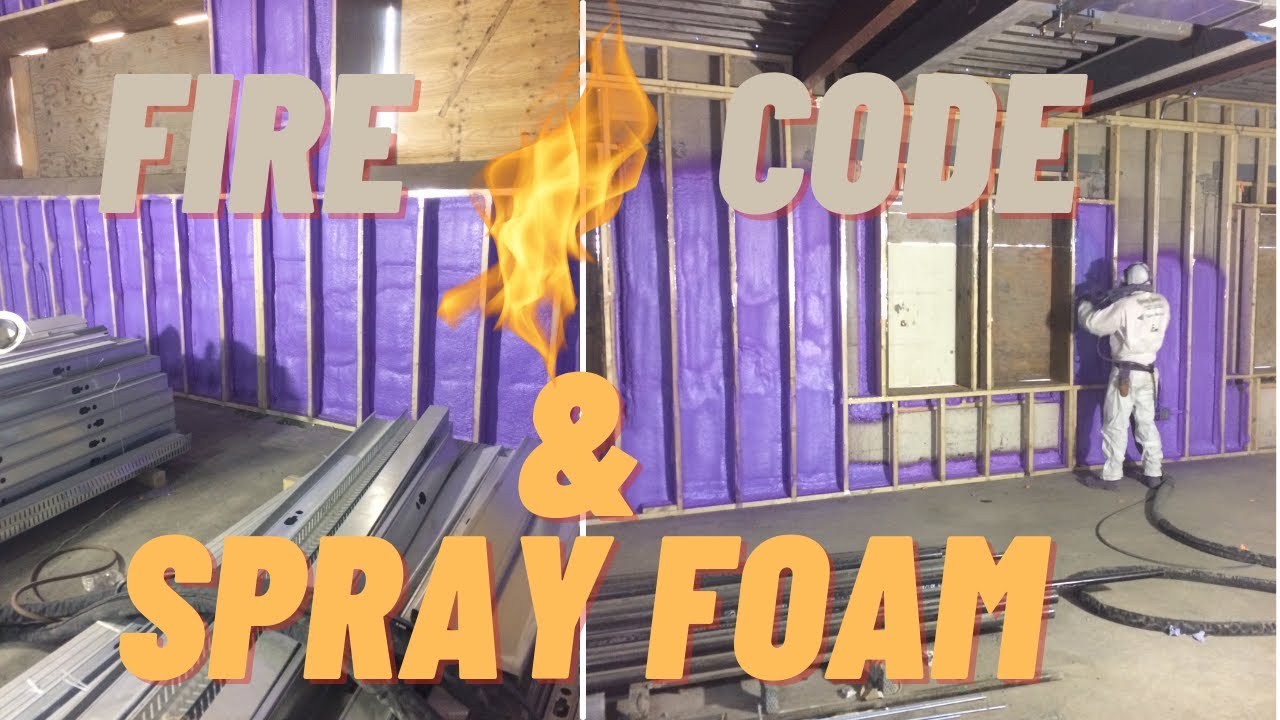
Spray foam gets run through ASTM E84, the same tunnel furnace test used on nearly every interior building material.
A 24-foot long, 20-inch wide specimen is mounted along the ceiling of the tunnel and exposed to a controlled gas flame at one end for 10 minutes. The test tracks the flame front as it moves down the sample and reports a flame spread index and a smoke developed index.
UL 723 runs the same procedure and produces the same two numbers, so code officials treat the two standards as interchangeable.
ASTM E119 tests something else. It fire-tests a complete assembly like a wall or a roof rather than the foam alone. The foam doesn’t carry an E119 rating. The assembly does, and the foam is just one layer in it.
E84 was never meant to measure everything, though. It doesn’t capture heat transmission or structural performance under fire exposure, and it says nothing about how the material behaves once it’s inside a complete wall or floor assembly.
So an inspector on a job site usually leans on the product’s ICC-ES evaluation report (Tiger Foam documents its E-84 Fire-Rated SPF line this way) instead of ordering a fresh test.
What Happens When Spray Foam Insulation Burns?
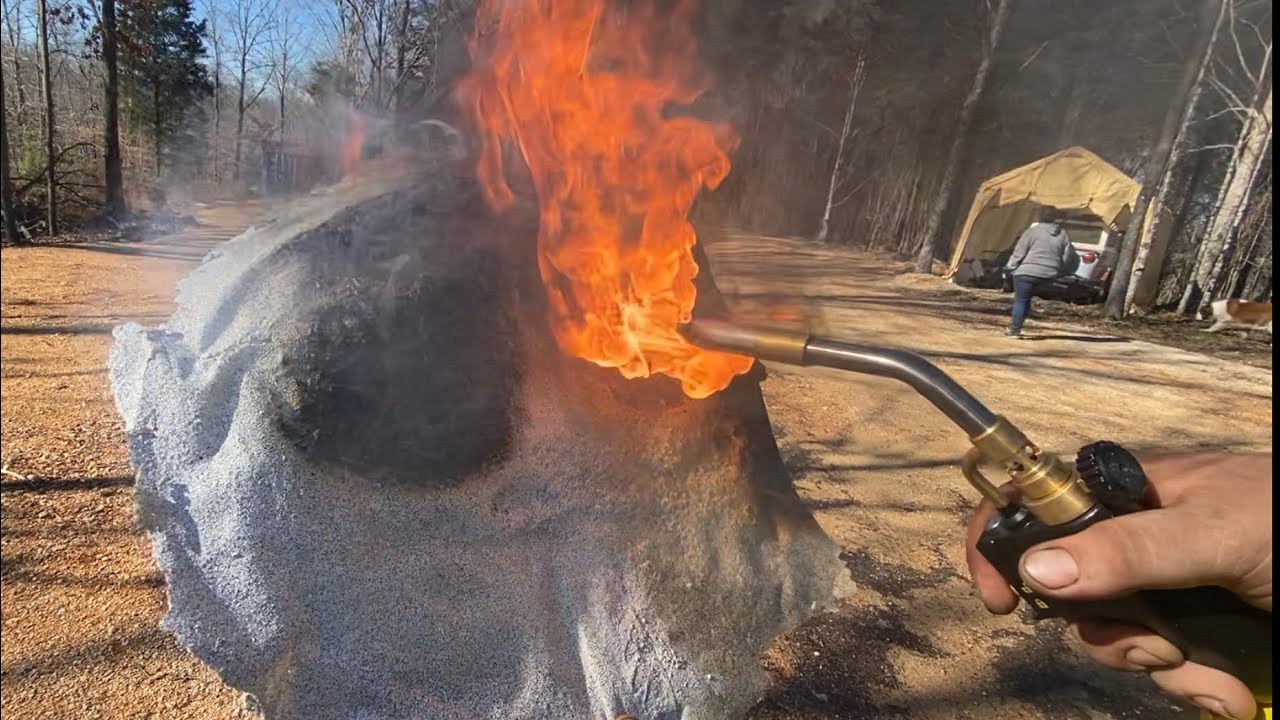
Spray foam won’t ignite on its own at room temperature. Sustained heat or direct flame has to start it, same as the wood framing around it.
Research from the Institution of Chemical Engineers puts the spontaneous ignition surface temperature of untreated polyurethane foam in the 220 to 400 degrees Celsius range, well above anything a household produces under normal conditions.
Once burning starts, polyurethane foam gives off smoke and carbon monoxide, plus nitrogen-containing combustion gases. In a structure fire involving foam plastic, smoke inhalation is the main life-safety risk, more than the flame itself. That’s why the smoke developed index matters as much as the flame spread index.
People tend to mix up combustion smoke and curing off-gas. Combustion smoke only comes out if the cured foam actually burns. Off-gas is released during installation while the fresh foam sets, and it has nothing to do with fire.
How Does Spray Foam Insulation Compare to Other Insulation Materials for Fire Safety?
Installed to code, spray foam lands in roughly the same fire performance tier as fiberglass and cellulose. They just get there different ways.
| Material | Typical Flame Spread Index | Typical Smoke Developed Index | Thermal Barrier Required |
|---|---|---|---|
| Spray foam (closed or open-cell) | 25 or less when Class 1 rated | 450 or less | Yes, in occupied spaces |
| Fiberglass batt, unfaced | 25 or less | 50 or less | No, glass fiber core is noncombustible |
| Cellulose, loose-fill | 15 or less | Not separately mandated at that level | No, treated fiber meets Class 1 without a cover |
Spray Foam vs Fiberglass
Fiberglass wins the noncombustibility argument outright.
Glass fibers don’t burn. Under sustained extreme heat they soften, and two separate test outcomes back that up. ASTM E136 classifies unfaced fiberglass batts as noncombustible, and ASTM E84 gives the same batts a flame spread index of 25 or less.
Spray foam is an organic plastic, so it can’t claim noncombustible status even at a Class 1 rating.
The practical safety gap narrows once both are installed to code, since fiberglass’s own flammability profile gets scrutinized under the same framework spray foam does.
Spray Foam vs Cellulose
Cellulose relies on borate treatment instead of a synthetic flame retardant package, and it still lands at a comparably strict flame spread index, commonly 15 or less, per the Cellulose Insulation Manufacturers Association.
The borate treatment resists flaming and smoldering combustion both, and no thermal barrier is mandated the way foam plastic requires one. Loose-fill also fills cavities without foam’s air-sealing side effect.
Readers weighing installed cost against fire performance can see the fuller picture in this spray foam versus cellulose insulation comparison.
Foam’s appeal is that it air seals and insulates in one pass, and it holds a Class 1 rating when it’s properly formulated. Against that, it’s an organic plastic and always needs a barrier in occupied space.
Fiberglass has the noncombustible glass core and no barrier requirement, but it doesn’t air seal, and batts leave gaps without careful fitting. Cellulose is recycled material with strong flame spread performance and no barrier requirement. It settles over time and absorbs moisture more readily than closed-cell foam.
On fire safety alone, fiberglass is the easiest of the three to defend. Whether that outweighs everything else is a different question.
What Do Building Codes Require for Spray Foam Insulation Fire Safety?

Spray foam used inside a building envelope has to satisfy one code section for the material itself and another for whatever covers it.
IBC Section 2603.4 requires foam plastic in occupied commercial space to be separated from the interior by an approved thermal barrier. IRC Sections R316.3 and R316.4 apply the same separation to occupied residential space. R316.3 sets the baseline for the foam itself at a flame spread index of 75 or less and a smoke developed index of 450 or less, and R316.4 requires the thermal barrier that separates the foam from the interior.
Code officials check compliance against the product’s own ICC-ES evaluation report. The DC315 intumescent coating line is a good example: it carries its own ICC-ES evaluation report covering use as a recognized barrier over spray foam, so even barrier alternatives get the same paperwork as the foam.
Enforcement still comes down to the local authority having jurisdiction, and exact interpretation shifts with each code adoption cycle a state or municipality goes through.
Thermal Barrier or Ignition Barrier: Which Does Your Installation Need?

Which barrier goes over the foam depends on the space it’s in.
Half-inch gypsum wallboard is the usual thermal barrier, rated to limit temperature rise on the unexposed side for 15 minutes. Ignition barriers are lighter, typically quarter-inch plywood, and only meant to block a small open-flame source. They don’t buy the extended escape time a thermal barrier does.
To count as a thermal barrier, a material has to pass both parts of NFPA 275, the Temperature Transmission Fire Test and the Integrity Fire Test, run together.
| Barrier Type | Typical Material | Where It Applies | Code Reference |
|---|---|---|---|
| Thermal barrier | Half-inch gypsum wallboard | Occupied living and working space | IBC 2603.4, IRC R316.4 |
| Ignition barrier | Quarter-inch plywood | Attics and crawl spaces, utility access only | IBC 2603.4.1.6, IRC R316.5.3 and R316.5.4 |
| Intumescent coating | Spray-applied swelling coating | Either space, product-specific | ICC-ES AC377 / AC456 |
There’s one narrow exception that skips both barriers. In Type V construction, foam plastic sprayed directly onto a sill plate or joist header, or onto a rim joist, can stay uncovered up to a maximum thickness of 3 1/4 inches (82.6 mm), per the IBC and IRC text governing that assembly.
Masonry or concrete covering the foam counts as an approved barrier on its own, no drywall layer needed underneath it.
Icynene’s Classic Max open-cell foam is one product carrying ICC-ES recognition as an ignition barrier free formulation, cutting a full step out of attic installations without dropping the fire testing requirement.
Thermal barriers give the highest fire protection rating, and drywall is familiar enough that any drywall contractor can install one. The downside is added labor and material cost, and it isn’t always practical in tight attic framing. Ignition barriers are cheaper and faster than drywall and fit unfinished attic and crawl space work, but they’re only permitted in utility-access spaces and give less escape time.
Intumescent coatings go on thin and work where rigid board won’t fit. They need a product-specific approval, and the coverage rate has to match the ICC-ES listing exactly.
I’d go with drywall wherever the framing allows it. It leaves the least to explain to an inspector.
How Do You Install Spray Foam Insulation to Meet Fire Code?

Spray foam only reaches its rated fire performance when the installer stays inside the thickness limits the ICC-ES report was tested against.
- Confirm substrate temperature and moisture are within the manufacturer’s range before spraying.
- Set the proportioning unit to the correct A-side to B-side ratio and verify it at the gun.
- Apply the first pass at the manufacturer’s maximum lift thickness, never a single thick coat.
- Check core temperature with an infrared thermometer between passes.
- Wait for the foam to cool before adding the next lift, so the exothermic reaction can settle.
- Repeat lifts until the cavity reaches its designed thickness, verified with a probe or wire.
- Install the required thermal or ignition barrier once the foam has fully cured.
- Have the barrier inspected before it gets closed up behind drywall or siding.
Spray Foam Insider’s field guidance puts the safe ceiling at 200 degrees Fahrenheit for core foam temperature during cure, with blowholes and discoloration showing up once the foam runs between 200 and 220 degrees.
An off-ratio mix undercuts the fire retardant package regardless of technique, so every lift is only as good as the rig that mixes and pressurizes both components.
Steve Shaw of Foam-Tech, a Vermont-based spray foam contractor, tells installers to never exceed the manufacturer’s stated pass thickness and to get that number in writing when it is missing from the data sheet.
Crews vacate the space during spraying and for roughly 24 hours afterward, a window covered in more depth in this explanation of whether spray foam insulation is safe after it cures.
Most inspection failures on foam jobs trace back to a crew skipping the barrier because time ran out, or spraying past the lift thickness to save a return trip. Mixing in leftover chemical from a different product line does it too.
When Does Spray Foam Insulation Fail to Meet Fire Safety Standards?
None of the usual reasons a spray foam job fails a fire inspection involve the chemistry going bad on its own.
Exposed foam is the obvious one. A basement wall or garage ceiling that got sprayed and never covered still needs the same 15-minute protection as any other occupied space.
Thickness catches people too. An ICC-ES evaluation report covers a specific thickness and density, and foam sprayed thicker than that figure isn’t backed by the flame spread data on file. Density works the same way: low-density open-cell foam substituted where the design assumed closed-cell changes both the R-value and the fire test result.
Chemical swapped in from a different product line voids the manufacturer’s listing, since the ICC-ES report only covers the exact formulation it tested.
| Failure Condition | Why It Fails | Typical Consequence |
|---|---|---|
| Foam left exposed in occupied space | No thermal barrier between foam and interior | Failed inspection, code violation notice |
| Installed beyond tested thickness | Result is unverified past the thickness in the evaluation report | Evaluation report no longer covers the installation |
| Wrong foam density for the space | Low-density foam substituted where a denser rating was assumed | Fire performance and R-value both fall short |
NCFI’s Insulstar closed-cell foam is a good example of how thickness and fire compliance are linked. Its ICC-ES report (ESR-1615) rates surface-burning compliance at a maximum tested thickness of 4 inches, which corresponds to an R-value near 25 rather than the higher number the same chemistry reaches at greater depths. Installers can go beyond that thickness only once a code-prescribed 15-minute thermal barrier is in place, per the same report.
The flame spread and smoke developed numbers on file only apply at the thickness actually tested, and the R-value printed on the bag assumes the installer stays within that same limit unless a code-prescribed thermal barrier lifts the cap.
Installed to the exact specification its fire test was run against, spray foam performs as advertised. Outside that, the numbers on file don’t apply.
FAQ on Is Spray Foam Insulation Flammable
Is spray foam insulation the same as rigid foam board insulation?
No. Spray foam cures in place as a liquid-applied plastic, while rigid foam board ships as pre-manufactured panels like polyisocyanurate or XPS. Each carries its own ASTM E84 flame spread rating, so one product’s fire rating never applies to the other.
Can spray foam insulation spontaneously combust without an ignition source?
Not under normal conditions. Cured foam needs sustained external heat or direct flame. The exception is during application, when spraying past the manufacturer’s lift limit can trap exothermic heat and cause rare self-heating inside the fresh foam mass.
Is spray foam insulation safe to use near a fireplace, chimney chase, or wood stove?
Manufacturers set a minimum clearance between spray foam and a flue or chimney chase, and the same goes for wood stoves, since sustained radiant heat can exceed the foam’s safe exposure temperature. Follow the product’s data sheet and local mechanical code clearance rules.
Is spray foam insulation banned or restricted anywhere because of fire risk?
No major U.S. jurisdiction bans spray foam outright. Building codes regulate it instead by requiring a thermal or ignition barrier, and local authorities enforce that with varying strictness depending on the code edition.
Does spray foam insulation affect homeowners insurance or fire claims?
Insurers increasingly ask for proof that the spray foam has a code-compliant thermal or ignition barrier, since exposed foam plastic reads as a fire code violation. Missing documentation can complicate underwriting or slow a claim tied to fire damage.
What should you do if spray foam was installed without a required thermal barrier?
Stop treating the space as occupied until a licensed contractor adds an approved thermal barrier, typically half-inch gypsum wallboard, over the exposed foam. Have a code inspector verify the covering before drywall or finish work seals it from view.
How do you verify a spray foam product’s fire test documentation before installation?
Match the exact product name and density, along with the thickness on the job, to its ICC-ES evaluation report or UL listing, then confirm the report hasn’t expired. A marketing claim of a Class 1 rating means nothing without that matching documentation.
What Should You Confirm First About Is Spray Foam Insulation Flammable?
The Class 1 rating only holds when the installed thickness and density, along with the barrier, match the formulation in the manufacturer’s ICC-ES evaluation report. Check that match first.
Match the product name and density to the ICC-ES report, then confirm the barrier fits the space. Get the inspector’s sign-off before drywall closes over the foam.
Skipping that step leaves a homeowner unable to prove which flame spread index actually applies to their walls.
There’s a real gap between the two thresholds, too. A flame spread index of 75 clears IRC Section R316.3, yet the Class 1 rating manufacturers publish tests closer to 25, which is stricter than code strictly requires.
That gap matters when deciding whether spray foam insulation is worth it once fire compliance costs enter the estimate.