
Squeeze an R-19 batt into a 2×4 wall and something breaks. Not the fiberglass, the math. How compressed insulation loses R-value in tight spaces comes down to one thing: thickness. Push a batt into a…
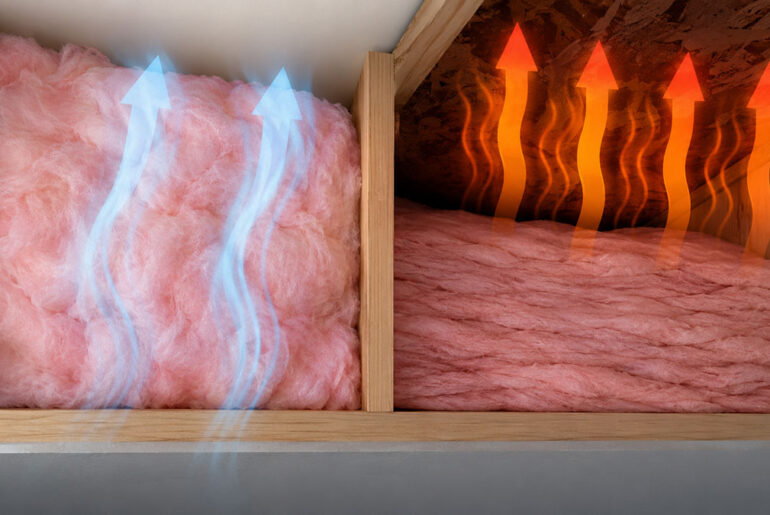
Squeeze an R-19 batt into a 2×4 wall and something breaks. Not the fiberglass, the math. How compressed insulation loses R-value in tight spaces comes down to one thing: thickness. Push a batt into a…

Moisture from the ground doesn’t knock before entering your crawl space. It just shows up, quietly rotting floor joists, feeding mold, and driving up energy bills while you have no idea it’s happening. Learning how…

Is Tyvek a vapor barrier? It’s one of the most common mix-ups in residential construction, and getting it wrong can cause serious moisture damage inside your walls. Tyvek is a weather-resistive barrier made by DuPont.…

Yes, once the two-part reaction actually finishes. That qualifier carries the whole answer. Foam that feels dry to the touch is not foam that has reached full completion, and the gap between those two states…

The math on spray foam fits in one sentence, even though the answer never does. You pay more per square foot than you would for fiberglass or cellulose, and some of that comes back every…

Most people try to saw through a fiberglass batt while it’s still puffy, and it goes badly. The blade drags. The fiber pulls into strings instead of parting, and you end up with an edge…

A poorly insulated attic can waste 25% or more of your heating and cooling energy. That is money leaving through your ceiling every single month. Learning how to install insulation in attic spaces is one…

Two numbers decide this. The R-value your climate zone calls for, and the R-value already sitting on your attic floor. The gap between them is what you buy. The Department of Energy sets that target…

Fresh overspray wipes off. Cured foam does not. That one difference decides whether you’re looking at a ten minute cleanup or a demolition job with respirators and containment sheeting. Once polyurethane has finished reacting, it…

The safety question about cellulose insulation usually gets answered with a shrug and something vague about recycled paper. The actual answer sits in the mineral treatment mixed into that paper, and in whether what ended…

Before anything else, you need to know where the mice actually are. A mouse crossing the attic floor at night is one situation. A mouse that has burrowed down into the fiberglass batt or the…

Fiberglass itches. Anyone who has handled a batt knows that much, and the itch is close to the whole story: the fibers scratch skin and airways the way a splinter does, then stop mattering once…

Two handfuls of attic fill can look nearly identical and mean completely different things. One is shredded newspaper. The other is a mineral fiber tied to fatal lung disease, and no amount of squinting at…

Spray polyurethane foam sits inside millions of walls, attics, and crawl spaces across the country. But is spray foam insulation flammable, and what does that actually mean for your home’s safety? The short answer is…

Vapor barrier placement is one decision with two possible answers, and your climate zone picks which one. The sheet faces the side of the insulation that stays warm in winter. In hot, humid regions that…

The glass doesn’t burn. The paper glued to it does. Almost every argument about whether fiberglass insulation is flammable traces back to which of those two layers somebody has in mind, because a standard batt…

A poorly insulated attic can waste up to 20% of your heating and cooling energy, according to the U.S. Department of Energy. That’s money leaving through your ceiling every single month. Choosing the right attic…

Most spray foam quotes land somewhere between $1.50 and $5.00 per square foot installed. That covers open-cell and closed-cell work nationwide, and labor is already baked in, which is part of why the number looks…

Nobody who qualifies pays a penny. Energy suppliers and the Department for Energy Security and Net Zero cover the full cost of insulating a property across England, Scotland and Wales, and the household contributes nothing…

Some insulation burns. Some of it will not, no matter how hot the room gets. Which kind sits in your walls is a question most homeowners never think to ask until a contractor opens a…

There’s no single number for this job. What you pay comes down to how big the home is, what goes back in, and whether you’re the one crawling under there. Underbelly work is its own…

Insulation problems are usually local. The attic is bare while the walls are fine, or the walls are packed tight and the rim joist has nothing in it at all. So the first question is…

The insulation tax credit sits inside the federal tax code as a specific provision, not a general discount on home improvement. It covers a slice of the material cost for qualifying insulation and air sealing…

The difference between a rebate and a tax credit tends to surface at tax time, which is the worst possible moment to learn it. One arrives as a discount while the work is happening. The…

Ask a contractor whether insulation is worth it and you will usually get a number back. Six years. Four years. Sometimes just a shrug and “it pays for itself pretty fast.” That number is the…

In Remodeling Magazine’s 2016 Cost vs. Value Report, a fiberglass attic insulation upgrade recouped 117% of its installed cost at resale. It was the only project category that year to return more than its price,…

Ask three contractors what insulation runs per square foot and you get three different answers, none of them wrong. The rate is material plus labor divided by area, and both of those inputs move around…

Most attics get cleared with a hose these days rather than a shovel. The machine stays outside, on a trailer or in the truck bed, and the loose-fill material gets pulled out under negative air…

Walls built before the 1970s often have nothing in them. Air, some dust, maybe an old wasp nest. Drill-and-fill insulation is the repair that skips demolition: small holes get drilled into each stud bay, material…

Old houses tend to have hollow walls. Stud bay, plaster or drywall on one side, sheathing on the other, and nothing in between except moving air. Dense pack insulation is the retrofit answer to that:…