Two handfuls of attic fill can look nearly identical and mean completely different things. One is shredded newspaper. The other is a mineral fiber tied to fatal lung disease, and no amount of squinting at it from the top of a ladder will settle which is which.
The question comes up mostly in homes built before 1990, in attics and wall cavities nobody has opened in years. Color and texture get you part of the way there. A lab looking at fiber structure under polarized light microscopy gets you the rest.
One mine near Libby, Montana supplied over 70 percent of the vermiculite sold in the United States between 1919 and 1990. The EPA’s guidance on that is unusually blunt: treat vermiculite from that source as asbestos-contaminated and skip the testing question entirely (EPA, 2013).
Cellulose Insulation and Asbestos Insulation Defined

Cellulose is loose paper fiber blown into attics and walls to slow heat loss. That’s the whole product.
Asbestos insulation is messier as a term. Nothing was ever sold in a bag labeled that way. The phrase covers two different materials that ended up in houses for the same reason, mostly loose vermiculite fill and sprayed fireproofing.
They get mixed up because both end up as loose granular stuff in an old attic that nobody wants to put a hand into.
| Trait | Cellulose insulation | Asbestos insulation |
|---|---|---|
| Material origin | Recycled paper and cardboard | Natural mineral fiber |
| Typical color | Gray, sometimes newsprint-flecked | Gold-brown, silver-gray, or off-white |
| Common install years | 1970s to present | 1930s to 1990 |
| Health classification | No asbestos content | Known human carcinogen |
Cellulose Insulation
Shredded newspaper and cardboard, fiberized, then treated with borate compounds so it resists fire and discourages pests. It ships either as loose fill or dense-packed material.
The Cellulose Insulation Manufacturers Association puts the recycled fiber content at up to 85 percent by weight, with the rest made up of fire-retardant additives (CIMA, 2023).
Some homeowners weighing their options start further back, at what cellulose insulation actually is, before they worry about anything asbestos-related.
Greenfiber and Nu-Wool both sell it nationally. The composition barely shifts from one manufacturer to the next.
Asbestos Insulation
Chrysotile turns up more than anything else in old insulation. White asbestos, if you go by the informal names, and it went into cement, textiles, and pipe insulation for decades. Amosite is the brown one, found in some sprayed fireproofing and pipe wrap. Crocidolite, blue asbestos, is rarer in houses and the type considered most dangerous once it goes airborne.
None of it arrived as a labeled, single-ingredient product. It came mixed into vermiculite ore or into sprayed coatings, which is why “asbestos insulation” works better as an umbrella term than a product name.
What Does Cellulose Insulation Look Like Compared to Asbestos Insulation

Gray shredded paper with flecks of newsprint still visible in it. That’s cellulose. Vermiculite fill looks like someone poured a layer of small gold-brown or silver pebbles across the joists.
Texture usually gives it away faster than color does. Press cellulose and it compresses. Vermiculite stays loose and granular no matter how many decades it has been sitting there.
| Material | Color | Texture | Common era |
|---|---|---|---|
| Cellulose | Gray, sometimes newsprint-flecked | Shredded, fluffy, compresses easily | 1970s to present |
| Vermiculite / asbestos | Gold-brown or silver-gray | Granular, pebble-like, pours like gravel | 1919 to 1990 |
| Rock wool | Gray-brown, sometimes greenish | Dense, fibrous clumps | 1930s to 1970s |
| Fiberglass | Pink, yellow, or white | Fluffy, springy, itchy to touch | 1950s to present |
None of these traits proves anything alone. They narrow the guess. They don’t replace a lab result.
Color
Age, water stains, and dust all shift color, so a gray attic does not automatically mean cellulose.
- Cellulose stays some shade of gray, darker in spots where newsprint ink was concentrated
- Vermiculite runs gold to silver and carries a mica-like glint that plain paper fiber never has
- Rock wool fades to a similar gray-brown once enough dust works into it over the years
That last one catches people out. Rock wool insulation gets mistaken for both materials, especially in attics nobody has been into since the Reagan administration.
Texture and Density
Cellulose is light and fluffy, settles over time, and clumps together slightly because of the borate treatment. Run a gloved hand through it and you come away with fine dust, nothing sharp.
Vermiculite behaves differently in the hand.
- Noticeably heavier per handful
- Pours rather than fluffs
- Individual pebbles visible without magnification
- Won’t compress the way paper fiber does
Fiberglass isn’t really part of this confusion. Batts or loose fill, pink or yellow, with a springiness neither of the other two has.
Is Vermiculite Insulation the Same as Asbestos Insulation
No. Vermiculite is its own mineral, one that puffs up when heated, and there is no asbestos in it by nature. Almost all the risk attached to it in American homes traces back to a single contaminated mine.
That mine sat near Libby, Montana, and it supplied over 70 percent of all vermiculite sold in the United States between 1919 and 1990, according to the EPA.
W.R. Grace and Company mined it and sold it as Zonolite. Zonolite is the name most homeowners eventually find printed on a rotting paper bag in the corner of the attic.
The Libby deposit also held tremolite-actinolite asbestos, so the vermiculite came out of the ground already contaminated, long before it reached a store shelf.
Which leads to the EPA’s position. If the material looks like vermiculite, assume it contains asbestos and act accordingly, without bothering with a sample first.
Vermiculite mined after 1990, once Libby shut down, carries far less risk. Most attics were filled well before that.
How Do Cellulose and Asbestos Fibers Differ Under Magnification
Put both under a microscope and the difference stops being subtle. Cellulose shows twisted, irregular strands of paper. Asbestos shows straight needles that split lengthwise into thinner and thinner fibers.
Shape is what a lab actually measures. Color and texture are for the person standing on the ladder. Fiber geometry is what separates a hazard from a paper product.
Cellulose fiber runs flat and curled, uneven in width, with no splitting pattern to it. Asbestos fiber is rigid and straight-edged, and it keeps breaking into thinner strands, which is a good part of why disturbed asbestos hangs in the air longer than ordinary dust.
None of this is visible without equipment. Polarized light or an electron microscope, nothing less.
A naked-eye inspection tells you what a material probably is. It cannot tell you what a material definitely is, and lab testing exists to close that gap.
When Was Asbestos Insulation Installed in Homes
Mostly between the 1930s and 1990. Vermiculite fill and sprayed fireproofing were both routine through the mid-1970s.
Regulation slowed the practice down years before it stopped it.
- Vermiculite fill and sprayed asbestos fireproofing both went into homes routinely from the 1930s through 1990
- In 1973 the EPA banned spray-applied asbestos insulation for fireproofing under the Clean Air Act’s asbestos NESHAP rule
- March 2024 brought a finalized EPA rule banning chrysotile asbestos, the last asbestos type still legally imported into the US
Those dates are more useful than any single “asbestos was banned in \\\_” answer, because no one year covers every product.
Johns Manville, at one point the largest manufacturer of asbestos insulation in the country, filed for bankruptcy in 1982 under the weight of asbestos injury claims. A fair marker for when the industry’s own math on the material stopped working.
Build date narrows things without settling them. A 1960s house can be full of cellulose blown in during a 2005 top-up. A home finished in the early nineties can still have asbestos pipe wrap, if the material sitting in the supplier’s warehouse predated the rules.
Renovation history counts for as much as the year on the deed.
How Do Cellulose and Asbestos Insulation React to Heat
Hold a flame to cellulose and it chars and smolders, fire-retardant treatment or not. Asbestos does not ignite at all. That non-reaction is the entire reason anyone sprayed it onto a steel beam in the first place.
Borate treatment is what keeps cellulose from feeding an open flame, and it’s why a paper-based product can carry an insulation fire rating that satisfies most building codes.
Cellulose chars at the surface, smolders slowly if the borate levels have run low, and puts itself out once flame contact stops. Asbestos just sits there. No charring, no smoldering, no flame spread.
That same inertness is what made removal such ugly work later on. A material that won’t burn also won’t break down, so it stays intact, and stays a hazard, for as long as nobody touches it.
The broader question of whether home insulation is flammable circles back to this comparison, since the answer flips completely depending on which material is actually up there.
Why You Should Not Do a Burn Test Yourself
Holding a lighter to a suspect sample tells you nothing usable, and it does the exact thing you’re trying to avoid. Heat and disturbance are how bound asbestos fibers become airborne ones.
A small test flame puts them into a room with no containment of any kind. And if the sample happens to be cellulose, the smoke trips the detector and obscures whatever you were trying to observe.
Heat behavior is a reason to test. It isn’t a reason to burn anything.
What Health Risks Does Asbestos Insulation Pose

Left alone, asbestos insulation is fairly low risk. The trouble starts when someone cuts it, vacuums near it, or blows it around during a renovation. Then it releases fibers small enough to reach deep lung tissue and stay there.
Cellulose carries nothing comparable. Paper fiber doesn’t behave in the lungs the way mineral fiber does.
Diseases Linked to Asbestos Exposure
Mesothelioma is a rare and aggressive cancer of the lining around the lungs or the abdomen, and asbestos exposure causes almost every case of it. Asbestosis is a different problem, a permanent scarring of lung tissue that keeps worsening even after exposure ends.
Both share the same cruel timing.
- A CDC review of 21 studies covering over a thousand mesothelioma cases put the typical latency period between first asbestos exposure and diagnosis at 20 to 40 years (CDC, 2009)
- Annual deaths from asbestos-related disease run to an estimated 40,000 Americans, based on Institute for Health Metrics and Evaluation data cited by the American Public Health Association (APHA, 2020)
Nothing surfaces right after exposure. That delay is part of why so much of this material sat unnoticed in attics for decades before anyone thought to test it.
How Asbestos Insulation Is Regulated
Two federal agencies split the work. The EPA handles asbestos in the environment and in consumer products. OSHA handles exposure on the job.
The Toxic Substances Control Act gives the EPA authority to restrict or ban specific asbestos uses, and it’s the law behind that 2024 chrysotile rule.
Cellulose sits outside all of this. Homeowners who look into whether cellulose insulation is safe tend to land in the same place: no asbestos content, no comparable fiber-inhalation risk, no federal carcinogen listing attached to the material itself.
That gap in how the two are regulated is the sharpest line between them, and it’s why getting the identification right matters more than color or texture ever will.
How Do You Test Insulation for Asbestos
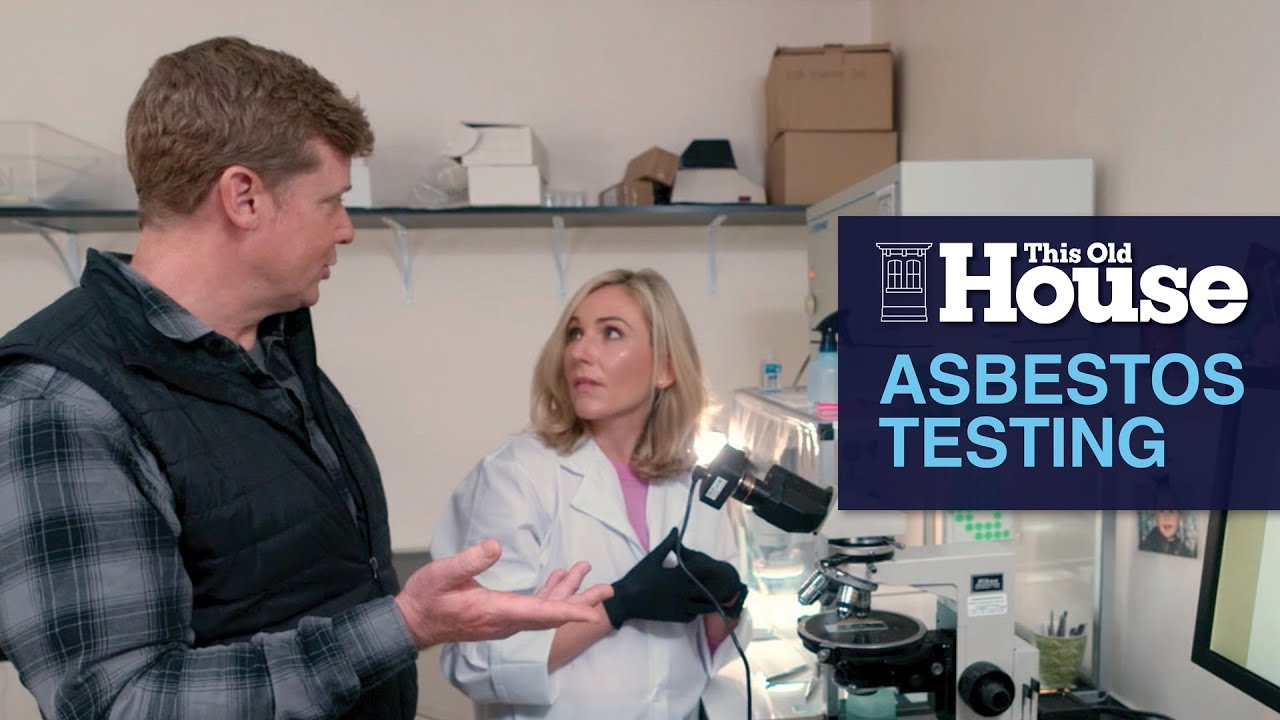
You take a small sample, dampened first so it doesn’t shed, without tearing up the material around it. Then it goes to an accredited lab for fiber analysis.
Labs start with polarized light microscopy. Transmission electron microscopy comes out when the fibers are too thin or too ambiguous for the first method to call.
- Turn off any fans or HVAC airflow near the sample area before starting
- Lightly mist the insulation with water to keep fibers from becoming airborne
- Cut or scoop a small piece using gloves and a sealable bag
- Label the bag with the exact location the sample came from
- Ship the sealed sample to an NVLAP-accredited laboratory for analysis
- Review the written report, which states the asbestos type and percentage by weight
NVL Laboratories is one example of a lab accredited under NIST’s National Voluntary Laboratory Accreditation Program for bulk asbestos fiber analysis, the program most homeowner samples end up running through.
NVLAP requires accredited labs to pass proficiency testing twice a year for polarized light microscopy and once a year for electron microscopy, according to NIST’s 2025 program handbook.
Loose-fill samples are the easy case, cellulose or vermiculite either way. A pinch is enough for the lab to work with.
A material with less than 1 percent asbestos by weight does not legally count as asbestos-containing. The EPA still recommends caution with anything sitting near that line.
Should You Use a DIY Asbestos Test Kit or Hire a Professional
A kit is fine when there’s one material, it’s easy to reach, and all you want is a lab result. Bring in a certified inspector for anything layered, awkward to get at, or attached to a renovation permit.
The kit costs less upfront, usually the kit price plus a lab fee, and you decide the timing and pick the sample yourself. What you don’t get is any look at the rest of the room. You’re also the one handling the material, and sloppy sampling disturbs fibers before the bag ever gets sealed.
An inspector brings a few things you can’t buy in a box.
- Training in pulling a sample without putting fibers into the air
- An assessment of the whole space rather than the one spot you happened to pick
- A report that holds up for permits, sales, and disputes
- An eye for other suspect material you wouldn’t have thought to test
Professional testing runs a national average of $483, with most homeowners paying between $231 and $778 for a residential asbestos test (HomeAdvisor, 2022).
For one accessible sample in a room where nothing else looks questionable, the kit is a reasonable call. It stops being reasonable the second a renovation, a sale, or a permit enters the picture, because a single mail-in result says nothing about what a crew might disturb on the way to the job.
Plenty of homeowners at this point are comparing more than cellulose against asbestos anyway. A wider look at types of insulation materials in the home usually turns up other candidates worth bagging at the same time.
How Do You Safely Remove or Handle Suspected Asbestos Insulation
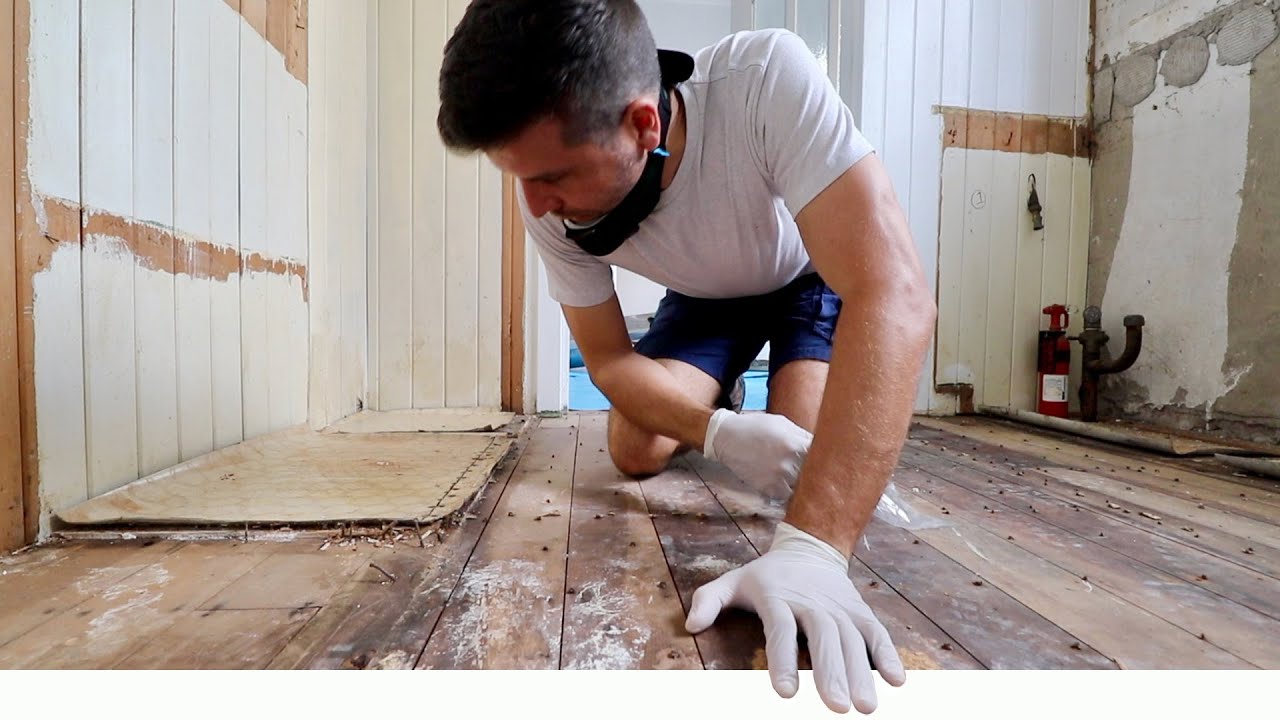
Containment, sealed protective gear, and a licensed abatement contractor instead of your own weekend. That’s the short version.
A lot of asbestos insulation gets left exactly where it is, on purpose. Removal is the disturbance that releases fibers, so leaving it sealed and undisturbed is often the safer call until a renovation forces the issue.
DIY Handling vs Professional Abatement
Do not attempt this yourself. OSHA sets the exposure limit for airborne asbestos at 0.1 fiber per cubic centimeter of air over an eight-hour period. Staying under that number takes sealed suits, HEPA filtration, and negative air pressure equipment, none of which is sitting in a residential garage.
- Shut off HVAC systems and seal the work area with plastic sheeting
- Set up a decontamination zone between the work area and the rest of the home
- Wear a sealed coverall and a properly fitted respirator rated for asbestos fibers
- Remove material using wet methods to keep fibers from going airborne
- Double-bag waste in labeled containers approved for asbestos disposal
- Transport waste to a landfill permitted to accept asbestos-containing material
That sequence is the reason licensed abatement contractors exist as a trade. Skip one step and a contained problem turns into a contaminated house.
Removal and Disposal Costs
Professional removal costs a national average of $2,213, with most homeowners paying between $1,191 and $3,255 depending on the size and location of the affected area (HomeAdvisor, 2024).
Two things cut into that figure. Encapsulation seals the material in place instead of taking it out, which costs less per square foot and skips disposal entirely. And the Zonolite Attic Insulation Trust, funded by a bankruptcy settlement from W.R. Grace and Company, reimburses 55 percent of abatement costs up to a cap of $4,125 on verified Zonolite claims.
That reimbursement is brand-specific. A lab report confirming the product name matters as much as one confirming the asbestos.
When You Cannot Tell Cellulose and Asbestos Insulation Apart by Looking
Layered, discolored, compacted, or covered by something else. Any one of those and visual identification is finished as a method.
Color and texture stop meaning anything at that point, and a lab sample becomes the only reliable answer.
- Cellulose blown in over old vermiculite fill, hiding the pebble-like layer underneath entirely
- Water staining or soot darkening both materials toward the same dull gray-brown
- Paint or drywall dust settled thick enough to mask texture and color both
- Insulation compacted flat after decades, losing the loft that normally signals cellulose
Attics that have been worked on more than once are the usual trap. Gray fluffy material on top, homeowner assumes cellulose, nobody checks what it got blown over.
Different attic insulation types end up stacked directly on top of each other across renovations, which is how a hazardous layer ends up buried under a harmless one.
Years of insulation settlement strip out the loose, springy texture that normally separates paper fiber from mineral fill. Both eventually compress into something flatter and harder to read.
So the rule that actually holds up: if a material has been disturbed, covered, or altered in any way since it went in, treat what you see as a starting guess.
Saying “it looks fine” about a mixed or altered attic isn’t a finding. It’s a guess, and a bulk sample exists precisely to settle it.
FAQ on How To Tell The Difference Between Cellulose And Asbestos Insulation
Is chrysotile asbestos less dangerous than amosite or crocidolite?
Chrysotile fibers are curlier and break down faster in lung tissue than the straight, needle-like fibers in amosite and crocidolite. All three are classified as human carcinogens, but crocidolite carries the highest risk per fiber inhaled.
What is the R-value difference between cellulose and asbestos insulation?
Cellulose runs about R-3.5 per inch. Vermiculite-based asbestos insulation sits closer to R-2.0 to R-2.4 per inch, so an attic needs a noticeably thicker layer of vermiculite to hit the same thermal resistance.
Is cellulose insulation itself hazardous to breathe or handle?
Cellulose dust irritates the nose, throat, and eyes during installation, which is why installers wear a dust mask and goggles. It has no asbestos content and no link to lung cancer, unlike the mineral fiber in old vermiculite fill.
Does homeowners insurance cover asbestos testing or removal?
Most standard policies exclude it. Insurers classify asbestos as a pollutant and a maintenance issue rather than sudden damage. Coverage sometimes kicks in when a covered peril, like fire or storm damage, disturbs the material.
Can popcorn ceiling texture also contain asbestos?
Yes. Spray-applied popcorn texture was a common carrier of asbestos fibers until the EPA banned that decorative use in 1978. Homes with the original texture still intact from before that year need testing before anyone scrapes or sands.
Can asbestos insulation be painted over or encapsulated instead of removed?
Ordinary paint does not count as encapsulation and cracks over time, exposing fibers underneath. Real encapsulation uses a specialized sealant bonded to the material, and it only works on insulation that is still intact rather than crumbling.
What Should You Do First After Learning How To Tell The Difference Between Cellulose And Asbestos Insulation?
Stop handling the material and get one undisturbed sample to a lab. Guessing harder from color and texture moves nothing forward.
- Leave the suspect material alone
- Send a single sample to an accredited lab
- Decide on removal or encapsulation after the report comes back, not before
The order pays for itself. Confirming the material costs roughly 22 percent of what full professional abatement runs on average nationally, a ratio no single cost guide states outright.
Encapsulation dodges the abatement bill. The trade-off is permanence in a different sense: the material stays in the house and still needs disclosure at resale, unlike a fully removed one.
Once a report clears the attic, the next decision is what replaces the old fill, and comparing spray foam or cellulose insulation settles that question for most homeowners.