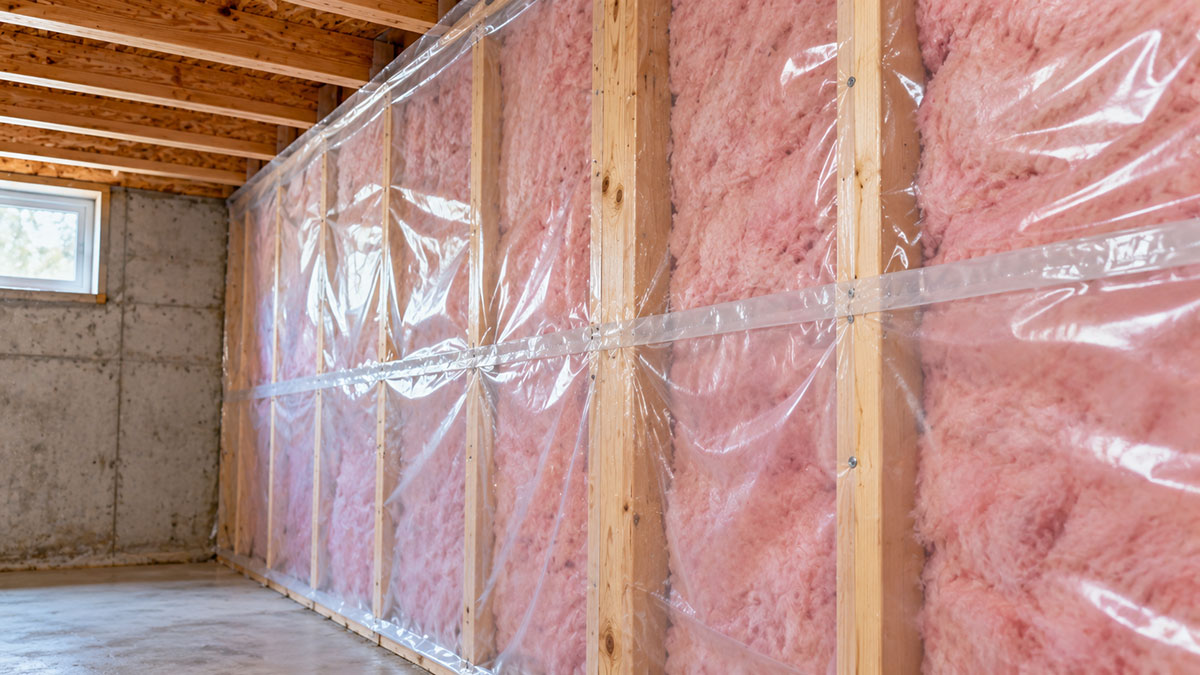
The safety question about cellulose insulation usually gets answered with a shrug and something vague about recycled paper. The actual answer sits in the mineral treatment mixed into that paper, and in whether what ended up in your attic still matches the formula a lab signed off on.
Cellulose is a loose-fill insulation material. Recycled paper goes in one end of the plant, a mineral flame-retardant treatment gets applied during processing, and what comes out is a fire-tested building product.
That treatment happens at the factory. Every batch sold as a consumer product in the United States has to clear federal flame and corrosion testing before an installer ever cuts open a bag.
Under ASTM International’s C739 specification, cellulose insulation must hold a critical radiant flux of at least 0.12 W/cm2 to pass, the same flame threshold the Consumer Product Safety Commission enforces under 16 CFR Part 1209 (ASTM International, 2017).
What Is Cellulose Insulation Made Of?

Mostly old paper, and that surprises people the first time they see it come out of a hopper.
The finished product looks like fine gray confetti. Light enough to pour by hand, light enough to blow through a hose into an attic or a wall cavity.
Recycled Paper Content
Old newsprint and corrugated cardboard trimmings make up the bulk of what is in the bag. Some plants also run office paper scrap through the line, depending on what they can source locally.
The Cellulose Insulation Manufacturers Association describes the fill as reclaimed newspaper and cardboard, with the rest of the weight coming from the additive package.
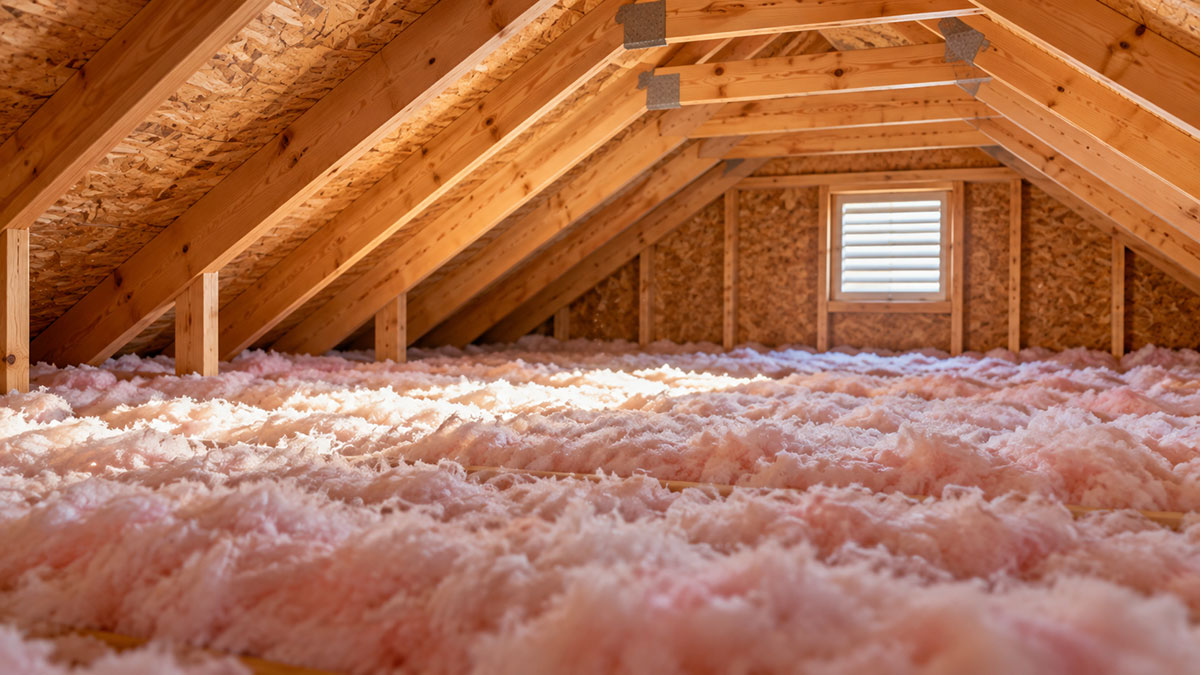
Being loose-fill is the whole point. It pours into tight attic corners and odd stud bays that a rigid board would never sit flush against.
Fire Retardant Additives
Boric acid does most of the work. It gets applied to the fiber during processing and functions as the primary retardant in nearly every formula on the market.
Borax usually rides along with it, mainly to broaden the fungal and pest resistance. A few manufacturers reach for ammonium sulfate instead, or use it as a secondary treatment alongside the borates.
Companies like US GreenFiber blend these compounds into the paper stock at the factory rather than on the job site, which is why the ratio holds steady bag to bag.
How Does Cellulose Insulation Resist Fire?

Paper burns. Everybody knows this, and it is the first objection anyone raises.
Fire resistance comes from what gets mixed into that paper before bagging, and from how tightly the fiber ends up packed once it is in the wall.
Packed densely enough, the fibers choke off the oxygen a fire needs to travel through a cavity. That is a big part of why dense pack insulation behaves so differently in a burn test than the same material blown loose.
The numbers a product has to hit:
- Critical radiant flux has to stay at or above 0.12 W/cm2 under ASTM C739 and CPSC 16 CFR Part 1209
- Smolder weight loss is capped at 15 percent of the sample’s starting weight
- Boric acid can run up to 15 percent of the finished product by weight, according to a US GreenFiber safety data sheet from 2011
Some manufacturers go past the minimum. Nu-Wool runs supplemental furnace testing on top of the standard lab protocol.
Why Density Slows a Fire
A wall cavity packed tight with cellulose has very little room left for air. Fire needs air.
- Less oxygen sitting inside the framing cavity
- Slower flame travel between studs, and less surface area exposed to direct heat
Worth separating this from the chemical treatment, because they are two different mechanisms. Together they explain why cellulose tends to earn a better insulation fire rating than a bag of shredded newspaper has any right to.
Neither one would clear the standard alone.
What Safety Standards Regulate Cellulose Insulation?

Every bag sold in the US clears a set of government and industry tests before it gets loaded on a delivery truck. Flame resistance, corrosion, smoldering, moisture absorption. Not one of those in isolation.
- ASTM C739 is the core specification for loose-fill cellulose, covering density, R-value, odor, moisture vapor sorption, and fungi resistance
- ASTM C1149 is the parallel specification for self-supported spray-applied cellulose
- CPSC 16 CFR Part 1209 is the federal safety standard mandating flame resistance and corrosion limits for any cellulose insulation sold as a consumer product
- ASTM E84 is the surface burning test that classifies how flame spreads across the material
- The FTC R-Value Rule (16 CFR Part 460) governs how R-value claims can be labeled and advertised
- CAN/ULC-S703 and SOR/2016-177 cover the same ground north of the border
All that flame and smolder testing exists for a reason. The underlying question, is home insulation flammable, has a genuinely different answer for every material category on the market.
Several state weatherization programs list cellulose as a preferred material, largely because it clears every one of these bars before a homeowner ever sees it.
What Health Risks Come From Cellulose Insulation Dust?
OSHA classifies cellulose dust as a nuisance dust. Not a toxic one.
Nuisance is not the same as harmless. At high enough concentrations it irritates lungs, eyes, and sinuses, which is why exposure limits exist at all.
A NIOSH workplace evaluation of ten installation contractors found 26 employees with eight-hour dust readings above OSHA’s 15 mg/m3 limit, and 42 above ACGIH’s stricter 10 mg/m3 guideline (NIOSH, 2001).
Dry attic work threw noticeably more dust into the air than wet-spray applications did in that same evaluation.
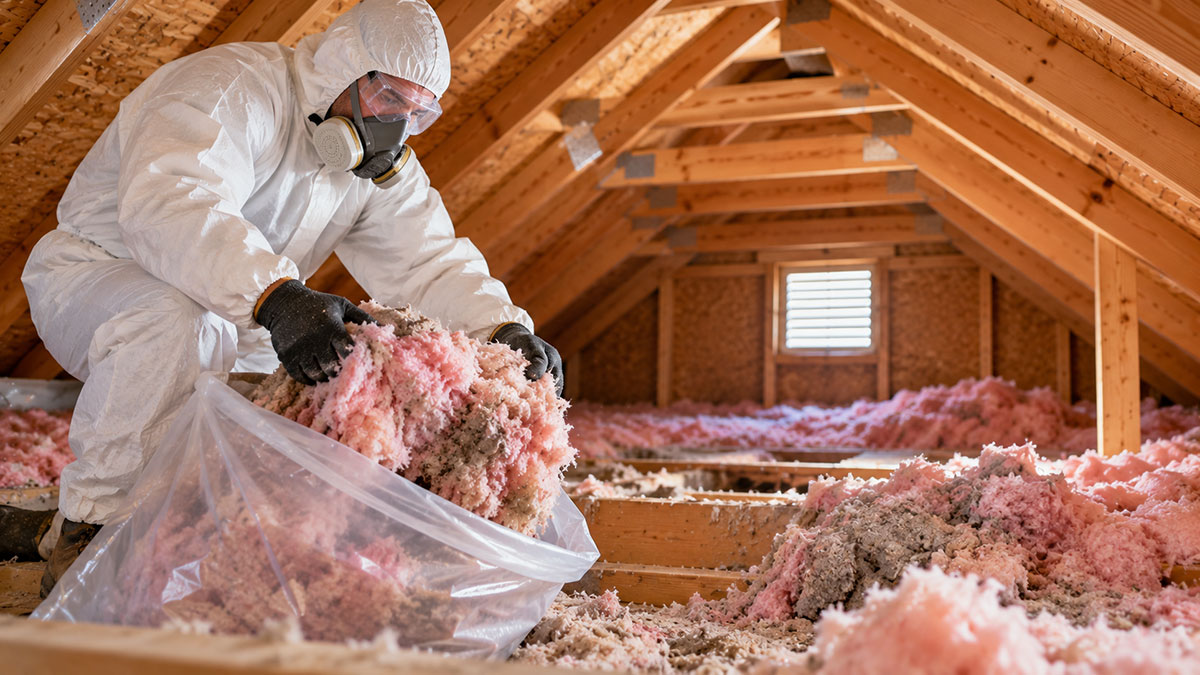
- N95 or better respirator during handling
- Active ventilation in the work area
- Nobody in the space during active blow-in
Cancer and Long-Term Study Findings
Researchers at the Institute of Occupational Medicine injected rats with high doses of cellulose fiber directly into the abdominal cavity.
Across every cellulose dose group, only two animals developed mesothelioma. Compare that with over 80 percent of animals given comparable doses of crocidolite asbestos. The complication is that 18 percent of the highest-dose cellulose group went on to develop sarcoma, a different tumor type.
The route of exposure matters enormously here. Injected doses in lab animals are not people breathing ordinary attic dust during a normal install.
And it is a different material from the one most homeowners are actually nervous about. If the worry is old attic fill that might be genuine asbestos, the more useful move is learning how to tell the difference between cellulose and asbestos insulation before anyone starts poking around up there.
Can Cellulose Insulation Cause Mold or Moisture Problems?

Cellulose is hygroscopic. It absorbs water instead of shedding it.
Insulation contractors report that soaked cellulose can hold up to 130 percent of its own dry weight in water.
Wet cellulose sags inside a wall cavity. It dries slowly, and it loses the settled density that gave it fire and thermal performance to begin with.
- Borate treatment resists fungal growth under ASTM C739’s fungi test
- Mold resistance is not waterproofing, and sustained saturation eventually overwhelms it anyway
A proper vapor barrier on the warm side of the wall keeps ambient humidity from ever pushing the material toward that saturation point.
Honestly, a slow roof leak will do more damage here than years of ordinary indoor humidity.
Does Cellulose Insulation Release Formaldehyde or Off-Gas Chemicals?
Borate compounds are inorganic mineral salts. They do not evaporate, so there is nothing to off-gas the way a liquid or foam-based chemical would.
Trace residuals do carry over from the original paper stock. Printing ink, small amounts of formaldehyde left from the recycling process. Those sit locked into the fiber in tiny, non-volatile amounts.
Spray foam is where this comparison gets interesting, because foam depends on a chemical reaction that is not always finished by the time the crew packs up.
The EPA’s Safer Choice program notes that spray foam is considered relatively inert only once fully cured, and that improper curing conditions can leave unreacted isocyanates to off-gas afterward.
Cellulose has no curing step to get wrong. Nothing in the borate treatment reacts after installation.
Is Cellulose Insulation Safer Than Fiberglass, Spray Foam, or Mineral Wool?

Safer according to which risk? Fire, dust, chemical exposure, and moisture do not rank the same way for every household.
The spray foam or cellulose insulation debate comes up constantly for exactly that reason. The two materials fail in opposite directions.
| Material | Fire Behavior | Dust and Respiratory Exposure | Chemical Off-gassing |
|---|---|---|---|
| Cellulose | Self-extinguishing, borate-treated | Dusty at install, none once sealed | None, borate does not off-gas |
| Fiberglass | Non-combustible, binder can smoke | Itchy glass fibers during install | Low, minor resin emissions |
| Spray foam | Ignites, needs a thermal barrier | Isocyanate exposure during spray | Possible if undercured |
| Mineral wool | Non-combustible, high heat tolerance | Mineral fiber dust during install | None |
Where cellulose wins:
- Made mostly from recycled paper
- No off-gassing once installed
- The dense-pack effect adds real fire resistance
- Fills irregular cavities completely
Where it does not:
- Generates heavy dust during installation
- Soaks up water readily if a leak reaches it
- Heavier than fiberglass at the same R-value
- Still needs a fire-rated barrier, same as any loose-fill product
Fiberglass raises a different question altogether. Whether fiberglass insulation is safe has much more to do with fiber irritation than with fire.
Who Should Avoid Cellulose Insulation?
Nobody needs to avoid cellulose permanently. Certain people should be out of the house while it goes in.
Dust is the whole reason. Blowing loose-fill into an attic or a wall cavity throws a lot of it into the air.
In the same NIOSH medical survey of installation crews cited earlier, eye symptoms and nasal symptoms were each reported by 35 percent of workers, more than any other complaint (NIOSH, 2001).
Most of those symptoms cleared up once the person left the dusty environment. Fine for a trained crew in respirators. Less fine for:
- Infants and very young children
- Pets that spend time in the attic or hang around return vents
- Anyone recovering from a respiratory illness
- People with a documented borate sensitivity
For a household in that situation, other types of insulation materials that sit sealed behind drywall from day one are worth a look.
Going with batt insulation in the attic or walls sidesteps the loose-fill dust question completely.
When Does Cellulose Insulation Stop Being Safe?

There are a handful of well-documented conditions where cellulose stops doing its job.
Non-IC rated recessed lights need a minimum 3-inch clearance from any insulation, cellulose included, under NEC 410.116(B). That one causes more real-world trouble than anything else on this list.
Active knob-and-tube wiring is a hard stop. NEC Article 394.12(5) prohibits loose, rolled, or foamed-in-place insulation from enveloping concealed knob-and-tube conductors.
Material without ASTM C739 or CPSC 16 CFR Part 1209 labeling has not proven it meets the flame and corrosion minimums, whatever the seller says.
Crawlspaces and basements with standing water or repeated flooding will eventually defeat the fungal resistance the borate treatment provides.
And wall cavities packed below roughly 3.5 lb per cubic foot tend to settle over time.
That last one traces straight back to how the material got installed. A cavity that never reached target density is already partway toward insulation settlement, and settled cellulose does not resist fire the way freshly packed cellulose does.
None of this is unique to cellulose, by the way. Every insulation material has conditions under which it quits performing.
How Is Cellulose Insulation Installed Safely?

Protect the installer, protect the building, hit the right density. Density is the one that gets skipped when a crew is behind schedule.
ASTM C1015, the standard practice for installing cellulosic and mineral fiber loose-fill insulation, lays out the sequence most contractors follow.
The Cellulose Insulation Manufacturers Association publishes companion guidance that machine manufacturers and installers tend to reference alongside the ASTM text.
- Inspect the space first. Clear recessed lights, flues, and other heat sources, and confirm no active knob-and-tube wiring runs through the cavity.
- Fit the crew with N95 or better respirators and sealed eye protection before the hopper starts.
- Box out any non-IC rated fixtures and heat sources to the required code clearance before blowing begins.
- Set the blowing machine to the manufacturer’s recommended output for the application, attic or wall.
- Blow to the target density, checking coverage against the bag count as the work proceeds.
- Ventilate and clean the work area once blowing stops, before anyone without protection re-enters.
For dense-packed walls, the blowing machine needs to deliver at least 2.9 psi (80 inches of water column) of static pressure at the outlet to reach a proper installed density, per the Department of Energy’s Building America Solution Center.
That kind of specificity is why the how to install insulation in attic process looks nothing like a simple pour-and-level job.
Sidewall retrofits work differently again. A small hole gets drilled per cavity and material is packed in under pressure, which is the whole premise behind drill-and-fill insulation.
FAQ on Cellulose Insulation Safety
Is Cellulose Insulation a Natural or Synthetic Material?
Neither label fits cleanly.
The base fiber is recycled paper, which is organic. The finished product also carries a manufactured mineral treatment, boric acid, borax, or ammonium sulfate, and that treatment is what gets the loose paper past fire safety standards.
Has Cellulose Insulation Ever Been Recalled or Banned for Safety Reasons?
No blanket recall has ever happened. The CPSC did force an industry-wide fix, though.
Investigating 51 cellulose insulation fires through April 1979, the agency found recessed light fixtures caused ignition in 31 cases, then required fire-safety labels under the same rule, CPSC 16 CFR Part 1209 (CPSC, 1979).
Can a Homeowner Install Cellulose Insulation Themselves, or Does It Need a Professional?
Attic loose-fill is the most DIY-friendly application there is. Rent a blowing machine and pour cellulose insulation across open joists.
Wall cavities are a different animal. Dense-pack work needs specialized equipment and a feel for when a cavity is actually full, which is why most homeowners hand it off.
How Much Does Professional Installation Cost Compared to DIY?
DIY attic work mainly costs equipment rental plus material, since labor is free.
Professional installation adds the labor charge plus the dense-pack machinery almost no homeowner owns. That gap is why wall cavities usually go to a crew instead of becoming a weekend project.
What to Check First on Cellulose Insulation Safety
Cellulose passes the safety test when the bag carries a certified flame-retardant treatment, the installation keeps proper clearance from heat sources, and the cavity stays dry afterward.
Check them in that order. Random order means you might tear into a wall before confirming the product was certified in the first place.
- Confirm the ASTM and CPSC certification label
- Verify clearance from recessed lights and flues
- Rule out standing moisture in the cavity
Put CPSC’s own fire investigations next to the clearance rule now in force and the priority becomes obvious.
Recessed lighting caused ignition in 31 of the 51 cellulose insulation fires the agency studied. Roughly three in five, and that is the exact gap the 3-inch clearance rule closes.
Once that sequence checks out, the question stops being about safety and becomes a question of how much insulation you need in your attic to reach the R-value your climate zone requires.