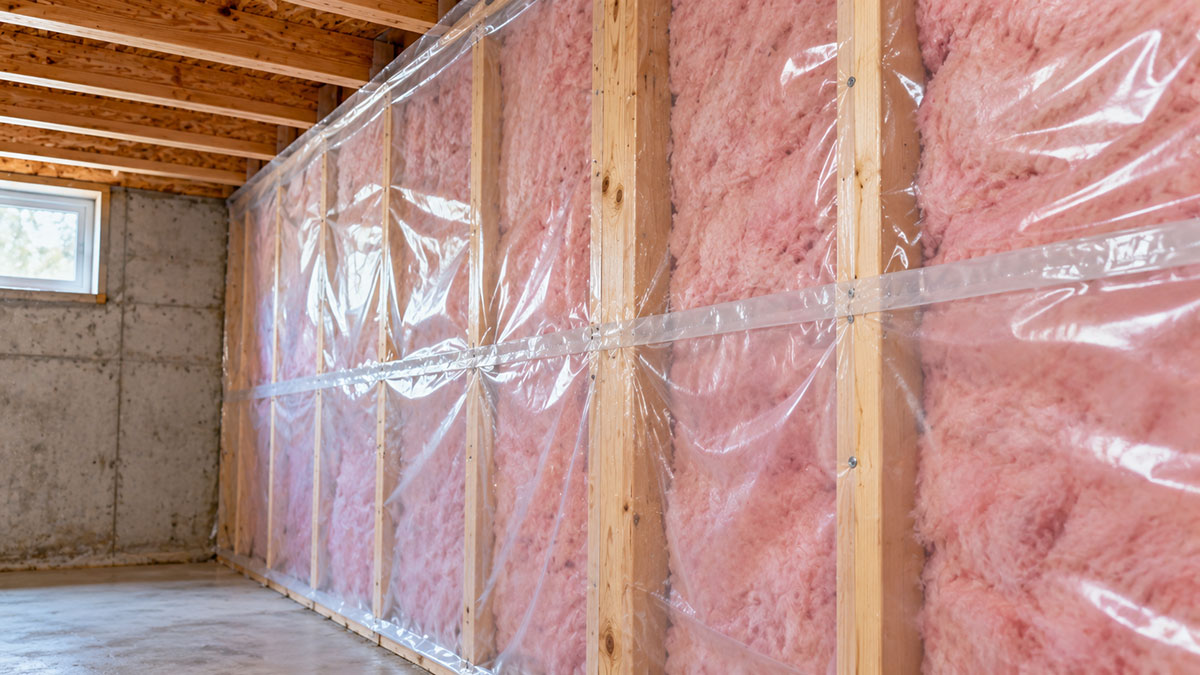
The glass doesn’t burn. The paper glued to it does. Almost every argument about whether fiberglass insulation is flammable traces back to which of those two layers somebody has in mind, because a standard batt is spun-glass fiber with a combustible paper or foil facing on one side.
Codes in the United States settle the question with lab tests rather than opinion. ASTM E136 decides whether a material counts as combustible at all. ASTM E84 measures how far flame travels and how much smoke comes with it. ASTM International’s E136-26 standard, published in 2026, requires glass fiber specimens to lose less than 50 percent of their weight and show no flaming after 30 seconds at 750 degrees Celsius to earn that noncombustible classification.
Is Fiberglass Insulation Flammable?
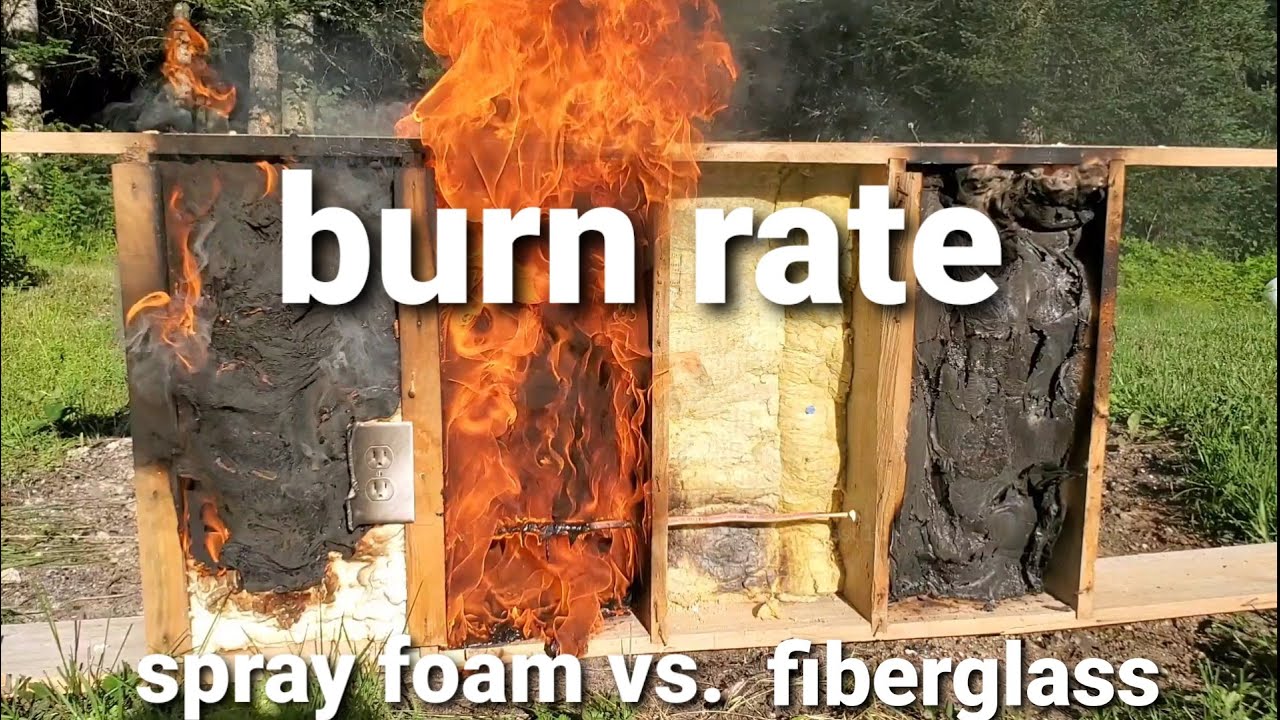
No, not the fiber itself. Molten glass gets spun into fine strands, and glass won’t ignite or hold a flame the way wood, paper, or plastic will.
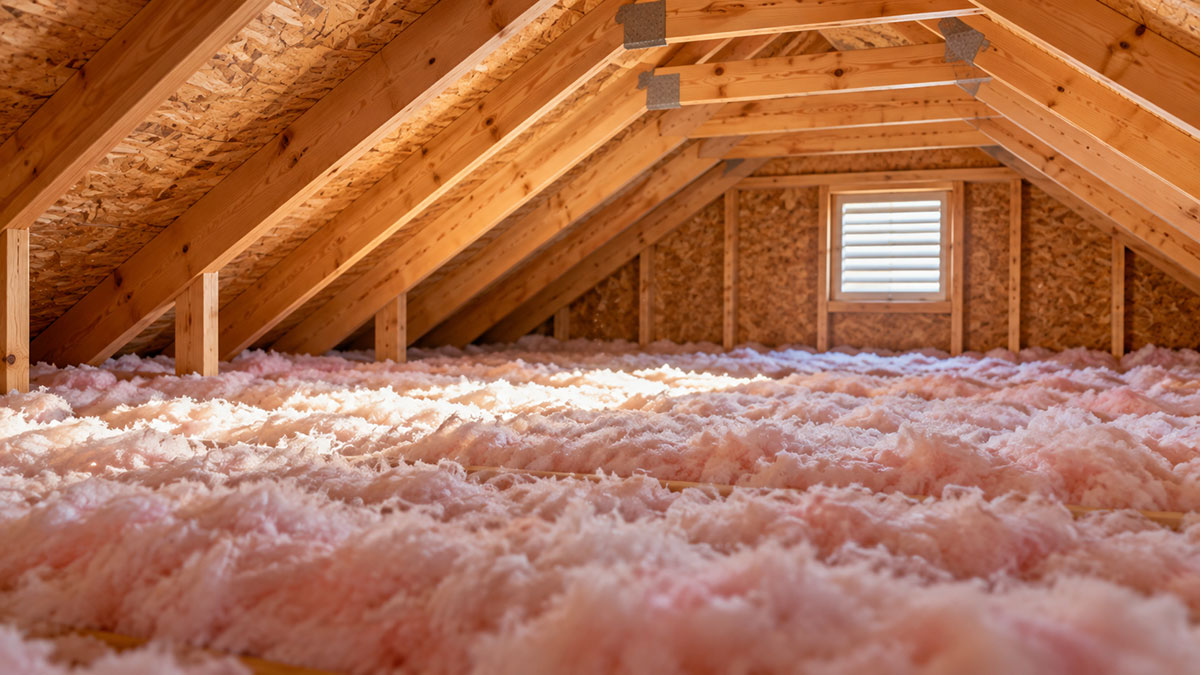
Those strands get bound into batts and rolls for walls and ceilings, or blown in loose across an attic floor.
Resin-bonded fiberglass is a different animal entirely. Boat hulls, car panels, bathtubs: all of those hold their glass fibers in a flammable resin matrix, and the resin is what burns.
People mix the two up constantly, which makes sense when both get called fiberglass insulation or just “fiberglass” in normal conversation.
Two separate fire questions apply here:
- Does the glass fiber core burn: no
- Does the facing or binder attached to it burn: sometimes, depending on the product
The first one has a short answer. The rest of this article deals with the second.
At What Temperature Does Fiberglass Insulation Melt?

Somewhere around 1,000 degrees Fahrenheit (538 degrees Celsius) is where the fibers give up. That figure comes from the nominal softening point documented in glass fiber industry specifications.
Below it, the fibers hold their shape and keep insulating.
Above it, the strands lose structure, soften, and eventually flow.
Melting is not burning, and the distinction matters. A material that melts isn’t adding fuel to the fire. It just stops doing its job.
Once the fibers slump, the assembly loses its thermal barrier, and melted material that sags or drips can expose framing or land on whatever sits below it. That’s a secondary risk, and a real one, even though the glass itself never ignites.
Worth keeping in perspective: a house fire has to run well past its opening minutes to get anywhere near that temperature. Melting shows up late.
How Is Fiberglass Insulation Tested for Fire and Smoke Performance?
ASTM E84 scores surface burning, meaning flame spread and smoke. ASTM E136 asks the blunter question of whether the material acts as fuel at all. Both come from ASTM International, and both get cited constantly in insulation fire rating discussions among code officials and manufacturers.
The Flame and Smoke Test
E84 runs a sample through a tunnel furnace and measures how far flame travels and how much smoke it produces, against two reference materials.
- Red oak flooring sets the upper reference point at 100
- Fiber-reinforced cement board sets the lower reference point at 0
You get back two numbers, a flame spread index and a smoke developed index, usually written together as something like 25/50.
Owens Corning’s FSK-faced fiberglass batts carry a flame spread and smoke developed rating under 25/50 under ASTM E84 testing, according to the manufacturer’s published specification.
The Noncombustibility Test
ASTM E136 puts a specimen in a furnace held at 750 degrees Celsius for at least 30 minutes. To pass, the specimen has to keep more than half its original weight, and it cannot show flaming after the first 30 seconds of exposure.
Glass fiber insulation clears that bar and earns the noncombustible classification building codes lean on. Note what’s in the sample, though: facing and binder are excluded.
Numbers worth keeping around.
- Melting or softening point: approximately 1,000 F (538 C)
- ASTM E136 pass threshold: less than 50 percent weight loss after 750 C exposure for 30 minutes
- NFPA 101 Class A rating: 0 to 25 flame spread index, 0 to 450 smoke developed index
- Owens Corning FSK-faced batt rating: under 25/50 flame spread and smoke developed (ASTM E84)
Is the Facing on Fiberglass Insulation Flammable?

Yes. That kraft paper or foil layer stapled across the face of the batt catches fire, even though the glass underneath never will.
One detail, and it’s responsible for most of the confusion around this whole topic.
Kraft and Foil Facings
Kraft paper facing is a thin brown paper vapor retarder bonded to one side of the batt. It burns like paper, because it is paper.
Foil-scrim-kraft facing, usually shortened to FSK, adds a reflective foil layer over that same kraft backing.
The foil slows heat transfer somewhat. It does not keep the kraft underneath from igniting once temperatures climb high enough.
Facing shows up almost exclusively on batt insulation sold in precut rolls for walls, floors, and ceilings.
Binder Chemistry and Smoke
Binder is the resin holding loose glass fibers in a batt shape, and small amounts of it burn off under enough heat, feeding smoke output.
Older products used phenol-formaldehyde binder, which smokes and off-gasses more under heat than what’s on the market now.
Bio-based binders have largely taken over, marketed under names like ECOSE Technology, and they cut formaldehyde content while producing less smoke in combustion testing.
Binder chemistry has nothing to do with whether the glass core is noncombustible. It affects how dirty the smoke gets when a facing or binder fire is already underway.
Going with loose-fill insulation or unfaced batts takes the facing question off the table completely. No paper, no foil, nothing to ignite.
Faced versus unfaced fiberglass, from a fire standpoint:
Unfaced or loose-fill fiberglass has nothing on it that can catch, and it passes combustibility testing as a bare material without any asterisks. The tradeoff is that you lose the built-in vapor retarder and may need to add one separately.
Kraft or foil-faced batts save you that installation step, and once drywall or another fire-rated layer covers them, they perform fine. Leaving that facing exposed is the problem, not the product.
Does Fiberglass Insulation Meet Building Code Fire Requirements?

It does, and without the fire-retardant treatment other insulation types need to get there.
Foam plastic insulation has to sit behind drywall or another thermal barrier. Fiberglass carries no such requirement, because it isn’t a plastic and doesn’t burn like one.
Most home insulation choices in the United States fall under either the International Residential Code or the International Building Code, depending on the structure.
Both codes permit fiberglass, rock wool, or slag wool batts in calculated fire-resistance wood-frame wall assemblies, a detail spelled out in the IBC’s calculated fire resistance provisions.
One caveat matters here. Lab testing under ASTM E136 covers the glass fiber material alone. The kraft facing on a faced batt is not part of that result, which is why exposed facing still needs its own consideration.
NAIMA, the trade group representing North American fiberglass insulation manufacturers, publishes the test data behind these code allowances so inspectors and installers can verify compliance product by product.
Clearance Around Recessed Lights, Flues, and Chimneys
IC-rated recessed light fixtures, certified under UL 1598, use an air gap between two layers of metal casing so the outer housing stays cool enough for insulation to touch it.
- IC-rated: safe for direct contact with fiberglass or cellulose insulation
- Non-IC-rated: needs clearance space and a protective cover
Standard retrofit guidance calls for a 3-inch clearance on all sides of a non-IC-rated fixture, with a cover made from a material carrying at least a 1-hour fire rating.
Same logic applies to flues and chimneys. Batts should never pack against a chimney chase or flue pipe, since local code calls for noncombustible clearance in those zones. I’ve seen plenty of attics where somebody stuffed insulation right up to the chase, and it’s an easy thing to fix during any attic work.
How Does Fiberglass Insulation Compare to Mineral Wool, Cellulose, and Spray Foam in a Fire?
Middle of the pack. Noncombustible like mineral wool, but with a lower melting threshold and a facing vulnerability that neither mineral wool nor treated cellulose brings along.
Looking across other types of insulation materials puts that middle position in context.
| Material | Core behavior | Melting or ignition point | Fire resistance level |
|---|---|---|---|
| Fiberglass | Noncombustible glass fiber | Approximately 1,000 F (538 C) | Medium |
| Mineral wool | Noncombustible stone fiber | Above 1,832 F (1,000 C) | High |
| Cellulose, treated | Flammable paper treated with boric acid | No fixed melting point, chars instead | High, once treated |
| Spray polyurethane foam | Combustible plastic | Requires a thermal barrier by code | Medium, only when protected |
Mineral Wool
Sometimes called rock wool, it gets spun from basalt rock or recycled slag instead of glass, and it holds structure long past the point where fiberglass starts to slump.
Rockwool, one of the larger manufacturers in this category, publishes ASTM E136 noncombustibility results alongside a melting point above 1,832 F (1,000 C) across its mineral fiber product lines.
That gap of roughly 800 degrees is why rock wool insulation keeps showing up in fire-resistance-rated wall assemblies and high-heat industrial settings.
Cellulose
Recycled newspaper is where cellulose starts, which means it begins as a flammable material before anybody treats it.
Boric acid and other fire retardants get added during processing to bring it up to a Class 1 fire rating, the same top bracket unfaced fiberglass batts typically reach.
Treated cellulose packs tighter than a fiberglass batt, without the same air pockets, so once it chars it tends to smolder in place rather than let flame run through a cavity the way exposed facing can.
Additives fix the flammability problem. They don’t eliminate it.
Spray Polyurethane Foam
Spray foam is a plastic, and the building code treats it accordingly.
Foam plastic insulation has to sit behind an approved thermal barrier, commonly half-inch gypsum board, before it can be exposed to occupied space. That requirement is based on fire exposure testing under the ASTM E119 standard time-temperature curve.
Attics and crawl spaces don’t usually have drywall, so code calls for a lighter ignition barrier there instead, such as a sheet of particleboard or a layer of mineral fiber insulation.
Fiberglass skips all of this. No barrier requirement, because the glass fiber core isn’t classified as a plastic and doesn’t need a protective layer to meet the same fire test.
When Does Fiberglass Insulation Stop Being a Safe Fire Choice?

It stops being adequate once facing sits exposed, once cavity design lets flame travel no matter what fills the cavity, or once the project needs a higher melting threshold than glass fiber can offer.
None of that makes the material unsafe by default. It means a standard product is being asked to do a job it was never tested for.
Exposed facing in open attics. Kraft or foil-scrim-kraft facing left uncovered by drywall or another fire-rated layer keeps a combustible surface open to any ignition source in that space.
Cavity fire spread. Fiberglass doesn’t stop fire from moving through a stud cavity above or below it. The framing and the cavity design decide that, not whatever is filling the gap.
High-heat or fire-rated separations. Industrial settings, chimney chases, and true fire-resistance-rated wall assemblies usually specify mineral wool, for the melting point reason covered above.
Loss of barrier function. Past the melting point, softened fibers lose structure and the material quits working as a barrier. Molten material that sags or drips can expose framing or contact what sits below, which is a secondary risk even with nothing actually burning.
None of these failure points appear in a standard E84 or E136 result. Both tests measure the material under controlled conditions, not inside a real cavity fire, and that’s a limitation worth remembering when somebody waves a spec sheet at you.
Frequently Asked Questions
Is Fiberglass Insulation the Same as Fiberglass Composite Used in Boats and Car Parts?
No. Same word, different product, and resin content is what separates them in a fire.
| Product | Resin content | Fire behavior |
|---|---|---|
| Fiberglass insulation | None in the glass fiber core | Noncombustible fiber, combustible facing only |
| Fiberglass composite (boats, panels, tubs) | Polyester or epoxy resin matrix | Resin burns, fibers become airborne |
Once the resin in a composite ignites, it throws off thick black smoke and toxic byproducts as it burns away from the glass underneath.
The glass fibers in that scenario never burn. They do become airborne once the resin holding them together is gone, which is its own hazard for anyone standing nearby.
Which Insulation Type Do Building Codes Require in Wildfire-Prone or High-Fire-Risk Zones?
Wildfire codes mostly ignore insulation. They go after the exterior envelope.
Chapter 7A of the California Building Code, the model most states borrow from, sets requirements for roofing, siding, decking, windows, eaves, and attic vents in Wildland-Urban Interface zones.
- Attic and foundation vents need noncombustible wire mesh screening no larger than 1/8 inch, and no smaller than 1/16 inch, against ember intrusion
- Wildland-listed vents must keep the unexposed side at or below 662 F (350 C) during flame testing
Nothing in those provisions says what the wall cavity behind the envelope has to hold, whether that’s fiberglass, mineral wool, or cellulose.
That broader question, whether home insulation in general is flammable, gets its own answer across material types.
Do You Need to Replace Fiberglass Insulation After It Has Been Exposed to Fire or High Heat?
Usually yes, once smoke, soot, or char has touched it.
Fiberglass is porous, and combustion odor settles into the fiber structure in a way ordinary cleaning won’t reverse. You’ll smell it for years.
Anything with direct smoke or soot contact gets replaced as standard practice. Material that was simply nearby, with no direct contact, often stays in place after inspection.
Restoration contractors work from the ANSI/IICRC S700 Standard for Fire and Smoke Damage Restoration when deciding what gets cleaned and what gets hauled out, and porous insulation lands on the removal side of that line more often than not.
Can You Safely Handle Fiberglass Insulation After a Fire Without Protective Equipment?
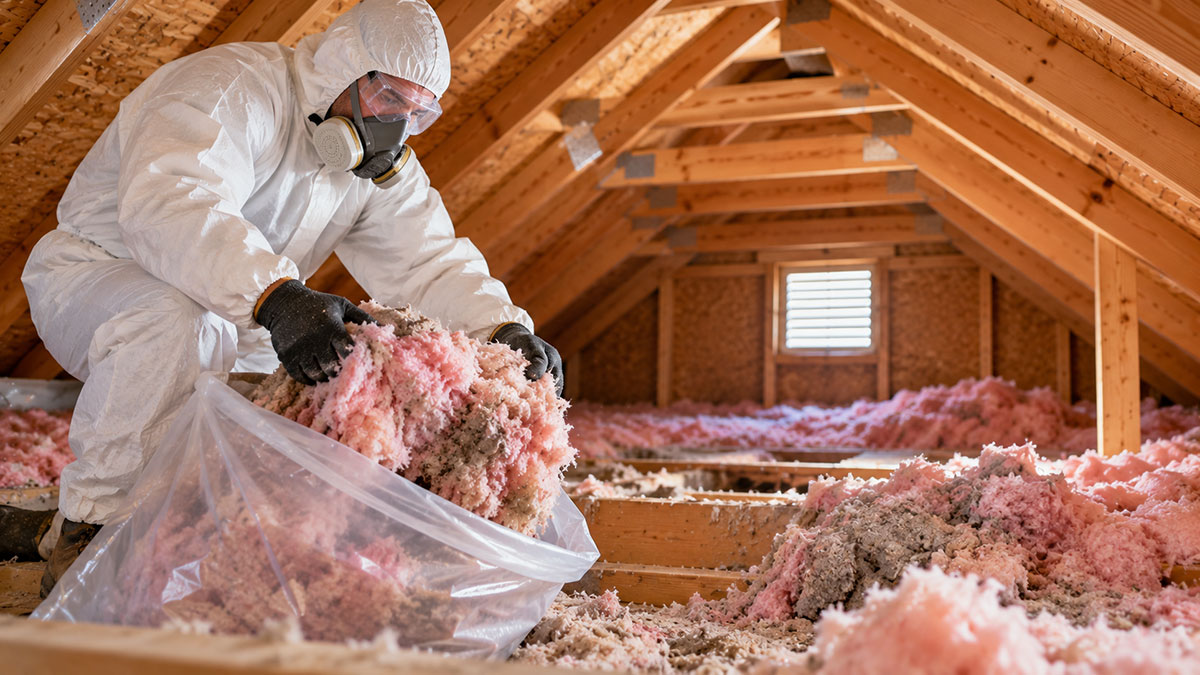
No. Skip the gloves, mask, and eye protection, and irritation is your best-case outcome.
For routine exposure, OSHA sets a permissible exposure limit of 15 mg/m3 for total fibrous glass dust and 5 mg/m3 for the respirable fraction, while manufacturers commonly recommend staying under 1 fiber per cubic centimeter.
Fire stacks a second layer of risk on top of the usual skin and lung irritation.
- Routine handling: dust mask, gloves, long sleeves, eye protection
- Post-fire handling: add a particulate respirator and ventilate the space before working
Burned facing and binder can give off carbon monoxide, hydrogen chloride, and low levels of cyanide compounds as they break down, according to manufacturer safety data sheets for fiberglass insulation products.
Does Homeowners Insurance Require a Specific Fire Rating for Fiberglass Insulation?
No insurer mandates a rating for a specific insulation product. Code compliance is the actual bar.
Where insurance does touch this is code upgrade coverage, the part of a policy that pays to bring damaged systems, insulation included, up to current code after a loss.
A standard policy pays to restore insulation to its pre-loss condition and stops there. A code upgrade endorsement covers the difference between that pre-loss condition and what current code demands.
California Assembly Bill 2756 requires a minimum of 10 percent additional code upgrade coverage on open residential policies issued or renewed after July 21, 2021.
Ask about code upgrade coverage by name. The base policy rarely volunteers it.
What to Fix First
Facing containment comes first. Exposed kraft or foil-scrim-kraft facing is the only combustible layer in a standard batt, and covering it with drywall or another fire-rated material is the fastest fix available to most homeowners and installers.
After that, keep clearance around recessed lights, flues, and chimneys. And reserve mineral wool for the zones that actually run hot, rather than defaulting to it everywhere and paying for performance you won’t use.
Here’s a detail that surprises people. The E136 furnace runs at 750 degrees Celsius, which sits above fiberglass’s own 538 degree Celsius melting point, so the glass fiber sample has already begun softening by the time inspectors check it for weight loss and flaming. Passing that test doesn’t mean the material came through unchanged. It means it never contributed fuel.
A full walk-through of correct installation order, including facing orientation and fixture clearance, lives in the guide on how to install fiberglass insulation.