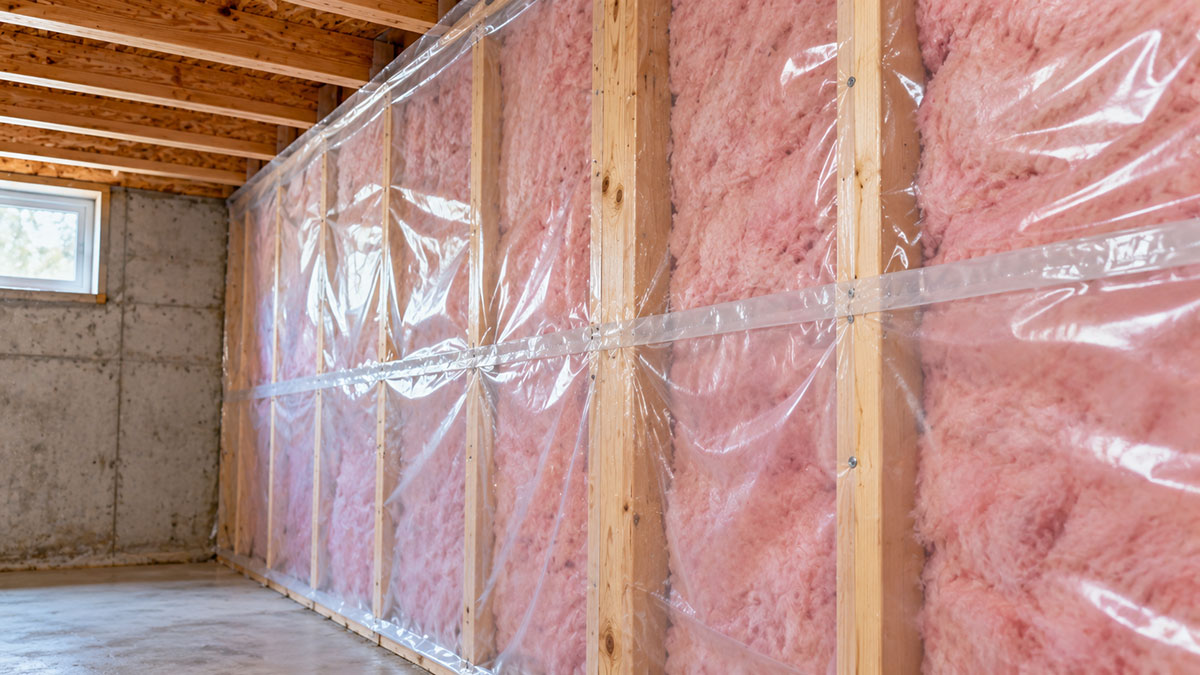
Pull the drywall off a cold wall and you will sometimes find the cavity completely full. Every inch packed with fiberglass, no gaps, nothing obviously wrong. And it still performs like half the insulation walked off the job.
That is compression. Fibrous batt insulation forced into a cavity shallower than its rated thickness loses the loft it depends on, and loft is where thermal resistance actually lives. Installers cause it most often by working an oversized batt around wiring or into a narrow stud bay. Inspectors catch it by measuring what ended up in the wall against the R-value printed on the product label.
An R-19 fiberglass batt rated at 6.25 inches drops to about R-18 when compressed by 12 percent into a 5.5-inch 2×6 cavity, according to the compression formula published by the North American Insulation Manufacturers Association (NAIMA, 2016).
What Is Insulation Compression?
The material stays exactly where you put it. Density is what changes. Squeeze a batt into less depth than it was built for and the air pockets inside it shrink, which is the entire mechanism. A thermal defect, technically, though it never looks like one.
That distinction matters more than it sounds like it should. A missing chunk of insulation and a flattened chunk of insulation both read as a cold wall on a January morning, and they get fixed in completely different ways.
Worth separating from thermal bridging too, which is heat skipping past the insulation through a stud or joist rather than moving through the batt at all.
Insulation Compression vs Insulation Gaps
With compression the batt is present and continuous. Density goes up, the air pockets shrink, and the thing still looks installed.
A gap is simpler. The batt does not reach part of the cavity, so a section of the wall has no insulation in it whatsoever.
Both cut performance. Only one leaves the batt physically intact when you pull back the drywall.
Insulation Compression vs Insulation Settling
Settling is a slower, separate failure mode.
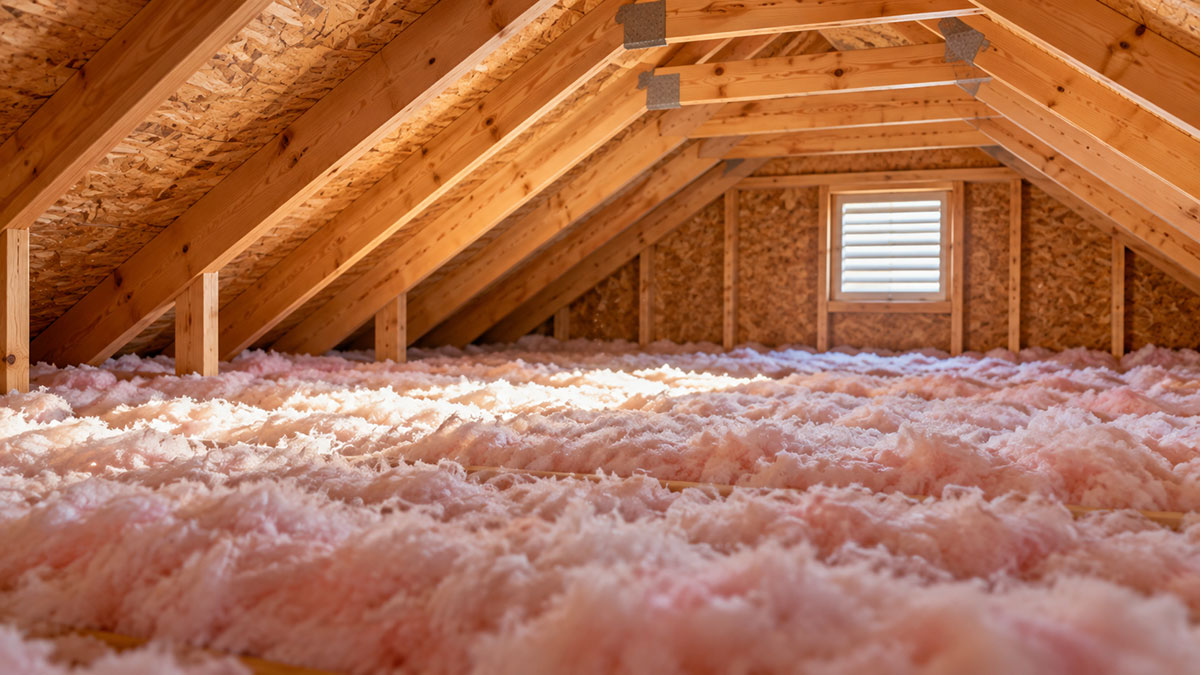
It shows up mostly in loose-fill and blown-in products, where loft drops over months or years from gravity, vibration, or moisture. Not from an installer forcing material into place on day one.
That gradual drift is better described as insulation settlement, a measurable density change tracked over time rather than a single installation error.
What Causes Insulation Compression?
Every case traces back to the same behavior, which is fitting a batt into a cavity smaller than the product needs. What varies is how the job got there.
Sometimes it is the batt itself. A 6.25 inch R-19 dropped into a 2×4 wall built for 3.5 inches, because that was what came off the truck that morning and nobody wanted to make a second trip.
Sometimes it is what is already in the cavity. Wiring, plumbing, electrical boxes, blocking. All of it eats into the available depth, and nobody re-sizes the insulation around any of it.
And sometimes it is pace. Stuffing a batt around a pipe is faster than slitting it and fitting both halves. It also wrecks the loft in precisely the spot where you needed it most.
Every wall assembly has a minimum insulation thickness for wall cavity depth baked into the framing. What shows up on site does not always match it.
An audit conducted for New Zealand’s Energy Efficiency and Conservation Authority found that all 58 homes surveyed had fiberglass batt insulation installed with folds, tucks, compression, or gaps (EECA, 2011).
None of the 58 met the country’s voluntary installation standard. New construction, not decades-old retrofits, which tells you something about how ordinary this mistake is under perfectly normal conditions.
Part of why is the product itself. Batt insulation is a fixed-thickness material meeting a fixed-depth cavity, and neither side gives.
How Insulation Compression Reduces R-Value

The damage happens at the fiber level, not at the surface.
R-value comes from the pockets of still air trapped between fibers. Not from the glass or mineral fiber itself. Obviously the fiber has to be there, but its job is holding the air still, nothing more.
Compress the batt and those pockets collapse. Density rises, thermal conductivity through the material shifts, and total resistance to heat transfer falls even though the fiber count in that cavity never changed by a single strand.
Same principle as everywhere else in the house. Dead air resists heat.
The numbers on compressed batt insulation are worth knowing before you argue with anyone about them:
- Standard low-density fiberglass batt delivers about R-3.1 per inch at full rated thickness (JLC, citing Bruce Harley of Conservation Services Group)
- A 6-inch R-19 batt forced into a 3.5 inch cavity drops to about R-14, even as the per-inch value climbs toward R-4.0
- Under NAIMA’s published compression formula, a 6.25 inch R-19 batt squeezed to 5.5 inches (12 percent compression) lands around R-18
- That same formula treats R-value loss as roughly half the percent of compression, not a one-to-one drop
That last point catches people out. Compression and R-value loss are not proportional, which is why the North American Insulation Manufacturers Association publishes the formula at all. HERS raters needed a way to assign a compressed R-value instead of eyeballing it.
So a little compression barely registers. A batt rated for a 2×6 cavity jammed into a 2×4 wall is a real loss, and that one shows up on the energy bill.
Insulation Compression Across Material Types
Not every insulation material compresses the same way, and some do not compress at all in the way fiberglass does.
| Material | Compressible | Density Behavior | Typical Use |
|---|---|---|---|
| Standard fiberglass batt | Yes, significantly | Low and loose, packs down easily | Standard wall and attic cavities |
| High-density fiberglass batt | Yes, less severely | Denser fiber pack resists flattening | 2×4 walls needing more R-value per inch |
| Mineral wool batt | Yes, but resists more | Naturally denser, holds its shape when cut | Fire-rated and sound-control assemblies |
| Loose-fill or blown-in | No, settles instead | Density drops slowly over years, not on install day | Open attics, retrofit cavities |
Fiberglass insulation runs light by design. That is exactly why a stray wire or an oversized batt flattens it so readily.
Rock wool insulation is a denser mineral fiber product and holds its loft better under the same pressure. Not immune, just stubborn. It also cuts clean, which is a small thing until you have spent an afternoon fighting limp fiberglass.
Johns Manville, which manufactures both product lines, reports its mineral wool batt at R-15 at 3.5 inches against its fiberglass batt at R-13 at the same thickness (Johns Manville, 2021).
Loose-fill and blown-in materials sit outside this whole discussion. They settle rather than compress, a different mechanism with a different fix.
Where Insulation Compression Happens in a Building
The locations are predictable, and they are almost always wherever the framing gets busy.
- Attic joist bays, especially where batts fold over blocking or duct runs
- Wall stud cavities, when an oversized batt gets forced into a standard 2×4 or 2×6 bay
- Band joists and rim joists, where cut pieces routinely get jammed rather than fitted
- Areas around recessed lighting and electrical boxes, a recurring problem in retrofit work
Product changes the risk profile. Loose-fill in an attic settles instead of compressing, which changes how you go about diagnosing a cold spot at the ceiling line.
Wall stud cavities are the least forgiving spot on the list. Once the drywall goes up there is no adjusting the depth, and every wire or pipe running through the bay spends part of a fixed budget nobody wrote down.
How to Detect Compressed Insulation
You cannot always see it without opening a wall. But there are signs.
Visual Inspection
A compressed batt looks flattened against its rated thickness, and the sides often pull away from the cavity where it got pushed in to fit.
During a retrofit the clearest evidence is simply a batt that comes out thinner than the number printed on its own paper facing.
Things to look at:
- Fold marks or crushed sections around wiring and boxes
- Batt depth measured against the cavity depth, not the label
- Gaps at the cavity edges where material got pushed inward to fit
No special equipment required. Enough light and enough patience to look closely at what is actually in there.
Infrared Thermal Imaging
A thermal imaging camera reads surface temperature differences and shows compressed zones as cooler patches. Heating season gives the sharpest contrast against the surrounding insulation, so that is when the scan is worth doing.
Most home energy auditors carry a FLIR-brand unit or something equivalent. It turns an invisible problem into something you can point at on a screen, which matters more than you would think when the homeowner is standing right there.
Pair the scan with a blower door test and you can confirm whether the cold patch lines up with measurable air leakage. Compression and air sealing failures tend to travel together.
Neither tool alone tells the whole story. Together they turn a suspicion into a documented finding.
When Insulation Compression Does Not Apply
Compression is not a defect in every case. Treating every minor mismatch as a failed installation burns hours on cavities that were fine to begin with.
Under half an inch, the fibers stay loose enough to keep trapping air, and the R-value change is small enough to ignore in most cavities.
Rigid and closed-cell products sit outside the problem entirely. Spray foam and rigid foam board cure or form as solid material, so a cavity depth mismatch does not squeeze them the way it squeezes a fibrous batt.
Some wall systems are deliberately built shorter than standard framing, using a high-density batt already rated for that reduced depth. No compression penalty exists there because nothing is being compressed.
Then there is the single wire or pipe running through an otherwise properly fitted batt. That compresses a small fraction of the batt’s face, which is a genuinely different problem than forcing the whole batt into an undersized cavity, even though both get called compression.
The distinction is what decides whether a cavity needs correcting or should be left alone.
How to Fix Compressed Insulation

The order matters. Skip a step and you will usually be back in the same cavity later.
Access is what changes between an attic joist bay and a finished wall, not the process itself.
- Identify the compressed zone. Mark exactly where the batt is flattened using the visual and thermal signs covered earlier, not just the general area.
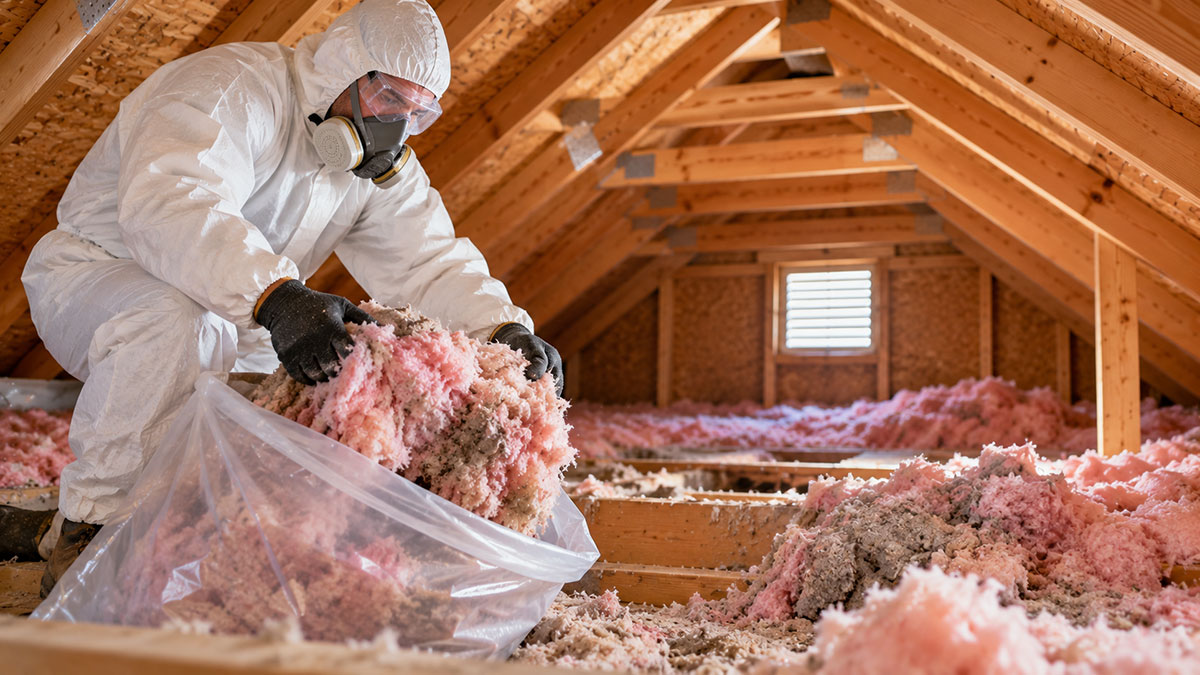
- Remove the compressed batt. Pull it out fully rather than trying to fluff it back into place, since a flattened batt rarely regains its rated loft on its own.
- Clear or replan around the obstruction. Reroute a wiring service loop where code allows, or accept the obstruction and plan the cut around it instead of through it.
- Select a properly sized replacement. Match the batt’s rated thickness to the actual cavity depth, not the other way around.
- Install without forcing. Fill the cavity on all sides and split the batt around wires and pipes rather than compressing it against them.
The mistake almost everyone makes is reinstalling the same oversized batt without trimming it, which recreates the original compression in the same spot within about four minutes of removing it.
Attic work is a reasonable weekend job for a confident homeowner. Finished wall cavities, where the batt sits behind drywall, generally call for a contractor.
Technique on the cut counts as much as getting the thickness right. The correct way to cut fiberglass insulation is what keeps you from trading a compression defect for a gap defect.
The U.S. Department of Energy’s Weatherization Assistance Program folds this kind of correction into its standard site visits.
The program reports average household savings of $372 a year across all the measures it installs combined, serving roughly 32,000 homes annually (DOE, 2025).
For technique beyond a single repair, the guide on how to install fiberglass insulation covers full cavity prep and fitting.
Compression Correction Methods Compared
Fixing a batt-to-cavity mismatch comes down to trimming what you have or buying the right product. Material on hand and budget usually decide it for you.
Which of the types of insulation materials is already on site shifts the math too, since fiberglass and mineral wool behave very differently under a blade.
Cut-and-Fit Method
Trimming a standard batt down to match the actual cavity depth around obstructions, rather than forcing the full batt in.
The appeal is obvious enough:
- Uses batt already on site, no special order needed
- Lower material cost per job
- Works on any batt thickness with basic tools
The catch is that it is slow, since every obstruction needs its own cut. Results also swing hard between installers, and each cut edge is one more place a small gap can open up. Skill-dependent work in a trade where the crew changes week to week.
Correct Thickness Product
Standard fiberglass batt runs about R-3.1 to R-3.4 per inch. A high-density version of the same batt packs more R-value into a shorter cavity, which sidesteps the whole problem.
An R-21 high-density batt is built at 5.5 inches and holds its full rating in a 2×6 wall. That is the same space where a standard R-19 batt, rated at 6.25 inches, would have to be compressed to fit (theroofingbrief.com, 2026).
No trimming, consistent results whoever is installing it, and nothing to calculate afterward.
You pay for it in two ways. Material costs more, and the product has to be ordered in the right density ahead of time instead of pulled from whatever is already on the truck. That second one kills it on a lot of jobs.
Anyone pricing out the cost per square foot for insulation upgrade usually finds the gap smaller than expected, since the premium sits on the material only and labor stays flat.
Insulation Compression and R-Value Standards
Every compressed batt still gets measured against a rated R-value that assumes it was never compressed at all.
That rating comes from a specific test, run at full thickness, under a federal rule governing what a manufacturer is allowed to print on the bag.
| Standard or Body | What It Governs | Key Requirement |
|---|---|---|
| ASTM C518 | How R-value gets measured | Heat flow meter test at full, uncompressed thickness |
| FTC R-value Rule | What can be claimed on labels and ads | Claims must reflect standardized test results, not field conditions |
| RESNET / HERS grading | Installation quality in the field | Up to 2 percent of area compressed, under 30 percent depth loss, still qualifies as Grade 1 |
| IECC / ASHRAE 90.1 | Minimum R-value by climate zone | Assumes full-depth, uncompressed installation |
ASTM C518 is the test itself, run in a heat flow meter apparatus at full, uncompressed thickness. Which is why the number on the bag and the number sitting in your wall are not always the same thing.
The FTC’s R-value Rule has real money behind it, not just warning letters. In 2013 a federal court ordered insulation marketer Edward Sumpolec to pay a $350,000 civil penalty, the largest in a home insulation case, over advertising claims the FTC called false and unsubstantiated (FTC, 2013).
RESNET, the body behind the Home Energy Rating System, sets the field standard a rater checks against during a home energy audit.
Under that standard a batt can carry up to 2 percent compressed area and still count as a Grade 1 installation, provided the compressed section keeps more than 70 percent of its intended depth.
Past that threshold, the HERS modeling software starts scoring the wall at a lower effective R-value whether or not anyone measures the batt by hand.
Code minimums under the IECC and ASHRAE 90.1 assume the insulation went in at full depth in the first place. So a compressed cavity can clear a permit inspection on paper while falling well short of what the code was written to deliver.
FAQ on What Is Insulation Compression
Should You Replace Compressed Insulation or Just Remove the Cause?
Removing the cause, whether it is stray wiring or an oversized batt, stops a cavity from recompressing again.
It does not restore lost R-value on its own, so full recovery still calls for a properly sized replacement batt.
What Is the Best Way to Correct Compression Around Wires and Pipes?
Split the batt around the obstruction instead of pressing it flat against one side.
Two half-thickness sections, tucked behind and in front of the wire or pipe, preserve loft far better than a single compressed piece.
What Tools Do Professionals Use to Detect Compression?
Most home energy raters carry a thermal imaging camera for the visual scan and a blower door test for airflow.
A simple tape measure checks batt depth directly against the cavity, still the most basic professional check of all.
Can You Add More Insulation on Top of Compressed Insulation Instead of Fixing It?
Adding a second layer on top raises total R-value but does not undo the compression sitting underneath it.
The original layer stays flattened and inefficient, and a new layer settles poorly over a batt that was never properly seated.
Can Compressed Fiberglass Be Fluffed Back Up, or Does It Need Replacing?
Fiberglass fibers deform under sustained compression, so fluffing rarely restores full loft once a batt has sat flattened for long.
Light, recent compression often recovers somewhat, but anything compressed for months typically needs a full replacement batt instead.
What Should You Fix First With Insulation Compression?
Start with wall stud cavities and band joists. That is where an oversized batt sheds R-value fastest, and it beats attic bays where loose-fill settling is a slower, more forgiving problem.
Rough priority order:
- Wall stud cavities and band joists, highest R-value loss per square foot
- Recessed lighting and electrical box surrounds, quick fixes with immediate payoff
- Attic joist bays with loose-fill settling, gradual and lowest urgency
Choosing wall cavities over attics means accepting higher demolition cost in exchange for a larger R-value recovery per square foot you open up.
Consider a single 2×4 cavity compressed from R-19 to R-14. It has lost more than a quarter of its rated value. The depth loss there runs roughly 42 percent, from a 6-inch batt down to a 3.5-inch cavity, which blows straight past the 30 percent limit RESNET allows a compressed spot to keep while still counting toward a Grade 1 rating.
Once the insulation itself checks out, air sealing is the next envelope fix worth looking at. The two problems overlap often enough that it makes sense to handle them in the same visit.