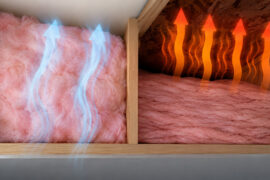
Your walls could be leaking up to 35% of your home’s heat right now. If your house was built after the 1920s, chances are it has cavity walls with an empty gap doing almost nothing to keep you warm.
So what is cavity wall insulation, and why does it matter?
This guide covers everything you need to know: how cavity walls work, the different insulation materials available, installation process, costs, and whether your property qualifies.
You’ll also learn about potential problems to avoid and funding options that could make the upgrade free or heavily subsidised.
Reducing heat loss through your walls is one of the most effective ways to cut energy bills and improve home insulation overall.
What is Cavity Wall Insulation

Cavity wall insulation is a thermal barrier material injected or fitted into the gap between the two leaves of an external wall to reduce heat loss from a building.
Most UK homes built after the 1920s have cavity walls. The gap between the inner and outer walls was originally designed to prevent damp from reaching interior spaces.
That air gap alone does a poor job of stopping heat from escaping. Filling it with insulation material changes everything.
Understanding how insulation works helps explain why this upgrade makes such a difference to your heating bills.
How Does a Cavity Wall Work
A cavity wall consists of two separate masonry layers (called leaves) with a gap between them. The outer leaf is typically brick; the inner leaf is brick or concrete block.
Metal wall ties hold these two layers together at regular intervals.
The cavity itself typically measures 50mm to 100mm wide. Originally, builders left this space empty to create a barrier against rainwater penetration.
Rain hitting the outer leaf would run down inside the cavity rather than soaking through to your interior walls. Smart for damp prevention. Not great for thermal conductivity.
Identifying Cavity Walls vs Solid Walls
Look at your brickwork. If you see only the long sides of bricks in a uniform pattern, you have cavity walls.
Alternating long and short brick faces (a stretcher-header pattern) indicate solid walls. Pre-1920s homes typically have solid construction.
Why Do Cavity Walls Need Insulation
An uninsulated home loses approximately 25% to 35% of its heat through external walls. That empty air gap between your wall leaves barely slows this process down.
Air is a poor insulator when it can move freely. Convection currents inside the cavity transfer heat from your warm inner wall to the cold outer wall.
The benefits of home insulation become obvious once you fill that gap. Heat stays inside where you want it.
Energy Efficiency and Cost Savings
Filling your cavity reduces the U-value of your walls significantly. Lower U-value means less heat escaping.
Most homeowners see their heating bills drop by 100 to 370 GBP annually, depending on property size. The payback period for insulation is typically under five years.
Environmental Impact
Less energy consumption means a smaller carbon footprint. Your boiler runs less; you burn less gas.
The Energy Saving Trust estimates cavity wall insulation saves around 690kg of CO2 emissions per year in a typical semi-detached house.
Types of Cavity Wall Insulation Materials
Several types of insulation materials work for cavity walls. Each has different thermal properties, costs, and installation requirements.
Your choice depends on cavity width, exposure to weather, and budget.
What is Mineral Wool Insulation
Mineral wool (including glass wool and rock wool insulation) has been used in UK homes since the 1950s. Lambda value sits around 0.034 W/mK.
Fire resistant and recyclable. Also provides decent soundproofing. Costs roughly 10 to 15 GBP per square metre for materials.
What is Polystyrene Bead Insulation
Expanded polystyrene (EPS) beads get blown into the cavity using compressed air. Often bonded with adhesive to prevent movement.
ThermaBead is a popular branded system. Works well in narrower cavities where mineral wool struggles.
What is Polyurethane Foam Insulation
PUR foam offers the best thermal performance with a lambda value around 0.030 W/mK. Two chemicals mix inside the cavity and expand to fill every gap.
More expensive than other options. Some mortgage lenders have concerns about spray foam insulation affecting property values.
What is Blown Mineral Fibre Insulation
Fiberglass insulation strands blown into cavities using specialist equipment. Environmentally friendly option since it can contain recycled glass.
Good coverage even in awkward spaces. The British Board of Agrement (BBA) certifies most products.
How is Cavity Wall Insulation Installed
Installation follows a drill-and-fill insulation method. Holes drilled in external walls; material pumped or blown into the cavity.
The whole process takes about two hours for a standard house. No need for installers to enter your home.
What Happens During a Cavity Wall Insulation Survey
A registered installer inspects your property first. They check:
- Cavity width (minimum 50mm required)
- Brickwork and mortar condition
- Exposure to driving rain
- Existing damp issues
- Flood risk for your location
Some installers use a borescope inspection to look inside the cavity directly. This confirms whether any rubble or debris needs clearing.
What is the Cavity Wall Insulation Installation Process
The installer drills 22mm holes at roughly 1 metre intervals across your external wall. Scaffolding may be needed for upper floors.
Specialist equipment pumps insulation material through these holes until the cavity fills completely.
Afterwards, holes get sealed with mortar to match your existing brickwork. Barely visible once finished.
Who Can Install Cavity Wall Insulation
Only use installers registered with the Cavity Insulation Guarantee Agency (CIGA) or National Insulation Association (NIA).
CIGA provides a 25-year guarantee covering defects from faulty installation. Check your installer holds current membership before work begins.
The Trustmark scheme and PAS 2030 certification also indicate reputable contractors. Building Control may need notification depending on your local authority.
What Properties Are Suitable for Cavity Wall Insulation
Not every home qualifies. Your installer conducts a survey to assess suitability before any work begins.
Getting this assessment wrong leads to serious problems down the line. Damp, mould, structural damage.
What Are the Requirements for Cavity Wall Insulation
Your property needs to meet specific criteria:
- Cavity width of at least 50mm
- Clear cavity with no rubble or debris
- Masonry and mortar joints in good condition
- Limited exposure to driving rain
- No existing damp or moisture problems
- No flood risk in your area
A home energy audit can identify whether your walls lose significant heat and whether cavity fill makes sense for your situation.
What Properties Are Unsuitable for Cavity Wall Insulation
Properties in exposed locations face higher risk of rain penetration after installation. West-facing walls in coastal areas are particularly problematic.
Homes with existing damp issues need those problems fixed first. Insulating over damp traps moisture inside your walls.
Narrow cavities under 50mm, damaged brickwork, and buildings with non-standard construction may need external wall insulation instead.
How Much Does Cavity Wall Insulation Cost
Costs vary by property size and insulation material. Unsubsidised prices have dropped over the years as the industry matured.
Understanding the ROI on insulation helps justify the upfront expense.
What is the Average Cost of Cavity Wall Insulation
Typical prices without grants or subsidies:
- Mid-terrace house: 370 to 500 GBP
- Semi-detached house: 475 to 700 GBP
- Detached house: 725 to 1,200 GBP
- Detached bungalow: 400 to 650 GBP
Material cost runs about 20 GBP per square metre on average. Labour and equipment make up the rest.
What Energy Savings Does Cavity Wall Insulation Provide
Annual savings based on Energy Saving Trust data (gas-heated homes, July 2025 fuel prices):
- Mid-terrace: approximately 100 GBP per year
- Semi-detached: approximately 175 GBP per year
- Detached: approximately 370 GBP per year
Most installations pay for themselves within three to five years. After that, pure savings on your heating bills.
What Problems Can Occur With Cavity Wall Insulation
Cavity wall insulation works brilliantly when installed correctly in suitable properties. Problems arise from poor workmanship or installing in unsuitable homes.
A thermal imaging camera survey can reveal issues with existing installations.
What Causes Damp After Cavity Wall Insulation
Moisture bridging happens when insulation material touches both wall leaves, creating a path for rainwater to reach your inner wall.
Exposed properties suffer most. Wind-driven rain soaks through the outer leaf, hits the insulation, and wicks across to the inside.
Thermal bridging at wall ties can also cause localised cold spots where condensation forms.
How to Identify Failed Cavity Wall Insulation
Warning signs to watch for:
- Cold patches on internal walls
- Increased condensation on windows
- Damp patches appearing after rain
- Mould growth in corners or behind furniture
- Uneven wall temperatures
If problems develop, insulation vacuum removal extracts the failed material so the cavity can dry out.
CIGA guarantees cover defects caused by faulty installation for 25 years. Check your paperwork.
What Funding is Available for Cavity Wall Insulation
Government schemes and energy company obligations can cover part or all of the installation cost. Eligibility depends on your circumstances and location.
Government Grants and Schemes
The Great British Insulation Scheme provides funding for households in lower Council Tax bands (A to D in England) or those receiving qualifying benefits.
ECO4 (Energy Company Obligation) requires large energy suppliers to fund home improvements for eligible households. Low income, health conditions, and inefficient properties all factor into qualification.
Some people qualify for free home insulation through these programmes.
Local Authority Support
Many councils run their own weatherization rebate programmes. Home Energy Scotland offers interest-free loans and cashback in Scotland.
Contact your local authority’s housing or energy team to check what’s available in your area.
Energy Performance Certificates
Installing cavity wall insulation improves your Energy Performance Certificate (EPC) rating. Higher ratings mean better resale value and lower running costs.
Properties rated E, F, or G may be required to improve before being rented out under Minimum Energy Efficiency Standards (MEES).
Landlords facing these requirements can explore retrofit insulation options to bring properties up to standard.
FAQ on What Is Cavity Wall Insulation
How long does cavity wall insulation last?
Properly installed cavity wall insulation lasts the lifetime of your building. The Cavity Insulation Guarantee Agency (CIGA) provides 25-year guarantees, but materials like mineral wool and polystyrene beads don’t degrade under normal conditions.
Can cavity wall insulation cause damp?
Yes, if installed in unsuitable properties. Homes exposed to driving rain or with existing moisture issues face higher risk. Damp occurs when insulation bridges the cavity, allowing water to reach internal walls. Always get a proper survey first.
How do I know if my home has cavity walls?
Check your brickwork. Uniform rows showing only the long side of bricks indicate cavity walls. Houses built after the 1920s typically have them. Walls measuring over 260mm thick usually contain a cavity.
Is cavity wall insulation worth it?
For most homes, absolutely. Annual savings range from 100 to 370 GBP depending on property size. Installation costs pay back within three to five years. After that, you keep the savings while enjoying better thermal performance.
What is the best material for cavity wall insulation?
Depends on your property. Mineral wool suits most homes and costs less. Polyurethane foam offers superior thermal efficiency but higher prices. Polystyrene beads work well in narrow cavities. Your installer recommends based on survey results.
Can I install cavity wall insulation myself?
No. Installation requires specialist spray rig equipment and certification. Only registered installers with CIGA or National Insulation Association membership can provide the mandatory 25-year guarantee. DIY attempts void warranties and risk serious damp problems.
How long does installation take?
About two hours for a standard house. Installers work from outside, drilling small holes at 1 metre intervals, injecting material, then sealing. No need for them to enter your home. Scaffolding adds time for multi-storey properties.
Will cavity wall insulation reduce noise?
Yes, particularly mineral wool and rock wool materials. Filling the cavity adds mass and absorbs sound waves, reducing external noise penetration. Not a replacement for dedicated soundproof insulation, but a noticeable improvement for most homeowners.
Does cavity wall insulation affect property value?
Positively, in most cases. It improves your Energy Performance Certificate rating, which buyers and renters increasingly prioritise. Some spray foam installations concern mortgage lenders, so stick with mineral wool or beads for hassle-free resale.
Can cavity wall insulation be removed?
Yes, though it requires specialist extraction. Vacuum removal clears failed or unsuitable insulation so cavities can dry out. Costs run higher than original installation. CIGA guarantees cover removal costs if problems stem from faulty workmanship.
Conclusion
Cavity wall insulation remains one of the most cost-effective upgrades for improving your home’s thermal performance.
The process is quick, minimally disruptive, and pays for itself within a few years through reduced heating bills.
Getting it right matters. Work only with registered installers who hold CIGA membership and can provide the 25-year guarantee.
Check your property’s suitability first. Exposure to driving rain, existing damp issues, or narrow cavities all affect whether this solution works for you.
Funding through the Great British Insulation Scheme or ECO4 could significantly reduce your costs. Some households qualify for fully subsidised installation.
A warmer home, lower carbon footprint, and improved EPC rating. That’s what filling your cavity delivers.