Nobody who qualifies pays a penny. Energy suppliers and the Department for Energy Security and Net Zero cover the full cost of insulating a property across England, Scotland and Wales, and the household contributes nothing toward the work itself.
The gate in front of that money is what catches people out. It looks at benefits, at income, and at the property’s Energy Performance Certificate band, and the band carries more weight than most people expect. Two households earning the same wage can get opposite answers because one lives in a leakier house.
The average fuel poverty gap in England reached 379 pounds in 2025, according to the Department for Energy Security and Net Zero (2026). That gap is the shortfall the funding exists to close.
What Is Free Home Insulation?
Someone else pays the whole bill. An energy supplier or a grant body covers the survey, the materials and the labour once a household clears a benefit, income or property test, and that full coverage is what separates it from part-funded retrofit work or a home improvement loan.
The broader idea of home insulation just means any material or method used to slow heat loss through a property’s walls, roof, or floor. What changes with the free version is where the money comes from and who decides you can have it.
Installers work from a fixed set of types of insulation materials, picked according to the wall construction and roof space they find on site.
Once a survey confirms what the property needs, the funded package usually comes from a short list:
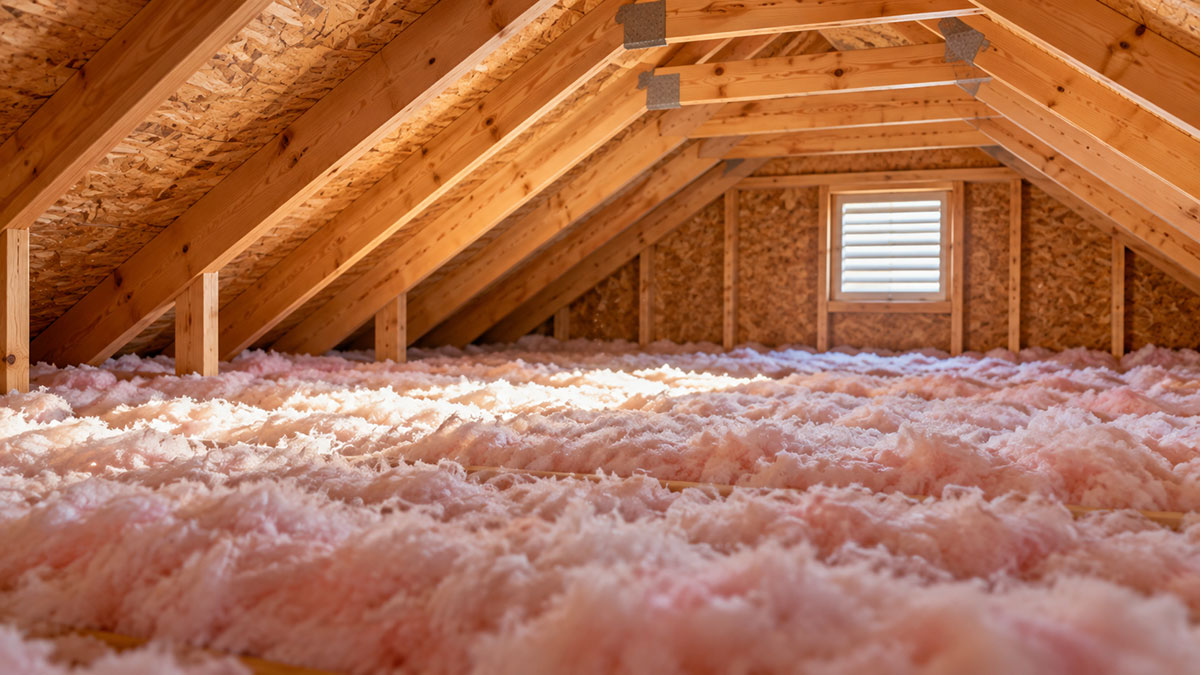
- Loft insulation, topped up or installed from scratch
- Cavity wall insulation for homes built with a wall gap
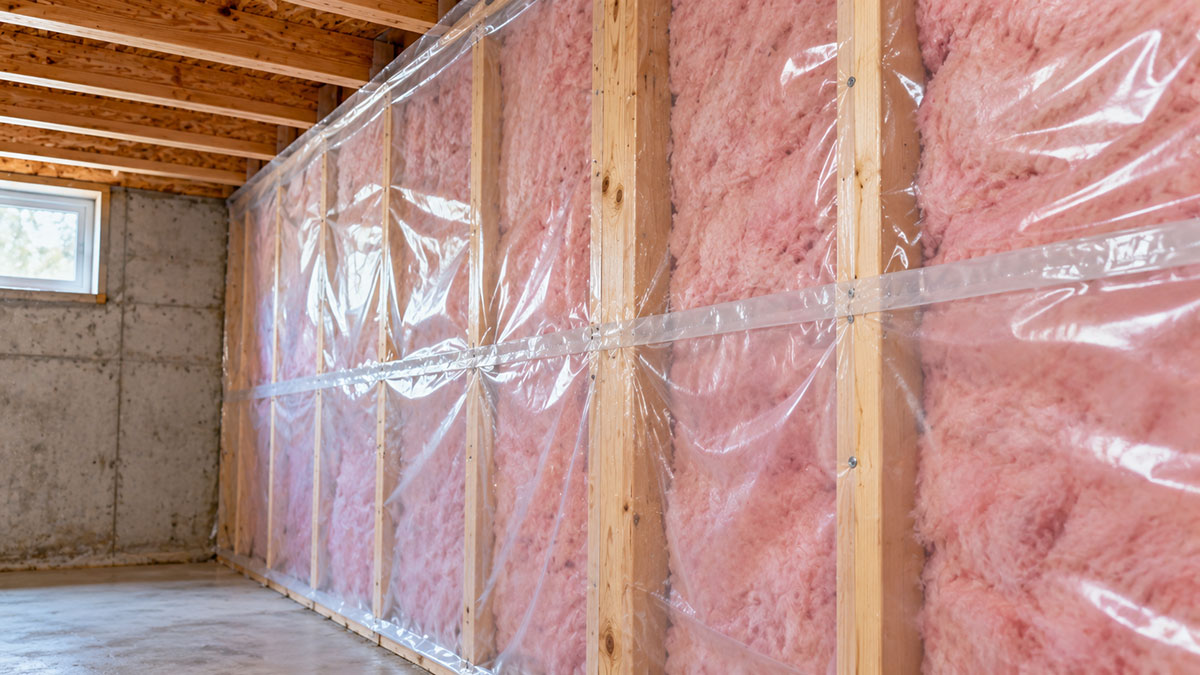
- Internal solid wall insulation for older, solid-brick homes
- External solid wall insulation where internal work is not practical
- First-time central heating, bundled in on some referrals
Fuel poverty affected an estimated 2.36 million households in England in 2025, down from 2.47 million the year before, according to the Department for Energy Security and Net Zero. The schemes below target the worst of those homes first.
Which Benefits Qualify You for Free Home Insulation?

One qualifying benefit anywhere in the household is enough. It does not matter who claims it, and it does not matter who owns the property.
The approved list currently reads:
- Universal Credit
- Pension Credit (Guarantee Credit)
- Income Support
- Income-based Jobseeker’s Allowance
- Income-related Employment and Support Allowance
- Housing Benefit
- Child Tax Credit
- Working Tax Credit
The two tax credits come with a caveat. They only count below a separate income threshold that moves depending on how many children live in the house, so a Working Tax Credit award on its own does not settle the question.
Child Benefit sits slightly apart. It qualifies through its own higher income threshold, confirmed by a self-declaration form the claimant signs and the supplier keeps on file.
Eligibility rides on a benefit being in payment, not on home ownership. The supplier or installer confirms the claim through a data check against Department for Work and Pensions records before anything gets booked.
What EPC Rating and Property Type Qualify for Free Insulation?
Every scheme checks the Energy Performance Certificate before anything else, because the rating decides how much work an assessor is allowed to recommend in the first place.
Band D, E, F or G homes typically clear this stage. Band C and above are turned away in almost every route, regardless of income, which frustrates plenty of households who are genuinely struggling with bills.
Checking Your EPC Rating
Ofgem’s Minimum Requirement pushes SAP band D or E homes up to at least band C, and SAP band F or G homes up to at least band D, once the work finishes.
An existing certificate lasts ten years and can be looked up for free through the national EPC register by postcode. If there isn’t one, the installer arranges an assessment at no cost during the first visit, so a missing EPC never rules a household out by itself.
A typical assessment records the things an installer actually needs to know:
- Wall construction type, cavity or solid
- Existing loft insulation depth
- Current heating system and fuel type
- Glazing and door condition
Off-Gas-Grid Properties and Park Homes
Homes heated by oil, LPG, solid fuel or electricity now route mainly through Warm Homes: Local Grant, since the Home Upgrade Grant has closed to new applications. The standard ECO4 options stay available on top of that.
Mobile and park homes can qualify through ECO4 Flex or a council-run scheme. The survey tends to need an installer who has worked on that construction type before, and not every firm on a council’s list has.
Both categories still need the same EPC banding as any other property. Only the funding channel changes.
Can You Qualify for Free Insulation Without Benefits?
Yes, through what the sector calls the Flex route. It swaps the benefit requirement for either a low income or a documented health condition as proof of need.
Income-Based Flex Route
Local authorities can refer a household on combined gross income alone, with no qualifying benefit in payment anywhere.
Ofgem sets that ceiling at 31,000 pounds a year for ECO4 Flex, and most councils apply the same figure locally.
Each council publishes a Statement of Intent explaining how it uses local authority flexibility on the ground. The proof they ask for shifts a little from one area to the next, which is worth knowing before you gather paperwork.
Health and Vulnerability Referral Route
A documented health condition can open this route even when income and benefits both fall outside the usual limits. Asthma and COPD count, since cold rooms make symptoms worse. So do heart conditions flagged as higher risk in a cold home, limited mobility that stops someone moving to a warmer room, and weakened immune systems that leave a resident more vulnerable to cold-related illness.
An NHS referral, a GP letter or a council welfare check can all trigger it, with or without any benefit in payment.
Benefits Route vs Flex Route
The benefits route is faster to prove. An award letter does most of the work, and the criteria are identical in every council area. It also misses households sitting just above the benefit thresholds, which is a lot of people.
Flex picks up some of those, at a cost:
- Criteria vary by council, so two neighbours can get different answers
- More paperwork, usually income evidence or a medical letter
- Slower, because a referral has to pass through the local authority
Installers check the benefits route first in almost every case, and only move to Flex once that comes up empty.
Are Homeowners, Private Tenants, and Social Tenants All Eligible?
All three tenure types can qualify. Ownership status changes the paperwork, not the underlying benefit or income test.
Homeowners apply directly once the benefit or Flex test and the EPC banding line up, with nobody else involved. Private tenants qualify on exactly the same basis, but their landlord has to agree to the work in writing before an installer can start. Social housing tenants normally go through their housing association or council landlord’s own energy programme instead of applying as individuals.
Construction and EPC banding stay the deciding factors throughout. Tenure just decides who signs off.
Landlord Consent for Private Tenants
That consent step blocks more people than you would think. There were 993,000 private-rented households in fuel poverty in England in 2024 alone, according to the Department for Energy Security and Net Zero, and a single unanswered email can leave an otherwise eligible tenant stuck.
What happens next depends on the landlord:
- Agrees, and work proceeds on the installer’s usual timetable
- Goes quiet, and the installer or council can chase them directly
- Refuses, and the tenant can ask their council about a Flex referral tied to the property itself
ECO4, ECO4 Flex, GBIS, Warm Homes: Local Grant, and Home Upgrade Grant Compared

The schemes below cover almost every route into free insulation, and plenty of households qualify for more than one. Only one can actually pay for the work, so it helps to see the differences before you call anyone.
| Scheme | Eligibility Basis | EPC Requirement | Status |
|---|---|---|---|
| ECO4 | Qualifying means-tested benefit | Band D, E, F or G | Open, closes 31 Dec 2026 |
| ECO4 Flex | Local authority referral: income or health route | Band D, E, F or G | Open, closes 31 Dec 2026 |
| Great British Insulation Scheme | Council tax band, or an ECO4-style referral | Mainly Band D and below | Closed, ended 31 Mar 2026 |
| Warm Homes: Local Grant | Council-assessed low income, matched by postcode | Band D, E, F or G | Open, running to 2028 |
| Home Upgrade Grant | Off-gas-grid property, income under 36,000 pounds | Band D, E, F or G | Closed to new applications, folded into Warm Homes: Local Grant |
Two of those are no longer taking applicants. GBIS stopped onboarding new households before its formal close on 31 March 2026, having mostly funded quick wins like loft top-ups and cavity wall insulation rather than costlier structural jobs. The Home Upgrade Grant went the same way, and Warm Homes: Local Grant now covers the off-gas-grid properties it used to serve.
British Gas, one of the obligated suppliers behind ECO4, funds and arranges its share of installations through its own approved installer network.
If there’s one measure to scrutinise across all of these, it’s external wall insulation.
The National Audit Office found that 98 percent of homes fitted with external wall insulation under ECO4 and the Great British Insulation Scheme needed remediation for major installation defects. That is not a typo, and it explains why several installers now push cavity or loft measures first and only reach for external work when a property genuinely has no other option.
Warm Homes: Local Grant behaves differently again. Birmingham City Council, for instance, targets it at specific low-income postcodes rather than one national income line, so where a property sits can matter as much as what the household earns.
Home Upgrade Grant funding varied by property type too, before it closed. South Kesteven District Council offered up to 38,000 pounds for a solid-wall end-of-terrace home against 22,000 pounds for a mid-terrace cavity-wall property.
How Much Is Free Home Insulation Worth?
Anywhere from a few hundred pounds for a simple loft top-up to tens of thousands for a full off-grid retrofit. Every scheme prices the package to the property’s actual EPC gap rather than a flat rate.
What stays constant is that the household pays none of it.
The numbers behind the current programme:
- Warm Homes Plan totals just under 15 billion pounds in capital investment, described by the government as the largest energy efficiency programme in British history
- An additional 1.5 billion pounds in grant funding was committed once ECO4’s supplier obligation model ends
- Warm Homes: Local Grant caps out at 30,000 pounds per household, split evenly between efficiency measures and low-carbon heating
- ECO4’s funding window was extended by nine months and now closes 31 December 2026
None of that money buys anything clever. It pays for the same fabric-first principle behind how insulation works in any building: trap air, slow heat transfer, cut the energy needed to keep a room warm.
Apply that across a whole property and the household-level benefits of home insulation turn up on the next energy bill, often within the first winter.
How Do You Apply for Free Home Insulation?

From first phone call to finished installation, nothing in the process costs the household anything. A TrustMark registered business has to be involved at every stage, because the scheme will not fund work lodged outside that network.
PAS 2035 governs the whole retrofit insulation process end to end, from first survey to final sign-off.
- Check your EPC rating. You want band D, E, F or G on a current certificate, or request a free assessment if none exists.
- Confirm a qualifying benefit, or gather evidence for the income or health criteria under Flex.
- Contact a TrustMark registered installer rather than the energy supplier, since suppliers work through their approved network anyway.
- Complete the property survey, where a retrofit assessor records construction, existing insulation and heating details.
- Wait for the coordinator’s plan. Work only starts once a retrofit coordinator signs it off under PAS 2035.
What Happens After the Property Survey
Not every survey ends in full funding. If the recommended package only partly closes the EPC gap, the coordinator splits it between fully funded measures and any the household would need to contribute toward, and says so before work starts.
PAS 2030:2023 installer certification and PAS 2035:2023 retrofit coordination have been mandatory for this kind of work since 31 March 2025, which is why a coordinator signs off the plan before installation begins.
TrustMark audits a share of completed jobs afterwards, sometimes with a thermal imaging camera to check the insulation actually went in where the paperwork claims. Registered businesses then get eight weeks from notification to fix anything flagged as non-compliant.
None of this involves paying a third party. A few things should make you hang up:
- Asking for payment before a survey has even happened
- Claiming a council partnership the council has not confirmed
- Pushing for a decision on the spot rather than leaving you time to check
Flintshire County Council, among others, has had to warn residents that companies cold-calling about ECO4 and claiming a council partnership are not acting on the council’s behalf.
The genuine schemes already run their own checks. Local authorities pass a Delivery Assurance Check before drawing down funding, and DESNZ can commission independent audits of individual projects on top of TrustMark’s inspections.
When Does Free Home Insulation Not Apply?
Some properties are out regardless of income, benefits, or how cold the house gets. A council cannot override any of them.
- EPC Band C or above, where the property has already reached the threshold every scheme is aiming at, leaving nothing to fund
- Second homes and unoccupied properties, since eligibility is restricted to an occupied private domestic premises, owner-occupied or privately rented
- External work blocked by planning, because external solid wall insulation usually needs permission, and listed buildings and conservation areas need it every time
- A scheme that has run out of funding or time, as allocations are finite and a council can suspend referrals mid-year once its budget is spent
That EPC threshold lines up with the Minimum Requirement banding covered earlier. Band C is the ceiling the schemes are built to reach, not exceed.
Ofgem’s delivery guidance frames an eligible property as an occupied private domestic premises, whether owner-occupied or privately rented, so a holiday home used part of the year sits outside every route.
A separate proposal would raise the minimum legal rating for privately rented homes to band C by 2030. That is a landlord obligation, not a grant, and it has nothing to do with the schemes here.
On planning, Leicester City Council is blunt: install external wall insulation without permission and the council can order it removed later.
Up to 35 percent of a home’s heat can escape through poorly insulated walls, according to the same council guidance, which is why installers fall back to internal wall insulation when external work hits a planning wall. That works, provided the junctions are detailed carefully enough to avoid new thermal bridging at the floor and ceiling edges.
Funding can also simply run dry. Pembrokeshire County Council paused new ECO4 Flex referrals in 2026 after national funding uncertainty left its approved installers without money for new cases.
Being blocked on one measure rarely blocks everything, though. A household refused external wall work can often still get loft or cavity measures funded off the back of the same visit.
FAQ on Who Is Entitled To Free Home Insulation
What Is the Difference Between Free and Discounted Insulation?
With free insulation, ECO4, ECO4 Flex or a council grant covers the lot and the household pays nothing.
Discounted means you cover part of it yourself, usually because income or EPC banding only meets partial eligibility.
Which Government Bodies and Energy Suppliers Fund and Regulate It?
Ofgem regulates the Energy Company Obligation and audits supplier compliance.
The Department for Energy Security and Net Zero sets the wider Warm Homes Plan policy, while obligated suppliers such as British Gas and Octopus Energy fund the measures through a levy on customer bills.
Is Free Home Insulation Really Free, With No Hidden Costs?
For fully qualifying households, yes. No survey fee, no application fee, no installation charge under ECO4, ECO4 Flex or a council grant.
Partial packages are the exception. Those can require a household contribution, and the coordinator gives you that figure before work starts.
Can You Reapply After Being Refused, or Apply More Than Once?
Yes. A refusal on the benefits route does not block a later Flex application if circumstances change, whether that’s a new benefit award or a worsening health condition.
Households can also come back once a property’s EPC rating or heating system changes.
What Is the Deadline Before Current Schemes Close?
ECO4 and ECO4 Flex close on 31 December 2026. The Great British Insulation Scheme already closed on 31 March 2026, and the Home Upgrade Grant has closed to new applications, with Warm Homes: Local Grant now covering the off-gas-grid properties it used to serve.
Warm Homes: Local Grant carries no fixed national end date inside its current funding window, which runs to March 2028, and operates on local authority budgets.
What Should You Check First If You Do Not Yet Qualify for Free Home Insulation?
Start with the EPC. Banding rarely shifts without work having already been carried out, so confirming it first saves you a wasted survey.
Benefit and income evidence is the opposite problem. It goes stale fast, and a Flex referral needs the freshest version on file. Once those two are settled, check that the scheme you’re aiming at still has open funding, because a council that has spent its allocation will not tell you unless you ask.
Timelines are worth factoring in as well. Most audited external wall jobs needed a post-installation fix, each bound to an eight-week TrustMark deadline, so a property whose recommended package includes that specific measure sits on a longer realistic timeline than one getting loft or cavity work alone.
After eligibility and timing are clear, the next practical step covers how to improve home insulation measure by measure, from survey through to finished installation.