Summarize this article with:

Cold floors make winter mornings miserable. You crank the heat, but those icy surfaces never warm up, and your energy bills keep climbing.

What is underfloor insulation? It’s a thermal barrier installed beneath your floor structure that stops heat from escaping through the bottom of your home. Most people focus on attic and wall insulation, but floors account for 10-20% of total heat loss in uninsulated houses.

This guide covers everything you need to know: how floor insulation works, what it costs, whether it’s worth the investment for your situation, and how to choose between DIY and professional installation. You’ll learn which materials work best, when floor insulation makes sense, and when your money works harder elsewhere.

What Is Underfloor Insulation?

Underfloor insulation is material installed beneath your floor structure to stop heat from escaping through the ground. Think of it as a thermal barrier between your living space and whatever’s below (crawl space, basement, or concrete slab).

Most homes lose 10-15% of their heat through uninsulated floors. That’s money draining straight into the dirt.

Material Types and Installation Locations

Material Type R-Value Per Inch Key Properties Best Application
Polyisocyanurate (Polyiso) Rigid Boards 5.6 – 8.0 Closed-cell structure, high compressive strength, moisture-resistant, eco-friendly with low-GWP blowing agents Residential and commercial subfloor installations requiring maximum thermal efficiency
Spray Foam (Polyurethane/Icynene) 5.5 – 7.0 Expands 100x on application, creates airtight seal, fills irregular spaces, remains flexible, breathable (open-cell) Suspended timber floors with irregular joists, crawl spaces, areas requiring complete gap sealing
Expanded Polystyrene (EPS) Sheets 3.6 – 5.0 Lightweight, pressure-resistant, moisture-resistant, easy to install, contains up to 20% recycled content Concrete slabs, even ground installations, new construction and retrofit projects
Extruded Polystyrene (XPS) Boards 3.6 – 5.0 High compressive strength, superior moisture resistance, closed-cell structure, durable for heavy loads Below-grade installations, concrete slabs, areas with high moisture exposure
Fiberglass Batts 3.25 Traps air pockets, acoustic insulation properties, cost-effective, made from recycled plastic, easy DIY installation Between floor joists in suspended timber floors, attic floor joists, budget-conscious projects
Mineral Wool (Rock/Glass) 3.0 – 4.0 Lightweight, thermal and acoustic performance, soundproofing benefits, eco-friendly, fire-resistant Wooden suspended floors, applications requiring sound insulation between levels
Multifoil Reflective Insulation Varies (thin profile) Multiple foil layers with wadding, reflects radiant heat, 50-year lifespan, lightweight, 6mm thickness options available Solid floors, limited headroom situations, radiant floor heating systems
Polyester Underfloor Insulation Variable Strong fibers for staple securing, water-resistant, maintains thickness long-term, safe to handle without PPE Long-term installations in exposed underfloor areas, moisture-prone environments

The stuff comes in different forms depending on what you’re working with.

Mineral wool (both glass wool and rock wool) gets used most often for suspended timber floors. Fire-resistant, decent sound dampening, and you can handle it without special gear. Rock wool insulation handles moisture better than the fiberglass variety.

Rigid foam boards work best under concrete slabs or where you need serious compression strength. EPS (expanded polystyrene) is the budget option. XPS (extruded polystyrene) costs more but handles moisture like a champ. PIR (polyisocyanurate) gives you the highest R-value per inch.

Spray foam insulation fills every gap and crack, which is perfect for irregular spaces. But you’ll need a pro with the right equipment, and it’s not cheap.

Natural options like sheep’s wool or cellulose appeal to the eco-conscious crowd. They breathe better than synthetics, though they cost more upfront.

Where It Goes

Suspended timber floors are the easiest retrofit. You access the floor cavity from below (crawl space or basement) and push batts between the joists. Some guys use netting to hold everything in place.

Concrete slab foundations need insulation installed during construction or major renovation. You can’t just slide material under an existing slab without tearing things apart.

Above unheated garages or basements, you’re basically insulating a ceiling from below. Same concept, different application.

How Does Underfloor Insulation Work?

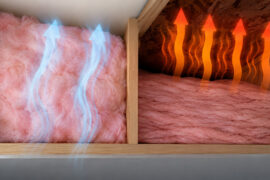
Heat moves three ways: conduction, convection, and radiation. Underfloor insulation blocks all three to keep warmth where you want it.

Stopping Heat Transfer

Conduction happens when heat travels through solid materials. Your floor joists act like thermal highways, channeling warmth straight into the ground. Insulation slows this down by trapping air in tiny pockets. Air is a terrible conductor, which makes it perfect for our purposes.

The ground under your house sits at 50-55°F year-round in most climates. Without insulation, your heated floor constantly tries to warm that massive heat sink. You’ll never win that battle.

Convection is air movement stealing your heat. Cold air in the crawl space rises through gaps and cracks, pushing warm air out. Air sealing combined with insulation stops this.

Thermal bridging through floor joists remains a weak point. Wood conducts heat 10 times better than insulation does. Breaking these bridges requires either rigid foam layers or careful installation techniques.

R-Value Performance

R-value measures thermal resistance. Higher numbers mean better insulation.

Cold climate zones need R-25 to R-30 under floors. Moderate climates can get away with R-19. Mild areas might only need R-13, though more never hurts your wallet.

A 20°F temperature difference between your floor and the ground creates serious heat loss. Bump your insulation from R-13 to R-25 and you’ll cut that loss nearly in half.

Don’t confuse R-value with U-value, which measures heat transfer rate. Lower U-values are better. They’re mathematical inverses of each other.

Moisture Management

Condensation forms when warm, humid air hits cold surfaces. Your floor cavity is prime real estate for this problem.

A vapor barrier goes on the warm side of the insulation (facing up toward your living space). This stops moisture from migrating into the insulation where it’ll condense and cause rot.

Suspended floors need ventilation too. Block all the vents and you’ll trap moisture that’ll wreck your joists within a few years. The building code specifies minimum vent area for good reason.

Closed-cell spray foam acts as its own vapor barrier. Open-cell foam needs a separate barrier installed.

Is Underfloor Insulation Worth It?

Let’s talk numbers because that’s what actually matters.

Energy Savings

Suspended timber floors with zero insulation waste 10-15% of your heating energy. Add proper insulation and you’ll save $150-300 annually on a typical 2,000 sq ft home in a cold climate.

Concrete slab upgrades show smaller returns (5-10% savings) because the thermal mass of concrete moderates temperature swings naturally. But that’s still $75-150 back in your pocket each year.

Your mileage varies by climate zone. Minnesota sees bigger savings than Tennessee. A home energy audit tells you exactly what you’re losing.

The calculations are straightforward. Multiply your current heating bill by 0.12 (average floor heat loss percentage). That’s your annual savings potential. Now compare it to installation cost.

Comfort Improvements

Cold floors suck. Period.

You know that shock when you step out of bed onto an icy floor in January? Gone. Your feet will thank you.

Room temperature becomes more consistent too. Without floor insulation, you get that classic “cold ankles, hot head” situation where heat stratifies. Fixing the floor evens things out.

Draft reduction makes a huge difference in perceived comfort. Even if your thermostat says 68°F, drafts make it feel like 62°F. Seal up that floor cavity and suddenly 68°F actually feels warm.

Financial Returns

DIY installation on an accessible crawl space costs $1.50-3.00 per square foot for materials. A 1,500 sq ft floor runs $2,250-4,500.

Professional installation doubles or triples that cost. But they’ll do it right the first time and warranty the work.

The payback period for insulation averages 5-7 years for floor work. Attic insulation pays back faster (2-4 years), which is why everyone does that first.

Government rebates and tax credits shorten payback time significantly. The insulation tax credit covers 30% of material and labor costs up to certain limits. Some utility companies offer additional weatherization rebates that stack with federal incentives.

ROI on insulation depends heavily on fuel costs. Natural gas is cheap, so gas-heated homes see slower payback. Electric heat, propane, or oil? You’ll recoup costs faster.

Property Value Impact

Energy Performance Certificates matter more every year. Better ratings attract buyers and justify higher asking prices.

Buyers notice cold floors during winter showings. They’ll either lowball your offer or demand you fix it before closing.

The benefits of home insulation extend beyond monthly bills. You’re making the building envelope more durable and less prone to moisture problems.

Environmental Considerations

Reducing your carbon footprint through insulation works better than most “green” purchases. One underfloor insulation job prevents more CO2 emissions than driving an electric car for two years.

Heating fuel consumption drops immediately and permanently. That’s tons of CO2, NOx, and particulates you’re not pumping into the atmosphere annually.

Natural fiber options like sheep’s wool insulation take this further with renewable, biodegradable materials. Though the performance-to-cost ratio isn’t quite as good as synthetics.

When It Makes Sense

Pre-1990 homes almost never have underfloor insulation. If your house fits that description and you’ve got accessible floor cavities, it’s probably worth doing.

Modern homes built to current code already include floor insulation. Adding more shows diminishing returns unless you’re chasing passive house insulation standards.

Very mild climates (Southern California, coastal areas with minimal heating needs) see the slowest payback. You might be better off spending that money on attic or wall upgrades instead.

The real question isn’t “is it worth it?” but “is it the next right step for your home?” Compare it against other types of insulation materials and locations. An energy audit shows you exactly where you’re bleeding the most heat.

Cost Analysis: Investment and Payback

The numbers tell you whether this project makes financial sense. Everything else is just noise.

DIY Installation Costs

Material costs vary wildly depending on what you choose and where you live.

Mineral wool batts run $0.60-1.20 per square foot. A 1,500 sq ft floor needs roughly $900-1,800 in materials. You’ll also need netting or wire to hold batts in place ($0.15-0.30 per sq ft), plus fasteners and tape.

Rigid foam board insulation costs more upfront ($1.50-2.50 per sq ft) but installs faster. Two-inch XPS boards give you R-10, which might be enough in moderate climates.

Fiberglass insulation is the budget king at $0.40-0.80 per square foot. Itchy as hell to work with, but it gets the job done.

Tool requirements are minimal if you’ve got basic carpentry gear. You’ll need a utility knife, staple gun, dust mask (critical), safety glasses, and gloves. Maybe $100-150 if you’re starting from scratch.

Time investment depends on access and your skill level. An experienced DIYer can insulate 200-300 sq ft per day working in a crawl space. First-timers? Cut that in half.

Professional Installation Pricing

Contractors charge $2.50-6.00 per square foot installed, depending on complexity and regional labor rates.

A typical 1,500 sq ft suspended floor job runs $3,750-9,000 professionally. That includes materials, labor, and disposal of old insulation if needed.

Concrete slab insulation during new construction adds $1.50-3.00 per sq ft to your foundation costs. Retrofitting existing slabs costs way more because you’re tearing up finished floors.

Spray foam installation requires specialized equipment and certification. Expect $3.50-7.00 per sq ft for closed-cell application. Open-cell runs slightly cheaper but offers lower R-value per inch.

Regional variations matter. California and Northeast labor costs run 30-50% higher than Midwest or South. Get three quotes minimum.

Breaking Down the Payback Period

Simple payback calculation: divide total cost by annual energy savings.

A $4,500 professional installation saving $350 annually pays back in 12.9 years. Factor in a 30% tax credit ($1,350) and you’re down to 9 years.

Most homeowners see 3-7 year payback on DIY projects with existing crawl space access. Professional installs take 7-12 years typically.

Factors that speed up payback:

  • High heating costs (electric, propane, oil beat natural gas)
  • Cold climate zones (heating degree days above 5,000)
  • Poor existing thermal performance
  • Available rebates and incentives
  • Rising energy prices over time

Factors that slow it down:

  • Mild climates with minimal heating needs
  • Recent energy-efficient HVAC upgrades
  • Natural gas heating (cheapest fuel)
  • Difficult access requiring premium labor rates

Rebates and Financial Incentives

Federal tax credits cover 30% of materials and labor through 2032. That’s capped at $1,200 annually for most insulation work.

State and utility rebates stack on top. Some programs cover 50-75% of costs for low-income households.

Utility companies offer direct rebates ($0.15-0.50 per sq ft) in many areas. These get processed faster than tax credits.

Low-interest loans through weatherization programs can spread costs over 5-10 years, making monthly payments smaller than energy savings from day one.

Application requirements vary by program. Most need contractor certification, receipts, and before/after energy calculations. Do your homework before starting work.

When Should You Install Underfloor Insulation?

Timing matters almost as much as the work itself.

Prime Candidates

Homes with cold floors top the list. If you can feel a temperature difference between your floor and room air, you’re losing heat.

Suspended timber floor structures offer the easiest retrofit opportunity. Access from below through a crawl space or basement makes this a straightforward weekend project for DIY types.

Properties with accessible crawl spaces are perfect candidates. You need at least 18-24 inches of clearance to work comfortably. Less than that and you’re in for a miserable time.

Pre-1990 construction almost never includes floor insulation unless someone added it later. Building codes didn’t require it, so builders skipped it.

When It Doesn’t Make Sense

Well-insulated modern homes built after 2000 probably already meet code requirements. Adding more shows diminishing returns unless you’re chasing zero-energy standards.

Inaccessible floor cavities kill the economics. If you’d need to tear up finished flooring to access joists, the cost jumps 3-5x. Better to wait until you’re renovating those rooms anyway.

Concrete slabs without renovation plans should stay alone. You can’t retrofit insulation under an existing slab without major demolition.

Very mild climate regions (IECC zones 1-2) see minimal heating loads. Your money goes further in attic or wall upgrades first.

Perfect Timing Opportunities

During bathroom or kitchen remodels when flooring is already torn up. You’re paying for demolition and reconstruction anyway, so adding insulation adds minimal extra cost.

Crawl space repair projects (foundation work, moisture remediation, or pest treatment) provide access. Coordinate with that contractor to handle insulation while they’re down there.

Flooring replacement periods are ideal. Pull up old carpet or hardwood, insulate from above, then install new flooring. You skip the crawl space entirely.

Foundation work schedules overlap perfectly with insulation upgrades. If you’re doing underpinning or foundation repairs, the access is already there.

Climate Considerations

Cold climate zones (6-8) show the fastest payback. You’re running heat 6-8 months annually, so every BTU saved matters.

Moderate climates (zones 3-5) still benefit significantly. The payback takes longer but the comfort improvement justifies it.

Hot climates with minimal heating might skip floor insulation entirely. Focus on attic, walls, and air sealing instead.

Installation Methods and Process

Two paths forward: crawl under the floor yourself or hire someone who knows what they’re doing.

DIY Installation for Suspended Floors

YouTube player

Safety gear comes first. You need a good respirator (not just a dust mask), safety glasses, gloves, coveralls, and a headlamp. Crawl spaces are nasty.

Check for moisture issues before starting. Standing water or wet soil means you’ve got drainage problems to fix first. Insulation in a wet crawl space just creates mold factories.

Measure your joist spacing (usually 16 or 24 inches on center) and buy batts that fit. Stuffing oversized batts into cavities compresses them and tanks their R-value.

Cut batts 1/2 inch longer than the span between joists. This slight compression holds them in place temporarily.

Installation Steps

  1. Start at the perimeter walls and work toward the center
  2. Push batts up between joists with the vapor barrier facing up (toward heated space)
  3. Secure with insulation netting, chicken wire, or metal rods
  4. Overlap netting by 2-3 inches at seams
  5. Staple netting to joists every 12-18 inches
  6. Don’t compress the insulation (compression kills R-value)

Common mistakes: leaving gaps around pipes and electrical boxes, installing vapor barrier backward, compressing batts too much, and forgetting to seal rim joists.

The rim joist (where floor meets foundation wall) leaks like crazy. Use rigid foam pieces cut to fit or spray foam to seal this thermal bridge.

Professional Installation Process

Contractors start with a site assessment. They’ll check access, measure the area, look for moisture problems, and verify existing ventilation.

Preparation includes clearing the crawl space of debris, setting up work lights, and staging materials. Good crews protect your HVAC ducts and plumbing from damage.

Installation takes 1-3 days for most homes. Larger houses or difficult access extends this.

Quality professionals do these things:

  • Seal all penetrations and gaps first (pipes, wires, rim joists)
  • Install vapor barriers correctly based on climate
  • Support insulation properly so it won’t sag
  • Maintain required crawl space ventilation
  • Clean up thoroughly afterward

Get written documentation of R-values installed and square footage covered. You’ll need this for rebate applications and future reference.

Spray Foam Application

Professional-only territory unless you’re certified. The chemicals require proper handling and the equipment costs $15,000+.

Closed-cell spray foam expands to fill every gap and crack. This eliminates air leakage while insulating. One material, two benefits.

Application happens in multiple passes (lifts). Each lift adds 1-2 inches of thickness. Going thicker in one pass causes overheating and poor curing.

Curing takes 24 hours minimum. Keep the area ventilated during this time because off-gassing happens.

Temperature and humidity affect application. Most foam won’t cure properly below 50°F or above 90°F. Contractors know this and schedule accordingly.

Retrofit vs. New Construction

New builds make everything easier. You insulate before installing subflooring, so there’s no crawling involved. You just lay batts or spray foam between joists from above.

Retrofit insulation means working in existing structures. You’re dealing with obstacles like plumbing, wiring, HVAC ducts, and 50 years of cobwebs.

Access limitations in retrofits sometimes force compromise. Maybe you can only reach 80% of the floor cavity. That’s still way better than zero insulation.

New construction lets you coordinate with other trades. Electricians and plumbers run their lines, then you insulate around them cleanly.

Concrete Slab Considerations

Under-slab insulation goes down before pouring concrete. You need 2-4 inches of rigid foam (XPS or EPS) rated for compression.

The foam sits on compacted gravel, then you pour your slab on top. This method is standard in cold climates now but wasn’t always required.

Edge insulation along foundation perimeters stops heat loss through the slab edge. Required by code in most cold climate zones.

Retrofitting existing slabs means either living with what you have or tearing up floors during renovation. There’s no easy retrofit option here.

Dealing with Obstacles

Plumbing pipes need clearance from insulation to prevent freezing. Keep at least 2-3 inches of air space between cold pipes and insulation.

Electrical wiring can be buried in insulation without issues (unlike in walls where it can overheat). Just make sure junction boxes remain accessible.

HVAC ducts in crawl spaces should be insulated separately. They’re part of your conditioned system, so they need their own pipe insulation treatment.

Cross-bracing and supports in floor systems require careful cutting and fitting. Take your time here because gaps around structural members create thermal bridges.

Underfloor Insulation vs. Other Insulation Priorities

Not all insulation upgrades deliver equal returns. Some spots bleed heat way faster than others.

Comparing Heat Loss by Location

Attic insulation stops 25-35% of total heat loss in most homes. That’s the biggest single leak point in your building envelope.

Wall insulation prevents 15-25% of heat loss. Exterior walls have massive surface area exposed to weather.

Floor insulation blocks 10-15% of heat escape. Smaller percentage, but still real money leaving your house.

Windows and doors account for 10-15% through air leakage and poor glazing. Weather stripping and caulking are dirt cheap fixes here.

Basement walls lose 10-15% if they’re uninsulated. Insulating basement walls pays back faster than floors in most cases.

Priority Ranking Strategy

Do the attic first. Always. You get the biggest bang for your buck and the fastest payback period.

Air sealing comes next, not more insulation. Seal every penetration, gap, and crack before adding another R-value anywhere. A blower door test shows you exactly where air leaks.

Wall insulation makes sense third, especially if you’ve got older cavity wall insulation that’s settled or never existed. Drill-and-fill insulation works for closed wall cavities.

Floor insulation ranks fourth unless you’ve got brutal cold floor problems. Comfort sometimes trumps pure economics.

Basement walls come in somewhere between floors and walls depending on your specific situation.

Budget Prioritization

Limited budget? Attic gets 60% of your money, air sealing gets 25%, and floors get 15%.

You can DIY attic work easily with blanket insulation or loose-fill insulation blown in. Floors require crawling through spider condos.

The cost per square foot for insulation runs lowest for attics ($1.00-2.50) compared to floors ($2.50-6.00 professional).

Whole-Home Approach

Professional energy audits using thermal imaging cameras show you actual heat loss patterns. Guessing wastes money.

Sequential upgrades work better than random projects. Each improvement builds on the last one.

Understanding how insulation works helps you make smarter decisions about where to invest next.

A comprehensive strategy considers your heating system efficiency too. New furnace plus poor insulation makes no sense. Fix the envelope first, then right-size your HVAC.

Climate-Specific Priorities

Cold climates (zones 6-8) need maximum R-values everywhere, but attic and walls still dominate the priority list.

Moderate climates (zones 3-5) can sometimes skip floor insulation entirely if attic and walls are solid.

Hot climates with minimal heating should focus on attic insulation for cooling loads. Floor work rarely makes sense here.

Common Problems and Solutions

Floor insulation fails in predictable ways. Know these issues before they become expensive disasters.

Moisture and Condensation

Dampness is the number one killer of floor insulation. Wet insulation doesn’t insulate, and it grows mold like crazy.

Condensation forms when warm humid air hits cold surfaces. Your floor cavity creates perfect conditions during heating season.

Vapor barrier placement matters enormously. In heating climates, the barrier goes on the warm side (facing up toward living space). Stick it on the cold side and you’re creating a moisture trap.

Crawl space ventilation requirements vary by region and approach. Vented crawl spaces need 1 square foot of vent per 150 square feet of floor area. Unvented (conditioned) crawl spaces need different treatment entirely.

Fixing Moisture Issues

  1. Install proper drainage around foundation perimeter
  2. Use vapor barrier on ground (6-mil polyethylene minimum)
  3. Slope ground away from foundation
  4. Fix any plumbing leaks immediately
  5. Consider dehumidification in humid climates

Standing water means you’ve got serious drainage problems. Fix those first or insulation is pointless.

High humidity (above 60%) in crawl spaces causes problems even without standing water. Dehumidifiers or conditioning the space solves this.

Installation Gaps and Thermal Bridging

Gaps around pipes, wires, and rim joists let air circulate freely. That moving air carries heat away fast.

Thermal bridging through floor joists continues even with perfect insulation between them. Wood conducts heat way better than fiberglass or mineral wool.

Proper installation requires filling every cavity completely. Compressed insulation in one spot and gaps in another both tank your performance.

Closing the Gaps

Spray foam works best for sealing rim joists and penetrations. Cut rigid foam to fit between joists at the rim, then foam the edges.

Stuff small gaps around pipes with scraps of insulation. Don’t compress it, just fill the space loosely.

Overlap netting or supports by several inches at seams. Gaps in your support system create gaps in your insulation.

Thermal bridging through joists can be reduced with continuous rigid foam layers, but that’s rarely practical in retrofits.

Sagging and Falling Insulation

Gravity wins eventually if you don’t support batts properly. I’ve pulled out tons of insulation that just gave up and fell onto the crawl space floor.

Batt insulation weighs 0.5-1.5 pounds per square foot depending on thickness and density. That adds up over 1,500 square feet.

Support systems need to be permanent, not temporary. Twine and hope doesn’t cut it long-term.

Proper Support Methods

Metal rods or wire mesh works well. Push metal rods (sometimes called “tiger teeth” or insulation supports) up between batts every 18-24 inches.

Plastic netting stapled to joist bottoms holds batts in place indefinitely. Use heavy-duty netting rated for insulation support.

Chicken wire does the job but rusts in humid crawl spaces. Galvanized wire mesh lasts longer.

Support spacing matters. Space supports closer together for thicker, heavier insulation. R-30 batts need supports every 12-18 inches.

Pest and Rodent Problems

Mice and rats love insulation for nesting. They tunnel through it, compress it, and leave droppings everywhere.

Closed-cell insulation resists pests better than fluffy batts. Rodents can’t burrow through cured spray foam easily.

Natural fiber insulation (cellulose, cotton, wool) sometimes includes boric acid as a pest deterrent. This helps but isn’t foolproof.

Prevention Strategies

Screen all foundation vents with 1/4-inch hardware cloth. This stops most rodents while maintaining airflow.

Seal every penetration where utilities enter the house. Mice squeeze through holes the size of a dime.

Regular crawl space inspections catch problems early. Check twice a year minimum.

Remove insulation damaged by pests completely. Contaminated insulation is a health hazard and doesn’t work anyway.

Insulation Settlement Over Time

Insulation settlement happens gradually with loose-fill materials. Blown-in products compact under their own weight.

Fiberglass batts can compress if moisture gets in them. Once compressed, they never fully recover their R-value.

Natural fiber insulation settles more than mineral products. Budget for 10-15% settling with cellulose over the first year.

Addressing Settlement

Check installed depth or thickness annually for the first few years. Mark measurements on joists so you can track changes.

Top off settled insulation when it loses more than 10% of its original depth. This maintains your target R-value.

Dense-pack applications resist settling better than standard loose-fill. The higher density (3.5 pounds per cubic foot vs. 1.5) keeps things stable.

Building Codes and Regulations

Code compliance isn’t optional, and inspectors actually check this stuff during renovations.

Minimum R-Value Requirements

Building codes specify minimum insulation levels by climate zone. IECC (International Energy Conservation Code) sets the baseline.

Climate zone map divides the country into 8 zones based on heating degree days. Your zone determines required R-values.

Floor insulation requirements by zone:

  • Zones 1-2 (hot climates): R-13 minimum
  • Zone 3 (warm): R-19 minimum
  • Zones 4-5 (moderate): R-19 to R-30
  • Zones 6-7 (cold): R-30 minimum
  • Zone 8 (very cold): R-38 minimum

Local codes sometimes exceed IECC minimums. California Title 24 requirements are stricter than federal baseline.

Some jurisdictions require Energy Star insulation levels for new construction and major renovations.

Fire Safety Regulations

Insulation fire rating requirements protect your home and meet code.

Most insulation needs a Class A (Class I) flame spread rating of 25 or less. This applies to exposed insulation in crawl spaces and attics.

Spray foam requires an ignition barrier (typically 1/2-inch drywall) unless it’s specifically rated for exposed applications. You can’t just spray foam and walk away.

Some jurisdictions ban certain materials in residential applications. Check local rules before buying materials.

Fire blocking at floor penetrations prevents flames from spreading between stories. Code requires blocking around chimneys, flues, and large pipe penetrations.

Ventilation Standards

Vented crawl space codes require minimum vent area of 1 square foot per 150 square feet of crawl space floor area.

Reduce that to 1:1500 ratio if you install a ground vapor barrier. Most modern installations include 6-mil poly on the ground anyway.

Unvented (conditioned) crawl spaces need different treatment. They become part of your conditioned space and need supply/return air from your HVAC system.

Vent placement matters. Position vents to create cross-ventilation, not dead zones. Put them high on walls for best air circulation.

Permit Requirements

Most jurisdictions require permits for insulation work tied to other construction projects. Standalone insulation retrofits sometimes slide by without permits (though technically required).

Permit costs run $50-250 depending on project scope and location. Better to get the permit than risk problems during future home sales.

Inspectors verify R-values, proper installation, vapor barrier placement, and fire safety compliance. Failed inspections mean redoing work.

Professional contractors pull permits as part of their service. DIYers need to visit the building department themselves.

Vapor Barrier Regulations

Vapor barrier requirements depend on climate. Cold climates need barriers on the warm (interior) side. Hot humid climates sometimes flip this.

Code specifies maximum permeability (1 perm or less for vapor barriers). Standard 6-mil polyethylene qualifies.

Some codes require vapor barriers on ground in crawl spaces regardless of insulation approach. This controls moisture from below.

Overlap vapor barrier seams by 6 inches minimum and tape them. Gaps defeat the entire purpose.

Compliance Verification

Building inspectors check insulation during framing inspection (new construction) or final inspection (renovation).

Documentation requirements include receipts showing R-values purchased, installation photos, and square footage calculations.

Professional installation certificates from certified contractors can streamline inspections. LEED certification for insulation projects needs extensive documentation.

Failed inspections require corrections before final approval. Common failures: wrong R-value, improper vapor barrier, gaps in coverage, or missing fire blocking.

Keep all documentation for future reference. New buyers and their inspectors will want proof of proper installation.

FAQ on Underfloor Insulation

What is the best insulation for underfloor?

Spray foam insulation delivers the best overall performance because it air seals and insulates simultaneously. Closed-cell foam provides R-6 to R-7 per inch and resists moisture perfectly.

For budget-conscious projects, fiberglass batts at R-19 or R-30 work well when properly supported and kept dry. Rock wool handles moisture better than fiberglass.

How much does underfloor insulation cost?

Material costs run $0.50-$4.50 per square foot depending on insulation type. Professional installation adds $1.50-$3.50 per square foot in labor.

A typical 1,000 square foot floor costs $2,000-$8,000 installed. DIY projects cut costs by 40-60% but require significant time and physical effort in cramped crawl spaces.

Does underfloor insulation really work?

Yes. Floor insulation reduces heat loss by 10-20% in uninsulated homes, saving $150-$500 annually depending on climate and energy costs.

The improvement is immediately noticeable. Cold floors warm up, rooms feel more comfortable, and heating systems run less frequently. Payback periods typically range from 5-12 years.

What R-value do I need for floor insulation?

Climate zones 1-2 need R-13 minimum. Zones 3-4 require R-19 to R-25. Cold climates (zones 5-7) need R-25 to R-30.

Very cold regions (zones 7-8) should use R-30 to R-38. Building codes set minimums, but exceeding code by 20-30% improves comfort and savings noticeably.

Can I install underfloor insulation myself?

Yes, if you’re physically capable of working in tight crawl spaces for extended periods. The work requires crawling, reaching overhead, and cutting insulation to fit between joists.

DIY saves 40-60% on installation costs but takes 15-25 hours for 1,000 square feet. You need basic tools, safety equipment, and understanding of vapor barrier placement rules.

How long does underfloor insulation last?

Fiberglass batts last 80-100 years when protected from moisture. Spray foam maintains performance for 80+ years with zero degradation.

Cellulose lasts 20-30 years before settling reduces effectiveness. Rigid foam boards last indefinitely when protected from UV light. Moisture exposure or pest damage shortens any insulation’s lifespan dramatically.

Should floors over basements be insulated?

Only if the basement is unheated and unconditioned. Insulating floors over heated basements wastes money because you’re blocking heat transfer between spaces you’re paying to heat anyway.

Unheated basements or crawl spaces absolutely need floor insulation above them. The temperature difference creates significant heat loss that insulation prevents effectively.

What are the disadvantages of underfloor insulation?

Installation challenges in tight crawl spaces make the work physically demanding and sometimes impossible without removing floors from above. This adds $5-$12 per square foot in costs.

Moisture problems develop if vapor barriers are placed incorrectly or if existing moisture issues aren’t addressed first. Discovering structural damage during installation adds unexpected repair expenses.

Does underfloor insulation prevent damp?

No, insulation doesn’t prevent dampness. It can actually trap moisture if installed incorrectly or without proper vapor barriers and crawl space moisture control.

Ground moisture needs addressing with vapor barriers over crawl space dirt and proper ventilation or dehumidification. Insulation combined with moisture control prevents damp problems, but insulation alone doesn’t solve them.

Is underfloor insulation worth it?

In cold climates with uninsulated floors over crawl spaces, absolutely. Payback periods of 5-8 years plus dramatic comfort improvements justify investment clearly.

Mild climates or already well-insulated homes see minimal returns. Run the numbers for your specific situation including climate, energy costs, and existing insulation before deciding.

Conclusion

Understanding what underfloor insulation is and whether it fits your home comes down to climate, existing conditions, and realistic cost expectations. Cold climate homes with suspended timber floors over crawl spaces see the biggest benefits, while mild regions or well-insulated newer homes should invest elsewhere.

The math matters. Calculate your actual heating costs, get multiple installation quotes, and run honest payback calculations before committing.

Professional installation costs more but delivers warranties, proper vapor barrier placement, and code compliance. DIY works if you’re willing to crawl through tight spaces for days.

Moisture control and air sealing matter as much as R-value. Perfect installation of moderate insulation beats sloppy installation of premium materials every time.

Consider floor insulation as one piece of whole-house thermal performance. Balance improvements across attic, walls, and floors for best results rather than overinvesting in any single area.

Author

My name is Bogdan Sandu, and I’ve dedicated my life to helping homeowners transform their spaces through practical guidance, expert advice, and proven techniques.

Write A Comment