Summarize this article with:
A single uninsulated hot water pipe can lose enough heat to raise your energy bill by double digits every year. And in winter, that same pipe in your crawl space can freeze, burst, and cause thousands in water damage overnight.
So, what is pipe insulation, and why does it matter this much?
This article covers everything from how thermal pipe wrap works to the specific materials used across residential plumbing, HVAC systems, and industrial piping. You will learn how R-value applies to curved surfaces, which insulation types fit which applications, and how to choose the right thickness based on your pipe diameter and operating temperature.
What Is Pipe Insulation
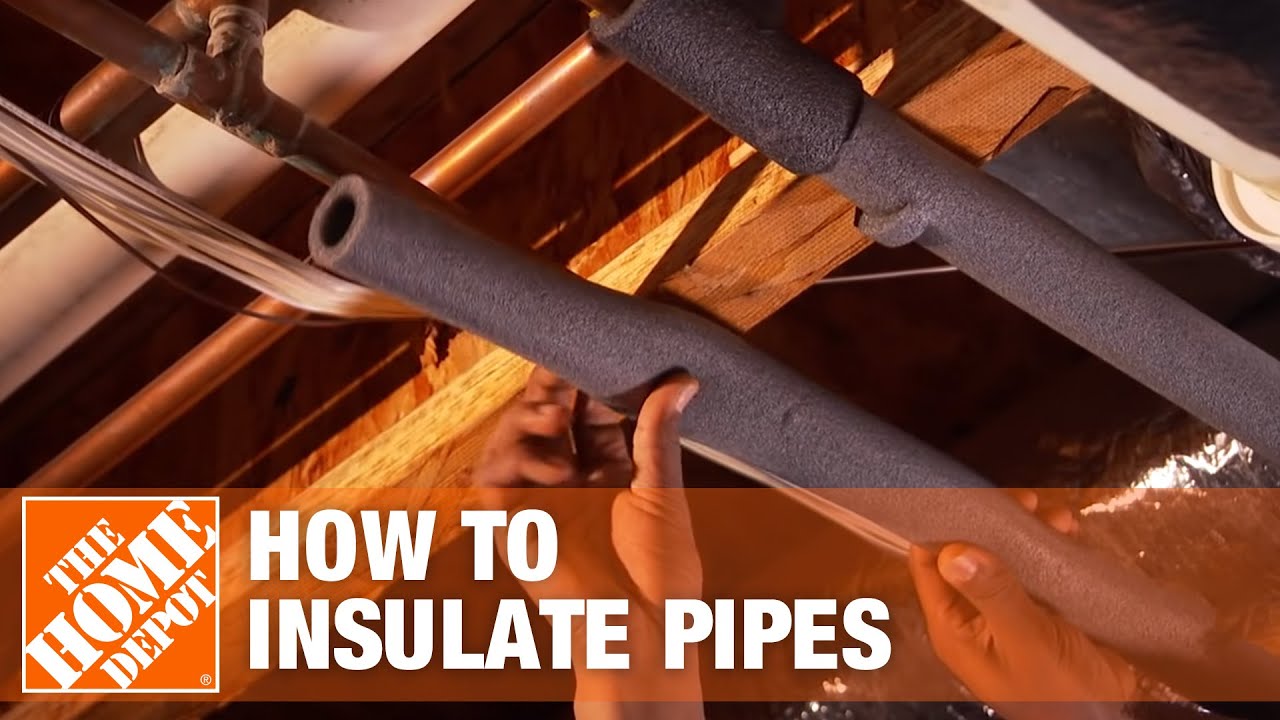
Pipe insulation is a thermal or acoustic covering applied to pipework to reduce heat loss, prevent condensation, and protect against freezing. It is made from materials like fiberglass, mineral wool, elastomeric rubber foam, or polyethylene foam and is shaped to fit around pipes of varying diameters.
Every plumbing and HVAC system loses energy through exposed pipes. Hot water lines cool down. Cold lines sweat and drip. Pipes in crawl spaces and basements freeze when temperatures drop below 32 degrees Fahrenheit.
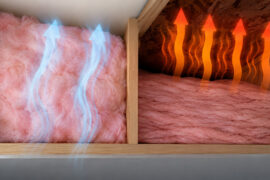
Pipe insulation fixes all three problems by creating a thermal barrier between the pipe surface and the surrounding air. The material slows thermal conductivity, which is the rate at which heat moves through a substance.
You will find pipe insulation in residential plumbing, commercial HVAC ductwork, industrial steam lines, refrigeration systems, and chilled water piping. It comes as pre-slit foam tubes, wrap-style sheets, or spray-applied coatings depending on the application.
The concept is simple but the material selection is not. Pipe diameter, operating temperature, moisture exposure, and fire rating requirements all determine which insulation type works best for a given installation.
What Are the Types of Pipe Insulation Materials
Pipe insulation materials fall into several categories based on their composition, temperature range, and intended application. Each material has specific strengths that make it suitable for certain environments and unsuitable for others.
Choosing the wrong material wastes money and creates problems. Foam on a steam line melts. Fiberglass insulation without a vapor barrier on a cold pipe sweats and corrodes the pipe underneath.
Here are the main types of insulation materials used on pipework.
Fiberglass Pipe Insulation
Fiberglass pipe insulation is made from inorganic glass fibers bonded with a resin binder. It handles temperatures up to 1000 degrees Fahrenheit, which makes it the standard choice for steam lines and high-temperature industrial piping.
Johns Manville and Owens Corning are the two largest manufacturers. Their products come as rigid pre-formed pipe sections or flexible wraps, depending on the pipe size and application. Fiberglass has a K-value around 0.23 at 75 degrees Fahrenheit mean temperature.
The downside is moisture. Fiberglass absorbs water, which kills its insulating ability and promotes corrosion. It always needs an outer jacket or vapor barrier on cold-service pipes.
Mineral Wool Pipe Insulation
Rock wool insulation is made from basalt rock or industrial slag spun into fibers. It performs well at temperatures up to 1200 degrees Fahrenheit and has strong fire resistance ratings.
Rockwool and Knauf Insulation are major producers. The material costs roughly 25% more than fiberglass or rubber alternatives, but its fire performance often justifies the price in commercial and industrial settings where NFPA standards apply.
Elastomeric Rubber Foam Insulation
Elastomeric foam is a flexible, closed-cell insulation based on NBR or EPDM rubber. Its built-in vapor resistance means it typically does not need a separate vapor barrier, which saves installation time and cost.
Armacell is the largest global manufacturer. This material works best on chilled water systems, refrigeration lines, and HVAC piping where condensation control matters most. Temperature range tops out around 220 degrees Fahrenheit, so it is not for steam.
Polyethylene Foam Insulation
Polyethylene foam is lightweight, inexpensive, and easy to install. It comes as pre-slit tubes that snap over pipes in seconds. Most residential plumbing insulation projects use this material.
It has the highest R-value per dollar for low-temperature residential applications. But it is limited to about 200 degrees Fahrenheit and has lower fire resistance than fiberglass or mineral wool. Fine for basement water pipes. Not suitable for boiler rooms.
Polyurethane Foam Insulation
Polyurethane foam delivers one of the lowest thermal conductivity values of any common pipe insulation material. It resists moisture absorption and holds its shape across a wide temperature range.
It is the go-to for refrigeration systems and chilled water piping where high insulating performance is needed in a compact thickness. Spray foam insulation versions (open-cell and closed-cell) are also used for irregular pipe geometries where pre-formed shapes will not fit.
The EPA notes that polyurethane spray foam can off-gas volatile organic compounds during application. Water-based and vegetable oil alternatives exist for projects where indoor air quality is a concern.
Polyisocyanurate (PIR) Insulation
PIR is an advanced form of polyurethane with better fire resistance and thermal efficiency at high temperatures. It works well on process piping in industrial plants and commercial mechanical rooms.
Rigid foam board insulation versions of PIR are also used in building applications, but for pipes it comes as pre-formed sections. Kingspan Group is one of the larger manufacturers of PIR products.
Phenolic Foam Insulation
Phenolic foam has the lowest thermal conductivity of any common insulation material and produces very low smoke when exposed to fire. It meets strict fire safety standards required in hospitals, data centers, and high-rise buildings.
It is brittle compared to rubber foam or polyethylene, so handling and installation require more care. The cost is higher than most alternatives, but for projects where both thermal performance and fire safety are non-negotiable, phenolic is hard to beat.
What Is the R-Value of Pipe Insulation
The R-value of pipe insulation measures how effectively the material resists heat transfer. It is expressed as a number, and higher values indicate greater thermal resistance. A 1-inch fiberglass pipe sleeve on a 1-inch copper pipe will have a different R-value than the same sleeve on a 4-inch steel pipe.
This confuses a lot of people. Most websites list flat numbers like “1 inch of insulation equals R-4” and call it a day. That is wrong for pipes.
Why Pipe Insulation R-Value Differs from Wall Insulation
Wall insulation is flat. The thickness you buy is the thickness you get, and the R-value scales predictably.
Pipe insulation is cylindrical. On a small pipe, a 1-inch layer of insulation contains proportionally more material relative to the pipe surface area than on a large pipe. The smaller the pipe and the thicker the insulation, the higher the equivalent thickness, and the higher the actual R-value.
The U.S. Department of Energy defines R-value as a material’s resistance to conductive heat flow. For flat surfaces, that is straightforward. For curved surfaces, you need the pipe outer diameter, insulation thickness, and K-value at the operating mean temperature to calculate it properly.
What Variables Affect Pipe Insulation R-Value
- Insulation material (fiberglass, rubber foam, polyurethane, phenolic)
- Wall thickness of the insulation
- Pipe outer diameter
- Mean temperature (pipe temp + ambient temp, divided by 2)
- Age and moisture content of the insulation
The FTC R-value Rule, which requires R-value disclosure for building insulation products sold in the United States, does not apply to pipe insulation. This means manufacturers are not required to publish R-values on pipe insulation packaging, which is part of why there is so much confusion around this topic.
When comparing products, use the K-value at your expected mean temperature. It is a more reliable comparison point. Understanding the relationship between U-value and R-value also helps, since U-value measures how much heat actually passes through (the inverse of R-value).
What Are the Benefits of Pipe Insulation
Pipe insulation delivers measurable returns in energy savings, equipment protection, and building safety. It is not optional in most commercial construction, and local building codes increasingly require it in residential projects too.
Does Pipe Insulation Reduce Energy Costs
Yes. The U.S. Department of Energy states that insulating hot water pipes allows you to lower your water heater thermostat by 2 to 4 degrees Fahrenheit, which reduces energy costs by 3% to 4% per year.
That percentage adds up fast on commercial buildings running miles of hot water and steam piping. Proper insulation thickness matching ASHRAE 90.1 standards can cut heat loss by 75% to 90% on a given pipe run. The payback period for insulation on exposed hot water lines is typically under two years.
Does Pipe Insulation Prevent Freezing
Pipe insulation slows the rate of heat loss from standing water inside a pipe, which delays freezing. It cannot prevent freezing indefinitely if the pipe is exposed to sustained below-freezing temperatures with no water flow.
Smaller pipes freeze faster because they hold less water volume. A half-inch pipe in an unheated crawl space will freeze much sooner than a 2-inch pipe in the same conditions. Insulation buys time, but for high-risk locations, combining insulation with trace heating cable is the standard approach.
Does Pipe Insulation Stop Condensation
When a cold pipe runs through warm, humid air, moisture condenses on the pipe surface. This leads to dripping, corrosion, mold growth, and water damage to surrounding materials.
Insulation prevents condensation by keeping the outer surface temperature above the dew point of the surrounding air. The insulation also needs a vapor barrier or built-in vapor resistance (like elastomeric rubber foam) to stop moisture from migrating through the insulation and reaching the pipe. Without that barrier, you just move the condensation problem from the pipe surface to the insulation interior, which is actually worse.
Does Pipe Insulation Reduce Noise
Water hammer, flow turbulence, and pump vibrations all transmit through piping systems. Soundproof insulation materials like mineral wool and elastomeric rubber dampen these vibrations and reduce the noise that reaches occupied spaces.
This matters in apartment buildings, hospitals, and hotels where pipe noise through
How Does Pipe Insulation Work
Pipe insulation works by trapping air or gas within its cellular structure, creating thermal resistance that slows conductive heat flow between the pipe and its environment. The thicker the insulation and the lower its K-value, the less heat passes through.
Heat always moves from warmer areas to cooler ones. On a hot water line, heat escapes from the pipe into the surrounding air. On a chilled water line, ambient warmth pushes inward toward the cold pipe surface.
Insulation interrupts this transfer. It does not stop it completely, but it reduces the rate enough to make a measurable difference in energy consumption and system performance.
How R-Value Applies to Pipe Insulation
The R-value measures thermal resistance. Higher R-value means better insulating performance.
But here is the tricky part. Pipe insulation R-value calculations are different from flat wall insulation. A wall is flat, so the R-value depends only on material thickness. A pipe is curved, which means the surface area changes based on both insulation thickness and pipe outer diameter.
A 1-inch layer of fiberglass on a half-inch pipe provides more actual insulating material (by volume) than the same 1-inch layer on a 6-inch pipe. This is called equivalent thickness, and it is why the U.S. Federal Trade Commission’s R-value Rule does not cover pipe insulation.
How K-Value and Mean Temperature Factor In
K-value represents thermal conductivity for a specific insulation material at a specific mean temperature. Lower K-value means better performance.
Mean temperature is calculated by adding the pipe temperature and the ambient air temperature, then dividing by two. As mean temperature rises, K-value increases and insulation becomes less effective. Fiberglass at 100 degrees Fahrenheit has a K-value of roughly 0.24, but at 400 degrees Fahrenheit that jumps to about 0.39.
This is why comparing pipe insulation products requires looking at K-value at a stated temperature, not just a generic R-value number. Most generic R-value charts you see online are misleading because they ignore pipe diameter and temperature entirely. Understanding how insulation works at this level helps you pick the right product instead of guessing.
This matters in apartment buildings, hospitals, and hotels where pipe noise through walls and ceilings is a common complaint.
Does Pipe Insulation Protect Against Burns
Steam lines and high-temperature process pipes can exceed 400 degrees Fahrenheit. Personnel burn protection is one of the primary reasons OSHA and facility safety programs require insulation on hot piping in mechanical rooms and occupied areas.
Fiberglass and mineral wool are the standard materials for this purpose because they handle the temperature range and maintain their structure over long service periods. The overall benefits of home insulation extend beyond pipes, but on exposed hot water and heating lines, the safety factor alone justifies the cost.
FAQ on Pipe Insulation
What is the best material for pipe insulation?
It depends on the application. Fiberglass handles high temperatures on steam lines. Elastomeric rubber foam works best for chilled water and refrigeration. Polyethylene foam is the cheapest option for residential plumbing in basements and crawl spaces.
Does pipe insulation prevent pipes from freezing?
Pipe insulation slows heat loss and delays freezing, but it cannot stop it indefinitely. For pipes exposed to sustained temperatures below 32 degrees Fahrenheit, combine insulation with trace heating cable for reliable freeze protection.
What R-value do I need for pipe insulation?
There is no single answer. R-value for pipe insulation varies by material type, pipe outer diameter, insulation thickness, and mean temperature. ASHRAE 90.1 standards specify minimum insulation thickness by pipe size and operating temperature range.
Can I install pipe insulation myself?
Yes. Pre-slit polyethylene foam tubes snap over pipes and can be secured with tape. Cold pipes need a vapor barrier to prevent condensation. Hot industrial piping typically requires professional installation with fiberglass or mineral wool sections.
What is the difference between pipe insulation and pipe lagging?
They are the same thing. “Pipe lagging” is the term commonly used in the UK and Australia. In North America, the standard term is pipe insulation. Both refer to thermal or acoustic covering applied to pipework.
How thick should pipe insulation be?
Thickness depends on pipe diameter, temperature differential, and target thermal resistance. ASHRAE 90.1 recommends 1 to 1.5 inches for most residential hot water lines. Industrial steam pipes may need 2 to 4 inches of fiberglass pipe insulation.
Does pipe insulation reduce energy bills?
Yes. The U.S. Department of Energy reports that insulating hot water pipes lets you lower your water heater setting by 2 to 4 degrees Fahrenheit. That cuts energy costs by roughly 3% to 4% annually.
Is pipe insulation fireproof?
Not all types. Mineral wool and phenolic foam have high fire resistance ratings and meet strict NFPA standards. Polyethylene and rubber foam are combustible and may need additional fire-rated jacketing in commercial installations per local building codes.
When should pipe insulation be replaced?
Replace pipe insulation when it shows visible damage, compression, moisture saturation, or mold growth. Wet fiberglass loses nearly all thermal resistance. Crumbling or sagging sections mean the material has degraded past its useful service life.
Does pipe insulation stop condensation on cold pipes?
It does, as long as the insulation keeps the outer surface above the dew point temperature of the surrounding air. The insulation also needs built-in vapor resistance or an external vapor barrier to block moisture migration.
Conclusion
Pipe insulation is one of those things you do not think about until a pipe bursts in January or your energy bill spikes for no clear reason. Getting it right means matching the correct material to the pipe diameter, operating temperature, and moisture conditions of your specific setup.
Fiberglass and mineral wool handle high-heat industrial lines. Elastomeric rubber foam and polyethylene cover most residential and commercial cold-service piping. Phenolic foam fills the gap where both thermal performance and strict fire safety codes from NFPA apply.
Check your local building codes and reference ASHRAE 90.1 for minimum thickness requirements. If your home has uninsulated pipes in the basement or crawl space, that is the place to start. A home energy audit can pinpoint exactly where heat loss is costing you the most.
Small investment. Big difference in comfort, safety, and monthly costs.