Summarize this article with:
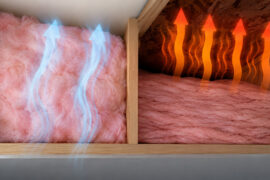
Cold floors, rising energy bills, and a sagging belly board are telling you something. The insulation under your manufactured home has probably failed.
So how much does it cost to replace insulation under a mobile home? Most homeowners spend $1,400 to $6,300 on materials, with total installed costs ranging from $2,000 to $8,500 depending on home size, insulation type, and labor rates in your area.
This guide breaks down the real numbers. You’ll find cost per square foot for every material option, what drives the price up or down, contractor vs. DIY savings, and federal tax credits that can cut your bill by 30% or more.
How Much Does It Cost to Replace Insulation Under a Mobile Home
Replacing the insulation under a mobile home costs between $1,400 and $6,300 for materials alone, with a national average around $2,900.
Labor adds another $1 to $3 per square foot depending on your area and the complexity of the crawl space.
Total project cost for a single-wide (roughly 900 sq. ft. of floor area) lands between $2,000 and $5,000 installed. Double-wide homes with 1,400+ sq. ft. push that range to $3,500 to $8,500 when you factor in both materials and a professional crew.
The final number shifts based on three things: the type of insulation material you pick, the size of the home, and whether you hire a contractor or handle it yourself.
Closed-cell spray foam sits at the top of the price range. Fiberglass batts sit at the bottom. Everything else falls somewhere in between.
Per square foot, expect to pay $0.50 to $3.50 for materials and $1.00 to $4.50 installed, according to HomeGuide’s 2025 pricing data.
What Does Mobile Home Underbelly Insulation Replacement Include

The underbelly of a manufactured home has a layered structure: floor joists, insulation material packed between them, and a protective belly board (a fabric or plastic wrap) holding everything in place from below.
Replacement touches every layer.
A typical job includes:
- Removing the mobile home skirting to access the crawl space
- Dropping or cutting away the existing belly wrap fabric
- Pulling out old, damaged, or moisture-soaked insulation
- Inspecting floor joists, ductwork, and plumbing for damage
- Installing a vapor barrier if one doesn’t exist or the old one failed
- Fitting new insulation between or beneath the floor joists
- Re-securing or replacing the belly board to seal the cavity
Some contractors also handle air sealing around penetrations where pipes and ducts pass through the floor. This step alone can cut heat loss by a noticeable margin before any new insulation goes in.
If the belly board has tears, animal damage, or sagging sections, that gets addressed during the same visit. Skipping it leaves the new insulation exposed to moisture and pests.
How Much Does Old Insulation Removal Cost Under a Mobile Home
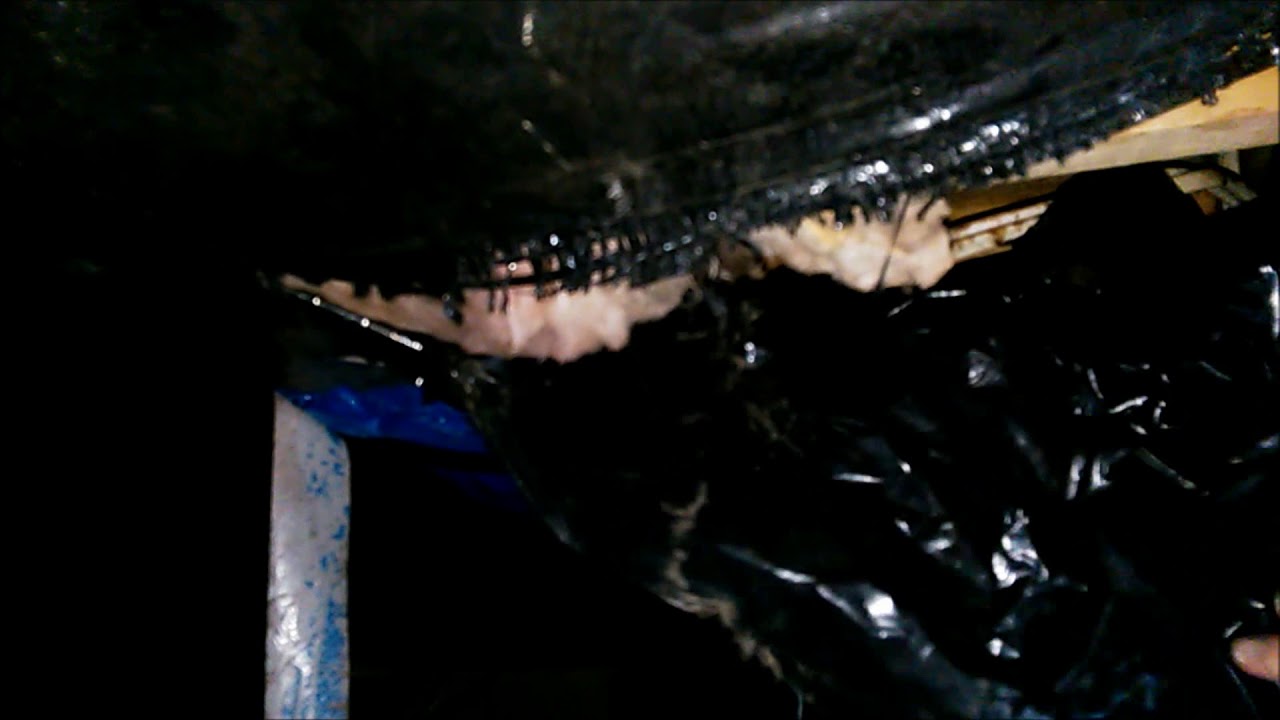
Removing existing insulation runs $1 to $1.50 per square foot, not counting disposal fees.
That puts a single-wide removal job at roughly $900 to $1,350 and a double-wide at $1,400 to $2,100 for labor alone.
Blown-in cellulose or loose-fill insulation costs more to remove because it requires industrial vacuum equipment. Batts and rolls come out faster by hand.
Old insulation can’t be reused. Once fiberglass gets wet or compressed, its R-value drops permanently. Cellulose that’s absorbed moisture clumps together and grows mold. Neither material performs after damage, so it all goes to the landfill.
Some contractors bundle removal into the total replacement quote. Others charge it separately. Always ask for an itemized breakdown so you know exactly what you’re paying for the tear-out versus the new install.
What Insulation Materials Are Used Under Mobile Homes
Four main insulation materials work for the underbelly of a manufactured home. Each one handles moisture, cost, and thermal resistance differently.
The right pick depends on your climate zone, crawl space clearance, and budget. Colder regions (Department of Energy zones 5 through 8) need higher R-values per inch, which narrows your choices fast.
Here’s what each option costs and how it performs under a mobile home floor.
How Much Does Closed-Cell Spray Foam Cost Under a Mobile Home
Closed-cell spray foam runs $1.50 to $3.50 per square foot installed, putting a single-wide job at $1,350 to $3,150 and a double-wide at $2,100 to $4,900.
It delivers an R-value of about 6.5 per inch, the highest of any common material. It also doubles as a moisture barrier because it doesn’t absorb water.
Lifespan sits around 80+ years with no sagging or settlement. It lasts roughly 3 to 4 times longer than fiberglass in crawl space conditions. The catch: you need professional spray rig equipment and trained installers, so DIY isn’t realistic here.
How Much Does Fiberglass Batt Insulation Cost Under a Mobile Home
Fiberglass batts are the cheapest option at $0.20 to $1.00 per square foot for materials. Installed, that climbs to roughly $2.00 to $3.40 per square foot.
R-value ranges from R-11 to R-30 depending on thickness. The problem with using batts under a mobile home is moisture. Fiberglass absorbs water, and the crawl space is the wettest zone in the entire structure.
Once wet, batts sag, lose their thermal resistance, and become a breeding ground for mold. They work if your crawl space stays bone dry and has a solid vapor barrier underneath. Otherwise, you’ll be replacing them again in 10 to 15 years.
How Much Does Rigid Foam Board Insulation Cost Under a Mobile Home
Rigid foam board costs $0.75 to $2.50 per square foot for materials. Polyisocyanurate boards deliver R-6.5 per inch; extruded polystyrene (XPS) gives about R-5 per inch.
Both resist moisture well, which makes them a strong fit for the underbelly. Installation means cutting panels to fit between floor joists and sealing edges with spray foam cans.
Lifespan runs 50+ years. This is one of the better DIY options if you have enough crawl space clearance to work.
How Much Does Blown-In Insulation Cost Under a Mobile Home
Blown-in insulation runs $2 to $7 per square foot installed. Cellulose is the most common type for this application, though fiberglass loose-fill is also used.
Cellulose lasts 20 to 30 years but starts degrading around year 15. It needs a solid vapor barrier beneath it because the material absorbs moisture over time.
The upside: blown-in fills irregular cavities and gaps around ductwork and plumbing better than batts or boards. The downside: removal later is expensive because it requires vacuum machines.
What Factors Affect the Cost of Replacing Insulation Under a Mobile Home
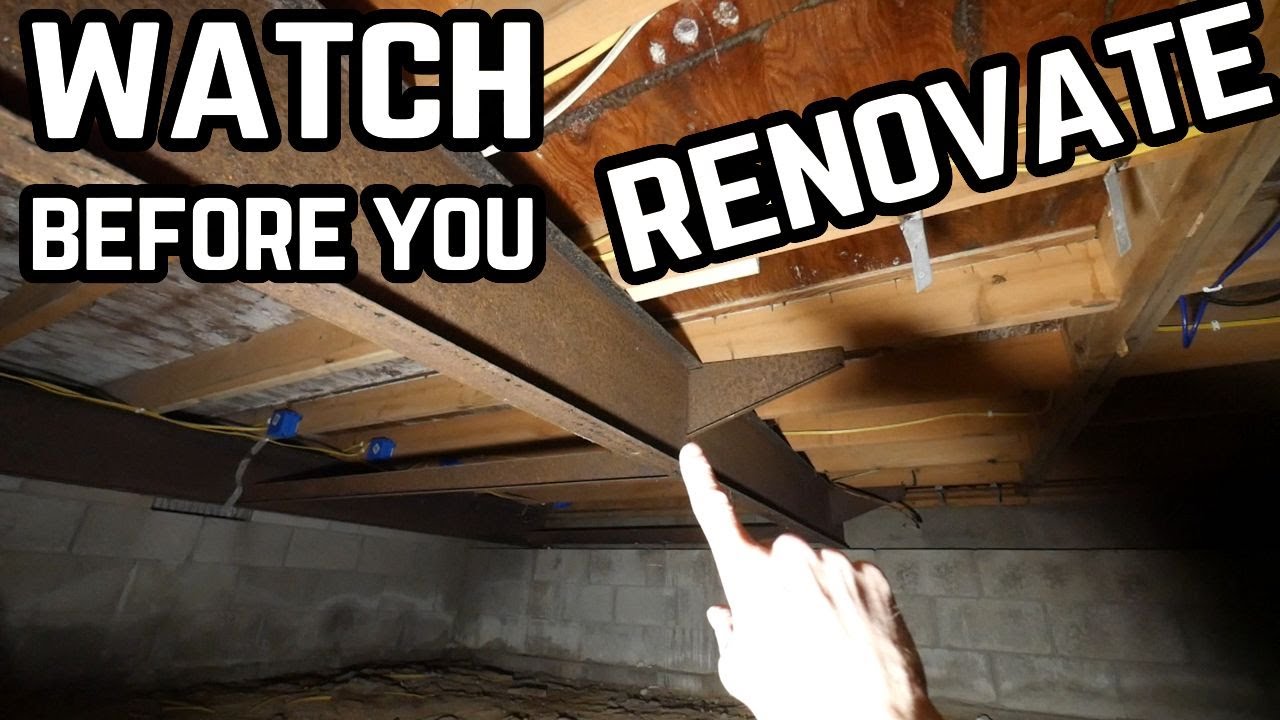
No two replacement jobs cost the same. Five variables control your final bill, and most of them interact with each other.
How Does Mobile Home Size Change the Insulation Cost
A single-wide manufactured home has roughly 900 to 1,100 sq. ft. of floor area. A double-wide runs 1,400 to 2,200 sq. ft. At $2 to $4.50 per square foot installed, the size difference alone can double your total cost.
Quick math: a 1,000 sq. ft. single-wide with spray foam at $3 per sq. ft. comes to $3,000 in insulation. The same material on a 1,800 sq. ft. double-wide hits $5,400.
How Does R-Value Affect the Price of Underbelly Insulation
R-value measures how well insulation resists heat flow. Higher number, better performance, thicker material, higher cost per square foot.
The Department of Energy recommends R-25 to R-30 for floors in climate zones 4 through 8 (most of the northern U.S.). Warmer zones 1 through 3 can get by with R-13 to R-19. Meeting the higher spec with closed-cell spray foam means roughly 4 to 5 inches of material versus 2 to 3 inches for the lower zones.
How Does Crawl Space Accessibility Impact Labor Costs
Low clearance under a mobile home (less than 18 inches) makes everything slower. Contractors charge more when crews have to work around ductwork, plumbing, and pipe insulation in a tight crawl space.
Skirting removal and reinstallation adds $200 to $500 to the job. Obstructed access points or homes on sloped lots push labor rates up another 15% to 25%.
Does the Condition of the Belly Board Affect Replacement Cost
Yes. If the belly wrap fabric is torn, sagging, or chewed through by rodents, it needs repair or full replacement before new insulation goes in.
A new belly board runs $0.50 to $1.50 per square foot for materials plus labor. On a single-wide, that’s an extra $450 to $1,650. Skipping this step leaves new insulation exposed to wind, moisture, and pest damage.
How Does Location Affect Mobile Home Insulation Pricing
Regional labor rates vary by 30% to 50% between low-cost rural areas and high-cost metro markets. A contractor in rural Alabama charges less per hour than one in suburban New Jersey.
Your climate zone also matters because it dictates the R-value you need. Higher R-value requirements mean thicker insulation, more material, and a bigger bill. Material availability plays a role too; polyisocyanurate boards cost more in areas where local suppliers don’t stock them.
How Much Does It Cost to Hire a Contractor vs. DIY Insulation Replacement

Hiring a professional insulation installer adds $1.00 to $3.00 per square foot in labor on top of material costs. A full contractor job on a single-wide runs $2,500 to $5,000; a double-wide lands between $4,000 and $8,500.
DIY cuts the bill by 40% to 60%, but only certain materials make sense for self-installation:
- Blanket insulation (fiberglass batts and rolls) is the easiest to handle yourself
- Rigid foam boards work for DIY if you have crawl space clearance and a saw
- Spray foam and injection foam require professional equipment, not a DIY job
- Blown-in cellulose needs a blower machine (some retailers like Home Depot rent them)
The real tradeoff isn’t just money. Spray foam installed by a trained crew seals air leaks and moisture paths that batts simply can’t match. Took me a while to accept that the cheaper material doesn’t always mean the cheaper outcome over 10 years.
Get at least three quotes. Prices between contractors in the same zip code can swing 20% to 40% for the exact same scope of work.
How Long Does Mobile Home Underbelly Insulation Last Before Replacement
Lifespan depends almost entirely on the material and the conditions under your home.
- Closed-cell spray foam: 80+ years, no sagging or moisture absorption
- Rigid foam board (polyisocyanurate, XPS, EPS): 50+ years if protected by a belly board
- Fiberglass batts: 80 to 100 years in theory, but check every 15 to 20 years; in a crawl space, effective life drops to 10 to 20 years due to moisture
- Blown-in cellulose: 20 to 30 years, starts losing R-value around year 15
Three things shorten any insulation’s life faster than normal aging: water damage from leaking pipes or poor drainage, pest infestations (rodents love to nest in fiberglass), and physical damage from wind or debris tearing the belly wrap.
A solid vapor barrier and intact belly board are what keep everything underneath performing for decades. Without them, even spray foam’s moisture resistance gets tested by standing water or flooding.
What Are the Signs That Insulation Under a Mobile Home Needs Replacement
Most people don’t crawl under their manufactured home to check insulation every year. But the signs show up inside the house first.
- Cold floors in winter, especially near exterior walls
- Uneven temperatures between rooms
- Energy bills climbing without a change in usage
- Visible sagging or drooping of the belly board when you look under the home
- Rodent droppings, nesting material, or chew marks on the belly wrap
- Musty smell inside the home, pointing to mold or mildew growth in wet insulation
- Moisture stains or condensation on the underside of the floor
If you’re seeing two or three of these at once, the insulation is probably compromised. A home energy audit can confirm exactly where heat is escaping and whether the underbelly is the main problem or just part of a bigger issue with thermal bridging or gaps elsewhere.
A blower door test measures total air leakage, while a thermal imaging camera shows exactly which sections under the floor have failed. Both cost $150 to $400 and can save you from replacing insulation that’s still fine in some areas.
Are There Tax Credits or Rebates for Mobile Home Insulation Replacement
The Inflation Reduction Act allows homeowners to claim up to $1,200 per year in federal tax credits for insulation upgrades. Mobile homes, manufactured homes, and modular homes all qualify as long as the property is your primary residence in the United States.
You file the credit on IRS Form 5695. The insulation must meet ENERGY STAR requirements for your climate zone.
State programs add more savings on top of that:
- The Weatherization Assistance Program (WAP) covers insulation costs for qualifying low-income households, sometimes at zero out-of-pocket cost
- Maine’s Efficiency Maine Program covers 40% to 80% of insulation costs for residents
- Utility companies like Consumers Energy, DTE Energy, and SEMCO offer weatherization rebates ranging from $50 to $1,100 depending on the scope of work
Combining a federal insulation tax credit with a state rebate and a utility incentive can knock 30% to 50% off your total replacement cost. Check the Database of State Incentives for Renewables and Efficiency (DSIRE) to find what’s available in your zip code.
How to Reduce the Cost of Replacing Insulation Under a Mobile Home
The cheapest insulation job is the one where you don’t overspend on material you don’t need and you don’t leave money on the table from programs that already exist.
Start here:
- Get three to five contractor quotes; pricing varies 20% to 40% for identical work in the same area
- Apply for weatherization rebates and federal tax credits before scheduling the job
- Seal air leaks first, because a well-sealed crawl space needs less insulation thickness to hit the same R-value target
- Combine insulation with other energy upgrades (heat pump, windows) in the same tax year to maximize the $1,200 annual credit
- Handle fiberglass batt or rigid board installation yourself if the crawl space has 24+ inches of clearance
- Buy materials during seasonal sales at Lowes, Home Depot, or Menards, where prices drop 10% to 15% in spring
One thing I’ve seen people overlook: the return on insulation investment depends on how long you plan to stay in the home. Spray foam’s higher upfront cost pays back in 3 to 5 years through lower heating and cooling bills, according to the Department of Energy. Fiberglass batts pay back faster upfront but may need replacement in 10 to 15 years under a mobile home, eating into those savings.
If you’re on a tight budget, insulate in stages. Start with the areas that lose the most heat, usually the belly and rim joists, then tackle walls and the roof deck later when the payback period from the first phase frees up cash.
FAQ on How Much It Costs To Replace Insulation Under A Mobile Home
What is the average cost to replace insulation under a mobile home?
The national average is around $2,900 for materials alone. Total installed cost ranges from $2,000 to $8,500 depending on home size, insulation material, and whether you hire a contractor or do it yourself.
What is the cheapest insulation for under a mobile home?
Fiberglass batts cost $0.20 to $1.00 per square foot for materials. They’re the most affordable option but absorb moisture in crawl spaces, which shortens their effective lifespan to 10 to 15 years under a manufactured home.
Is spray foam worth the cost under a mobile home?
Closed-cell spray foam costs more upfront at $1.50 to $3.50 per square foot installed. But it lasts 80+ years, blocks moisture, and eliminates air leaks. The payback period is typically 3 to 5 years through lower energy bills.
Can I replace mobile home underbelly insulation myself?
DIY works for fiberglass batts and rigid foam boards if your crawl space has at least 24 inches of clearance. Spray foam and blown-in cellulose require professional equipment. Self-installation cuts costs by 40% to 60%.
How long does it take to replace insulation under a mobile home?
A professional crew finishes most single-wide homes in 3 to 5 hours, including old insulation removal and new material installation. Double-wide manufactured homes take 5 to 8 hours. DIY projects usually stretch across a full weekend.
Does homeowners insurance cover insulation replacement under a mobile home?
Standard policies typically cover insulation damage caused by covered events like storms, fire, or burst pipes. Normal wear, pest damage, and moisture degradation are not covered. Check your policy’s specific exclusions before filing a claim.
What R-value do I need for insulation under a mobile home?
The Department of Energy recommends R-25 to R-30 for floors in climate zones 4 through 8. Warmer zones 1 through 3 need R-13 to R-19. Higher R-values mean thicker insulation and higher material costs.
Are there government programs that help pay for mobile home insulation?
The Inflation Reduction Act offers up to $1,200 in annual tax credits. The Weatherization Assistance Program (WAP) covers costs for low-income households. State utility rebates from providers like Consumers Energy and DTE add $50 to $1,100 more.
How do I know if insulation under my mobile home needs replacing?
Cold floors, rising heating bills, and a sagging belly board are the clearest signs. Rodent damage, musty odors from mold, and visible moisture stains on the underside of the floor all point to failed insulation underneath.
Does replacing insulation under a mobile home increase its resale value?
New underbelly insulation improves energy efficiency by 10% to 40%, which raises the home’s appeal to buyers. It also protects plumbing from freezing. The return on insulation typically exceeds the project cost within a few years.
Conclusion
Figuring out how much does it cost to replace insulation under a mobile home comes down to material choice, home size, and labor. Budget anywhere from $2,000 to $8,500 installed for most single-wide and double-wide manufactured homes.
Closed-cell spray foam costs the most but lasts decades longer than fiberglass or cellulose. Rigid foam board sits in the middle for both price and performance.
Don’t skip the federal tax credits under the Inflation Reduction Act or state-level programs like the Weatherization Assistance Program. These alone can reduce your out-of-pocket cost by 30% to 50%.
Get multiple contractor quotes, check your crawl space clearance, and pick a material that matches your climate zone’s R-value requirements. The money you spend now on proper underfloor insulation shows up as lower heating and cooling bills for years.