Most spray foam quotes land somewhere between $1.50 and $5.00 per square foot installed. That covers open-cell and closed-cell work nationwide, and labor is already baked in, which is part of why the number looks steep sitting next to a bag of blown-in fiberglass.
The billing unit is where people get tripped up. Spray foam is sold by the board foot, not by flat area like almost everything else on the shelf. Contractors quote one combined material-and-labor rate for attics, walls, crawl spaces, and rim joists, and that rate moves with your target R-value and how awkward the space is to work in.
One thing to get out of the way early. The 30 percent federal insulation credit, Section 25C, expired for projects placed in service after December 31, 2025 under the One Big Beautiful Bill Act (IRS, 2025). Nothing federal is waiting for you on a 2026 job.
How Spray Foam Insulation Cost Is Measured

Square foot or board foot. Bids use both, and confusing the two is the fastest way to misread what you’re being charged.
A board foot is one square foot of coverage at one inch of thickness. That’s the unit actually driving your final bill, since a deep cavity eats far more material than a shallow one at identical surface area.
The math isn’t complicated once someone writes it out. Area in square feet times thickness in inches gives you total board feet. Board feet times the price per board foot gives you raw material. Labor stacks on top, sometimes folded into the rate and sometimes sitting on its own line.
That same area-versus-volume confusion shows up with other products too, so it’s worth getting straight before you start comparing bids on cost per square foot for insulation generally.
Foam is one option inside the broader home insulation category, and as far as common materials go, it’s the only one priced by volume.
HomeGuide’s 2025 cost data puts installed pricing at $1.50 to $5.00 per square foot across most residential work, material and labor together.
Closed-Cell vs Open-Cell Spray Foam Cost
Closed-cell runs $3.00 to $5.00 per square foot installed. Open-cell comes in at $1.50 to $3.50. Density explains the gap, since closed-cell packs roughly twice the material into the same cavity.
Closed-Cell Foam Cost
Closed-cell carries an R-value of 5 to 7 per inch, the highest of any common spray-applied material, per HomeGuide’s 2025 pricing data.
The price follows straight from that density. More raw material goes into the same space, and you walk away with a rigid air barrier and a vapor barrier from a single pass instead of two separate trades. It also stiffens stud walls and roof decks noticeably, which no batt or loose fill will do for you.
That moisture resistance is why closed-cell insulation can usually skip a separate vapor barrier step, unlike open-cell or fiberglass.
BASF’s Walltite and Demilec’s Heatlok are two products that turn up on contractor quotes in this bracket.
Open-Cell Foam Cost
Open-cell is the budget pick inside the foam category itself.
Its R-value sits lower per inch, around 3.5 to 3.7, so hitting the same target as closed-cell means spraying it thicker.
| Factor | Open-Cell Foam |
|---|---|
| Price installed | $1.50 to $3.50 per sq ft |
| R-value per inch | 3.5 to 3.7 |
| Best fit | Interior walls, sound dampening |
Icynene built an entire brand on open-cell, and contractors still spec it by name on plenty of residential work.
Average Cost of Spray Foam Insulation

Past the per-square-foot figure, a typical project comes in between $1,000 and $9,000 total. Single-room jobs sit at the bottom. Full attics and additions climb toward the top.
Nationally, installed pricing holds at $1.50 to $5.00 per square foot (HomeGuide, 2025). Small jobs break that pattern, since contractor minimums start around $1,000 to $2,000 no matter how little foam the space actually takes (HomeGuide, 2025). Spray a 2,000 square foot attic with 6 inches of open-cell and you’re at 12,000 board feet, or $4,800 to $7,200 in material before anyone gets paid (SprayFoamCalc, 2025). Whole-home work on that same 2,000 square feet lands at $3,600 to $9,000 installed (HomeGnome, 2025).
Those minimums catch people off guard more than anything else in the quote.
A job with $200 of material in it still gets billed at $1,000 or more. The rig has to be heated, hauled out, and set up regardless of whether you’re doing one closet or an entire second floor.
Among the types of insulation materials homeowners actually choose between, foam sits near the top of the price range. Which is why it tends to get reserved for the spaces where air sealing earns its keep.
Spray Foam Insulation Cost by Application Area
Where the foam goes changes what it costs, because access, ceiling height, and moisture conditions all affect how long a crew is on site. A crawl space and a garage ceiling are not remotely the same job even at identical square footage.
Attic Spray Foam Cost
Attics tend to land toward the higher end of the range, mostly because spraying the roofline takes longer than spraying a flat floor.
If you’re comparing foam against other attic insulation types, keep in mind it’s the only one priced by depth instead of by batt count or bag count.
- Roofline application costs more than flat attic-floor spraying
- Steep pitches slow crews down and add labor hours
- Knob-and-tube wiring, if it’s still up there, means prep work before anything gets sprayed
Crawl Space Spray Foam Cost
Clearance drives the price here, not square footage.
Crawl spaces push labor rates higher than almost anywhere else in the house. Crews end up working on their knees or their stomachs, and everything takes longer that way.
(Anyone who’s actually dragged a hose through one of these understands why the labor line runs high compared to an open attic.)
Rim Joist Spray Foam Cost
Rim joists are the smallest standalone foam job most homeowners bother hiring out.
Quotes here often come as a flat rate rather than a square-foot number, since the band around the foundation is a narrow continuous strip instead of an open surface.
- Almost always closed-cell, because moisture and pest resistance matter most down at the foundation line
- Frequently bundled with crawl space work by the same crew on the same visit
Garage and Roof Deck Spray Foam Cost
Scope decides this one. Walls only costs less than walls plus ceiling, which is obvious enough, but it’s worth pinning down in writing before the crew arrives.
| Scope | Relative Cost |
|---|---|
| Walls only | Lower end of the per-sq-ft range |
| Walls plus ceiling | Upper end of the per-sq-ft range |
Roof decks price closer to attic work. Same lift equipment, same awkward overhead angles.
Cost to Spray Foam Insulate a Whole House

Doing an entire home in foam typically runs $3,600 to $9,000 on a 2,000 square foot house, scaling from there with total floor area.
| Home Size | Total Installed Cost |
|---|---|
| 1,000 sq ft | $1,800 to $4,500 |
| 2,000 sq ft | $3,600 to $9,000 |
| 3,000 sq ft | $5,400 to $13,500 |
Those figures come from HomeGnome’s 2025 pricing data, collected across both large and small markets nationwide.
Larger homes cost more in raw dollars, obviously, though the per-square-foot rate usually dips a little. The crew isn’t tearing down and resetting equipment between separate small jobs.
Worth knowing: most whole-house projects don’t spray everything at the same density.
Builders routinely mix open-cell in interior partitions with closed-cell along the exterior envelope and roofline. The blended average comes in well under what an all-closed-cell quote would look like.
What Affects Spray Foam Insulation Cost

Labor rates, target R-value, access, and whether old insulation has to come out first. Those move the number more than anything else on a quote.
- Local crews typically charge $50 to $100 an hour, or bill labor separately at $0.44 to $3.30 per square foot
- A thicker layer means more board feet, and more board feet means a bigger material bill
- Steep rooflines and cramped crawl spaces add labor hours that have nothing to do with how much foam gets used
- Tearing out old fiberglass or cellulose first usually adds $1.00 to $2.00 per square foot on top of the base quote
R-value does more damage to a budget than most people anticipate.
The U.S. Department of Energy recommends attic insulation from R-30 in the mildest climate zones up to R-60 in the coldest, and every point you add is another layer of foam going on.
Figure out how much insulation your attic actually needs for your climate before you start collecting quotes. A contractor pricing to code minimums will come in far below one pricing to a higher voluntary standard, and you won’t spot the difference by comparing bottom-line numbers.
Some of this only clicks once you know how insulation actually works at the material level. Thicker isn’t just thicker. It’s more resistance to heat flow, and resistance is what the crew is really selling you.
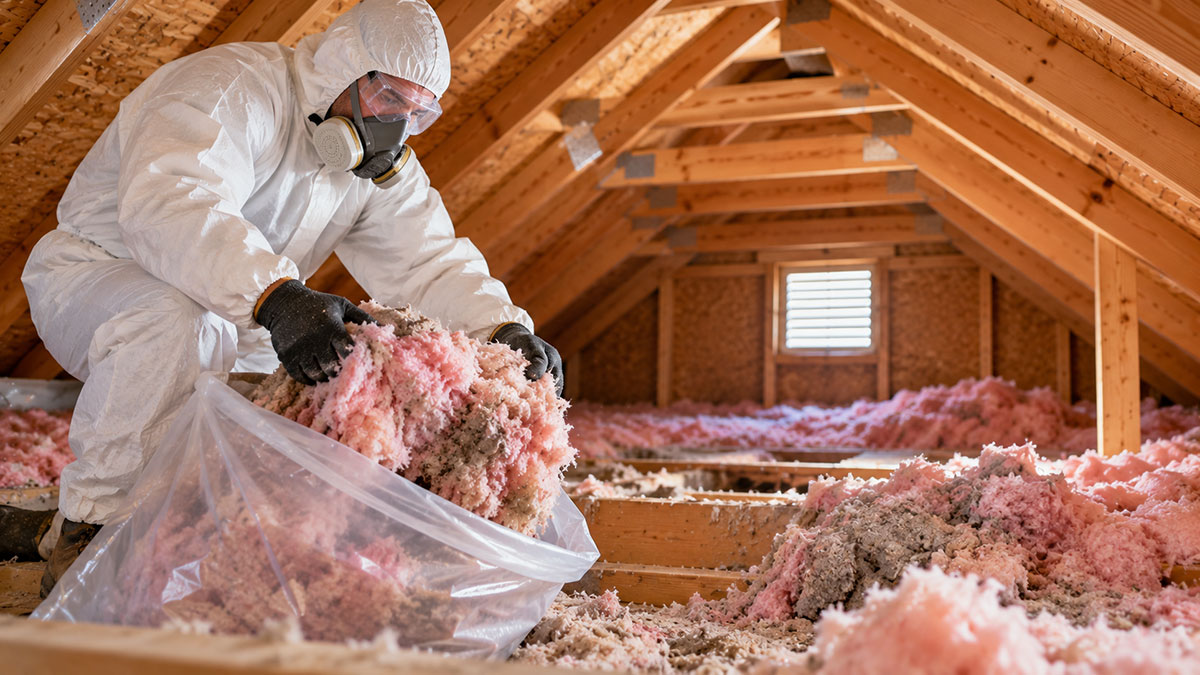
Removal is the line nobody budgets for.
Vacuuming out old blown-in fiberglass, or bagging up compressed batts before the spray crew even pulls in, can add a full day of labor to what looked like a straightforward attic.
Spray Foam Insulation Cost vs Fiberglass and Cellulose
Foam costs more upfront. Roughly $1.50 to $5.00 per square foot installed against $0.40 to $1.50 for fiberglass batts. What it buys you is a job neither of the alternatives does alone, sealing air leaks and insulating in the same pass.
| Material | Installed Cost per Sq Ft | R-Value per Inch | Air Sealing |
|---|---|---|---|
| Spray foam, closed-cell | $3.00 to $5.00 | 5 to 7 | Built in |
| Spray foam, open-cell | $1.50 to $3.50 | 3.5 to 3.7 | Built in |
| Fiberglass batts | $0.40 to $1.50 | 2.9 to 3.8 | Needs a separate air-sealing step |
Fiberglass insulation is still the cheaper choice on paper, and it meets code in plenty of climate zones without any drama at all.
Cellulose prices similarly to fiberglass and beats it slightly on R-value per inch, so for a lot of people the real question is spray foam or cellulose insulation rather than foam versus fiberglass.
The premium pays off in older homes with drafts you can feel, attics with complicated framing, and anywhere air leakage is doing more damage to your utility bill than raw R-value ever could.
Fiberglass wins on budget. Foam wins on performance per square foot covered. Neither of those is a surprise.
Owens Corning and Johns Manville are the names on most rolls of batting at the price point foam is competing against.
DIY Spray Foam Kit Cost vs Professional Installation
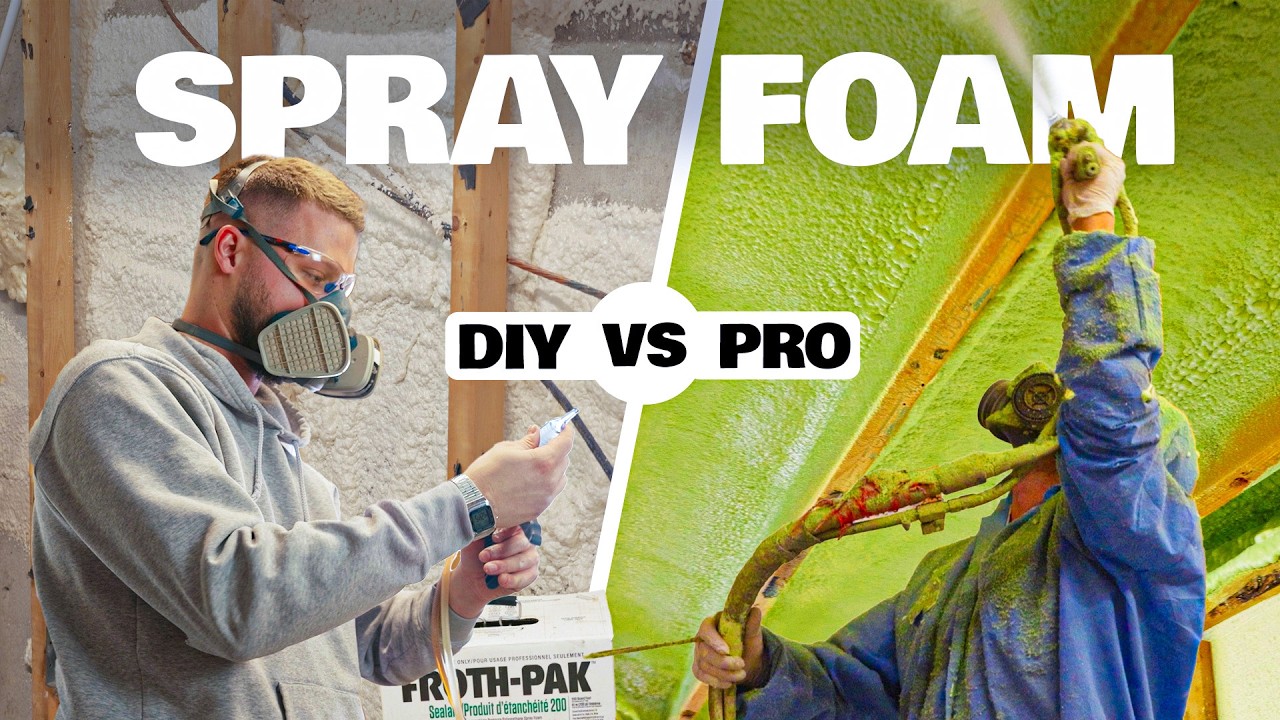
A midsize DIY kit runs $300 to $1,000 depending on coverage, against $1,500 or more for the same square footage done by a licensed crew. Tempting gap. Board-foot yield and application skill close it faster than you’d think.
DIY Spray Foam Kit Cost
Kits are priced by board-foot yield, not by room size.
| Kit Size | Coverage | Price |
|---|---|---|
| Small (Dow Froth-Pak 12) | About 12 board feet | $79.99 |
| Medium (Dow Froth-Pak 200) | 200 sq ft at 1 inch | $419 |
| Large (Dow Froth-Pak 630) | About 630 board feet | $979 to $1,079 |
RetroFoam of Michigan’s 2025 pricing survey pulled those straight from Amazon, Lowe’s, and Home Depot listings. Tiger Foam sits in the same neighborhood, with a 200-board-foot kit around $385.
The appeal is real on small, forgiving work. No labor line means the sticker price looks tiny, and a rim joist or a sill plate is about as forgiving as foam application gets.
The trouble starts on anything bigger. Uneven coverage and wasted material are near universal on a first attempt, and most kits won’t get you to the R-value a code inspector is looking for in a full wall or attic anyway.
Professional Installation Cost
Labor is the entire difference between a $400 kit and a $1,500 quote on identical square footage.
What that money covers: a rig that stays hot and pressurized for hours without tank swaps, even thickness across every cavity checked as the crew works, and someone else’s liability coverage if it goes badly.
- Consistent density and thickness across the whole job
- Manufacturer and workmanship warranties actually apply
- Minimum job fees still hit you even on one small room
- Scheduling a crew takes considerably longer than driving to a hardware store
Dow and Tiger Foam sell direct to homeowners for exactly this reason. They’re betting a motivated DIYer will take on a rim joist or a crawl space themselves rather than swallow a minimum call-out fee.
Tax Credits and Rebates for Spray Foam Insulation
Section 25C, the federal credit that used to take a bite out of insulation costs, expired for anything placed in service after December 31, 2025. Install foam in 2026 and there’s nothing to claim federally, though state and utility programs are still running in a lot of places.
The credit came through the Inflation Reduction Act at 30% of material cost, capped at $1,200 a year across insulation, air sealing, windows, and doors combined.
The One Big Beautiful Bill Act, signed July 4, 2025, ended it early. It was supposed to run through 2032. Instead it stopped cold at the end of 2025 with no phase-down, per IRS guidance issued that August.
Anyone who got foam installed before the cutoff can still claim the insulation tax credit on a 2025 return filed during the 2026 tax season. Projects placed in service in 2026 don’t qualify. No exceptions, no grandfathering.
Federal money is gone. It was never the only money.
Utility companies and state energy offices in a number of regions run their own programs, and a weatherization rebate through one of those can take a real percentage off a foam quote without any federal involvement.
Households under a set income threshold have another route worth checking. The federal Weatherization Assistance Program still funds insulation work directly, and in some cases covers the whole thing.
Oncor’s Take a Load Off Texas program is a concrete example, paying a per-square-foot incentive to homeowners upgrading attic insulation from R-22 or below up to R-38 or better.
Spray Foam Insulation Installation Process
Site prep, equipment setup, spray application, then cure time before anyone goes back in. A small interior job can be done in an hour or two. A full attic generally wraps inside a single day once prep is finished.
- Clear the work area and mask anything fixed in place with plastic to catch overspray
- Stage the rig on the driveway or curb and run hose lines to the attic, crawl space, or wall cavity
- Open windows, set up exhaust fans, and suit up in protective gear before mixing chemicals
- Spray the foam in lifts of about half an inch per pass rather than one thick coat
- Trim any foam that expanded past the framing line once it has cured
- Hold the space vacant for the manufacturer’s stated cure time before anyone re-enters
The truck-mounted spray rig equipment is the whole reason a crew can cover a house in a day. It holds and heats enough chemical to run continuously, with none of the tank swapping a DIY kit forces on you.
Half an inch per pass is the standard minimum in a single lift, per spray polyurethane foam application guidance published for roofing and wall assemblies. Go thicker in one pass and you trap heat, which can leave the core soft while the surface looks perfectly finished.
The Spray Foam Coalition notes that a small interior touch-up can be sprayed in an hour or two, though most residential jobs still eat most of a day once prep and cleanup are counted.
This isn’t a casual weekend project.
Every stage leans on the one before it. Rush the ventilation, skip a lift, and you’ve undone thousands of dollars of otherwise good material.
When Spray Foam Insulation Does Not Make Financial Sense

Sometimes the answer is just no. A home already at code R-value, a sale coming up, a budget that can’t stretch, or a moisture problem that needs solving first.
- Topping up an attic that already hits its R-value target rarely returns enough in energy savings to justify a full foam retrofit
- If the payback window is longer than the time you’re staying, you’re mostly insulating for whoever buys the place
- Fiberglass or cellulose at a fraction of the price still meets minimum code in plenty of climate zones
- Sealing a damp cavity with closed-cell traps the moisture rather than solving it, so the leak gets fixed first or not at all
Allison Bailes of Energy Vanguard has pointed out that current energy codes already require the airtightness foam used to deliver almost by default, since most jurisdictions now mandate blower-door testing regardless of what’s in the walls.
That takes some air out of one of foam’s oldest selling points, at least in new construction, where builders can hit the same target with cheaper material plus a dedicated air-sealing pass.
Whether spray foam insulation is worth it in your case comes down to how long you’re staying and how leaky the place already is. There’s no blanket answer.
A shorter payback period for insulation shows up in homes with genuine drafts and high bills right now.
Newer, already-tight houses have less headroom. The math stretches out, and at some point the premium stops paying for itself on any timeline you’d care about.
Nothing wrong with the material in those situations. The numbers just don’t clear the bar.
FAQ on How Much Does Spray Foam Insulation Cost
What Is Spray Foam Insulation?
Polyurethane, applied as a liquid that expands on contact and hardens into a rigid or semi-rigid layer. What sets it apart from batts, blown-in fill, and rigid board is that it handles insulation and air sealing in one application.
Does Open-Cell Foam Need a Vapor Barrier?
In Climate Zones 5 through 8, yes. Open-cell only performs as a Class III vapor retarder, so codes call for an added Class II layer, per Huntsman Building Solutions guidance. Modest extra material cost that closed-cell typically avoids.
How Much Does Spray Foam Insulation Removal Cost?
Budget $2,000 to $12,000 depending on area and access, with around $4,000 being typical for a standard attic or wall job. Closed-cell costs more to pull out than open-cell because of how rigidly it adheres.
How Long Does It Take Spray Foam Insulation to Pay for Itself?
There’s no fixed timeline. Payback tracks local energy prices, how harsh your climate is, and how leaky the house was beforehand. Expensive energy markets and badly sealed homes recover the investment fastest.
What Mistakes Cause Spray Foam Insulation Quotes to Run Higher?
Underbidding hidden surfaces is the big one. Gable ends, soffits, and interior partitions get missed, and the quote climbs after work starts. Second most common is skipping a pre-quote inspection for old insulation or moisture issues.
How Do I Get an Accurate Spray Foam Insulation Quote?
Collect at least three itemized quotes that break out material, labor, and prep separately, and confirm each contractor physically measured every surface instead of working off a floor plan. Get the target R-value in writing, not just a price per square foot.
How Long Does Spray Foam Insulation Last Once Installed?
Manufacturers generally rate properly cured foam at 50 years or longer. It doesn’t sag, settle, or need topping up. In most houses it outlasts the building components around it rather than hitting any kind of replacement schedule.
Is Spray Foam Insulation Safe After It Cures?
Once the required ventilation period ends, typically at least 24 hours, cured foam is inert and doesn’t off-gas under normal conditions. That wait is built into most quotes rather than billed separately.
Where Does Spray Foam Insulation Cost Planning Start?
Start with a written scope instead of a phone quote. Confirm target R-value by area, decide open-cell or closed-cell for each cavity, and flag any old insulation that needs removing before a contractor shows up to measure.
After that, sequencing by cost efficiency beats spraying everything in one go.
- Rim joists and roofline first, since those leak the most air per dollar spent
- Attic floor or exterior walls next, once the worst of the leakage is handled
- Crawl space last, because tight access keeps its per-square-foot cost high whenever you get to it
There’s a trade-off buried in that order. Rooms sprayed last hold their old performance longer, so savings arrive in stages instead of all at once. Most people find that acceptable. Some don’t.
For the performance side this cost breakdown takes for granted, including how the two-part reaction cures and what R-value it delivers per inch, the full rundown on spray foam insulation fills in the gaps.