Fresh overspray wipes off. Cured foam does not. That one difference decides whether you’re looking at a ten minute cleanup or a demolition job with respirators and containment sheeting.
Once polyurethane has finished reacting, it is chemically stuck to whatever it landed on. Getting it off means cutting it, scraping it, freezing it, or softening it with solvent, then dealing with whatever the foam was covering up.
Most of this work happens in attics and crawl spaces, plus rim joists. The same cavities spray foam insulation went into for air sealing in the first place.
About 250,000 UK homes have it, and a quarter of the country’s largest mortgage lenders now decline to lend against a property with foam in the roof, according to a BBC investigation published in November 2024. That second number is why a lot of these jobs get booked at all.
What Is Spray Foam Insulation Removal

Treat it as demolition rather than replacement. Cured polyurethane gets cut, scraped, or chemically softened off framing, roof decking, or wall cavities, and none of it comes away clean.
Pulling out loose-fill insulation is a different animal entirely. That stuff just sits in the cavity. It was never bonded to anything.
Worth separating out the jobs people confuse with this one. Wiping uncured foam off skin or clothing before it sets is a cleanup task. Trimming fresh overspray during the install is part of the install. Vacuuming fiberglass or cellulose out of an attic is a different trade. None of those count as removal in the sense used here.
Cured foam is permanent by design. That’s the entire selling point. So taking it out is always destructive to some degree.
Why Does Cured Spray Foam Bond So Tightly to Building Materials

The chemistry is a two-part reaction between polyol and MDI, which is what Icynene, Demilec and the rest are actually selling when they sell you rigid or flexible foam.
What comes out of that reaction is a cross-linked bond with wood, concrete or drywall. Not an adhesive layer sitting on top. There is nothing to peel.
Density decides how hard you’ll have to work for it. Closed-cell foam runs 1.8 to 2.3 pounds per cubic foot, versus 0.5 to 0.8 pcf for open-cell (Spray Polyurethane Foam Alliance). Roughly three times the material packed into the same space.
Closed-Cell Foam Removal Difficulty
Hand tools barely register on this stuff. You’ll be reaching for power tools within about five minutes of starting.
The rigidity comes from a sealed cell structure that forms during the reaction, which is what closed-cell insulation is named for.
That same seal is why it works as its own vapor barrier, and why roof decks and rim joists tend to get sprayed with this type rather than the other one.
Open-Cell Foam Removal Difficulty
Much easier. Get an edge started and large sections often come away by hand.
Break the surface with a putty knife or flat bar, pull loose what you can, then go back over the residue with a stiff brush. That’s usually the whole process.
The soft, open structure that makes it easy to strip out is also why open-cell handles sound deadening well. Closed-cell doesn’t do that.
What Causes Spray Foam Insulation to Need Removal

Nobody rips out working insulation on a whim. Something went wrong first.
Off-ratio foam is the classic failure. It stays soft and spongy, or it shrinks back off the substrate, and there is no fixing it after the fact. Lingering chemical smell months past the install is another one. Then there are the paperwork triggers, a failed home inspection or mortgage survey, or a code violation flagged during a sale.
Moisture does more damage than any of them.
Foam sprayed into a wall cavity can trap water against masonry instead of letting it dry out. Mold and timber decay follow, and at that point removal is the only route back. Cavity wall insulation jobs run into this far more than roof or attic work does.
Rodents come up less often, but they do come up. Crews open a wall and find nests tunneled through the foam, and dealing with mice nesting under attic insulation generally means the foam comes out to reach them.
What Health Risks Does Spray Foam Insulation Removal Pose
Cutting or grinding cured foam turns something stable back into breathable dust, and that dust can carry unreacted isocyanates.
Manufacturers and building scientists both treat foam as safe once it has fully cured. Removal work undoes that.
OSHA caps MDI exposure at 0.02 ppm (0.2 mg per cubic meter) as a ceiling limit. NIOSH recommends a stricter 0.005 ppm (0.05 mg per cubic meter) as a time-weighted average.
That gap is not a typo. NIOSH sits four times lower because isocyanate sensitization has no recognized safe exposure threshold once somebody is reactive to it. You don’t build tolerance. It works the other way around.
The EPA’s guidance on spray polyurethane foam says the same thing: dust generated while cutting or trimming cured foam may still contain unreacted isocyanates.
There’s a second problem stacked on the first. Grinding foam with a wire wheel or a reciprocating saw throws fine combustible particulate around an enclosed attic or crawl space, which is a fire and inhalation concern on its own terms.
What Tools and Protective Equipment Are Required to Remove Spray Foam Insulation
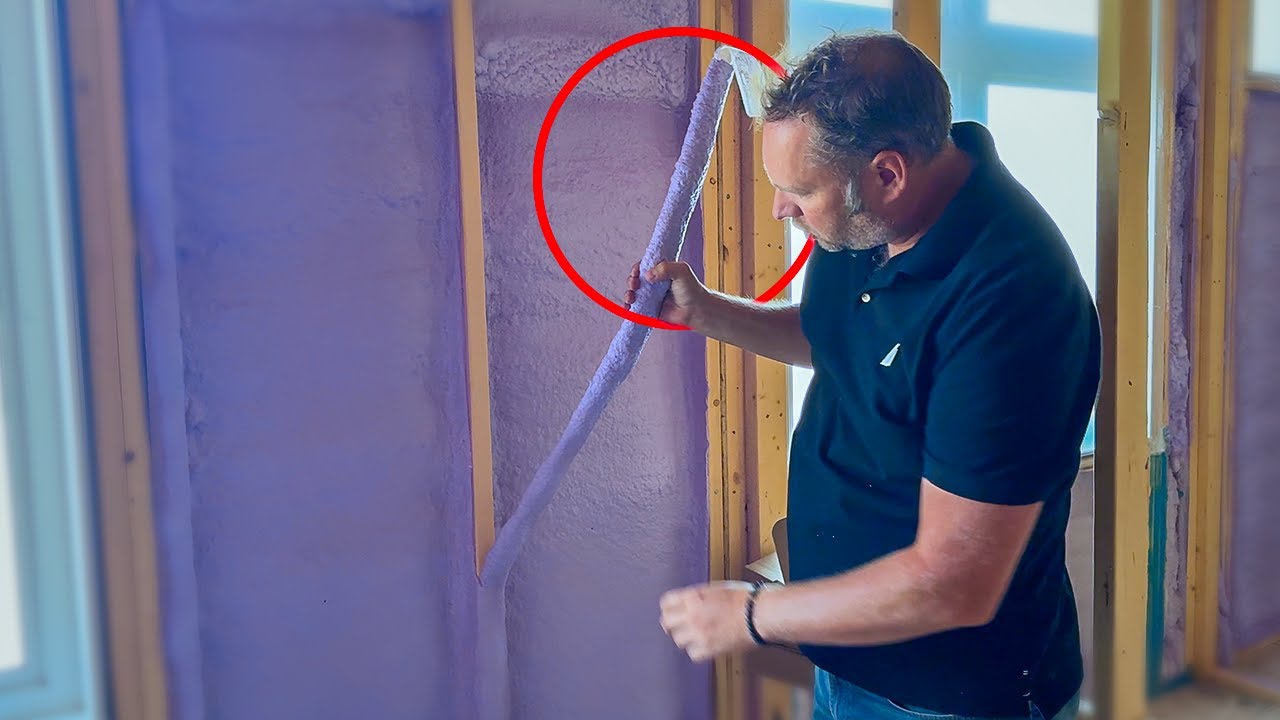
Tool choice follows foam type directly. Soft open-cell in an accessible spot rarely needs anything electric. Dense closed-cell almost always does.
Hand Tools
A serrated bread knife cuts foam better than it has any right to. Dedicated insulation knives exist for the same job if you’d rather not raid the kitchen drawer.
Flat pry bars and putty knives cover prying and scraping. Serrated blades slice bulk sections loose. And curry combs, the kind sold for grooming horses, shave closed-cell residue off framing surprisingly well.
Power Tools
Oscillating multi-tools like the Fein MultiMaster cut flush against a stud without chewing into the wood behind the foam.
Reciprocating saws clear thick sections fast, a Milwaukee Sawzall being the usual jobsite pick, though the finish is rougher than what an oscillating tool leaves behind.
A Dremel with a cutting wheel gets into corners a full-size grinder can’t reach.
For stubborn closed-cell residue, a drill or angle grinder fitted with a wire wheel takes it down to bare substrate. It also throws dust in every direction, which is the trade you’re making.
Protective Equipment
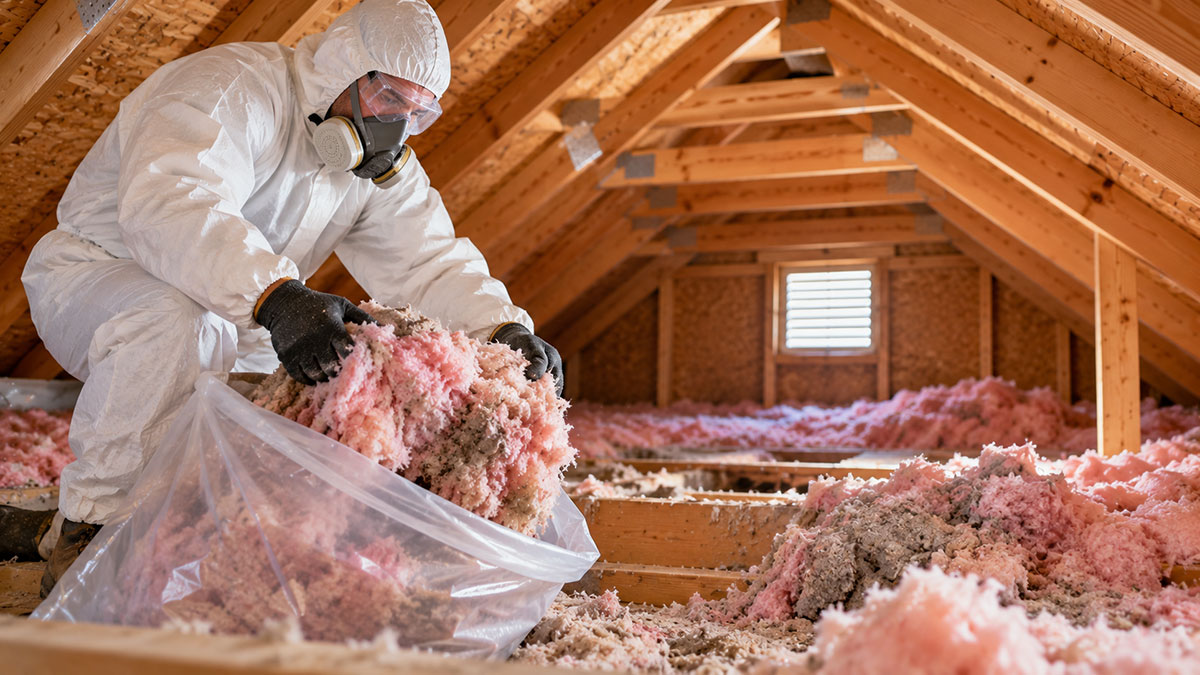
Don’t start without a NIOSH-approved respirator rated for isocyanates. A paper dust mask is not that. Add Tyvek coveralls or an equivalent disposable suit, sealed eye protection, and chemical-resistant gloves.
Cleanup needs a HEPA-filtered vacuum. A shop vac without HEPA filtration takes fine dust in one end and blows it straight back into the room out the other.
M and Honeywell both make cartridges rated for isocyanate exposure. Swapping a dust mask for one of those is the single biggest safety upgrade available to anyone doing this themselves.
What Methods Are Used to Remove Spray Foam Insulation

Which approach makes sense comes down to the substrate and the foam type, plus how much finished surface is sitting in the way. Most jobs end up using more than one.
| Method | Best For | Relative Cost | Primary Tool |
|---|---|---|---|
| Mechanical scraping | Exposed framing, accessible studs | Low | Pry bar, scraper |
| Heat softening | Small, stubborn residue patches | Low to moderate | Heat gun |
| Dry ice blasting | Finished or delicate surfaces | High | Blast equipment |
| Chemical softening | Thin residue on hard substrates | Moderate | Solvent, rag |
An insulation contractor shows up with all four available. A homeowner working alone realistically has the first two.
Mechanical Scraping and Cutting
Where nearly every job starts, and where the bulk of the foam volume actually comes out.
Cheapest route, nothing to rent, works on any substrate you can physically reach. The downsides are that closed-cell foam turns it into slow going, and a wrong blade angle gouges framing you’ll have to live with.
Heat Gun Softening
Warming foam before scraping cuts the resistance noticeably, since heat temporarily breaks down some of the bond strength.
It’s a finishing move. Use it on residue left after mechanical removal, not on bulk foam, and keep the gun far enough back that you’re not scorching wood or drywall. Most contractors treat it that way too.
Dry Ice Blasting
Dry ice pellets hit the foam at close to minus 78 degrees Celsius (about minus 109 Fahrenheit), freezing and fracturing the bond without leaving liquid or chemical residue behind.
Cold Jet has reported that Industrial Cleaning Solutions cut labor time nearly in half after switching to dry ice blasting, and the contractor separately credits the process with removing spray foam residue from finished surfaces without damaging them.
Finished surfaces survive it, there’s no secondary waste stream to bag up, and it moves quickly over large flat areas. Rental cost is the catch, along with ventilation. The process displaces oxygen with carbon dioxide, so an enclosed crawl space needs real airflow, not a propped-open hatch.
Chemical Softening
Scrape away as much bulk foam as you can first. Then apply a solvent such as lacquer thinner to what’s left and wipe it clean once the foam loosens its grip.
Water does the opposite of what people assume here. It accelerates curing rather than softening anything, so it never substitutes for an actual solvent.
How Much Does Spray Foam Insulation Removal Cost
Removal costs more than the original install did. Scraping cured foam off a surface takes longer than spraying it on, and labor is most of the bill.
The figure routinely lands above what spray foam insulation originally cost to put in.
Numbers from myjobquote.co.uk give a reasonable picture of UK pricing.
- Open-cell foam runs roughly GBP 20 to GBP 30 per square metre
- Closed-cell foam runs roughly GBP 30 to GBP 50 per square metre
- A full roof job on an 80 square metre, three-bed detached property averages around GBP 3,200
- Specialist disposal adds about GBP 100 on top of labor
Closed-cell costs more at every size, and density is the whole reason. Denser foam means power tools, and power tools mean slower progress per square metre.
Time scales the same way. A crew can often clear open-cell from a standard attic in a single day. A dense closed-cell roof stretches across two or three.
Should You Remove Spray Foam Insulation Yourself or Hire a Professional
A confident DIYer with the right respirator can handle small open-cell work in an accessible spot.
Closed-cell foam changes the math. So does an enclosed roof space. So does a house that’s about to go on the market.
Small open-cell patches on exposed framing, with no sale pending, are fair game for a weekend. Closed-cell roofs, enclosed crawl spaces, and anything tied to a transaction are not.
Resale is where the argument usually gets settled.
A quarter of the UK’s largest mortgage lenders now decline to lend on homes with spray foam insulation in the roof, and an estimated 250,000 UK properties carry this type of insulation, according to a BBC investigation. Those two figures together are why removal companies stay busy.
What valuers and surveyors want to see before approving a mortgage is a documented, contractor-verified removal. Not a homeowner’s word and a handful of phone photos.
Checkatrade and similar directories list spray foam removal specialists partly for that reason. The paper trail has become nearly as important as the foam being gone.
Plenty of homeowners end up reading about whether spray foam insulation is worth it in their specific situation before deciding who does the work.
How Do You Remove Spray Foam Insulation Step by Step
Order matters more than tool choice. Most of the damage in these jobs happens because somebody jumped ahead.
- Identify the foam type (open-cell or closed-cell) and check for wiring or plumbing hidden inside it
- Isolate the work area with plastic sheeting and tape to contain dust and fumes
- Cut or pry away the bulk of the foam, working small sections at a time
- Scrape remaining residue down to the substrate with a putty knife or wire wheel
- Vacuum the area with a HEPA-filtered vacuum before removing containment
- Inspect the exposed substrate for damage before reinsulating or closing the space back up
Cutting before you’ve isolated the space just pushes isocyanate dust into rooms that were clean a minute earlier. Containment goes first, every time.
Step three is where jobs stall, and it’s rarely the foam resisting the tools. It’s hidden wiring forcing a slower, more careful pace than anyone budgeted for.
What Mistakes Commonly Damage Building Materials During Removal
Rushing causes more damage than bad tool selection does. A few errors come up constantly.
- Setting a reciprocating saw blade too deep and cutting straight through roof decking
- Using water to soften foam, which speeds up curing instead of loosening it
- Grinding through wiring or plumbing hidden inside a foam-filled cavity
- Tearing drywall paper while prying foam off an interior wall
Standard roof sheathing runs just 7/16 to 5/8 of an inch thick, according to Angi. A blade set a quarter inch too deep passes clean through the decking along with the foam, and you find out when daylight shows up.
Rim joists carry the same risk for a different reason. The power tools you’d happily use on open framing end up sitting inches from wiring runs and duct penetrations that a layer of foam hides completely.
How Is Removed Spray Foam Insulation Disposed Of
In most jurisdictions cured spray foam isn’t classified as hazardous waste once it has fully reacted.
It leaves the site as construction and demolition debris, the same stream that handles drywall offcuts and scrap lumber, rather than through a specialized hazardous-waste channel.
Spray Foam Magazine’s advice on handling it is straightforward enough. Separate foam debris from other insulation types before bagging, check whether local facilities run insulation-specific recycling programs, and hang on to the receipts from the disposal facility.
Those receipts matter more than people expect. A mortgage valuer or a buyer’s surveyor may ask for proof the foam was removed and disposed of properly. Photos of an empty attic don’t prove much on their own.
Contaminated material is the exception. Foam soaked with mold growth or pest waste usually needs bagging and labeling as contaminated debris instead of going out with routine construction scrap.
When Should Spray Foam Insulation Not Be Removed
Sometimes the right call is to leave it alone, even when a homeowner has already decided otherwise.
Structural foam stays. In structural insulated panels the foam core carries load the way the web of an I-beam does, with the outer sheathing acting as the flanges. Cutting it out over a cosmetic complaint weakens the panel, not just its insulation value.
A few other situations don’t justify the work.
- Foam that fully cured and off-gassed years ago, with no lingering odor or moisture problem since
- Foam buried behind finished walls, where reaching it means tearing out drywall, trim and flooring first
- A small area of overspray that’s cosmetic only and isn’t affecting performance or access
- Cases where the real problem is inadequate ventilation rather than the foam itself
That last one comes up more than it should. Adding ventilation, or a secondary layer of a different material, often fixes what the homeowner had blamed on the foam.
Looking at spray foam or cellulose insulation as a next step tends to be more useful at that point than planning a demolition.
And before committing either way, put the cost of full removal plus reinsulation next to the cost per square foot for insulation installed fresh. That comparison changes minds.
FAQ on How To Remove Spray Foam Insulation
What Is the Difference Between Spray Foam Remediation and Full Removal
Remediation targets a specific problem, trapped odor or moisture usually, without stripping every layer off the substrate. Full removal takes the cured foam off completely.
Lenders want full removal. Partial remediation leaves material behind that a valuer can’t inspect, which defeats the point of doing it.
Is Spray Foam Insulation Removal Covered by Homeowners Insurance
Homeowners insurance rarely covers removal. Policies pay for sudden, accidental damage like fire or storms, not installation defects.
A bad initial install typically falls under the faulty workmanship exclusion, which leaves the homeowner or the installer’s guarantee holding the cost.
Does Removing Spray Foam Insulation Lower the Home’s R-value Until New Insulation Goes In
Yes, for as long as the cavity sits open. Bare framing means the R-value in that section drops to nearly zero.
Which is why contractors schedule reinsulation immediately behind removal. An open wall or roof cavity in January loses heat fast.
Can Spray Foam Insulation Be Removed With Water or Household Solvents
Water makes the problem worse. It reacts with unreacted isocyanate groups and pushes curing along instead of loosening the bond.
Household solvents like acetone will soften thin residue on a hard surface. Neither option touches bulk closed-cell foam without mechanical scraping first.
Can Removed Spray Foam Insulation Be Reused or Recycled
Not once it’s cured. Spray polyurethane foam is a thermoset plastic, so it won’t melt down and reform the way thermoplastic foams like polystyrene do.
Some regions accept clean offcuts for waste-to-energy processing. Curbside recycling programs almost never take cured foam debris.
How Do You Remove Spray Foam Insulation From HVAC Ductwork
Ductwork needs a gentler touch than framing. Contractors use plastic scrapers instead of metal blades, since thin sheet metal punctures easily, then wipe the residue with a mild solvent.
Foam sprayed directly inside a duct usually means replacing that section. Clearing it properly isn’t realistic.
What Comes After How To Remove Spray Foam Insulation Is Finished?
The job ends at the substrate, not at the trash bag. Exposed framing, roof decking or drywall still needs a moisture check and fresh material before that cavity performs as insulation again.
Test framing moisture content before anything else. Dry or replace whatever fails that test. Reinsulate only once the substrate reads clean.
Timber above roughly 22 percent moisture content stays at risk of fungal decay even with the foam gone, a threshold the Building Research Establishment sets for softwood framing.
Skipping that reading to save a day trades it for a rot problem that surfaces behind new material a year or two later, where nobody can see it happening.
Once the substrate reads clean, comparing the full range of types of insulation materials is the sensible next move.