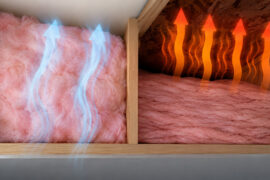
Your insulation might be doing half its job. Gaps and cracks in your home’s envelope let conditioned air escape constantly, and most homeowners never notice until the energy bills arrive.
Air sealing closes those pathways. It stops uncontrolled air movement between your living space and the outdoors, attics, and crawlspaces.
The Department of Energy estimates that air leakage accounts for 25-40% of heating and cooling costs in typical homes.
This guide covers how air sealing works, where leaks hide, what materials contractors use, and whether DIY sealing makes sense for your situation.
You’ll also learn how a blower door test measures results and why air sealing should happen before adding insulation.
What is Air Sealing
Air sealing is the process of closing gaps, cracks, and openings in a building’s envelope to prevent uncontrolled air movement between indoor and outdoor spaces.
Contractors use caulk, weatherstripping, spray foam, and gaskets to seal penetrations around windows, doors, electrical outlets, plumbing, and attic access points.
The Department of Energy estimates that air leakage accounts for 25-40% of energy loss in most homes.
Without proper sealing, your HVAC system works harder to maintain temperature. Drafty rooms, uneven heating, and high utility bills are the usual symptoms.
Air sealing works alongside home insulation to create a complete thermal barrier. One handles air movement; the other handles heat transfer through materials.
How Does Air Sealing Work in a House
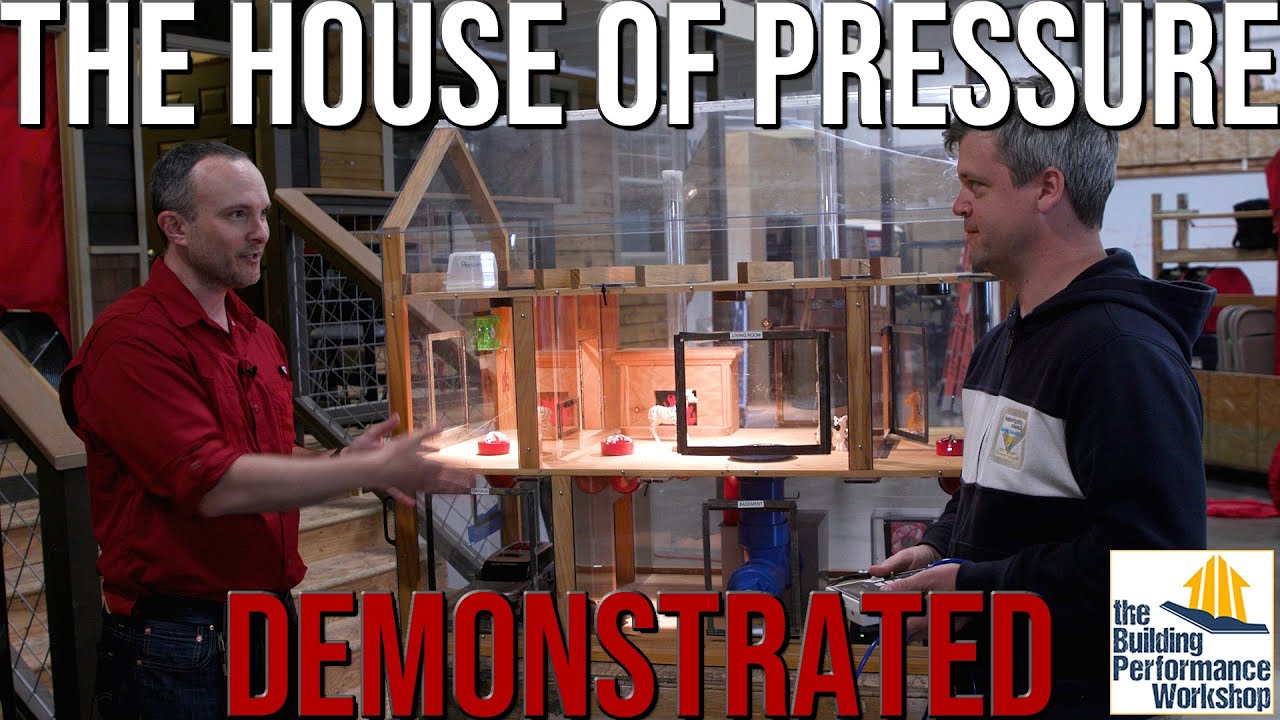
Air moves through your home based on pressure differential. Warm air rises and escapes through upper-level openings (exfiltration), while cold air enters through lower gaps (infiltration).
This is called the stack effect.
Air sealing targets every pathway between conditioned and unconditioned space. The goal is envelope integrity from foundation to roof.
Pressure Dynamics and Air Movement
Your house operates like a chimney. Warm air pushes upward through attic bypasses, recessed lights, and ceiling penetrations.
Replacement air gets pulled in through basement rim joists, sill plates, and wall outlets. HVAC systems, exhaust fans, and dryers add mechanical pressure changes that accelerate leakage.
The Building Envelope Connection
The building envelope separates heated living space from outside air and unconditioned areas like attics, garages, and crawlspaces.
Air barrier continuity matters. A single unsealed penetration can short-circuit an otherwise tight envelope, which is why whole house weatherization addresses every layer systematically.
Where Are the Most Common Air Leaks in a Home
Air leaks cluster around penetrations where different building materials meet. The bigger the gap, the more air moves through it.
Attic Air Leak Locations
- Attic hatch or pull-down stairs
- Recessed lights (can-style fixtures)
- Plumbing vent stacks
- Electrical wire penetrations
- HVAC duct boots
- Chimney and flue chases
- Dropped soffits over cabinets
Attic air sealing delivers the highest return because warm air naturally rises and exits here first.
Basement and Crawlspace Leaks
- Rim joist (where floor framing meets foundation)
- Sill plate gaps
- Foundation cracks
- Utility penetrations for gas, water, electrical
- Dryer vents and exhaust ducts
The basement rim joist is one of the largest leak sources. Many contractors seal and insulate this area using spray foam insulation for both air blocking and thermal resistance.
Wall and Living Space Leaks
- Electrical outlets and switches on exterior walls
- Window and door frames
- Baseboards and crown molding gaps
- Fireplace dampers
- Mail slots and pet doors
A thermal imaging camera reveals hidden leaks behind walls that visual inspection misses.
What Materials Are Used for Air Sealing
Material selection depends on gap size, location, and movement potential. Rigid gaps need rigid sealants; joints that expand and contract need flexible materials.
Caulk and Sealants
Silicone caulk handles exterior joints exposed to weather. Acrylic latex works for interior gaps under 1/4 inch.
Acoustic sealant stays permanently flexible for drywall-to-framing connections. Products from DAP and similar manufacturers cover most residential applications.
Spray Foam Products
Expanding foam fills irregular gaps from 1/4 inch to 3 inches. Low-expansion formulas work around windows and doors; high-expansion fills large cavities.
Closed-cell foam adds structural rigidity and moisture resistance. Open-cell expands more but offers less density.
Great Stuff and similar one-component foams handle most DIY sealing. Two-component professional spray rig equipment covers large areas faster.
Weatherstripping and Gaskets
Weatherstripping seals movable joints around doors and operable windows. Options include adhesive foam tape, V-strip bronze, and bulb gaskets.
Foam gaskets fit behind outlet and switch covers on exterior walls. Pre-made attic hatch covers with gasket edges reduce major leak points.
Rigid and Sheet Materials
Rigid foam board covers large openings like attic knee walls and dropped soffits. House wrap products like DuPont Tyvek and ZIP System sheathing create air barriers at the structural level.
Flashing tape seals seams between sheet materials. Metal flashing addresses gaps around chimneys where combustion safety requires non-flammable materials.
What Is the Difference Between Air Sealing and Insulation

Air sealing stops air movement. Insulation slows heat transfer through materials. Different problems, different solutions.
How Each System Functions
Insulation works by trapping air in tiny pockets that resist thermal conductivity. Fiberglass insulation, cellulose, and rock wool all function this way.
Air sealing physically blocks pathways. Wind can blow straight through fiberglass batts, which is why air sealing must happen before or alongside insulation installation.
Why Sequence Matters
Adding insulation without air sealing is like wearing a sweater with holes. You get some benefit, but air movement carries heat right past the insulation.
The Building Performance Institute (BPI) standard requires air sealing before installing loose-fill insulation in attics. This sequence maximizes R-value performance.
Combined Approaches
Some materials do both jobs. Spray foam insulation seals air gaps while adding thermal resistance, which is why contractors often choose between spray foam or cellulose based on air sealing needs.
Dense pack insulation techniques also reduce air movement through wall cavities, though not as completely as spray foam.
How Does a Blower Door Test Measure Air Leakage
A blower door test quantifies your home’s air tightness by measuring how much air moves through the envelope under controlled pressure.
The test uses a calibrated fan mounted in an exterior door frame. The fan depressurizes the house to 50 Pascals (a standardized pressure), then measures airflow in cubic feet per minute (CFM50).
Understanding Test Results
Air changes per hour at 50 Pascals (ACH50) is the standard metric. Most existing homes test between 5-10 ACH50; ENERGY STAR certification requires 4-7 ACH50 depending on climate zone.
Passive house standards demand 0.6 ACH50 or less. That’s extremely tight construction.
Before and After Testing
Contractors run a baseline test, perform air sealing work, then retest. The difference shows exactly how much leakage was eliminated.
RESNET and BPI certified professionals use equipment from The Energy Conservatory (Minneapolis Blower Door) or Retrotec. A home energy audit typically includes blower door testing as part of the diagnostic process.
What Is the Building Envelope
The building envelope is the physical barrier between conditioned interior space and the outside environment. It includes every surface that separates heated or cooled areas from unconditioned zones.
Envelope Components
- Exterior walls (framing, sheathing, siding)
- Roof and ceiling assemblies
- Foundation walls and floor slabs
- Windows and doors
- Floors over unconditioned spaces (garages, crawlspaces)
Thermal Boundary vs. Air Barrier
The thermal boundary is where insulation sits. The air barrier is where air sealing happens. These should align perfectly but often don’t in older homes.
Gaps between the two create thermal bridging and convective loops that bypass insulation entirely.
Why Does Air Sealing Affect Energy Bills
Uncontrolled air leakage forces your HVAC system to condition replacement air constantly. That’s energy you’re paying for twice.
Heating Season Impact
Warm air escaping through attic bypasses gets replaced by cold infiltration through lower openings. Your furnace runs longer cycles to compensate.
The Department of Energy estimates air sealing can reduce heating and cooling costs by 15-30% in typical homes.
Cooling Season Impact
Hot, humid air entering through gaps adds latent load (moisture) that air conditioners must remove. This increases runtime and wear.
Tight homes maintain setpoint temperatures with shorter equipment cycles, extending HVAC lifespan and improving efficiency. Understanding how insulation works alongside air sealing explains why both matter for energy performance.
Calculating Savings
The payback period for professional air sealing typically runs 2-5 years depending on climate, fuel costs, and baseline leakage.
ROI on insulation and air sealing combined often exceeds 20% annually in high-heating climates.
How Does Air Sealing Improve Indoor Air Quality
Controlling air pathways means controlling what enters your home. Unfiltered infiltration brings dust, pollen, pollutants, and moisture.
Pollutant and Allergen Control
Leaky homes pull air from garages (car exhaust, stored chemicals), crawlspaces (soil gases, moisture), and attics (insulation particles, pest debris).
Air sealing redirects all ventilation through filtered HVAC returns or dedicated fresh air systems. You choose what comes in.
Humidity and Moisture Management
Summer infiltration brings humid air that condenses on cool surfaces. Winter exfiltration carries moisture into wall cavities where it can condense and cause mold.
A properly sealed envelope with a vapor barrier in the right location prevents condensation problems and supports mold prevention.
Radon Mitigation Connection
Radon enters through foundation cracks and gaps. Sealing basement penetrations reduces soil gas infiltration, though dedicated radon systems may still be needed in high-radon areas.
What Building Codes Address Air Sealing Requirements
Modern energy codes mandate air sealing as part of new construction. Title 24 in California and the International Energy Conservation Code (IECC) elsewhere set minimum standards.
IECC Requirements
The 2021 IECC requires blower door testing for all new residential construction. Maximum allowable leakage ranges from 3-5 ACH50 depending on climate zone.
Required sealing locations include: attic penetrations, rim joists, duct boots, window/door frames, and all utility penetrations.
ENERGY STAR and Beyond-Code Programs
ENERGY STAR certification requires third-party verification of air sealing through RESNET-certified raters.
LEED certification awards points for exceeding code minimums on envelope tightness. Passive House certification (PassivHaus Institute) sets the strictest air sealing standards in residential construction.
How Much Does Professional Air Sealing Cost
Professional air sealing typically costs $1,500-$4,000 for a whole-house project. Attic-only sealing runs $500-$1,500 depending on size and complexity.
Cost Factors
- Home size and age
- Accessibility of leak locations
- Baseline leakage rate
- Materials required (foam vs. caulk vs. rigid barriers)
- Regional labor rates
The cost per square foot varies widely based on scope. Spot sealing runs $0.50-$1.50/sq ft; comprehensive sealing with insulation reaches $3-$5/sq ft.
Rebates and Incentives
Many utilities offer weatherization rebates covering 30-75% of air sealing costs. The federal insulation tax credit (25C) includes air sealing materials and labor.
Low-income households may qualify for free weatherization through the Weatherization Assistance Program administered by state energy offices.
Which Rooms Need Air Sealing First
Prioritize by impact. Attic sealing delivers the biggest energy savings because warm air rises and pressure differences are greatest at the top of the house.
Priority Order
- Attic floor – seal all penetrations before adding insulation
- Basement/crawlspace – rim joists, sill plates, foundation penetrations
- Exterior walls – outlets, windows, doors
- Attached garage – shared walls and ceiling
- Ductwork – connections, boots, seams in unconditioned space
Attic First, Always
Complete attic air sealing before improving insulation levels. Blown insulation covers penetrations and makes later sealing difficult or impossible.
Existing insulation may need vacuum removal before sealing work can begin in older homes.
What Tools Are Required for DIY Air Sealing
Basic air sealing requires minimal specialized equipment. Most homeowners already own the essentials.
Essential Tools
- Caulk gun (quality ratchet-style)
- Utility knife and scissors
- Foam gun for canned spray foam
- Headlamp or work light
- Safety glasses and gloves
- Dust mask or respirator
Detection Tools
Smoke pencils or incense reveal air movement at suspected leak points. A FLIR or similar infrared camera shows temperature differences indicating leakage.
DIY blower door kits exist but most homeowners hire professionals for testing. The equipment costs more than the test itself.
Materials to Stock
- Silicone and latex caulk tubes
- Low-expansion and high-expansion spray foam cans
- Foam backer rod (various diameters)
- Weatherstripping assortment
- Foam gaskets for outlets
- Aluminum flashing tape
How Do HVAC Systems Interact with Air Sealing
Tight homes change how mechanical systems operate. What worked in a leaky house may need adjustment after air sealing.
Combustion Safety
Atmospheric combustion appliances (natural draft furnaces, water heaters) need makeup air to operate safely. Tight envelopes can cause backdrafting where exhaust gases spill into living space.
Always verify combustion appliance safety after major air sealing work. Sealed combustion or power-vented equipment eliminates this concern.
Pressure Balancing
Exhaust fans, dryers, and range hoods create negative pressure (depressurization). In tight homes, this pulls air through any remaining leaks or can cause backdrafting.
Passive air inlets or mechanical fresh air systems solve pressure imbalances in well-sealed homes.
Duct Sealing Connection
Leaky ducts in unconditioned spaces (attics, crawlspaces) waste 20-30% of heating and cooling energy. Duct sealing complements envelope sealing.
HVAC load calculations (ACCA Manual J) should be updated after major air sealing. Tighter homes need smaller equipment; oversized systems short-cycle and waste energy.
FAQ on What Is Air Sealing
Is air sealing worth the money?
Yes. Most homeowners recover air sealing costs within 2-5 years through lower energy bills. The Department of Energy reports 15-30% savings on heating and cooling. Tight homes also improve comfort by eliminating drafts and cold spots.
Can I air seal my house myself?
DIY air sealing works well for accessible areas like attics, basements, and around windows. Caulk and spray foam handle most gaps. Hire professionals for combustion safety testing and hard-to-reach locations requiring specialized equipment.
What is the best material for air sealing?
Spray foam seals irregular gaps most effectively. Use caulk for cracks under 1/4 inch, weatherstripping for doors and windows, and rigid foam board for large openings. Material choice depends on gap size and location.
How long does air sealing last?
Properly installed air sealing lasts 20+ years. Caulk and weatherstripping may need replacement after 5-10 years due to UV exposure and wear. Spray foam and rigid materials remain effective for the life of the building.
Does air sealing cause moisture problems?
No, when done correctly. Controlled air sealing with proper vapor barrier placement actually reduces moisture issues. Uncontrolled leakage carries humid air into wall cavities where condensation causes mold and rot.
Should I air seal before or after insulation?
Before. Always complete air sealing before installing batt or blown insulation. Insulation covers penetrations and makes sealing difficult later. BPI standards require this sequence for attic weatherization projects.
How tight is too tight for a house?
Houses below 3 ACH50 need mechanical ventilation to maintain indoor air quality. ASHRAE 62.2 sets minimum fresh air requirements. Sealed combustion appliances and heat recovery ventilators solve air quality concerns in tight construction.
What areas lose the most air in a typical home?
Attic penetrations account for 30-40% of leakage. Rim joists and basement gaps contribute another 20-30%. Doors, windows, and wall outlets make up the remainder. Stack effect drives most air movement through upper-level openings.
Does air sealing help with allergies?
Yes. Sealing stops unfiltered outdoor air from bypassing your HVAC system. Pollen, dust, and pollutants enter through gaps in leaky homes. Tight construction forces all air through filters, reducing allergen exposure significantly.
How do I know if my house needs air sealing?
Drafty rooms, ice dams, high energy bills, and dust accumulation near outlets signal air leakage. A professional blower door test measures exact infiltration rates. Infrared scans reveal hidden leak locations behind walls and ceilings.
Conclusion
Air sealing is one of the most cost-effective upgrades for building tightness and home performance. Closing gaps in your envelope reduces energy loss, improves HVAC efficiency, and creates healthier indoor air quality.
Start with attic penetrations and basement rim joists. These areas deliver the highest return.
Consider a professional energy audit with blower door testing to measure your baseline infiltration rate. BPI and RESNET certified contractors can identify hidden leaks and verify results after sealing work.
Many utility programs and federal incentives offset project costs. Combined with the benefits of proper insulation, whole house weatherization pays for itself within a few years.
Tight homes stay comfortable. They cost less to heat and cool. And they last longer.