Old houses tend to have hollow walls. Stud bay, plaster or drywall on one side, sheathing on the other, and nothing in between except moving air. Dense pack insulation is the retrofit answer to that: cellulose, fiberglass, or mineral wool blown through small drilled holes and packed hard enough that it resists settling and slows air movement.
Weatherization contractors use it almost entirely on existing homes with closed cavities. Nobody pulls the drywall. Nobody strips the siding. The comparison that matters is ordinary loose-fill insulation, which settles and leaks air at a noticeably higher rate once installed.
The Department of Energy’s Standard Work Specifications, 2025 edition, sets the bar for a correctly packed cavity at no measurable air movement at 50 pascals of test pressure.
What Is Dense Pack Insulation?

Density is the whole difference. The same fibers used in ordinary blown-in work go into closed wall, attic, and floor cavities at a weight per cubic foot far higher than a standard blown-in job would ever reach.
Packing it that tight does two things at once. The material can’t settle, and air can’t move through the cavity easily.
Weatherization crews worked the approach out through the late 1980s. Home Energy Magazine ran one of the first published explanations in January 1990, and the Department of Energy’s Weatherization Assistance Program later adopted the method nationwide.
Within the broader field of home insulation, this is the method that gets material into a finished wall through a pattern of small drill holes.
Ordinary blown-in insulation is a different animal. It drops loosely into an open attic. Nothing gets compacted inside a sealed cavity.
- Goes in through small holes drilled in drywall or siding
- Compacted hard enough that it won’t settle
- Works only in closed cavities, so wall bays and attic kneewalls, plus floors over unheated space
- Leaves the wall finish intact apart from patched holes
How Does Dense Pack Insulation Work?

Fiber gets compacted into a closed cavity until it hits a density that resists airflow and settling at the same time. Both results come from the same physical fact. The tighter the pack, the less room there is for material to shift or for air to find a path around it.
Target densities and published R-values, all from the Building America Solution Center (a Pacific Northwest National Laboratory resource built for the Department of Energy):
- Cellulose packs in at 3.5 to 4.5 pounds per cubic foot
- Fiberglass runs lighter, 1.8 to 2.6 pounds per cubic foot
- Cellulose delivers R-3.2 to R-3.5 per inch
- Fiberglass, R-4.2 per inch
Installed Density and Compaction
Compaction is what separates dense pack from ordinary blown-in work. Loose cellulose settles over time and leaves a gap near the top of the stud cavity, which is exactly where you don’t want one. Material packed to the target density stays locked in place.
Equipment matters more here than people expect. The blowing machine has to deliver enough static pressure at the hose end, at least 2.9 pounds per square inch or roughly 80 inches of water column, to force fiber into a closed cavity at that density (Building America Solution Center, PNNL).
The standard it gets tested against is the Department of Energy’s Standard Work Specifications, 2025 edition. That means a continuous thermal boundary showing no measurable air movement at 50 pascals of test pressure.
R-Value Per Inch by Material
Manufacturers publish R-value per inch to show how much resistance each inch of material adds. Building codes work from a related figure, R-value, when they set minimum insulation targets for a wall or attic assembly.
Run those numbers against a real wall and a 2×4 cavity holds about 3.5 inches of material. Roughly R-12 with dense pack cellulose. Closer to R-14 with dense pack fiberglass.
Mineral wool lands in a similar range and almost never shows up in dense pack retrofits. It doesn’t convey through a hose as consistently as cellulose or fiberglass once the density goes up.
The published figure shifts with the fiber itself and how it was manufactured, with installed density inside the cavity, and with how much moisture the material is carrying on installation day.
How Density Reduces Air Leakage
Field data compiled by Building America researchers on retrofit houses treated with dense pack cellulose in the walls and floor cavities documented air leakage reductions of roughly 40 to 55 percent as measured by blower door testing. That’s large enough to land directly on a home’s heating and cooling bills.
Which is why contractors count dense pack as an air sealing measure and not only a thermal one.
Packed fiber blocks the small gaps that loose material simply drapes over without sealing. Gaps at the top and bottom wall plates, the small voids around electrical boxes and blocking, the stud bays a batt never quite sits flush against.
What Materials Are Used in Dense Pack Insulation?

Cellulose, fiberglass, and mineral wool are the fibers behind the density and R-value numbers above. Cellulose does most of the work.
Choosing between them usually comes down to moisture exposure, budget, and what the crew’s blowing machine is calibrated to run.
Cellulose
Cellulose dominates dense pack work, weatherization programs especially. It’s inexpensive to produce and it packs into cavities without much fuss.
Most jobs still run cellulose insulation made from ground newsprint and cardboard treated with a borate fire retardant.
Recycled content is high. Cellulose insulation is made from up to 85 percent recycled paper and cardboard, according to the Cellulose Insulation Manufacturers Association.
- Carries a one hour fire rating recognized under the International Residential Code
- Takes on and releases small amounts of moisture without losing R-value quickly
- Milled regionally across most of the U.S., which keeps shipping distances short
Nu-Wool and Applegate Insulation supply much of the weatherization-grade material.
Fiberglass
Fiberglass takes a smaller share of dense pack jobs than cellulose, mostly because reaching the same density takes more pressure out of the machine.
Crews that go with fiberglass insulation for dense pack usually pick it for cavities where moisture exposure is a real risk.
Recycled content sits lower, typically 20 to 40 percent recycled glass, according to the Building America Solution Center, PNNL.
It won’t break down when it gets wet. It also won’t buffer moisture the way cellulose fibers do, so the trade runs in both directions.
Mineral Wool
Mineral wool turns up now and then, usually on commercial retrofits or where local code pushes for extra fire resistance.
- Naturally non-combustible without any added treatment
- Heavier per bag than cellulose or fiberglass
- Not many blowing machines are calibrated for it
The practical limitation is supply. Few contractors stock mineral wool for dense pack, so lead times and equipment calibration can drag a job out.
Where Is Dense Pack Insulation Installed?

Walls are the obvious case, though not the only one. A closed space is the requirement.
- Existing wall cavities
- Attic kneewalls
- Floor cavities over unheated space
Interior crews drill a pattern of holes through drywall, fill each stud bay through a hose, then patch the holes. The wall never comes off the studs.
Drill and patch is what makes dense pack a practical form of retrofit insulation for houses built before batts or loose fill went into the walls at construction.
The same method covers underfloor insulation between joists over a crawl space or unheated basement, worked from below instead of through the living space.
The Department of Energy’s Weatherization Assistance Program serves roughly 35,000 low-income homes a year nationally and supports about 8,500 jobs. Cavity insulation methods such as dense pack are among the standard measures installed under the program, alongside air sealing and equipment upgrades.
Open attic floors and exposed rafter bays get standard loose-fill or batt work instead. No closed cavity means no pressure to build against.
How Does Dense Pack Insulation Compare to Other Insulation Methods?

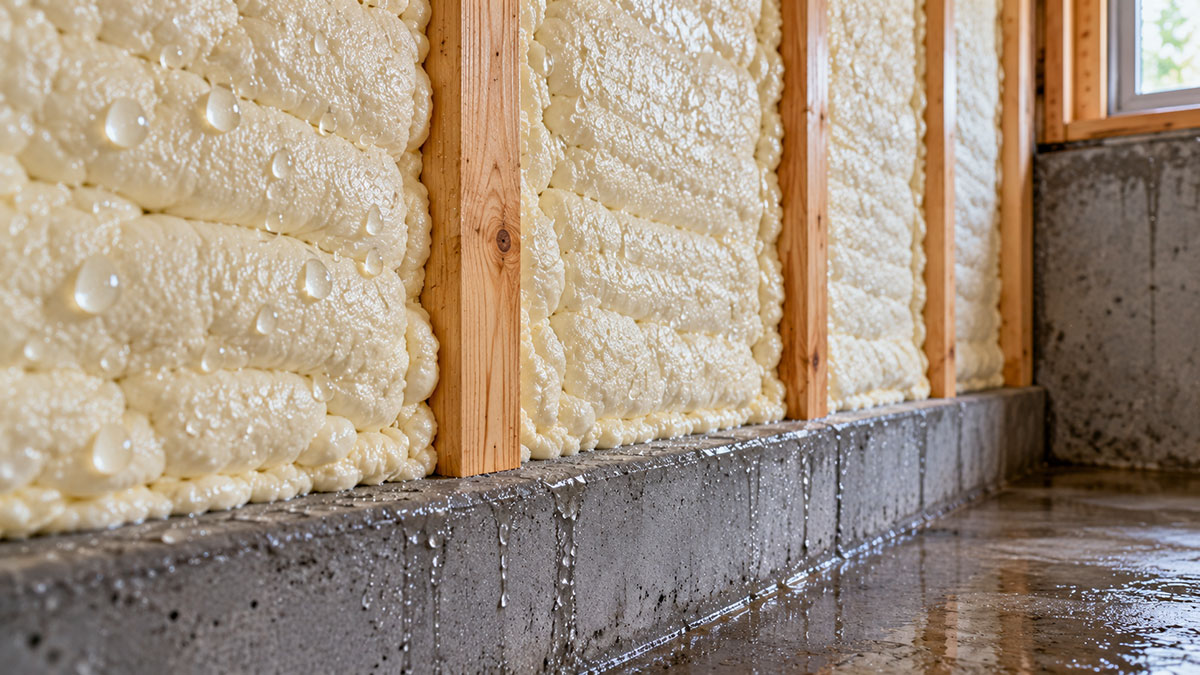
On cost and on performance, dense pack sits between ordinary blown-in work and a full spray foam retrofit.
| Method | Installed density | Air sealing | Settling risk |
|---|---|---|---|
| Dense pack cellulose | 3.5 to 4.5 lb/ft3 | High, fills full cavity | Low when installed correctly |
| Loose-fill (blown-in) | 0.5 to 2 lb/ft3 (varies by material) | Low to moderate | High, settles over years |
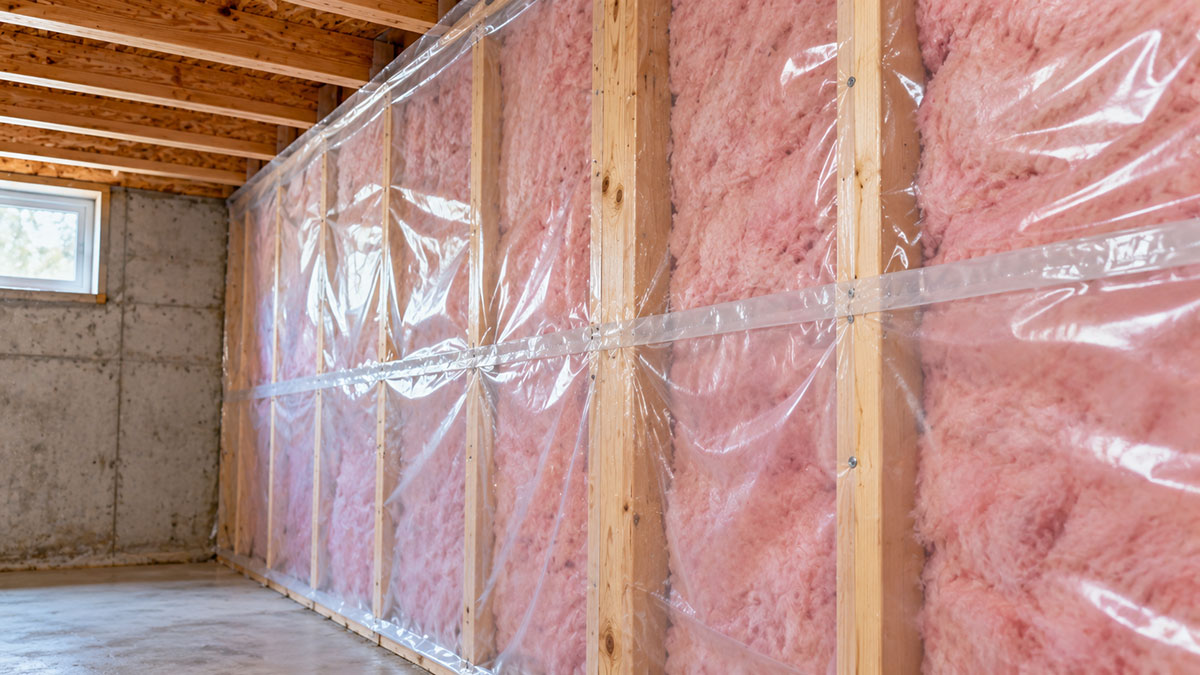
| Batt | Fixed by product | Low, gaps at edges common | Low, but voids if compressed |
| Spray foam | Fixed by product | Very high, seals as it expands | None |
The widest functional gap is against ordinary loose-fill insulation, which never gets compacted enough to resist settling or slow airflow the way dense pack does.
Spray foam is the closer competitor. It matches or beats dense pack on air sealing, usually costs more, and can’t be removed without demolition.
Anyone weighing spray foam or cellulose insulation as a straight choice for open wall cavities is really deciding between a higher upfront bill and a material that stays easy to inspect and repair later.
What Are the Pros and Cons of Dense Pack Insulation?

Weighed on its own terms, the method carries trade-offs worth reading before a contract gets signed.
The upside is easy enough to list.
- Fills the stud cavity completely, corners included, where batts routinely miss
- Cuts air leakage further than loose-fill or batt work
- Goes in without removing drywall or siding in most cases
- Won’t settle when it’s packed to the correct density
The downsides get advertised less.
- Costs more per square foot than standard loose-fill
- Needs a skilled crew, because an underfilled cavity settles and gives the performance back
- Leaves small patched holes in drywall or siding
- Does nothing about thermal bridging through the studs themselves
Most of that upside overlaps with the general benefits of home insulation done well. Lower bills, fewer drafts, rooms that hold temperatures closer to each other.
Settling risk is real but avoidable. It shows up almost exclusively on jobs where the installer stopped short of the target density, which is the pattern behind insulation settlement.
The Building Performance Institute’s BPI-102 standard for the air resistance of retrofit cavity insulation exists for exactly this reason. It tests airflow resistance in dense pack installations, a response to inconsistent field results tied to under-density work.
How Much Does Dense Pack Insulation Cost?
Dense pack prices out at the higher end of blown-in insulation work, and the reasons aren’t mysterious.
Material use per cavity runs higher than standard loose-fill, since the crew is packing fiber to a density roughly two to three times what a loose attic fill uses. More pounds per bay, more bags off the truck.
Labor accounts for most of the rest. Drilling and patching drywall or siding adds time that a fully open attic install skips entirely, and a trained installer who checks density with a probe and verifies coverage bills more per hour than a general labor crew. Then the patched holes need matching paint or siding work to disappear, a cost loose-fill attic jobs never carry.
Contractors quote the work the way they quote any blown-in job, using cost per square foot for insulation as the baseline unit. The rate just sits above standard loose-fill.
The payback period for insulation upgrades tends to run shorter for dense pack retrofits than for loose-fill top-ups. You get the air sealing gain on top of the R-value gain, and both show up on the same bill.
How Is Dense Pack Insulation Installed?

Whether the wall is still open to the studs or already closed up with drywall or siding decides the approach.
Mesh stapled across an open stud bay, then blown full, covers new construction and gutted walls. On finished walls the crew drills instead, a method the industry generally calls drill-and-fill insulation, putting a pattern of holes through drywall or siding to reach each closed stud bay.
Greenfiber, one of the larger cellulose manufacturers, markets these as two distinct product applications rather than variations on one technique.
- Insulation blowing machine and hose
- Fill tube for directing fiber into the cavity
- Netting or mesh for open stud bays
- Probe for checking density and coverage before anything gets patched
On drill and fill jobs, two holes per stud bay is typical. One runs the fill tube, the other lets displaced air escape as the cavity fills.
- Protect the work area, covering flooring and shrubs, and set up dust containment if working from inside.
- Confirm the wall can handle blowing pressure and patch any existing damage first.
- Drill a pattern of access holes sized to the framing.
- Insert the fill tube and blow fiber to the target density, probing each cavity to confirm coverage.
- Check for missed spots with a probe, or a blower door and infrared scan if conditions allow.
- Patch every access hole and match the siding or drywall finish.
- Clean the site and complete the insulation certificate with coverage area, thickness, and R-value.
That sequence follows the Department of Energy’s Weatherization Installer Job Aid for interior dense pack sidewall work, published in July 2024.
How Do You Verify Dense Pack Insulation Was Installed Correctly?
A patched wall looks the same whether the cavity behind it is full or half empty. Verification means proving it’s both full and sealed.
A 1990 field study on four retrofit houses found air leakage measured by blower door testing dropped by 39.6 to 54 percent after dense pack cellulose went into the walls (Fitzgerald, Nelson and Shen, Home Energy Magazine, cited in a Department of Energy Building America report).
| Method | What it checks | Best timing |
|---|---|---|
| Blower door test | Whole house air leakage, before and after | Pre and post installation |
| Infrared scan | Cold spots showing missed or thin fill | Right after installation, cold weather |
| Physical probe | Density and voids inside the cavity | During installation, before patching |
A blower door test run before and after the job is the only way to put a number on the improvement rather than guessing at it.
Crews also walk the wall with a thermal imaging camera right after blowing, since a missed cavity reads as a cold streak that follows the stud spacing.
Signs a cavity came up short:
- Soft spots where a light push moves the wall surface
- Cold streaks on an infrared scan lining up with stud spacing
- A blower door reading that barely moves after installation
The Department of Energy’s installer checklist puts this check before the holes get patched, which is the only window available. Once the wall closes up, a missed cavity is invisible.
When Does Dense Pack Insulation Not Work?
Building Science Corporation lab testing found empty wall cavities leak 0.4 to 4 cubic feet per minute per square foot at 75 pascals, a number that drops to 0.04 to 0.2 once packed tight, according to Joseph Lstiburek.
Those results don’t carry over to unvented cathedral ceilings or flat roofs, even though the cavity there is every bit as closed as a wall stud bay. A roof membrane blocks drying to the outside, so moisture that leaks in from the interior has nowhere to go once the cavity is packed tight.
Peer reviewed research on flat wood frame roofs found air leakage into a dense packed cavity caused measurable moisture buildup inside the cellulose itself (Derome, Journal of Thermal Envelopes and Building Science, 2005).
Jim Fitzgerald, one of the most experienced cellulose installers in the field, still couldn’t get dense packing to work consistently in an unvented cathedral ceiling, according to Lstiburek’s account of the project. That’s a fairly loud signal.
The building code allows two fixes instead. Rigid insulation above the roof deck, or switching the roof to closed-cell insulation sprayed on the underside, which acts as its own air and moisture barrier.
An existing water leak is the other hard stop. A wall or roof already taking in rainwater needs the leak fixed first, because dense pack traps whatever moisture is already sitting inside the cavity.
Same logic wherever a vapor barrier sits on the wrong side of the assembly. Trapped moisture behaves the same way whether it entered through a roof leak or condensed against a badly placed barrier.
- Cavities crowded with electrical wiring, plumbing, or fire blocking that fiber can’t flow around
- Stud bays with diagonal bracing or unusual framing that traps air pockets
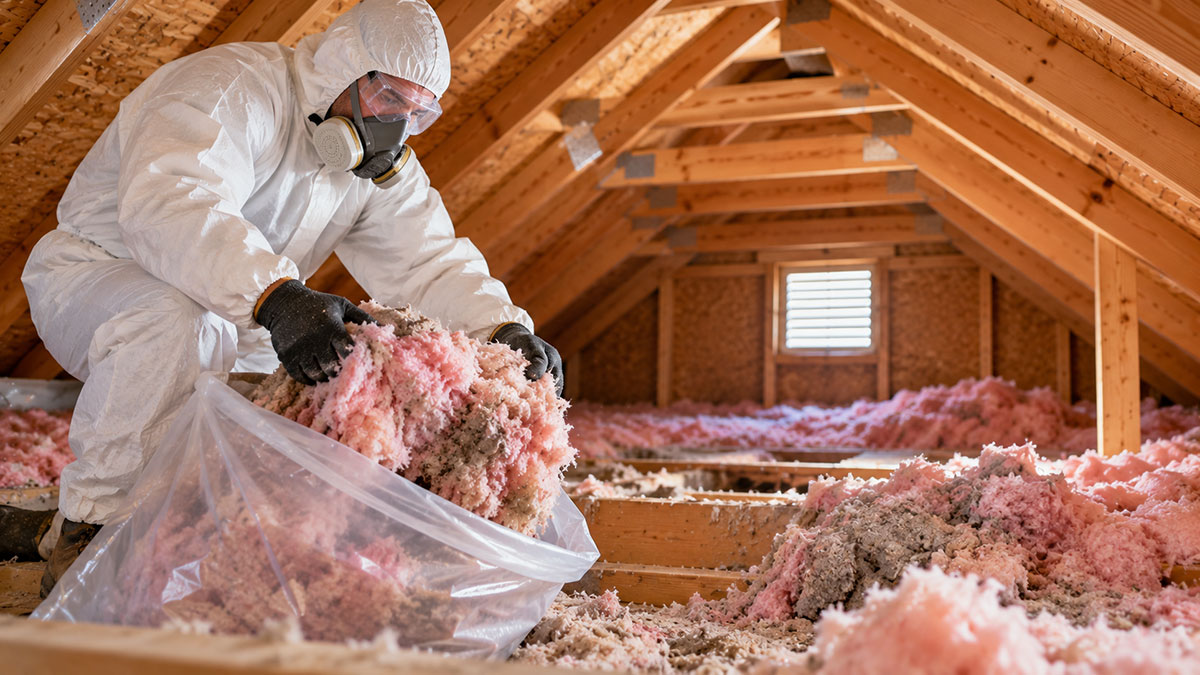
- Cavities still holding old batt insulation nobody pulled out
Underfilled cavities don’t fail right away. The material settles across the following seasons, a gap opens at the top of the bay, and the air leakage path the job was meant to close reopens.
FAQ on What Is Dense Pack Insulation
What is dense pack insulation also called?
Dense pack cellulose, dense packing, and drill and fill insulation all describe the same technique, and contractors and manufacturers use them more or less interchangeably.
Each term points at the same result: fiber packed into a closed cavity at a density that resists settling.
Is dense pack insulation worth it for older homes?
Houses built before modern energy codes often have nothing in the wall cavities at all, and those see the largest gains since no existing thermal barrier is competing with the new material.
The ROI on insulation work there usually beats what you’d get on newer, already insulated construction.
Do you need a certified installer for dense pack insulation?
Density is easy to get wrong without training, so most weatherization programs require a certified installer or crew lead on site.
Certification usually comes through the Building Performance Institute or a manufacturer’s own training program. A general contractor license doesn’t cover it.
Does dense pack insulation qualify for energy rebates?
Utilities and state programs commonly offer a weatherization rebate that covers part of the material and labor cost for cavity insulation work, dense pack included.
Federal weatherization funding also reaches income eligible households directly, without a rebate application at all.
What Should You Confirm Before Starting What Is Dense Pack Insulation?
Dense pack only delivers full value when a few conditions get confirmed first, and the order they’re checked in matters more than the checklist itself.
Cavity condition comes first, since it decides whether the job proceeds at all. Moisture is next, because trapped water cancels any density gain and no active water leak can be left sitting inside the wall or roof. Fiber type and access method get settled last, once the cavity is cleared for work.
Confirming all of it upfront adds a scheduling step most contractors skip, which pushes the start date back compared to a same week quote and blow job.
A home energy audit covers every one of those conditions in a single visit, before any crew shows up with a blowing machine.