Insulation gets sorted by what it’s made of and what shape it comes in, not by the job it does. Every type is a building envelope product that resists heat transfer through walls, roofs, and floors.
Builders and energy auditors mostly choose between fibrous products and foams, with reflective foils as a more specialized option. R-value per inch matters, but so do moisture behavior and the shape of the cavity being filled. The Thermal Insulation Association of Canada’s Mechanical Insulation Best Practices Guide (TIAC, 2013) splits the field into three generic types called fibrous, cellular, and granular, and that classification is still common in industry guides.
What Is Insulation Material?
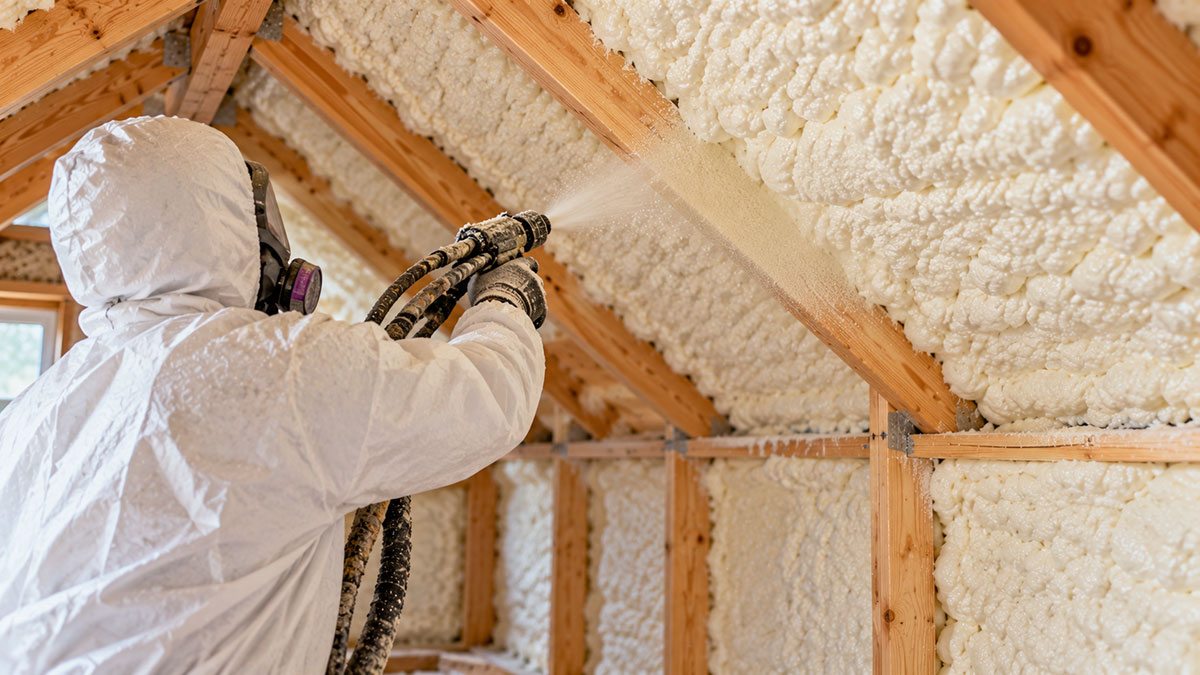
Batts stapled into a wall cavity and foam sprayed against a roof deck are both insulation material, though most people just call it home insulation.
Its purpose is to slow the movement of heat through wall, roof, and floor assemblies. It belongs to the building envelope category, next to air barriers and window systems, and not with structural framing. It only resists conductive, convective, and radiant heat flow, and it doesn’t carry load or finish a surface, which is what sets it apart from other envelope products.
Fibrous products like fiberglass and mineral wool make up one group. Cellular foams, meaning spray polyurethane and rigid board, make up another. Reflective systems, such as foil-faced radiant barriers, sit apart from both.
Owens Corning, one of the largest insulation manufacturers in North America, sells products in nearly every one of those families, from fiberglass batts to closed-cell spray foam.
How Does Insulation Material Stop Heat Transfer?
Heat moves from warm to cool no matter what, so insulation can only make the trip slower.
Fibrous and foam materials handle conduction by trapping still air pockets that resist direct heat flow. Dense or sealed materials deal with convection by keeping air from circulating inside a cavity. Radiation is a separate problem, and reflective foils address it by bouncing radiant heat back instead of absorbing it.
The short version of how insulation works is that trapped air does most of the work, not the material itself.
Manufacturers describe resistance with thermal conductivity, or k-value, which is measured per material, and with R-value, which builds in thickness. U-factor is a related figure that measures the same resistance across an entire wall or window assembly instead of a single material, so the two numbers can’t be swapped for each other.
Labels have to be honest, at least on paper. The FTC’s R-Value Rule requires that no individual specimen fall more than 10 percent below its labeled figure, according to 16 CFR 460.8.
For reference, standard fiberglass batts run R-2.9 to R-3.8 per inch (U.S. Department of Energy), while closed-cell spray polyurethane foam runs R-6.0 to R-6.5 per inch. Labs measure these with either the ASTM C518 heat flow meter or the ASTM C177 guarded hot plate.
NAIMA’s R-Value Certification Program actually pulls samples from member plants, including Owens Corning and Johns Manville, and re-tests them against the label. That’s a reasonable check on the numbers printed on the packaging.
Types of Insulation Material by Composition
Composition tells you more about an insulation material than its form or brand does. Nearly every product on the market falls into one of a few families, and each interrupts heat transfer in its own way.
Fiberglass Insulation
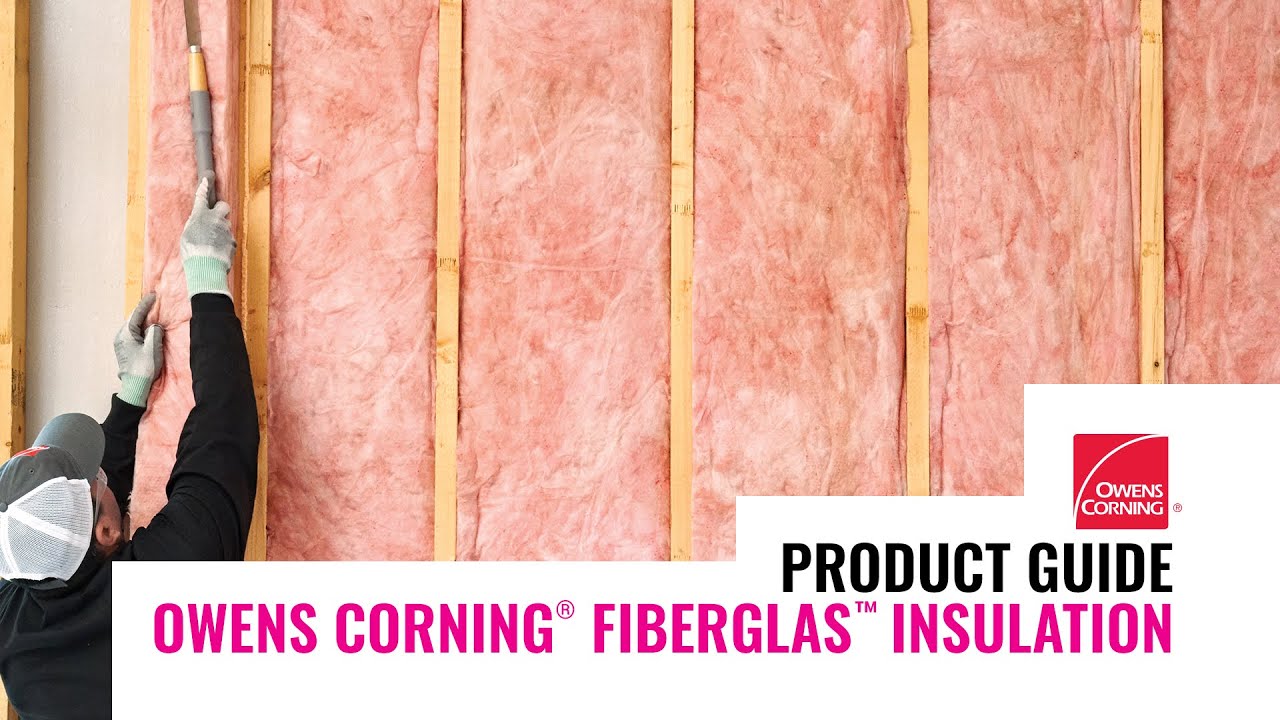
Fiberglass is spun from molten glass into fine fibers, and it’s still the most widely produced insulation material in North America.
You’ll find it as batts and rolls for standard stud cavities and as loose-fill for attics and open spaces. Rigid boards exist too, mostly for duct and sheathing work.
Most fiberglass insulation ships unfaced or with a kraft-paper facing, which doubles as a light vapor retarder.
The appeal is low material cost and wide availability, and standard stud bays are easy enough for DIY installation. The downsides are real, though. It loses R-value if it’s compressed or left with gaps, and it irritates skin and lungs without protective gear.
Mineral Wool Insulation

Mineral wool, sold as rock wool insulation or slag wool depending on the raw material, is spun the same way as fiberglass but from stone or furnace slag instead of glass.
Recycled content varies a lot between these products. Insulation Institute data puts slag wool’s recycled content at 70 percent or more, while rock wool runs closer to 10 to 15 percent. The U.S. Department of Energy puts most fiberglass at 40 to 60 percent recycled glass.
ROCKWOOL, one of the largest stone wool producers worldwide, markets its batts on fire performance rather than price.
The fibers are naturally noncombustible, and the R-value stays stable even under light compression. Sound dampening is strong too. On the other side, it’s heavier than fiberglass and runs roughly $1.40 to $4.00 per square foot installed. Plan on a respirator on site.
Cellulose Insulation
Recycled paper, usually newsprint, makes up almost all of cellulose insulation, and it’s treated with borate for fire and pest resistance.
Greenfiber, one of the largest cellulose manufacturers in the US, lists its recycled paper content at roughly 85 percent.
That recycled share is a big reason cellulose insulation counts as one of the more sustainable choices in the category. It’s also excellent at filling irregular gaps that other materials miss, and I think it gets less credit than it deserves.
Dense-pack goes into existing, closed wall cavities, and loose-fill goes over open attic floors. The catch is that loose-fill settles roughly 10 to 20 percent over time, and cellulose holds moisture longer than foam.
Spray Foam Insulation (Open-Cell and Closed-Cell)
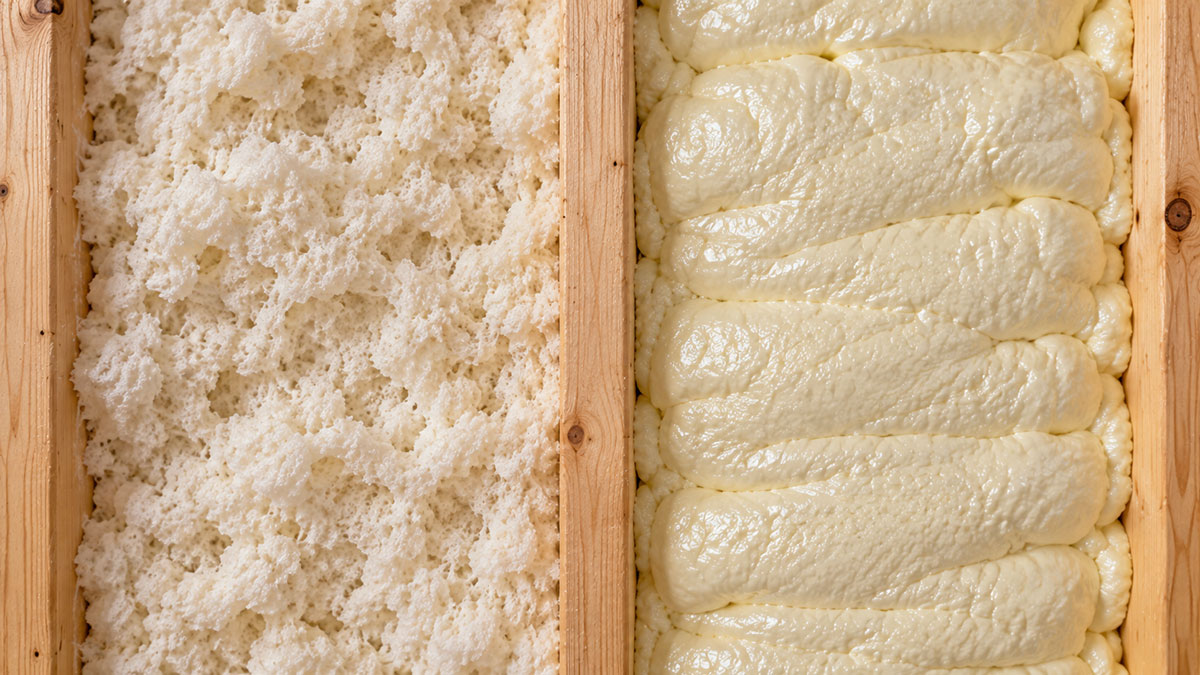
Open-cell and closed-cell are two different densities of the same product, and the gap between them is bigger than the names suggest.
| Type | R-value per inch | Best use |
|---|---|---|
| Open-cell | 3.5 to 3.8 | Interior walls, sound dampening |
| Closed-cell | 6.0 to 6.5 | Rim joists, crawl spaces, tight cavities |
Closed-cell’s R-value per inch, already noted above, is roughly double a standard fiberglass batt at the same thickness.
Icynene, one of the early pioneers of open-cell spray foam, built its reputation on air-sealing performance rather than raw R-value.
Closed-cell costs roughly three to five dollars per square foot installed and cures rigid. Open-cell stays soft and costs less, though in cold climates it needs a separate vapor strategy.
Rigid Foam Board Insulation (EPS, XPS, Polyiso)
Nearly every rigid board product sold today is EPS, XPS, or polyiso.
EPS, expanded polystyrene, runs roughly R-3.6 to R-4.2 per inch and costs the least. XPS, extruded polystyrene, is denser and more moisture-resistant at roughly R-5.0 per inch, and it’s usually the most expensive per board foot. Polyiso comes in at roughly R-5.6 to R-6.5 per inch, the highest of the group, and its price lands between the other two.
Kingspan Insulation and Dow both make rigid board used as continuous exterior insulation over sheathing, a setup that interrupts thermal bridging through the studs.
Polyiso packs the most R-value into each inch, so it’s the one to look at when space is tight. Any of them needs taped seams to actually function as an air barrier.
Natural Fiber Insulation
Sheep’s wool, hemp, cotton, and wood fiber make up a small but growing niche, mostly chosen by owners who want a low-toxicity build.
Thermally they behave like fiberglass, in the R-3 to R-3.7 per inch range, but they cost noticeably more per square foot.
Sheep’s wool resists moisture on its own thanks to its fiber structure. Cotton batts are usually treated with borate, the same fire retardant used in cellulose.
The indoor air quality claims are the selling point, though the supply chain is much smaller and the price is out of reach for most budget retrofits. Whether that’s worth it is a judgment call.
Reflective and Radiant Barrier Insulation
Reflective insulation works differently from everything covered so far. It reflects radiant heat before the heat is absorbed, instead of resisting conductive flow.
It makes the most sense in hot regions, where radiant heat gain through the attic drives cooling costs. Reflective systems don’t build R-value the way bulk insulation does, so climate matters a lot here.
Common forms are foil-faced bubble wrap stapled beneath roof rafters and foil-faced rigid board, which acts as a radiant barrier and adds a modest R-value layer. Foil facing on batt insulation is another, and it doubles as a vapor retarder.
Reflectix, a longstanding US manufacturer of foil-bubble products, markets its rolls specifically for attic and crawl space radiant barriers.
In cold climates, reflective systems don’t replace bulk insulation. They supplement it.
How Does Moisture Affect Insulation Material Performance?
Moisture does more damage to a well-installed insulation material than anything else.
Fibrous types lose R-value when they get wet, because water conducts heat far better than the trapped air they depend on.
Vapor movement is measured as a perm rating, which is how much water vapor passes through a material per hour. It’s also what separates a barrier from a retarder. A true vapor barrier stops nearly all vapor movement, while a vapor retarder only slows it down.
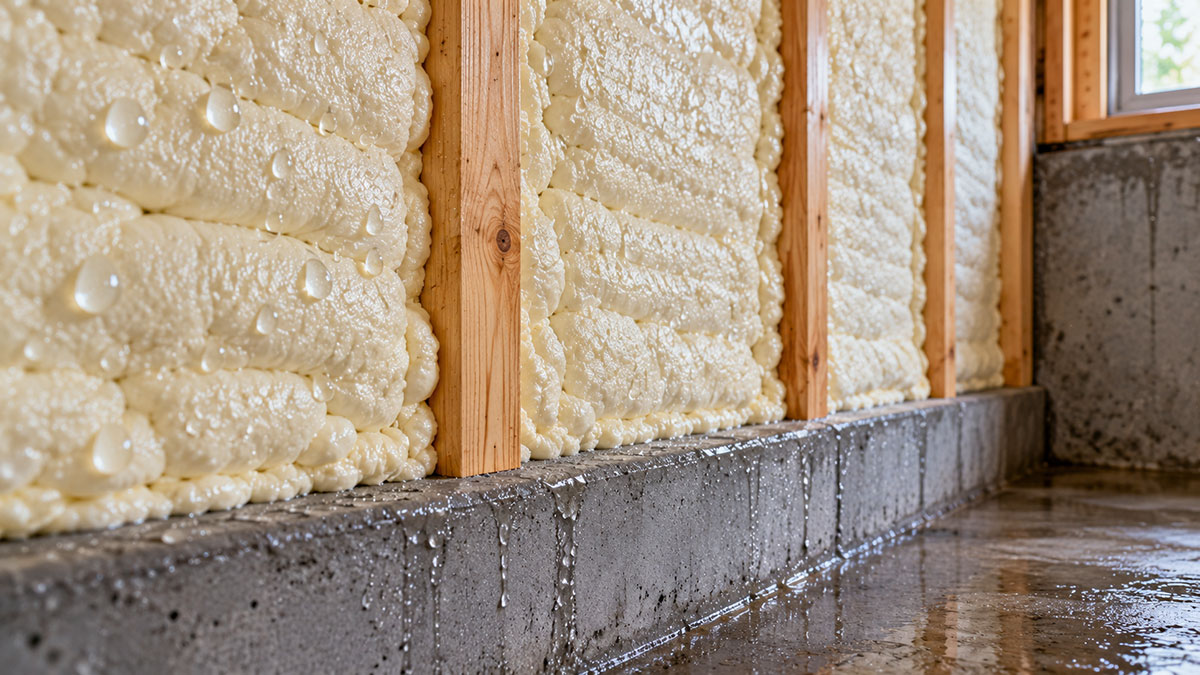
Closed-cell spray foam has very low permeance and is usually treated as a vapor retarder rather than a true barrier, and some codes still call for a separate layer. Fiberglass and mineral wool are vapor-open, so in cold climates they’re usually paired with a separate retarder. Loose-fill cellulose absorbs moisture readily.
Cellulose insulation in particular can hold onto moisture for days after a leak, which is why a soaked attic floor usually means a full tear-out rather than a dry-out.
Moisture problems rarely start with the insulation itself. Usually a missing air seal is to blame, or a vapor barrier installed on the wrong side of the wall.
Insulation Material Comparison by R-Value, Cost and Fire Rating
Brand matters less than the numbers, so here they are side by side.
| Material | R-value per inch | Installed cost per sq ft | Fire behavior |
|---|---|---|---|
| Fiberglass batt | 2.9 to 3.8 | $0.30 to $1.50 | Class A, noncombustible fibers |
| Mineral wool | 3.0 to 3.3 | $1.40 to $4.00 | Class A, naturally noncombustible |
| Blown cellulose | 3.2 to 3.8 | $0.60 to $2.30 | Class A when borate-treated |
| Closed-cell spray foam | 6.0 to 6.5 | $3.00 to $5.00 | Combustible, needs a code thermal barrier |
| Rigid foam board | 3.6 to 6.5 | $0.25 to $2.00 per board foot | Combustible, needs a code thermal barrier |
What it costs per square foot for insulation varies by a factor of ten or more across these five materials. Labor adds to that, since installers typically charge $40 to $80 per hour, according to Angi’s 2026 cost data.
How a material earns its insulation fire rating isn’t governed by one universal scale. ASTM E84 reports flame spread and smoke development, but noncombustibility is a separate determination made under ASTM E136. Fiberglass and mineral wool fibers qualify as noncombustible. Cellulose gets its low flame-spread rating from its borate treatment. Foam plastics are combustible, so they rely on a code-mandated thermal barrier instead.
Independent labs such as UL test samples against ASTM E84 before a manufacturer can print a fire class on the label.
Which Insulation Material Fits Which Part of the House?

Where the material is going matters more than who made it. Attics, wall cavities, crawl spaces, and metal buildings all pose different problems around access and moisture, and fire clearance varies too.
| Location | Common materials | Why |
|---|---|---|
| Attic floor | Blown fiberglass, blown cellulose | Covers irregular joist spacing fast and cheap |
| Wall cavity | Batt fiberglass, mineral wool, dense-pack cellulose | Fits standard 16 or 24 inch stud spacing |
| Crawl space or rim joist | Closed-cell spray foam, rigid foam board | Resists ground moisture and seals irregular gaps |
| Metal building | Faced fiberglass rolls, spray foam | Handles thermal bridging through steel framing |
The different attic insulation types split mainly on access. Open, unfinished attics favor blown-in material, while finished cathedral ceilings often need closed-cell foam or rigid board instead.
Insulating basement walls is a different job altogether, since below-grade concrete stays cold and often damp year-round.
ENERGY STAR’s Home Upgrade attic guidance says rolls or batts used on the attic floor should be unfaced, since moisture trapped behind a facing can cause more harm than the facing prevents. Blown-in fiberglass and cellulose don’t have a facing, so the issue never comes up.
What R-Value Do Building Codes Require by Climate Zone?
Building codes set a minimum R-value and nothing more, and the minimum changes with climate zone.
The U.S. Department of Energy and the International Energy Conservation Code divide the country into eight zones, from Zone 1 in southern Florida to Zone 8 in the coldest parts of Alaska.
Under the 2021 IECC, attic requirements run from R-30 in Zone 1 up to R-60 in Zones 4 through 8. Wood-frame wall requirements start at R-13 in the warmest zones and reach R-30 (or R-20 plus R-5 of continuous insulation) in the coldest, according to the U.S. Department of Energy’s Building America Solution Center.
| Climate zone | Attic R-value (2021 IECC) | Wall R-value (2021 IECC) |
|---|---|---|
| Zone 1 (hot-humid) | R-30 | R-13, or R-10 continuous |
| Zone 2 (hot) | R-49 | R-13, or R-10 continuous |
| Zone 3 (warm) | R-49 | R-20, or R-13 plus R-5 continuous |
| Zones 4 to 8 (mixed to very cold) | R-60 | R-30, or R-20 plus R-5 continuous, or R-13 plus R-10 continuous |
Many states still enforce older editions, and the 2024 IECC lowered some attic minimums, so confirm which edition your jurisdiction has adopted before specifying a number.
ENERGY STAR’s recommended insulation levels sit above many code minimums, but following them is voluntary. The federal 25C tax credit tied insulation eligibility to the IECC rather than to ENERGY STAR, and it expired for work placed in service after December 31, 2025.
Some states go further than the federal baseline. California’s Title 24 energy code sets its own insulation and building performance standards, administered by the California Energy Commission, and it runs stricter than the IECC in several categories.
Getting the zone wrong is one of the more common code mistakes, and it usually means under-insulating a cold-climate home or overspending on a warm-climate one.
How Is Insulation Material Installed?
Order matters here more than most homeowners expect. Air sealing always comes first, and skipping it is one of the most common reasons an insulation job underperforms its rated R-value.
The EPA estimates that combining air sealing with proper insulation saves an average of 15 percent on heating and cooling costs, or about 11 percent on total energy bills.
- Seal every penetration first, including wiring, plumbing, and the framing gaps around outlets and top plates.
- Address moisture sources before closing anything up, such as roof leaks and poor grading at the foundation.
- Install the material itself, matched to the cavity. Batts suit stud bays, blown-in suits open attics, and spray foam handles irregular gaps.
- Verify the result with a blower door test rather than assuming the job passed on sight.
A blower door test is the only way to confirm the finished assembly actually hit its target air leakage rate.
The 2021 IECC caps homes at 5 air changes per hour at 50 pascals (ACH50) in climate zones 1 and 2 and 3 ACH50 in zones 3 through 8. The 2024 edition tightens the limit to 4 ACH50 in zones 0 through 2 and 2.5 ACH50 in zones 6 through 8, while zones 3 through 5 stay at 3.
Batts, rolls, and some loose-fill jobs are DIY-friendly, given a rented blower and basic safety gear. Spray foam and dense-pack cellulose are best left to trained contractors, both for the equipment involved and the training needed to hit the right density.
TruTeam, one of the largest insulation installation contractors in the US, runs its crews through density and coverage checks on every blown-in job specifically to avoid under-filled cavities.
What Is the Environmental Impact of Insulation Material?
The environmental side comes down to two questions: what the material is made from, and what was used to shape it.
Fibrous products lean on recycled content (glass and slag, plus paper for cellulose), which is covered above. Foam is different. Its footprint is tied to the blowing agent trapped inside the cells.
Older closed-cell spray foam formulations used HFC-245fa, a blowing agent with a global warming potential of about 1,030, according to the EPA. Newer formulations use HFO-1233zd instead, with a GWP of about 1, which essentially eliminates that portion of the product’s climate impact.
| Blowing agent | GWP | Status |
|---|---|---|
| HCFC-141b | Ozone-depleting | Banned from foam production, 2003 |
| HFC-245fa | About 1,030 | Barred from new SPF production, 2025 |
| HFO-1233zd | About 1 | Current industry standard |
Under EPA’s Technology Transitions rule, issued under the AIM Act, manufacturers and importers were barred from producing HFC-based spray foam systems above the GWP limit starting January 2025, and sales of existing stock end three years later, in January 2028 (EPA).
Recycled content and low-GWP blowing agents both feed into voluntary programs like LEED certification for insulation, which awards credits for exactly these attributes.
Honeywell’s Solstice line of low-GWP blowing agents is one of the products manufacturers switched to across both spray foam and rigid board production.
When Does Insulation Material Fail or Stop Performing?
Insulation that has stopped performing usually looks fine. It just isn’t delivering what the label says.
Nine out of ten US homes are under-insulated relative to current recommendations, according to the EPA.
Compression under stored boxes or foot traffic in an attic cuts R-value roughly in proportion to how much the material is squeezed. Settling in loose-fill and blown material opens a gap at the top of a wall cavity that a quick glance won’t reveal. Moisture saturation soaks fibrous insulation, and it rarely dries back to full performance without removal. The most common defect professional inspectors report, though, is gaps and compressed edges from a rushed batt installation.
Insulation compression is easy to overlook because the material still looks intact, even though its effective R-value has already dropped.
Thermal bridging compounds the problem. A wall framed with standard studs and rated for R-19 often performs about R-3 lower, closer to R-16, once heat bypassing through the wood framing is counted, according to GreenBuildingAdvisor (BuildingGreen).
W.R. Grace’s Zonolite brand vermiculite insulation, widely installed in US attics through the 1980s, was later found to be contaminated with asbestos from its Libby, Montana source mine, and the EPA has since issued specific handling guidance for it.
None of this means the material is defective. It performs as tested only when the installation is good and moisture stays under control, and air sealing has to hold up too.
FAQ on Types Of Insulation Materials
What is the difference between insulation R-value and U-factor?
R-value covers a single material’s resistance to heat flow and grows with thickness, which is why it’s usually quoted per inch. U-factor looks at heat transfer across an entire assembly, framing and air gaps included. Higher R-value performs better, but for U-factor the lower number wins. The two figures are not interchangeable.
Does spray foam insulation also work as an air barrier?
Closed-cell spray foam expands and adheres to framing as it cures, sealing gaps, so it functions as both insulation and an air barrier. Open-cell foam also air-seals once it’s applied thickly enough, roughly 3 inches or more compared with about 2 inches for closed-cell. Fiberglass and mineral wool batts don’t stop air movement on their own.
Is spray foam insulation worth the extra cost over fiberglass?
It depends on the cavity. In rim joists, cathedral ceilings, or tight spaces, closed-cell foam’s higher R-value per inch and built-in air sealing often justify the price. In standard stud bays, fiberglass or cellulose usually deliver comparable performance for less money.
Can two different insulation materials be combined in the same assembly?
Yes. R-values are additive, so batts plus continuous rigid foam board work fine, and so does blown cellulose over existing fiberglass. In cold climates, the more vapor-impermeable layer belongs toward the warm side of the assembly, and a vapor-open material should never get trapped between two impermeable ones.
What tools does installing insulation material require?
A utility knife and a straightedge are enough for batts. Loose-fill and blown-in jobs need a rented blowing machine and hose. Spray foam is a different story, with a proportioning rig, heated hoses, and a trained applicator involved, which is why it stays a contractor job.
Can insulation material be installed over existing insulation?
Most of the time, as long as the existing layer is dry and undamaged. Loose-fill or unfaced batts can go on top, with the new material running perpendicular to the old joists for even coverage. Don’t bury vermiculite without confirming it’s asbestos-free first.
How long does insulation material typically last?
Fiberglass and mineral wool keep their R-value for the life of a building as long as they stay dry, and cellulose settles somewhat over decades. Rigid foam board and closed-cell spray foam lose a small amount of R-value in their first years as the blowing agent is replaced by air, which is why labels use a long-term thermal resistance figure. Even so, closed-cell foam is essentially permanent once cured, barring physical damage or a roof leak.
What Should You Fix First When Insulation Material Underperforms?
Most underperformance traces back to missing air sealing, compressed or gapped batts, or moisture intrusion, and fixing them in that order recovers more R-value per hour of labor than any other approach.
Start by air sealing penetrations and top plates. Replace or refluff compressed and gapped batts next, then resolve moisture sources and dry the cavity.
Air sealing pays back fastest, but it doesn’t restore R-value lost to compression. That still needs the material pulled and replaced rather than left in place.
Once the envelope is sealed and dry, the next step is matching the fix to the specific material already in the wall, which is covered in how to improve home insulation.