Most people first run into Icynene on a contractor’s quote, sitting somewhere between a fiberglass line and a generic spray foam line, with no explanation of why it costs what it costs.
It’s a Huntsman Building Solutions product, made in open-cell and closed-cell versions and sprayed by factory-trained applicators on both homes and commercial buildings. Builders compare it with fiberglass and cellulose on R-value, density, and air-barrier performance. The company started in Ontario, Canada in 1986 and has since supplied spray polyurethane foam systems to builders in more than 31 countries (Icynene, 2015).
What Is Icynene Insulation?

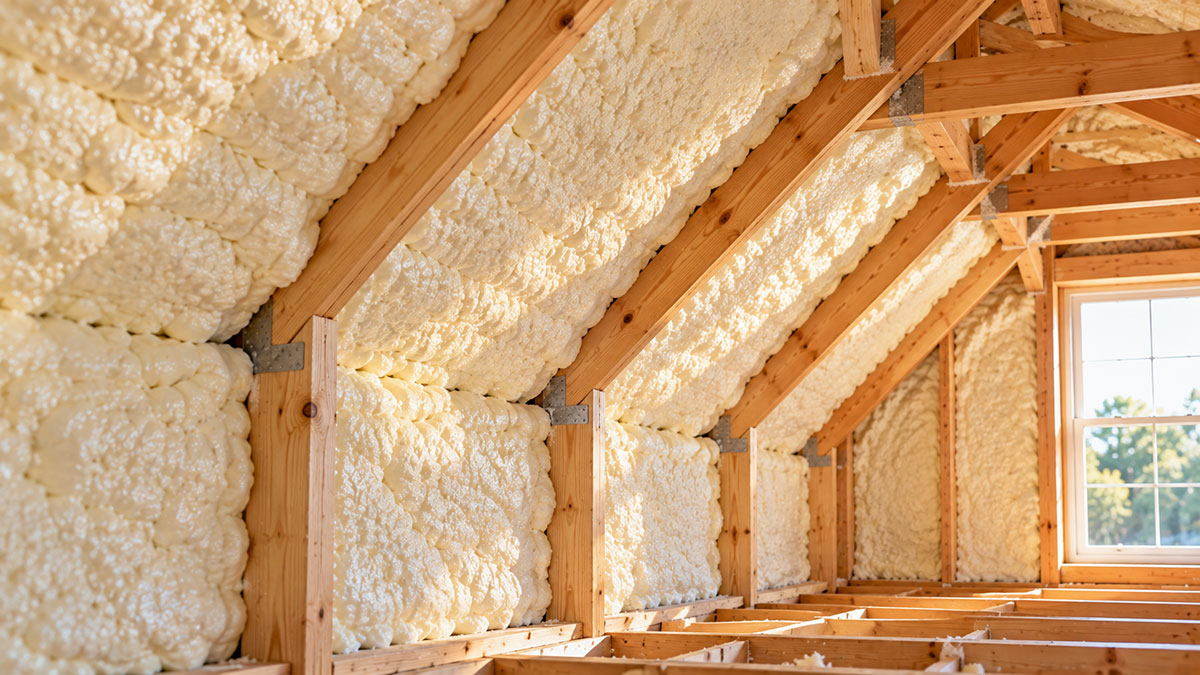
Two chemical components get mixed at the spray gun, and the result expands and cures right inside the wall, attic, or floor cavity. That’s Icynene, and it counts as a spray polyurethane foam (SPF).
It belongs to the wider family of spray foam insulation, which behaves nothing like batts or loose-fill. Those rely on trapped air alone. Foam fills the cavity and seals it too.
The brand came out of Ontario in 1986 with a water-blown, low-density open-cell foam aimed at residential builders. Today people set it against other types of insulation materials and decide based on climate zone, cavity depth, and budget.
A few things it isn’t. It’s not a catch-all name for every spray foam on the market. It’s not something you stuff into a wall by hand. And it’s not a DIY kit, because only factory-trained applicators spray it.
Huntsman Building Solutions took shape in May 2020 when the Demilec and Icynene-Lapolla businesses merged, bringing more than 110 years of combined experience insulating buildings (Huntsman Building Solutions). Some custom builders, Southerlyn Homes among them, now offer Icynene in their homes and match the application to each project.
How Icynene Insulation Works

Once it cures, the foam is basically part of the building envelope instead of a layer sitting on top of it.
Insulating and air sealing happen in the same pass. That’s the mechanical difference from batts and loose-fill, and honestly it’s most of the story.
Density and Expansion Ratio
Open-cell resin grows up to 100 times its liquid volume when it hits a surface, which lets it reach gaps that pre-cut material never will (Icynene product specifications). Closed-cell expands far less and cures into a denser, rigid layer.
Open-cell lands around 0.5 pound per cubic foot. Closed-cell sits closer to 2 pounds per cubic foot.
That gap in density is why open-cell needs a deeper cavity to reach the same thermal target.
Blowing Agent: Water-Blown vs HFO
Water-blown formulas react with water to make the gas that expands the foam. HFO-blown formulas use a hydrofluoroolefin gas, and its global warming potential is far lower than the older HFC agents. Most of Icynene’s light-density open-cell products are 100 percent water-blown, while the closed-cell HFO line switched to the newer gas to cut environmental impact without losing performance.
Air Sealing and Vapor Permeance
Cured foam stays bonded to framing through seasonal expansion and contraction. That’s why the air seal lasts for decades and not just a few months.
Open-cell is vapor-open at typical thickness, so some assemblies still want a separate vapor barrier. Closed-cell, at roughly 1.25 to 1.5 inches or more depending on the product, is dense enough to act as its own vapor retarder.
Put together, this is the mechanism behind how insulation works when it’s treated as a combined air and thermal control layer and not passive filler.
Icynene Open-Cell vs Closed-Cell Products

Icynene comes in two cell structures, and the product name usually tells you which one is on the truck.
| Product | Cell type | Density | Typical use |
|---|---|---|---|
| Classic Max | Open-cell | ~0.5 lb/ft3 | Walls, attic floors |
| Xpress 55 | Open-cell | Low density | Unvented attics, crawl spaces |
| ProSeal | Closed-cell | ~2.4 lb/ft3 | Basements, roof decks |
| HFO Max | Closed-cell | ~2 lb/ft3 | Commercial walls, rim joists |
Open-Cell Product Line
Open-cell is the soft, flexible one, and it dampens sound well. Classic Max is the low-VOC standard for walls and attic floors. Classic 75 is engineered to reach R-20 in a standard wall cavity. Xpress 55 is rated for unvented attics without a separate ignition barrier. High-R 80 arrived with the 2024 Icynene Series launch and offers a higher aged R-value per inch (R-4).
Because open-cell flexes with the framing as a house settles, the seal doesn’t crack the way rigid board products can.
Closed-Cell Product Line
Closed-cell cures rigid and adds real shear strength to a wall assembly. Engineers sometimes specify it on structural grounds alone.
ProSeal has a GREENGUARD Gold certification, a 2.4 pound core density, and an R-value of R-7.1 per inch (Building Enclosure, 2016). It sits in the broader class of closed-cell insulation, which FEMA recognizes as a flood-resistant material class.
Discussion on GreenBuildingAdvisor generally favors closed-cell over open-cell for basement walls, since low vapor permeance matters more down there than raw R-value.
R-Value and Thermal Performance

Every spec sheet leads with thermal resistance, and it decides how thick the fill has to be.
The industry calls it R-value. Icynene publishes an aged rating for each formulation, since foam loses a small amount of resistance during its first year.
- Open-cell comes in at R-3.7 to R-4.0 per inch (Huntsman Building Solutions product data, 2024).
- Closed-cell runs R-6.2 to R-7.4 per inch, and current HFO 200 and HFO Max sit at R-7.4 (Huntsman Building Solutions product data, 2024).
- HFO Max can go up to 6.5 inches of lift in one pass (Huntsman Building Solutions, 2024).
A continuous foam layer also cuts thermal bridging through studs and joists, which batts can’t do on their own.
R-value alone doesn’t show that benefit. Assembly performance tells you more than any single per-inch number.
Building Code Compliance and Certifications

ICC-ES Evaluation Reports and Fire Testing
Each Icynene product has its own ICC Evaluation Service report, and code officials check it before signing off on a job. ESR-5495 covers Classic 75 and its compliance path under the Seal and Insulate with ENERGY STAR program. ESR-1826 covers the open-cell Classic, Classic Plus, Classic Ultra, and Classic Ultra Select products.
Both reports document compliance with ICC-ES AC377, the acceptance criteria written for spray-applied foam plastic insulation.
Appendix X of AC377 is what lets some open-cell products skip a prescriptive insulation fire rating barrier in an unvented attic that serves utilities only.
ASTM Standards and Indoor Air Certifications
ASTM E84 rates surface burning and smoke development. ASTM C518 measures steady-state thermal resistance, which is where the R-values on the label come from. ASTM D1622 checks cured foam density against the published spec, and ASTM E2178 tests air permeance, the standard behind any air-barrier claim.
Icynene ProSeal and Classic Max both hold GREENGUARD Gold certification from UL Environment, which covers emissions of more than 360 tracked volatile compounds (SprayFoam Magazine, 2016).
Don’t confuse that with energy star insulation program alignment. Some ICC-ES supplements reference that one separately for residential energy code credit.
Icynene Insulation Cost
Spray foam is priced by the board foot (one square foot, one inch thick), because project depth changes so much from job to job.
Contractors use the same unit to work out how much does spray foam insulation cost on a specific job once cavity depth is known.
Open-cell runs roughly $0.25 to $0.75 per board foot installed (South Central Services, 2025). Closed-cell is more like $1.15 to $1.75 per board foot (South Central Services, 2025), and closed-cell basement walls at 2 to 3 inches come to about $2.30 to $5.25 per square foot (South Central Services, 2025).
Labor, cavity access, and regional rates move the final number more than the choice of material does.
The premium over fiberglass shrinks across the payback period for insulation, since sealing and insulating in one step can cut heating and cooling costs by an average of 15 percent (ENERGY STAR, EPA).
There’s no DIY kit for Icynene, so every dollar in those ranges already includes certified installer labor.
Icynene vs Fiberglass and Cellulose Insulation

Fiberglass batts and blown cellulose are what builders reach for by default, so they’re Icynene’s closest rivals.
| Material | R-value per inch | Air sealing | Moisture handling |
|---|---|---|---|
| Icynene open-cell | 3.7 to 4.0 | Continuous, self-sealing | Vapor-open, sometimes needs a separate barrier |
| Icynene closed-cell | 6.2 to 7.4 | Continuous, self-sealing | Functions as its own vapor retarder |
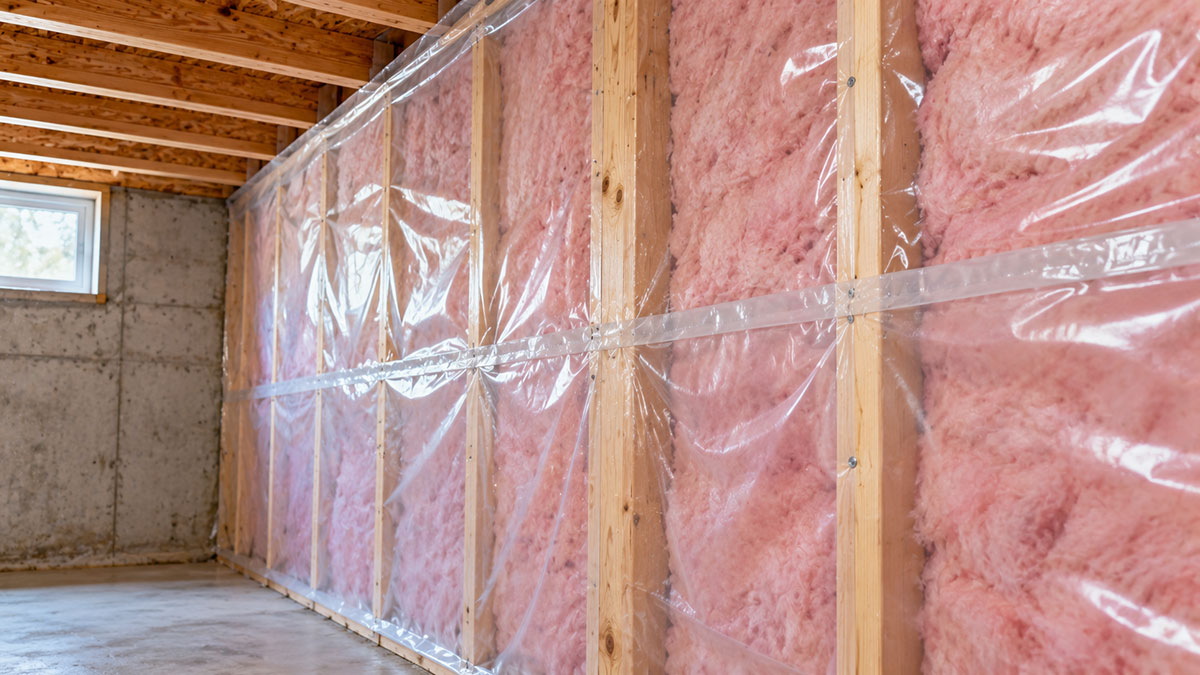
| Fiberglass batt | 3.0 to 3.7 | None built in | Absorbs and holds moisture if wet |
| Blown cellulose | 3.2 to 3.8 | None built in | Absorbs moisture, can settle when damp |
The Icynene figures come from Huntsman Building Solutions product data and ICC-ES evaluation reports; the fiberglass and cellulose figures are typical published ranges from Department of Energy and PNNL Building America data.
The R-value column isn’t where the real gap is. It’s at the seams.
Any honest comparison of spray foam or cellulose insulation ends up showing that fiberglass and cellulose leave gaps around wiring and odd framing, and only a separate air-sealing pass closes them.
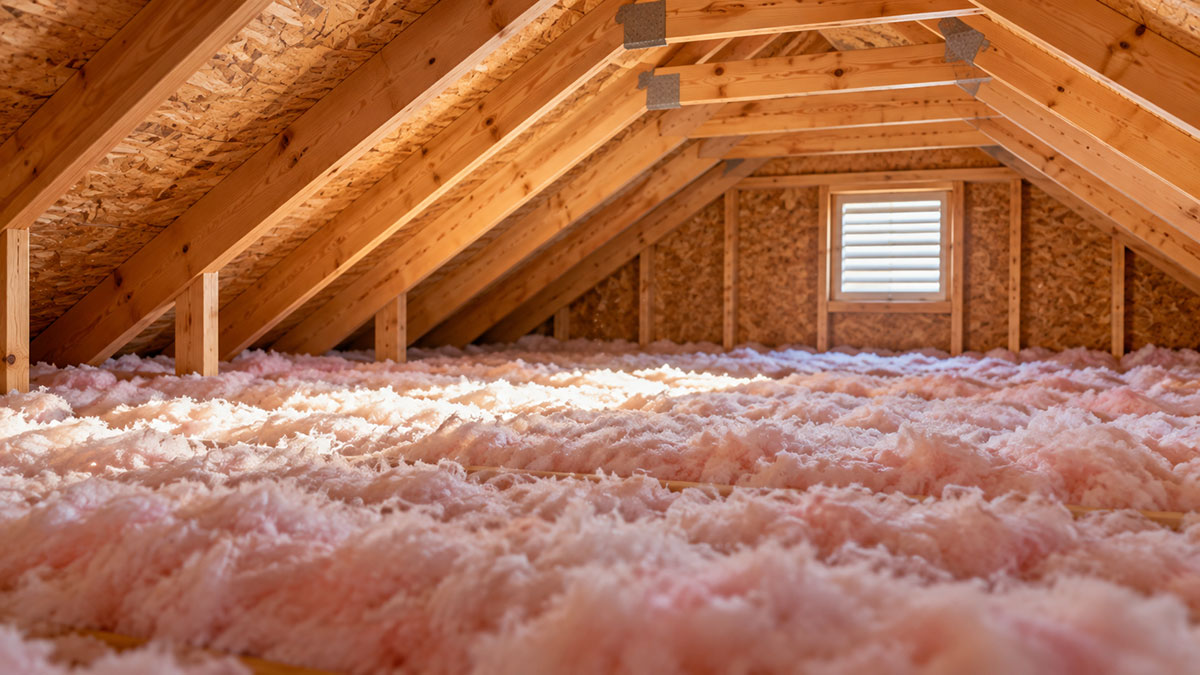
Fiberglass insulation is still the cheaper pick for a plain attic floor with easy joist spacing and nothing to seal around.
Icynene costs more per R-value than either. What makes up the difference in real-world performance is the built-in air barrier, not the number printed on the label.
Is Icynene Insulation Safe?

Once it has fully reacted, cured Icynene foam is chemically inert and doesn’t off-gas under normal conditions.
The exposure risk comes during spraying and right after it, while isocyanate vapors are still in the air.
With standard spray foam, nobody goes back in without protective equipment for 24 hours. Icynene Classic Max and ProSeal (low-VOC formulas, United States only) cut that to 1 hour for trades and 2 hours for homeowners, provided the space gets 40 air changes per hour of ventilation.
Icynene says those shorter windows are backed by independent studies and third-party toxicologist verification, using ventilation protocols from the American Chemistry Council’s Center for the Polyurethanes Industry (Icynene, 2015). Because the guidance comes from the industry rather than a government agency, always confirm the ventilation rate on the current product data sheet.
Installers wear full-face respirators and protective suits, since direct isocyanate contact can trigger asthma or skin and eye irritation in sensitized workers. It’s also the reason the product ships to certified applicators only.
Looking into is spray foam insulation safe after it cures turns up the same pattern across brands. The chemistry needs caution. The finished foam mostly doesn’t.
Pros and Cons of Icynene Insulation
Icynene earns its premium in some situations and loses the argument in others.
Pros

- Air sealing and insulation happen in one application step
- It expands into irregular framing, wiring, and plumbing penetrations that batts can’t reach
- GREENGUARD Gold options exist for low-VOC, low-odor installs
- Some utility or state rebate programs can offset part of the premium, although the federal insulation tax credit (Section 25C) ended for work placed in service after December 31, 2025
Cons
- Upfront cost per R-value is higher than fiberglass or cellulose
- Only a certified installer can do the job, since no DIY kit exists
- Open-cell’s vapor-open nature can hurt in the wrong wall assembly
- Trimming overspray adds labor time and waste on tight cavities
Whether is spray foam insulation worth it depends mostly on how long the owner will stay in the building and how leaky the envelope already is.
A gut renovation with open stud bays makes a strong case for Icynene. A simple attic top-up on a tight budget usually doesn’t.
Choosing the Right Icynene Product by Application

Where the foam goes in the envelope decides the formulation, not personal taste.
| Location | Recommended cell type | Why |
|---|---|---|
| Attic floor, unvented roof deck | Open-cell | Ignition-barrier-free options, lower cost per inch |
| Exterior walls | Open-cell or closed-cell | Open-cell for sound control, closed-cell for racking strength |
| Basement, below-grade walls | Closed-cell | Low vapor permeance resists ground moisture |
| Rim joists, crawl spaces | Closed-cell | Moisture resistance where ground contact is close |
Attic coverage depends on the target R-value and roof pitch. A contractor working out how much insulation do i need in my attic looks at the climate zone before quoting anything.
Exterior walls are a split decision. Open-cell dampens sound better and costs less per board foot. Closed-cell adds racking strength and doubles as the vapor retarder.
Basements and crawl spaces almost always get closed-cell, because ground moisture eventually finds its way through any vapor-open material.
Running a home energy audit before the job shows which rooms lose the most conditioned air, so the budget goes where it matters.
How Icynene Insulation Is Installed

Every job follows about the same sequence, though thickness and the number of lifts change with the product and assembly.
- Check substrate temperature and moisture content before opening the drums
- Load and calibrate the two-component spray rig to the correct pressure and ratio
- Spray in staged lifts, letting each layer cool before the next pass
- Trim overspray flush with the framing
- Cover with the code-required thermal or ignition barrier
Closed-cell ProSeal HFO allows up to 5.5 inches on the first pass, then a 30-minute wait before the next lift (Icynene technical data sheet).
Rushing that wait is one of the most common causes of poor adhesion and uneven cure.
Equipment and Installer Certification
Icynene requires factory training before a crew can spray its products. Beyond that, the Spray Polyurethane Foam Alliance’s Professional Certification Program is the industry benchmark for individual installer credentials.
Master Installer status under that program takes 500,000 board feet or square feet of documented spraying experience (Spray Polyurethane Foam Alliance).
Crews use spray rig equipment that heats and proportions the two components before they meet at the gun tip. Off-spec pressure or temperature ruins the mix.
A blower door test after the job checks that the air seal matches what the product promised on paper.
Common Problems With Icynene Installations
Most complaints come from application error, not the chemistry.
Off-ratio mixing is the big one. The two components are designed to go on at 1:1 by volume, within about 2 percent tolerance (Journal of Light Construction, 2010). A-rich foam cures hard and brittle. B-rich foam stays soft and gummy and keeps a persistent odor.
Other warning signs are visible gaps or shrinkage pulling away from the framing, a chemical smell that hasn’t faded a few days after cure, and a crumbly or discolored texture where a firm, even cell structure should be.
Contractors hunt for suspect areas with a thermal imaging camera. A cold streak on the interior side usually means a void or thin spot behind the drywall.
A reputable installer removes and re-sprays bad foam at no charge instead of patching over it.
When Icynene Insulation Is Not the Right Choice
There are a few cases where Icynene is the wrong call, whatever the brochure says.
Roof leaks that haven’t been fixed are the worst one. Foam sprayed over a wet or leak-prone deck traps moisture against the wood, and Building Science Corporation puts the cost of replacing rotted roof framing, insulation, and sheathing at $30,000 to $50,000 for a typical home once that failure is caught (Building Science Corporation).
On a tight budget with a simple, unobstructed attic floor, fiberglass or cellulose closes most of the cost gap.
Some retrofits are restricted by code. An addition may still need a prescriptive thermal or ignition barrier that the existing assembly can’t take without extra framing or drywall. Questions about is spray foam insulation flammable come up here in particular, since foam left exposed without its required barrier is a code violation, not just a safety worry.
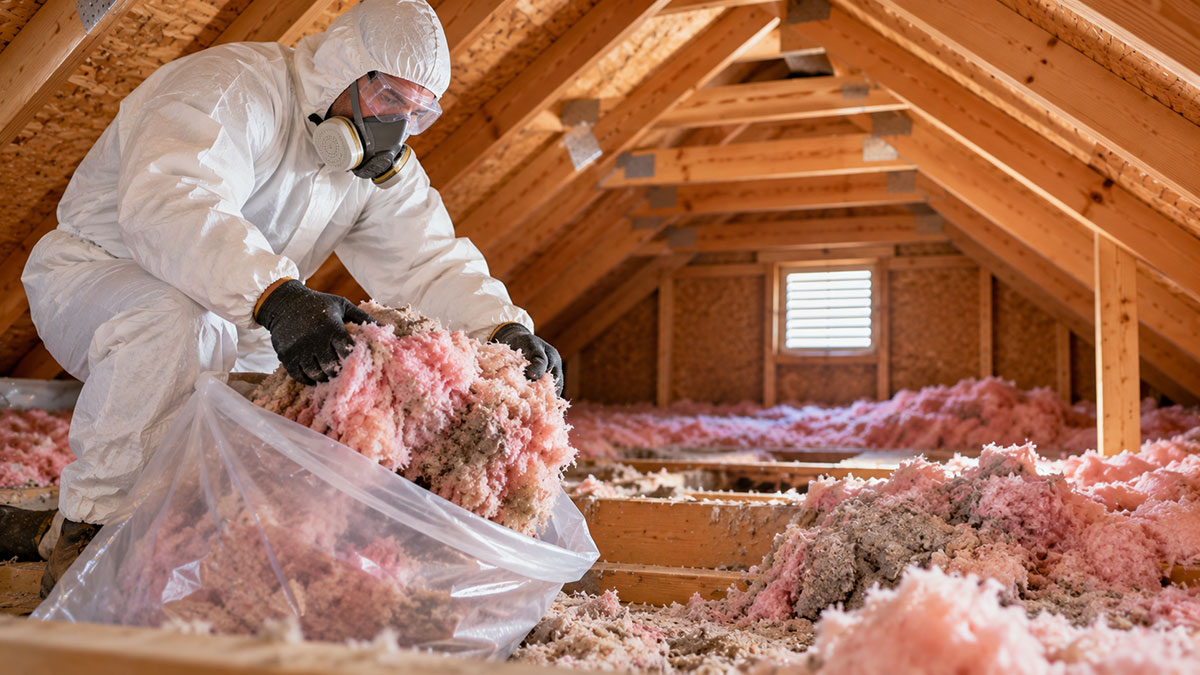
And if you plan to rewire or replumb later, keep in mind that cured foam grips framing and wiring hard. how to remove spray foam insulation is a genuinely labor-intensive job.
None of this rules Icynene out completely. It just shifts the math toward another material or a different scope.
FAQ on Icynene Insulation
Is Icynene Insulation the Same as Generic Polyurethane Spray Foam?
No. Icynene is a branded, factory-trained system built to ICC-ES evaluation reports and ASTM standards. Generic polyurethane foam sold in cans skips that code documentation and the GREENGUARD Gold emissions testing behind Icynene’s Classic Max and ProSeal lines.
How Does Icynene Differ From Other Spray Foam Brands Like Demilec or BASF?
All of them make spray polyurethane foam on the same open-cell and closed-cell chemistry. Icynene, now under Huntsman Building Solutions alongside Demilec, built its name on early water-blown open-cell foam and certified installer training. BASF sells its own open-cell (Enertite) and closed-cell (Walltite) lines plus roofing systems.
Does Icynene Insulation Affect Home Resale Value?
Nobody publishes resale premiums specific to Icynene. Continuous air sealing and higher R-value per inch are still selling points that buyers notice on a home energy audit, and some projects qualify for utility incentives that appraisers now factor into energy-efficient valuations.
Can Icynene Insulation Be Removed or Replaced Later?
It can, but it’s labor-intensive because cured foam bonds chemically to framing and sheathing. Contractors grind, cut, or scrape it out instead of using solvents, haul the debris away, and then install fiberglass, cellulose, or a fresh layer of spray foam.
What’s the First Step Before an Icynene Insulation Installation?
Icynene pays off fully only when the project follows a fixed order. Find the air leaks first, match open-cell or closed-cell foam to the assembly second, and confirm the seal at the end. The spray gun comes after all that, not before.
- Diagnose leakage with an energy audit and blower door reading
- Match open-cell or closed-cell foam to the specific assembly
- Verify the seal with a second blower door test before drywall closes the cavity
Skip the audit and you gain a faster start, but you may end up paying closed-cell rates on a cavity that only needed open-cell, or miss a leak an inspector will catch anyway.
The window for that verification closes once drywall goes up. A hidden gap behind finished walls costs far more to find than to prevent.
Proper air sealing is what separates Icynene’s real-world performance from the R-value on paper.