Most attic insulation lasts somewhere between 15 and 80 years, which is a wide enough range to be close to useless until you know what’s actually up there. The material sets the upper limit, and moisture usually decides how close a given attic gets to it.
Age often isn’t the first problem anyway. ICF Consulting found that 89 percent of United States single-family homes fall short of the 2012 International Energy Conservation Code insulation baseline, in a 2024 study sponsored by the North American Insulation Manufacturers Association.
That’s why contractors rarely talk about an expiration date. They size the layer against Department of Energy R-value targets for the climate zone, then look at what shape it’s in.
Types of Attic Insulation
Fiberglass, cellulose, spray foam and mineral wool cover almost every attic in North America. They go in differently and carry different R-values per inch, which is the main reason their lifespans don’t line up.
| Material | Installation method | R-value per inch | Typical use case |
|---|---|---|---|
| Fiberglass | Batt or blown-in | 2.2 to 3.8 | New construction, DIY top-ups |
| Cellulose | Blown-in loose-fill | 3.2 to 3.8 | Retrofits, irregular joist bays |
| Spray foam | Spray-applied | 3.5 open-cell, 5.0 to 7.0 closed-cell | Air sealing and insulating in one step |
| Mineral wool | Batt or blown-in | 3.0 to 3.3 | Fire-prone or high-moisture attics |
Fiberglass Insulation

Most US attics already have fiberglass, either as batts or as blown loose-fill made from spun glass fiber. Owens Corning’s AttiCat system is a widely used blown-in fiberglass insulation product built specifically for attic top-ups.
It doesn’t soak up moisture the way cellulose does, and it’s fire-resistant and won’t rot. It’s also cheap per square foot and easy to find at any supplier.
The downsides are real, though. Compressed fiberglass loses R-value fast, and batts leave gaps around irregular joist bays. Installing it calls for full PPE, and you’ll probably still itch by evening.
Cellulose Insulation

Cellulose comes from treated recycled paper fiber and gets blown into attics as loose-fill. GreenFiber is one of the bigger names supplying it, and the bags carry settled-thickness coverage charts, which federal labeling rules require.
The fill is denser than fiberglass, so at the same thickness it blocks air movement better, and it’s made largely from recycled content. Moisture is the catch. Cellulose absorbs it readily, which speeds up mold growth if the roof ever leaks, and I’d skip it entirely in an attic with any leak history. It also settles more than fiberglass over the first few years after installation.
Spray Foam Insulation

Spray foam insulation is the odd one out, since it expands and cures in place instead of sitting loose or coming pre-cut. It comes in open-cell and closed-cell versions, and the difference matters a lot in an attic.
| Type | R-value per inch | Best for |
|---|---|---|
| Open-cell | About 3.5 | Unvented attics, sound dampening |
| Closed-cell | 5.0 to 7.0 | Roof decks, tight thermal targets in less depth |
Demilec and Icynene make formulations that show up repeatedly on residential attic jobs.
Mineral Wool Insulation
Mineral wool, also sold as rock wool, is spun from basalt rock and recycled slag instead of glass or paper fiber. Rockwool is the brand most homeowners run into first, mostly because the company and the material share a name.
It withstands temperatures above 1,800°F without burning, and it doesn’t wick water the way cellulose does, so mold risk stays lower. It’s also heavier per bag than fiberglass, which limits settling over time. That density is a big part of why mineral wool ends up toward the long end of the lifespan range.
How Does R-Value Affect Attic Insulation Lifespan?

Not directly. R-value measures a material’s resistance to heat flow, and it’s the number printed on every bag or roll of attic insulation. It says nothing about how long that resistance will hold up once the material is actually sitting in an attic.
Manufacturers test r-value in a lab using ASTM C518, a heat flow meter test, or ASTM C687 for loose-fill products. Both standards sit behind the Federal Trade Commission’s R-Value Rule for insulation labeling, so the lab numbers assume a dry, undisturbed, correctly installed sample. Real attics rarely stay that tidy for decades.
Settling thins out loose-fill over time, and moisture turns fiber into a heat conductor instead of a resistor. Compression from foot traffic or stored boxes belongs on that list too, since it flattens batts and cuts their effective depth.
The reason comes down to how insulation works at the fiber level. Trapped air pockets do the actual insulating, so anything that collapses them collapses performance along with them.
How Long Does Attic Insulation Last by Material Type?

Manufacturer literature quotes big numbers for every material. Real lifespan depends more on moisture control and pest activity than on anything printed on the bag, along with how well the attic was ventilated at installation. The ranges below reflect typical residential performance, not the best-case lab scenario.
| Material | Average lifespan | Lifespan under ideal conditions | Main limiting factor |
|---|---|---|---|
| Fiberglass | 25 to 40 years | 80 to 100 years | Compression and gaps |
| Cellulose | 15 to 25 years | 20 to 30 years | Moisture absorption |
| Spray foam | 50 to 80 years | 80-plus years | Installation quality |
| Mineral wool | 30 to 50 years | 80 to 100 years | Physical disturbance, rare otherwise |
Fiberglass and mineral wool show the biggest gap between advertised and actual lifespan, since the 80 to 100 year figures assume the material was never compressed or wetted.
Spray foam and cellulose insulation sit at opposite ends of the range for a reason. Foam cures into a sealed layer that blocks air. Cellulose stays loose and settles a little more every year as gravity works on it.
In practice, mineral wool tends to outlast fiberglass, even though their lab-rated lifespans look almost identical on paper. Density explains most of it. Rock wool insulation is heavier and denser per cubic foot, so it resists compression and pest tunneling better than fiberglass batts of the same thickness.
What Causes Attic Insulation to Break Down Early?
Any of the materials above can fall short of its expected lifespan, and the causes tend to repeat from attic to attic.
Moisture and Roof Leaks
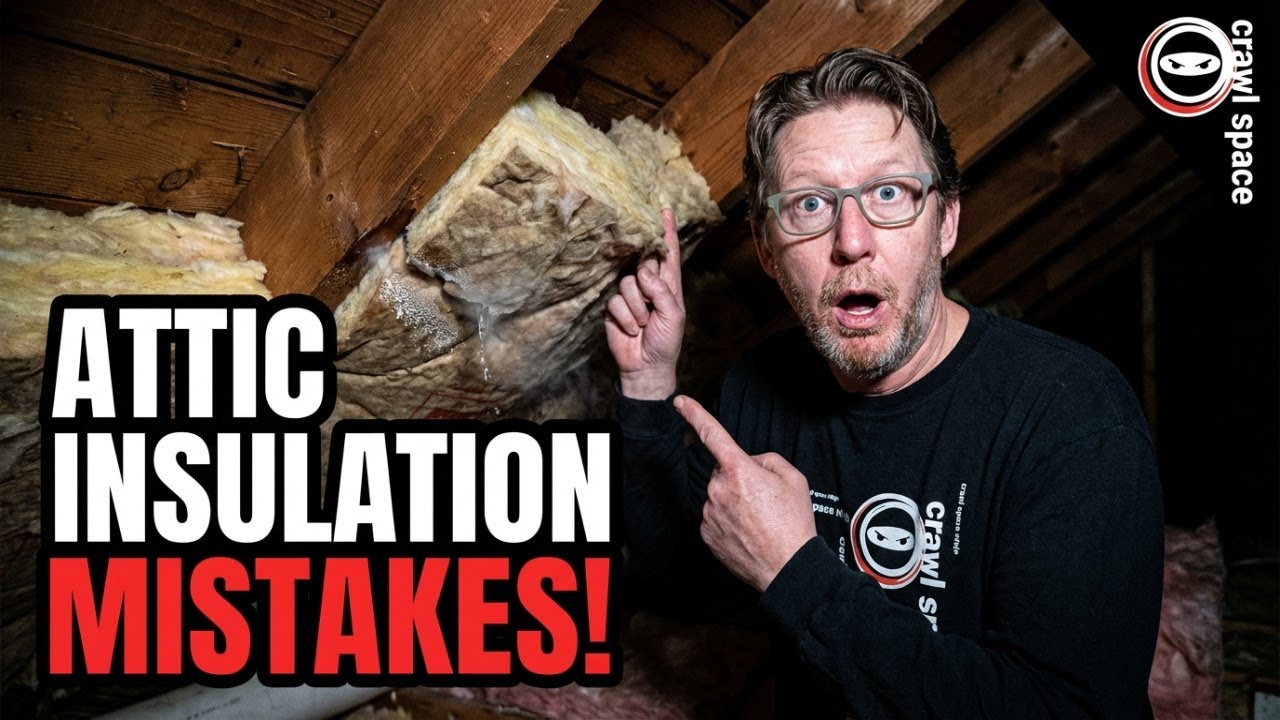
Water does more damage to attic insulation than anything else. A roof leak or an ice dam backing water up under the shingles soaks the material below, and wet fiber conducts heat instead of blocking it. A bathroom fan venting straight into the attic does the same thing, only slower.
Flashing and vent penetrations tend to leak first, with chimneys not far behind. From the house side, poor air sealing lets warm, humid air rise into the attic and condense, and bath or kitchen exhaust fans vented into the attic instead of outside make that worse.
Pest Activity
Rodents and birds both treat loose attic insulation as nesting material. Dealing with mice that have moved in under the insulation is one of the most common calls insulation contractors get.
Rodents do the worst of it. They tunnel through loose-fill, flatten it, and leave contamination that has to be removed. Birds thin out the coverage near soffits by pulling fibers loose for nests, and insects mostly leave the material alone, though they show up wherever moisture is already present.
Settling and Compression
Loose-fill cellulose settles 10% to 20% over time, while loose-fill fiberglass settles only 2% to 4%, according to the Department of Energy’s Building America Solution Center. That gap alone explains why cellulose needs a top-up sooner than fiberglass installed at the same starting depth.
Insulation settlement is the slow sinking that gravity and vibration cause, even with nobody touching the attic. Compression is quicker and usually self-inflicted, since foot traffic, stored items or equipment resting on the material flatten it right away. Neither one reverses on its own once it happens.
Heat Exposure
Attics run hotter than almost any other part of a house, often 20 to 40 degrees above outdoor temperature on a sunny summer afternoon.
Sustained heat doesn’t destroy insulation the way moisture or pests do. It works slower, breaking down binders in fiberglass batts and drying out cellulose fibers over many years. Spray foam handles this better than the others, since it cures into a fixed structure with no binder left to break down under repeated heat cycling.
Attic Insulation R-Value Requirements by Climate Zone
The Department of Energy divides the country into eight climate zones, and each one carries a different target for attic R-value. Local building codes generally follow a version of the International Energy Conservation Code, and DOE’s recommendations are keyed to the 2021 edition, so areas still enforcing an older edition can set lower minimums.
DOE’s recommended attic R-value runs from R-30 to R-60 across US climate zones, from warm Zone 1 to cold Zones 7 and 8. A home in Florida or South Texas needs far less than one in Minnesota or Maine, so a national average is close to useless for judging any single attic.
ENERGY STAR reports average savings of 15% on heating and cooling costs when air sealing and insulation are done together. Being under-insulated is common, too, since 89% of US single-family homes fall short of the 2012 IECC insulation baseline (ICF Consulting for NAIMA, 2024).
The clearest check is measuring current depth against the target for your specific zone. A depth calculator can tell you how much insulation your attic actually needs once you know the zone and the current material.
Energy Star insulation guidance is keyed to the 2021 IECC, so in areas that still enforce an older code, a home can be code-compliant and still fall short of an ENERGY STAR target.
What Are the Signs Attic Insulation Needs to Be Replaced?
Age alone doesn’t tell you much. A dry, undisturbed layer of fiberglass from 1995 can still be doing its job, while a five-year-old batch damaged by a slow roof leak might already have failed.
Start with what you can see from the attic hatch.
- Floor joists poking up above the insulation line
- Discoloration or matting, or spots where the layer looks noticeably thinner
- A musty smell near the hatch, or water stains and mold anywhere
- Droppings, nesting material and chewed sections, which mean pests have been in there
The house itself gives hints too. Energy bills that climb without any change in usage are the obvious one, and rooms right under the attic that feel drafty or uneven in temperature point the same way. Ice dams along the eaves every winter usually mean heat is leaking into the attic.
Compressed insulation is easy to miss because the material is still physically present, it’s just flattened and no longer holding its rated depth. Any spot where insulation compression has flattened the material to half its original depth is losing roughly half its rated R-value there, even if the rest of the attic looks fine.
When the visual check leaves you unsure, a professional home energy audit settles it with a blower door test and an infrared scan rather than guesswork.
Which Type of Attic Insulation Lasts the Longest?
By real-world durability rather than lab-rated maximums, the order runs spray foam, mineral wool, fiberglass, cellulose. That ranking flips in a few situations, so the reasons behind it matter more than the order itself.
Spray foam comes first because it cures into a single sealed layer that can’t settle, shift or let air bypass it. The catch is the highest upfront cost, and a poor installer can trap moisture behind the foam permanently. Honestly, it’s overkill for a lot of dry, simple attics.
Mineral wool is dense enough to resist compression, pests and fire. It’s heavier and pricier than fiberglass for the same coverage. Johns Manville and Rockwool both sell mineral wool batts for residential projects.
Fiberglass is where most people start, because it’s cheap, widely available and easy to top up. Performance drops fast once it’s compressed or hit by wind-washing near the soffits.
Cellulose lands last on durability, even though its dense fill blocks air movement well and copes with irregular framing. It absorbs moisture and settles more than any of the other three.
Density explains a lot of this gap. Loose-fill cellulose runs 1.5 to 2.0 pounds per cubic foot, while loose-fill fiberglass runs just 0.5 to 1.0 pounds per cubic foot, per the Department of Energy’s Building America Solution Center. That extra weight is also why cellulose resists wind-washing near soffits better than fiberglass, even though it settles more overall.
Should You Replace Attic Insulation or Add a New Layer?
Not every attic needs to be stripped down to bare joists. The decision comes down to condition first and R-value gap second.
When Topping Up Is Enough
Topping up just means adding new material directly over what’s already there. That’s usually blown-in loose-fill insulation laid across the old layer, since batts would mean pulling up the existing material first so they butt together properly.
It only works if the old layer is dry, with no history of roof leaks or standing water, and free of visible mold, pest droppings or nesting material. It should also be one material type, since mixing incompatible products can trap moisture, and it should simply be short of the target R-value for the climate zone.
A top-up adds capacity, but it doesn’t restore whatever r-value the old layer has already lost to settling or compression.
When Full Replacement Is Required
Wet or previously wet insulation holds mold spores, and a top-up would only bury them. Pest contamination works the same way, except droppings and nesting material are a health hazard on top of a performance problem. Batts that have been crushed flat for years rarely puff back up enough to matter, so those come out too.
Mixed or unknown material is the one to be careful with. Older attics sometimes hide vermiculite under newer fiberglass, and a professional needs to identify it before anything gets touched.
Vermiculite insulation, sold for decades under brand names like Zonolite, often contains asbestos fibers, and the EPA advises homeowners to assume it does. Leave it undisturbed and bring in a trained professional before any tear-out happens around it.
How Much Does It Cost to Replace Attic Insulation?
Most quotes split removal, disposal and new material into separate line items. Skipping removal when the old layer is dry and clean is the biggest thing homeowners control over the final number.
Professional removal of dry, non-contaminated insulation costs $1 to $2 per square foot (Angi, 2026), and a standard attic insulation project, materials and labor combined, typically runs $1,500 to $3,500 (Angi, 2026). Asbestos changes the math quickly. When abatement is required, removal costs $10 to $25 per square foot, versus $1 to $2 for a clean, dry attic (Home Energy Decisions, 2026).
Material choice moves the number more than almost anything else, and a full cost per square foot for insulation comparison across fiberglass, cellulose and spray foam shows how wide the spread gets.
The federal 25C credit, which covered up to 30% of insulation costs, applied only to insulation placed in service by December 31, 2025. Anyone budgeting for a 2026 project should check state and utility programs instead of assuming a federal insulation tax credit still applies.
Households below certain income thresholds may still qualify for full coverage through the Department of Energy’s Weatherization Assistance Program, which is a separate track from the expired credit.
When Does Attic Insulation Not Need to Be Replaced?
Plenty of attics with insulation older than the homeowner are still doing their job. Age is not a failure condition by itself.
A layer is fine to leave alone, however many years it’s been up there, if it has no history of roof leaks, condensation or standing moisture, and no visible pest activity, droppings or nesting. It should still sit at or near its original installed depth, and energy bills should have stayed proportional to weather and usage instead of climbing on their own.
Take a 30-year-old fiberglass batt that’s dry, uncompressed and meeting the R-value target for its climate zone. It needs nothing. Five-year-old cellulose under a slow roof leak needs attention now, however new it is.
Replacing insulation that already meets those conditions won’t buy meaningful energy savings. You’d just be paying to reinstall something that wasn’t broken.
How to Check the Age and Condition of Attic Insulation
A proper check takes about fifteen minutes and answers most of the replace-or-leave-it question on its own.
- Start with any paperwork you can find. Home inspection reports, permit records or a previous owner’s receipts often name the installation date and the material.
- Measure the depth. Push a ruler straight down to the attic floor in several spots and compare the reading against the R-value target for your climate zone.
- Look for visible damage. Scan for discoloration, matting, water stains, and any spot where floor joists show through.
- Check for pests. Droppings, nesting material, or tunnels through loose-fill point to contamination that a simple top-up won’t fix.
- If it’s still inconclusive, book a professional audit. A RESNET-certified rater or a Building Performance Institute-certified auditor can run a blower door test and confirm whether the installation meets Grade 1 standards.
Skip straight to the professional check if the attic has any history of leaks or pests, or renovation work near the roof.
How to Remove and Replace Old Attic Insulation
The order matters here, and skipping steps is where most DIY attempts go wrong. For tool selection and safety gear, see the fuller walkthrough on how to install insulation in an attic.
- Check for vermiculite first. If the attic was insulated before the 1990s, look for small gray-brown or silver-gold pebbles. If you find them, stop, treat the material as asbestos-containing, and call a trained professional instead of sampling or removing it yourself.
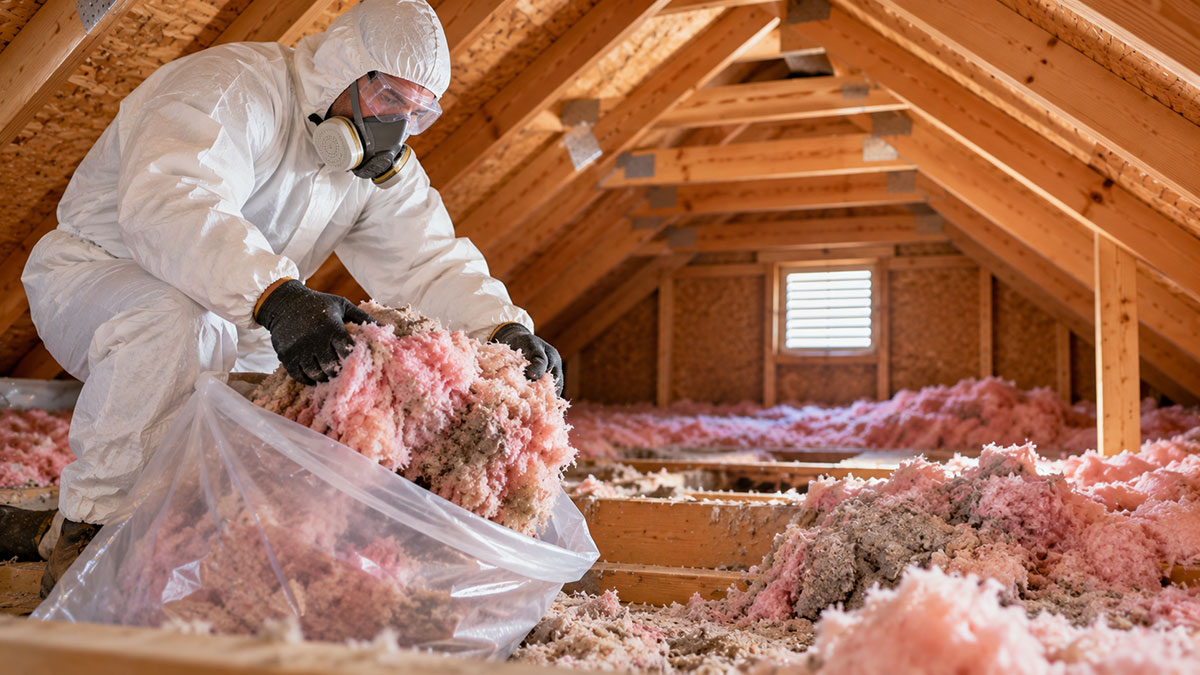
- Vacuum or bag out the old material. Industrial insulation vacuums pull loose-fill into sealed bags for disposal, while batts get rolled and bagged by hand.
- Air seal the ceiling plane before anything new goes down. Caulk or foam every penetration, wiring hole, and top plate gap.
- Check for knob-and-tube wiring. Exposed knob-and-tube wiring cannot legally be buried under insulation in most jurisdictions that enforce NFPA 70, the National Electrical Code.
- Install to the target depth. Blow or lay new material to the R-value your climate zone requires, checking depth at multiple points rather than trusting a single measurement.
- Leave clearance around fixtures. Recessed lights, flues, and exhaust fans need the manufacturer’s specified clearance to avoid a fire hazard.
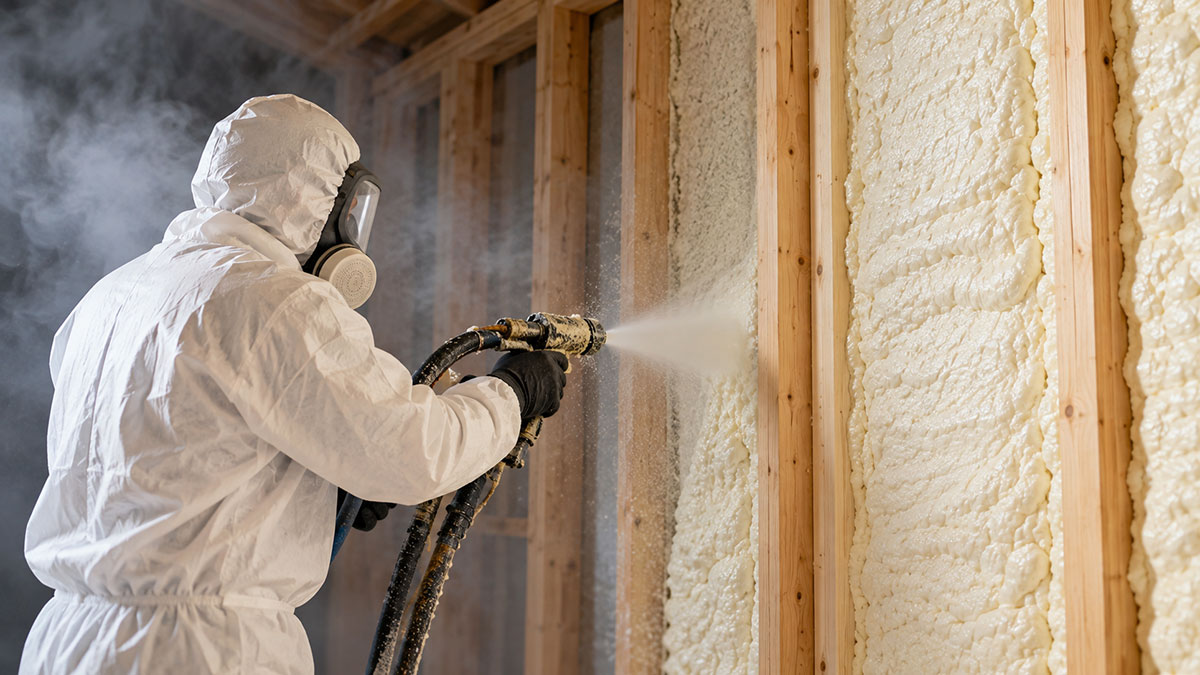
Spray foam skips most of this sequence since it air seals and insulates in one application, using spray rig equipment that only certified installers typically operate.
Attic Insulation Lifespan FAQ
What Is the Difference Between Open-Cell and Closed-Cell Spray Foam?
Closed-cell foam is rigid, works as its own vapor barrier, and adds some structural strength to the roof deck.
Open-cell stays soft and breathes more, so it does better at sound dampening than at blocking moisture. It also costs less per square foot.
Does Compressing Insulation Reduce Its R-Value?
Yes. Compressed insulation loses effective r-value because trapped air pockets collapse under pressure.
A batt rated R-38 at full loft delivers only a fraction of that once flattened by stored boxes or foot traffic near the attic hatch.
Do Attic Insulation Upgrades Qualify for Tax Credits or Rebates?
Eligibility depends on when the work happens and where you live.
Many states and utilities still run rebate programs for insulation and air sealing even after the federal 25C credit lapsed, so check ENERGY STAR’s rebate finder before assuming nothing applies.
Does Homeowners Insurance Cover Attic Insulation Damage?
Coverage depends on the cause of the damage.
Most policies pay out when a sudden event like a roof leak or storm damages the insulation. Gradual wear and settling get treated as maintenance issues, and pest infestations usually do too, so none of those count as covered perils.
Can Insulation Be Added Over Knob-and-Tube Wiring?
No, in most jurisdictions.
Building codes based on NFPA 70 prohibit burying exposed knob-and-tube wiring under insulation, since the wiring lacks the heat dissipation modern cable has. An electrician typically reroutes or replaces it first.
Is Vermiculite (Zonolite) Attic Insulation Dangerous?
It can be. Vermiculite insulation often looks like small gray-brown pebbles poured loosely between joists.
Much of it was contaminated with asbestos fibers from a since-closed Montana mine, and the EPA recommends assuming it contains asbestos and leaving it undisturbed, with any removal handled by a trained professional.
What Certification Should an Insulation Contractor or Energy Auditor Have?
Look for a RESNET-certified HERS rater or a Building Performance Institute-certified professional for diagnostic work.
Installation itself depends more on state contractor licensing and manufacturer training, since RESNET credentials cover raters and inspectors rather than installers. BPI does offer Retrofit Installer Technician and Crew Leader certifications, so ask whether the crew holds them.
What to Check First

Attic insulation lasts longest when moisture and installed depth get checked before anything else, since a dry twenty-year-old layer routinely outperforms a five-year-old layer damaged by a slow roof leak.
Put the settlement figures above next to the zone R-value targets and it’s clear why cellulose needs closer monitoring than fiberglass. A layer installed at the zone minimum has no cushion left once settling reaches the higher end of that range.
Choosing spray foam for that certainty means paying a higher price per square foot than blown cellulose, and it’s a permanent commitment, since cured foam can’t be topped up the way loose-fill can.
The next practical step for most homeowners is a broader look at how to improve home insulation across walls and floors, plus the rim joists.