Loose-fill insulation sinks after it’s installed, and manufacturers plan around that. Insulation settlement is why a coverage chart asks for more thickness at install than the finished job is supposed to have.
CIMA’s technical bulletin states that, for certain applications, installed thickness may run five to twelve percent greater than settled thickness. Manufacturers build that margin in so performance holds up once compaction runs its course (Cellulose Insulation Manufacturers Association, 2023).
Contractors and home energy auditors measure the change against settled density, the baseline printed on a manufacturer’s coverage chart for every loose-fill product.
What Is Insulation Settlement?
Give loose-fill insulation enough time and it sinks. The fibers pack closer together, the air pockets that gave the layer its thermal resistance collapse, and what’s left is thinner and denser than what went in. This can happen inside a wall, an attic, or a floor cavity.
The problem only shows up in products that get poured or blown into place. Every category of home insulation resists heat flow, but a solid piece has nothing loose to fall.
Structural settlement is a separate thing, and it’s about the foundation and framing. Insulation settlement stays inside the thermal layer and has nothing to do with the house shifting on its footing.
Cellulose, fiberglass and mineral wool all fall under loose-fill insulation, and each one settles at a different rate. Batts and spray foam don’t behave this way. That distinction matters more than most homeowners realize.
Settled Density Versus Installed Density
Right after the crew finishes, the material sits at its installed density, as tight as it will ever be. Gravity and vibration go to work from there, and whatever density remains afterward is the settled density.
Thickness follows the same logic. Measure right after blowing and you get the installed thickness, before any compaction has started. The coverage chart uses settled thickness instead, because that figure reflects long-term performance and not a fresh install.
Federal regulation requires loose-fill insulation labels to list minimum settled thickness, initial installed thickness, maximum net coverage area, number of bags needed per 1,000 square feet, and minimum weight per square foot at R-values of 13, 19, 22, 30, 38, and 49 (Federal Trade Commission, 16 CFR Part 460).
Crews using dense pack insulation methods in wall cavities aim for a denser target, one built to prevent settlement instead of planning around it.
What Causes Insulation Settlement
Gravity is the constant. It works on loose fibers every single day, pulling them down and squeezing out the air pockets that create resistance.
Vibration adds to it. Foot traffic in an attic nudges the material lower. HVAC cycling and normal structural movement do the same thing over months and years.
Moisture and Humidity Effects
Water weakens the fiber bonds that hold loose-fill insulation in its blown shape. Wet insulation compacts faster than dry insulation, and it loses thermal resistance at the same time it loses volume.
Roof leaks above the insulation and plumbing leaks inside a wall cavity are the obvious sources. Humid attic air condensing on cold sheathing is the quieter one, and it’s easy to miss.
A properly installed vapor barrier slows that moisture path and, by extension, the settling it causes.
Installation Density Shortfalls
Most settlement complaints come down to the same cause. Not enough material went in at the start.
That’s different from insulation compression, which happens at the moment of installation instead of gradually afterward.
Thin coverage at attic edges usually signals a shortfall from day one. In walls, a cavity that took no resistance while being blown was probably underfilled. And the jobs that settle the most tend to belong to installers who skipped the coverage chart.
How Much Insulation Settles
It depends on the material and the installation method, but there is real test data behind the percentages.
Rock wool in two manufactured-home attics lost about 16 percent of its thickness in the end sections after factory vibration and a 265-mile tow, and R-value fell from 31.2 to 28.8 (Oak Ridge National Laboratory, U.S. Department of Energy).
Greenfiber’s current coverage chart for SANCTUARY cellulose builds in a settling factor of roughly 7 to 8 percent. At R-49 that works out to 14.3 inches of initial installed thickness for 13.3 inches of settled thickness.
Wall density changes things. According to the Cellulose Insulation Manufacturers Association, cellulose at 3.5 pounds per cubic foot has virtually nil settling.
So density at install time predicts the outcome better than material choice alone.
How Insulation Settlement Affects R-Value
A gap from settled insulation isn’t just missing material. It changes how heat moves through the entire assembly, and that’s where R-value comes into the picture.
R-value measures resistance to heat flow, and it depends directly on consistent thickness and density across the cavity. Once insulation slumps away from the top of a wall or thins out in an attic, that spot behaves like a hole in the thermal layer even though the material is technically still there.
The gap also opens a path for thermal bridging, where heat crosses the weak point far faster than it crosses the insulated areas around it.
The Department of Energy’s insulation guide notes that proper insulation combined with air sealing typically delivers whole-house energy savings of 10 to 20 percent, which gives a sense of how much energy inadequate insulation can waste.
The symptoms are easy to write off. Higher energy bills with no obvious cause are the usual first sign. Rooms that never quite reach the thermostat setting fit too, and so do cold drafts near the ceiling or along exterior walls.
Attic Settlement Versus Wall Cavity Settlement
Where the settling happens changes how bad it gets and how easy it is to catch. Attics have no containment holding the material in place, so they settle the most and they settle the fastest.
| Location | Containment | Typical Severity | Visibility |
|---|---|---|---|
| Attic floor | None, open blow | Highest | Easy to spot on inspection |
| Wall cavity, standard blow | Minimal | Moderate to high | Hidden behind drywall |
| Wall cavity, dense pack | Netting under pressure | Low to none | Hidden behind drywall |
A settled wall cavity is the harder problem of the two. Nobody sees it happening, and confirming it usually means opening the wall, whereas the attic only takes a walk up there with a flashlight.
Which Insulation Materials Settle

Not every insulation product is vulnerable to this, and the differences are big.
| Material | Settles? | Typical Behavior | Common Location |
|---|---|---|---|
| Cellulose, standard blow | Yes | Highest settling tendency | Attic, standard wall |
| Loose-fill fiberglass | Yes, less than cellulose | Moderate settling | Attic |
| Mineral wool loose-fill | Yes, moderate | Settles under vibration and gravity | Attic, manufactured housing |
| Batts, fiberglass or mineral wool | Minimal | Held by friction and facing | Wall, floor, attic |
| Spray foam | No | Cures rigid | Wall, attic, rim joist |
Cellulose insulation tops that list because its fibers are lightweight and slide against each other easily once gravity gets involved.
Fiberglass insulation in loose-fill form settles less, and that’s mostly down to chunk size and how the fibers nest together, not any resistance to gravity itself.
Mineral wool loose-fill behaves closer to fiberglass than to cellulose. Batts hold their shape through friction and facing rather than density, and spray foam is the only product on this list that cures into a solid, non-settling mass.
The Settling Factor Manufacturers Build Into Coverage Charts
Manufacturers already know their product will settle, so they add extra thickness to the install target before the bag ever leaves the warehouse.
That extra has a name, the settling factor, and it’s the percentage of additional installed thickness a coverage chart adds on top of the settled target. Every bag of loose-fill cellulose ships with a chart listing two numbers side by side, installed thickness and settled thickness.
Say a contractor is aiming for 17 inches of settled depth. Using CIMA’s five-to-twelve-percent margin, that means blowing roughly 18 to 19 inches at install time. Installer discussion on GreenBuildingAdvisor puts normal settling on an open attic floor closer to 13 percent, though, which would push that target nearer to 19 or 20 inches.
Walls are different. Once a crew hits the density target for dense-pack wall cavities, the settling factor drops close to zero because there’s no room left for the fibers to move.
Spray-applied cellulose systems, like the wet-spray method used by International Cellulose Corporation, bond fibers to the cavity as they go in rather than relying purely on packed density.
When Insulation Settlement Does Not Apply
Some products simply don’t have this problem.
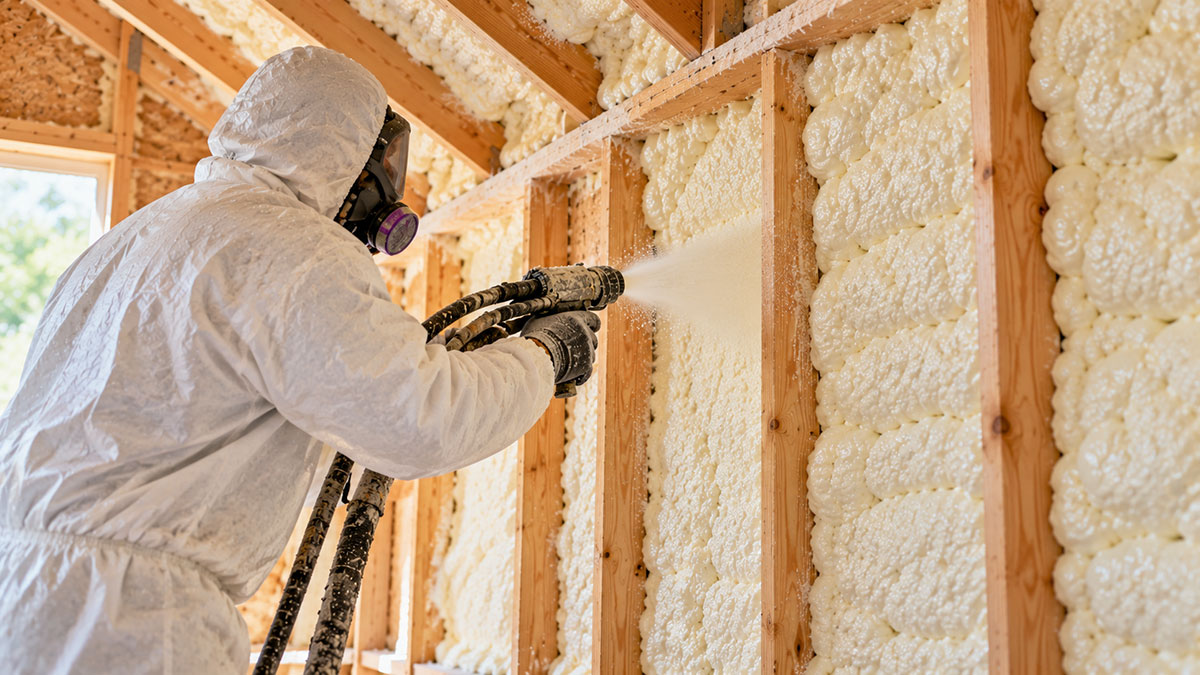
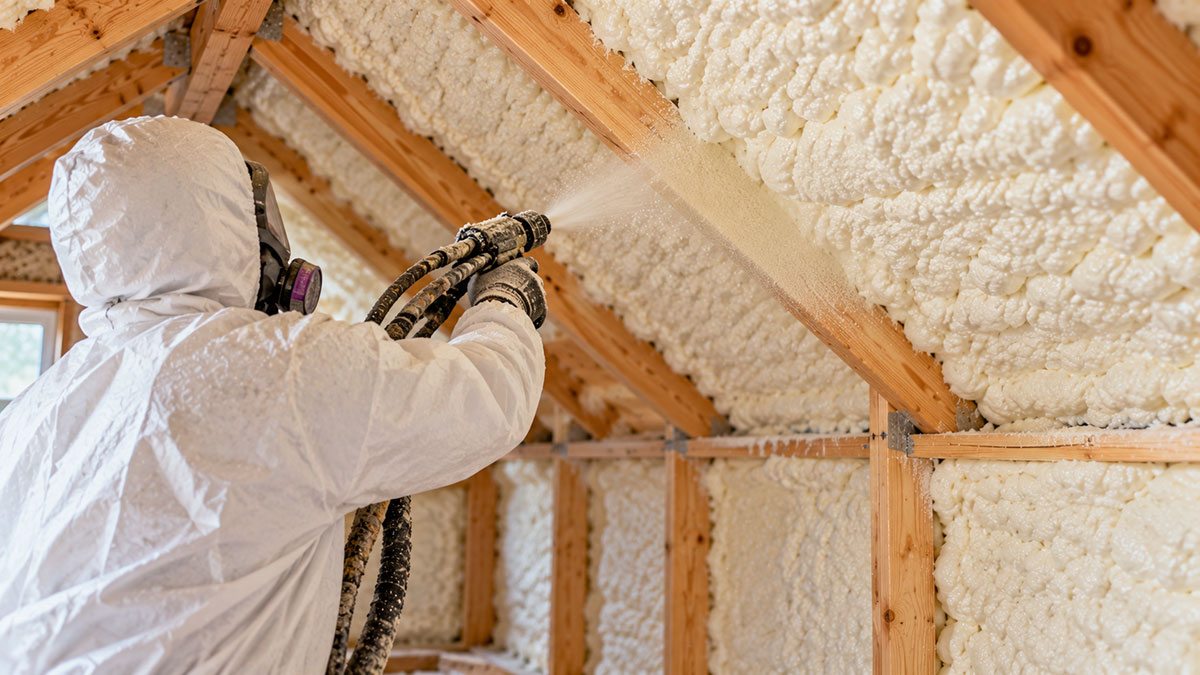
Spray foam insulation cures into a rigid, cross-linked polymer within minutes of application. No loose fibers are left to compress once that reaction finishes, so a cured foam wall stays at the thickness it was sprayed.
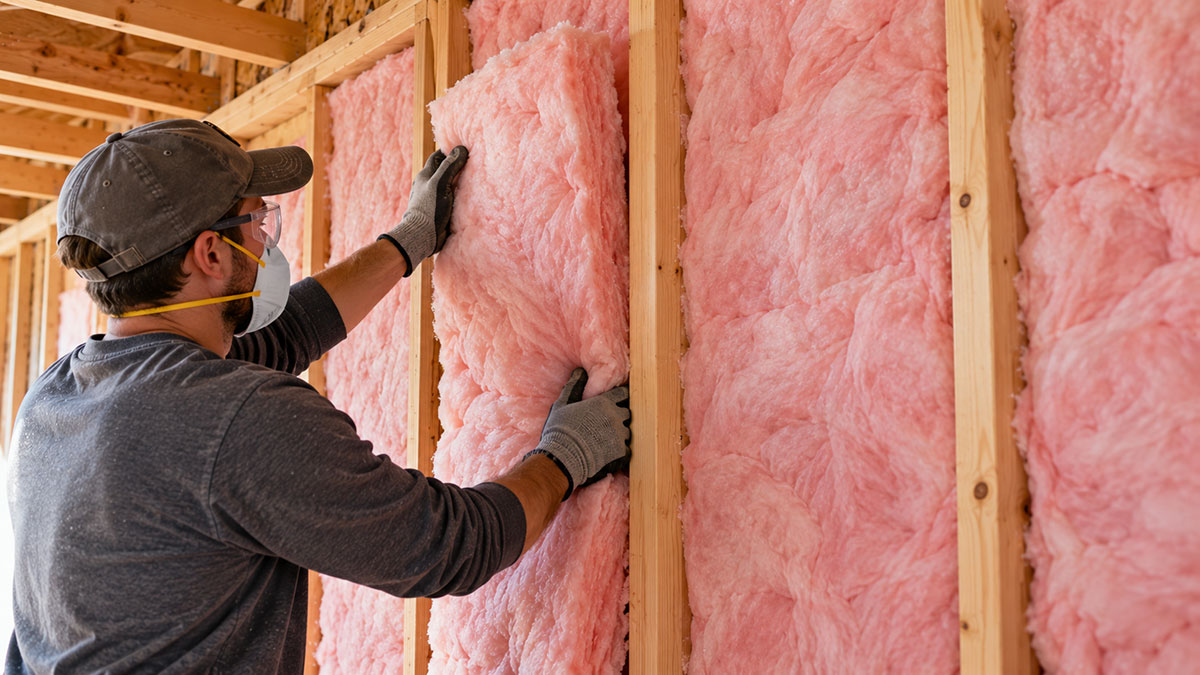
Batt insulation avoids it for a different reason. Friction against the framing and a stapled facing hold the batt in place, so there’s no gravity path pulling it down the way loose fibers fall.
Owens Corning states in its AttiCat product documentation that settling is negligible with no impact on R-value, a claim tied to the conditioning process the fiberglass goes through inside the blowing machine. That’s the manufacturer’s own claim, so weigh it accordingly.
In practice the settle-proof list covers closed-cell spray foam, which is tested for dimensional stability under ASTM D2126, and fiberglass or mineral wool batts with stapled or friction-fit facing. Dense-pack cellulose or fiberglass installed at the manufacturer’s minimum wall density belongs there too.
There’s one caveat. Even in these products, a small amount of settling in the first few weeks after a correct install is normal. It isn’t a defect, just the material finishing its initial conditioning inside the cavity.
How To Detect Insulation Settlement
A hunch isn’t enough to confirm settlement, but the standard checks are simple.
Attic Depth Checks
Push a tape measure or a marked stick straight down to the attic floor at several points and read the depth at each one. Compare the readings against the settled thickness on the original coverage chart.
Check corners and hip areas separately, since those spots settle first. Any exposed joists mean thickness has dropped below the R-value target.
It costs nothing and takes about ten minutes for an average attic. Honestly, it’s the check I’d start with.
Infrared and Blower Door Testing
Infrared inspection follows a formal standard, not guesswork. ASTM C1060 governs how a technician uses a thermal imaging camera to inspect insulation inside finished walls and ceilings.
Cold streaks on the image usually mark a settled gap rather than a missing section, since the material is still present, just lower in the cavity.
A blower door test confirms the leakage that gap creates. LEED v5 BD+C building enclosure guidance sets a whole-building threshold of 0.40 cfm per square foot under a 0.3 inch water pressure differential, so look for air leakage readings above that and for cold spots that line up with the thermal image.
How To Prevent Insulation Settlement
Prevention comes down to choices made at installation, before the material has a chance to settle.
Dense-packing a wall means holding the fiber under pressure with netting or mesh during the blow, then landing at or above the manufacturer’s minimum density for near-zero settling. It takes a specialized machine and a trained crew, and it costs more per square foot than a standard attic blow.
A standard attic blow is faster and cheaper per square foot. It relies on the installer overfilling to the chart’s installed thickness, and if the crew skips that step, settlement risk goes up. The upside is that an attic is easy to inspect and top off later.
Applegate Insulation’s wall installation manual calls for dry dense-packing behind netting at a minimum of 3.5 pounds per cubic foot for its stabilized cellulose in wall cavities.
Installer training counts as much as the product. A crew that ignores the coverage chart gives up whatever advantage the material was designed to have.
How To Fix Settled Insulation
Fixing settled insulation is a straightforward repair once the shortfall is confirmed.
- Inspect the affected area and confirm settlement with a depth check or thermal scan
- Measure current thickness against the original coverage chart target
- Calculate the shortfall in inches and convert it to bags needed
- Match new material to the existing type to avoid moisture or compatibility issues
- Install the added insulation, topping off an attic or opening the wall for the repair
- Verify the fix with a follow-up depth check or thermal image
Opening a wall for this kind of repair is often called a drill-and-fill insulation job, since small holes are drilled and refilled with fresh material.
Attic top-offs run cheaper than wall repairs, since nothing needs to be opened or patched afterward. The cost per square foot for insulation climbs once drywall removal and repair enter the job.
The Department of Energy’s Weatherization Assistance Program reports households save an average of $372 a year after insulation and related upgrades, a figure drawn from its national evaluation in 2022 dollars. That number covers a full weatherization package, not insulation alone, but it still points to the fix paying for itself over a reasonable stretch of time.
Insulation Settlement FAQ
Is Insulation Settlement The Same As Foundation Settlement?
No. Insulation settlement affects the thermal layer inside a wall or attic cavity, not the building itself. Foundation settlement is the structure sinking or shifting from soil movement. The two share a name but involve different materials and different fixes.
Does Settling Always Mean The Installer Did A Bad Job?
Not always. A small, uniform drop within the manufacturer’s stated settling factor is normal material behavior, not a defect. Bare joists and thin corners point to a real installation shortfall, and so do wall cavities that took no resistance while blowing.
What Installer Mistakes Make Settlement Worse?
Skipping the coverage chart’s installed thickness column is the most common error. Others include rushing wall cavities without checking back-pressure and using the wrong nozzle setting on the blower hose, plus blowing attics too thin at hips and corners.
What To Fix First
Start with the wall cavities and attic sections that lost the most R-value. Those spots waste the most heating and cooling energy per square foot until they’re corrected.
After that, go cheapest and most reversible first. Top off the thinnest hips and corners in the attic, then bring the whole attic back to the settled thickness target, and only then drill and fill any wall cavities a scan confirms are hollow.
A top-off only works in an open attic. A wall cavity that was packed below CIMA’s settling-prevention density has a hidden gap, and that needs a drill-and-fill repair instead.
The wall repair costs more per square foot than an attic top-off, but it closes the job for good, since a properly packed cavity doesn’t settle again.
If you’re unsure what depth to aim for before topping off, how much insulation your attic actually needs covers it separately.