Summarize this article with:
Your attic might be bleeding money right now and you don’t even know it.
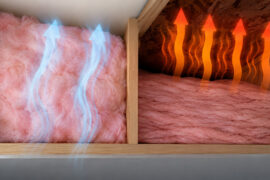
Poor attic insulation accounts for 25-30% of heating and cooling losses in most homes. That’s hundreds of dollars evaporating through your roof deck every year.
But here’s where it gets tricky. The types of attic insulation available today range from $1 per square foot fiberglass batts to $10 per square foot closed-cell spray foam. Each material handles moisture differently, provides varying R-values per inch, and works better in specific climate zones.
Some insulation settles over time. Others last the lifetime of your house. A few trap moisture and cause roof damage if installed wrong.
This guide breaks down nine insulation types with real numbers on thermal performance, installation costs, moisture resistance, and fire ratings. You’ll know which materials work for your climate, budget, and existing attic configuration.
Types of Attic Insulation
| Insulation Type | R-Value per Inch | Application Method | Installation Difficulty |
|---|---|---|---|
| Fiberglass Batts | R-2.9 to R-3.8 | Manual placement between joists | Easy (DIY-friendly) |
| Blown-in Fiberglass | R-2.2 to R-2.7 | Pneumatic blowing machine | Moderate (requires equipment) |
| Cellulose | R-3.2 to R-3.8 | Blown-in (loose-fill or dense-pack) | Moderate (requires equipment) |
| Spray Foam (Open-Cell) | R-3.5 to R-3.6 | Spray application (expands) | Professional installation required |
| Spray Foam (Closed-Cell) | R-6.0 to R-7.0 | Spray application (dense) | Professional installation required |
| Mineral Wool (Rock Wool) | R-3.0 to R-3.3 | Batts or blown-in | Easy to moderate |
| Rigid Foam Boards | R-3.6 to R-6.5 | Cut and fit panels | Moderate (requires cutting) |
| Radiant Barriers | N/A (reflects heat) | Foil sheets stapled to rafters | Easy (DIY-friendly) |
| Reflective Insulation | R-1.0 to R-2.0 | Roll installation with air gap | Easy (DIY-friendly) |
Fiberglass Batts

Pre-cut panels of woven glass fibers that fit between standard joist spacing. This is what most people picture when they think about attic insulation.
R-Value Performance
Fiberglass insulation delivers R-3.0 to R-4.3 per inch depending on density.
A 6-inch batt typically provides R-19, while 10-inch batts reach R-30. But here’s the catch: compression kills performance. Squeeze it into a smaller space and you’re losing thermal resistance.
The labeled R-value assumes perfect installation. Reality? Most DIY jobs see 20-40% reduction due to gaps and compression.
Installation Method
Cut to fit. That’s the appeal.
You can handle this yourself if you’ve got attic access and basic tools. Unfaced batts go anywhere. Faced batts (with kraft paper or foil backing) need the facing toward the living space.
The flexible edge helps, but getting a snug fit without gaps takes patience. Every gap is a thermal bridge where heat escapes.
Most contractors can knock out 1000 square feet in a day.
Cost Range
Budget-friendly. $1.00 to $2.00 per square foot for materials.
Professional installation adds another $0.50 to $1.50 per square foot. For a typical attic, you’re looking at $1,500 to $3,500 total depending on R-value and whether you’re doing attic floor or ceiling.
Moisture Resistance
Poor. Fiberglass batts soak up water like a sponge.
When they get wet, they sag, compress, and lose insulating value. Unlike mineral wool, fiberglass stays wet and encourages mold growth.
That’s why you need proper attic ventilation and sometimes a vapor barrier on the warm side.
Fire Resistance
Class A when tested, but it melts at high temperatures.
Most manufacturers treat batts with fire retardants. They won’t fuel a fire but they’ll definitely melt and lose structure.
Not your first choice if fire resistance matters.
Best Used For
Attic floors in unfinished attics work fine if you can achieve perfect coverage.
Skip it for cathedral ceilings. Too many thermal bridges through the rafters.
Reasonable for mild climates where R-38 is enough. Cold climate zones needing R-49 or higher? You’ll need thick batts that are harder to handle.
Lifespan & Durability
20 to 30 years if conditions stay dry.
Moisture, settling, and rodent damage cut that short. I’ve pulled out 15-year-old batts that looked like wet newspaper.
The fibers don’t degrade chemically, but physical damage happens.
Environmental Impact
Recycled glass content runs 40% to 60%.
Low embodied energy compared to foam products. No ozone depletion issues.
But the formaldehyde binders used in some products raise concerns. Look for formaldehyde-free options if indoor air quality matters.
Manufacturing uses less energy than spray foam, which is why it’s cheaper.
Blown-In Fiberglass

Loose glass fibers installed with a blowing machine. Think of it as fiberglass batts that got shredded and can fill every crack.
R-Value Performance
R-2.2 to R-3.0 per inch for standard blown fiberglass.
White InsulSafe reaches R-2.8 per inch. Pink or yellow products sit closer to R-2.2.
To hit R-49 in your attic, you need 16 to 18 inches of settled thickness. And it will settle – expect 10-15% over the first year.
Installation Method
Requires a blowing machine. Most big-box stores rent them free with a minimum bag purchase.
One person feeds the machine, another handles the hose in the attic. The trick is maintaining consistent depth.
Set up depth markers every 300 square feet so you know you’re hitting the target R-value.
Takes longer than batts but fills around obstacles better. Electrical boxes, pipes, and odd corners all get covered.
Cost Range
Material costs run $1.67 to $2.00 per square foot at R-49.
That’s competitive with batts. Labor costs drop if you DIY, but you need two people and a full day.
Professional installation averages $2.00 to $3.00 per square foot all-in.
Moisture Resistance
Same problems as batts. Water turns it into a soggy mess.
The advantage? When it dries out, blown-in tends to recover better than compressed batts. Still, prevention beats remediation.
Attic ventilation and air sealing before installation make a huge difference.
Fire Resistance
Treated with fire retardants similar to batts.
Won’t burn but will melt. Class A rating in most applications.
Best Used For
Attic floors, absolutely. This is where blown-in fiberglass shines.
Retrofit situations where pulling up old insulation isn’t practical. Just blow new material on top (if the old stuff is dry).
Adding R-value to existing home insulation is easier with blown-in than batts.
Lifespan & Durability
25 to 30 years in dry conditions.
Settling reduces effectiveness over time. That’s why installers overfill initially.
Better performance than batts in the long run because there are no gaps to begin with.
Environmental Impact
Same recycled content as batts, 40% to 60%.
Slightly higher installation energy due to the blowing process, but negligible in the grand scheme.
Lower VOC emissions than spray foam or cellulose insulation products.
Cellulose

Recycled paper products treated with borate for fire and pest resistance. The greenest option if that matters to you.
R-Value Performance
R-3.2 to R-3.8 per inch. Cellulose insulation outperforms fiberglass per inch.
You need 11 to 14 inches of settled depth to reach R-38 to R-49.
The higher density means better thermal resistance and air blocking compared to blown fiberglass.
Installation Method
Blown-in with specialized equipment. Denser than fiberglass, so it fills voids better.
For attics, loose-fill application on the floor is standard. Dense-pack behind netting for walls.
Professional installation is recommended. The density matters – too loose and it settles too much, too dense and you’re wasting material.
Cost Range
$1.70 to $2.30 per square foot for R-49.
Slightly more than blown fiberglass but less than spray foam.
The cost varies with availability. Areas with paper recycling programs see better pricing.
Moisture Resistance
Better than fiberglass, worse than foam.
Borate treatment provides some moisture resistance and prevents mold. Cellulose can absorb moisture without losing all R-value immediately.
But prolonged wetness causes settling and potential mold issues despite the borate.
Fire Resistance
Class 1 fire rating thanks to borate treatment.
Won’t support combustion. Actually smothers fire better than fiberglass.
This is one area where cellulose beats almost everything except rock wool.
Best Used For
Attic floors where you want good coverage and decent fire resistance.
Climate zones with temperature extremes. Cellulose handles summer heat better than fiberglass.
Retrofit projects where you’re adding to existing insulation. Works great on top of old fiberglass.
Lifespan & Durability
20 to 30 years with proper installation.
Settles more than fiberglass – 15-20% is normal. Smart installers account for this.
Resistant to pests due to borate treatment. Rodents don’t like it.
Environmental Impact
Recycled newspaper content hits 75-85%.
Lower embodied energy than fiberglass. No mining required.
Borate is non-toxic. Safe for humans and pets once installed.
Carbon footprint is minimal compared to petroleum-based insulation.
Spray Foam (Open-Cell)

Low-density polyurethane foam that expands 100 times its liquid volume. Soft and spongy when cured.
R-Value Performance
R-3.5 to R-3.8 per inch.
Lower than closed-cell insulation but expands more, so you get better gap filling.
For attics, 7 to 10 inches provides R-38 to R-49. The expansion reaches every crack and penetration.
Installation Method
Professional only. This isn’t a DIY material.
Spray application requires protective gear and proper ventilation. The chemicals are hazardous before curing.
Wait 24 hours before re-entry. The off-gassing period matters.
Takes about a day for most residential attics. Creates an air barrier at 3.5 inches minimum.
Cost Range
$0.88 to $2.63 per square foot for materials at minimum thickness.
Professional installation runs $1.50 to $3.50 per square foot total.
For a 1000 square foot attic at R-38, expect $3,500 to $7,000.
Moisture Resistance
Vapor permeable. Open cells allow moisture to pass through.
This is both good and bad. Good because trapped moisture can escape. Bad because it doesn’t function as a vapor barrier.
In humid climates, you need a separate vapor barrier or risk condensation issues.
Can absorb 5-70% of its weight in water depending on formulation.
Fire Resistance
Requires a thermal barrier (typically drywall) per building code.
Melts and burns when exposed to flame. Releases toxic fumes.
Class II or III fire rating. Not your choice if fire resistance is a priority.
Best Used For
Attic ceilings where you’re creating conditioned attic space.
Above-grade applications only. Never below grade or in high-moisture environments.
Works well in moderate climates. Cold climate performance drops compared to closed-cell.
Lifespan & Durability
80+ years if installed correctly.
Doesn’t settle or sag like loose-fill insulation. The foam stays put.
UV exposure degrades it, but that’s not an issue in enclosed attics.
Environmental Impact
Petroleum-based product. High embodied energy.
Modern formulations use water as a blowing agent, eliminating ozone depletion concerns.
But the raw materials and energy-intensive manufacturing process give it a higher carbon footprint than natural alternatives.
Long lifespan and energy savings offset some environmental cost over time.
Spray Foam (Closed-Cell)

High-density polyurethane with completely sealed cells. Rigid and strong when cured.
R-Value Performance
R-6.0 to R-7.0 per inch. Highest R-value per inch of any common insulation.
Two inches meets code for an air and vapor barrier at 1.5 inches minimum.
For R-38, you need 5.5 to 6.5 inches. That’s half the thickness of fiberglass for the same thermal resistance.
The R-value holds steady across temperature ranges better than other materials.
Installation Method
Strictly professional installation. Same safety concerns as open-cell but denser application.
Slower expansion allows precise thickness control. Multiple passes for thick applications.
Cures faster than open-cell. Still requires 24-hour occupancy wait.
Can be shaved flat if needed. Adds structural rigidity to the assembly.
Cost Range
$2.30 to $3.50 per square foot minimum.
Up to $6.90 to $10.50 per square foot for thicker applications.
A 1000 square foot attic hits $4,500 to $10,000 depending on depth. That’s 2-3 times open-cell cost.
Moisture Resistance
Impermeable. Acts as both air and vapor barrier at proper thickness.
Water can’t penetrate the closed cells. But if you get a leak, the foam traps water behind it and you won’t know until damage occurs.
Perfect for insulating basement walls where moisture control is critical. Questionable for areas where you need drying capability.
Fire Resistance
Better than open-cell but still requires thermal barrier.
Forms a protective char layer when exposed to flame. Doesn’t drip like open-cell.
Meets NFPA 285 requirements for steel stud wall assemblies.
Best Used For
Below-grade applications. Basement walls and crawl spaces benefit from the vapor barrier properties.
Attic ceilings in cold climates. The high R-value and vapor control prevent condensation on the roof deck.
Anywhere space is limited and you need maximum R-value in minimum thickness.
Not recommended for attic floors where you want drying potential.
Lifespan & Durability
Lifetime of the building. We’re talking 80-100+ years.
Adds structural strength to framing. Can increase wall racking resistance by 200%.
Doesn’t sag, settle, or degrade under normal conditions.
Environmental Impact
Highest embodied energy of common insulation types of insulation materials.
Blowing agents have improved – modern versions use low-GWP hydrocarbons instead of HFCs.
The long lifespan and superior performance mean significant energy savings over decades. That offsets the manufacturing impact for most buildings.
Not recyclable. Removal is difficult and generates waste.
Mineral Wool (Rock Wool)

Spun stone fibers, primarily basalt. Think of it as fiberglass’s tougher cousin made from volcanic rock instead of glass.
R-Value Performance
R-3.0 to R-4.2 per inch for batts and boards.
Density matters. High-density products hit R-4.2, standard density closer to R-3.0.
For attics, you can get R-15, R-23, R-30, and even R-38 batts in various thicknesses.
The R-value stays consistent across temperature ranges. Doesn’t lose performance in cold weather like some foam products.
Installation Method
Similar to fiberglass batts but heavier and more rigid.
Cut with a serrated knife. Friction fits between framing without compression.
The semi-rigid structure makes it easier to get a tight fit. Less gapping than floppy fiberglass.
DIY-friendly if you can handle the weight. Wear gloves, mask, and eye protection – the fibers irritate skin and lungs.
Cost Range
$1.38 to $2.00 per square foot for materials.
40-50% more expensive than fiberglass for equivalent R-value.
Professional installation adds $1.00 to $2.00 per square foot. Total project cost runs 50-100% higher than fiberglass.
Moisture Resistance
Excellent. Rock wool doesn’t absorb water like fiberglass.
When it gets wet, it dries out completely and maintains structure. No sagging or compression.
The hydrophobic properties make it ideal for humid climates or anywhere moisture intrusion is possible.
Doesn’t support mold or mildew growth.
Fire Resistance
Outstanding. Melting point above 1000 degrees Celsius (1832 F).
Non-combustible. Won’t produce toxic smoke or promote flame spread.
Retains shape during fire, providing longer structural protection than fiberglass or foam.
Can create one-hour fire-rated assemblies when combined with fire-rated sheathing.
This is why commercial buildings use it.
Best Used For
Any application where fire resistance matters. Attic floors and ceilings both work.
Humid climates where moisture control is difficult.
Sound control applications. The density provides excellent acoustic dampening.
Retrofit projects in older homes where moisture and fire resistance provide peace of mind.
Lifespan & Durability
50+ years. Significantly longer than fiberglass.
Won’t settle or lose R-value over time. The rigid structure maintains performance.
Resistant to pests and doesn’t provide nesting material for rodents.
Environmental Impact
75% recycled content from blast furnace slag.
Lower embodied energy than foam products but higher than fiberglass.
Manufacturing process is energy-intensive due to the high temperatures required to melt rock.
But the long lifespan and recycled content balance the equation.
No VOC emissions. Safe for sensitive occupants.
Rigid Foam Boards

Solid panels of rigid foam board insulation – polyiso, XPS, or EPS. Used primarily for continuous exterior insulation but occasionally in attic applications.
R-Value Performance
Depends on type:
- Polyiso: R-5.6 to R-7.0 per inch (but performance drops in cold temperatures)
- XPS: R-5.0 to R-5.2 per inch
- EPS: R-3.85 to R-4.2 per inch
Stackable to achieve any desired R-value. Two inches of polyiso gives you R-12 to R-14.
Cold weather reduces polyiso performance by 20-30%. XPS and EPS maintain consistent R-values.
Installation Method
Cut to fit between rafters or joists. Score with utility knife and snap.
Can be mechanically fastened or adhered. Tape all seams to create air barrier.
For attic floors, lay panels over joists and add plywood for walkable surface.
For cathedral ceilings, install between or under rafters. Requires careful air sealing.
DIY-friendly for straightforward applications. Complex cuts around obstacles take patience.
Cost Range
Material costs vary by type:
- EPS: $0.40 to $0.80 per square foot
- XPS: $0.80 to $1.20 per square foot
- Polyiso: $0.70 to $1.00 per square foot
Thicker panels cost proportionally more. Installation adds $1.00 to $2.00 per square foot if you hire out.
Moisture Resistance
Varies significantly by type.
XPS and EPS are vapor permeable to different degrees. Polyiso with foil facing is essentially impermeable.
Foil-faced polyiso can trap moisture if used incorrectly. Creates vapor barrier on cold side of assembly.
EPS allows some drying. XPS sits in the middle.
Fire Resistance
All require covering per building code.
EPS melts and drips, failing fire tests quickly. XPS performs better but still melts around 200F.
Polyiso chars instead of melting. Meets stricter fire requirements.
Never leave foam boards exposed. Always cover with drywall or other thermal barrier.
Best Used For
Attic hatch covers. Easy retrofit that eliminates massive heat loss.
Cathedral ceilings where space is limited and high R-value per inch matters.
Continuous insulation over attic floors before adding blown-in on top. Creates thermal break over joists.
Not ideal for attic floors as primary insulation – too expensive and doesn’t fill gaps well.
Lifespan & Durability
50+ years if protected from UV and physical damage.
Polyiso R-value degrades 10-20% over first 5-10 years as blowing agent escapes.
XPS and EPS maintain R-value but XPS uses high-GWP blowing agents.
Termites won’t eat it but may tunnel through it.
Environmental Impact
All petroleum-based. High embodied energy.
XPS has highest global warming potential due to HFC blowing agents (1300x CO2).
EPS uses pentane blowing agent with near-zero GWP.
Polyiso uses hydrocarbon blowing agents with minimal environmental impact.
Not biodegradable. Disposal is problematic.
Radiant Barriers
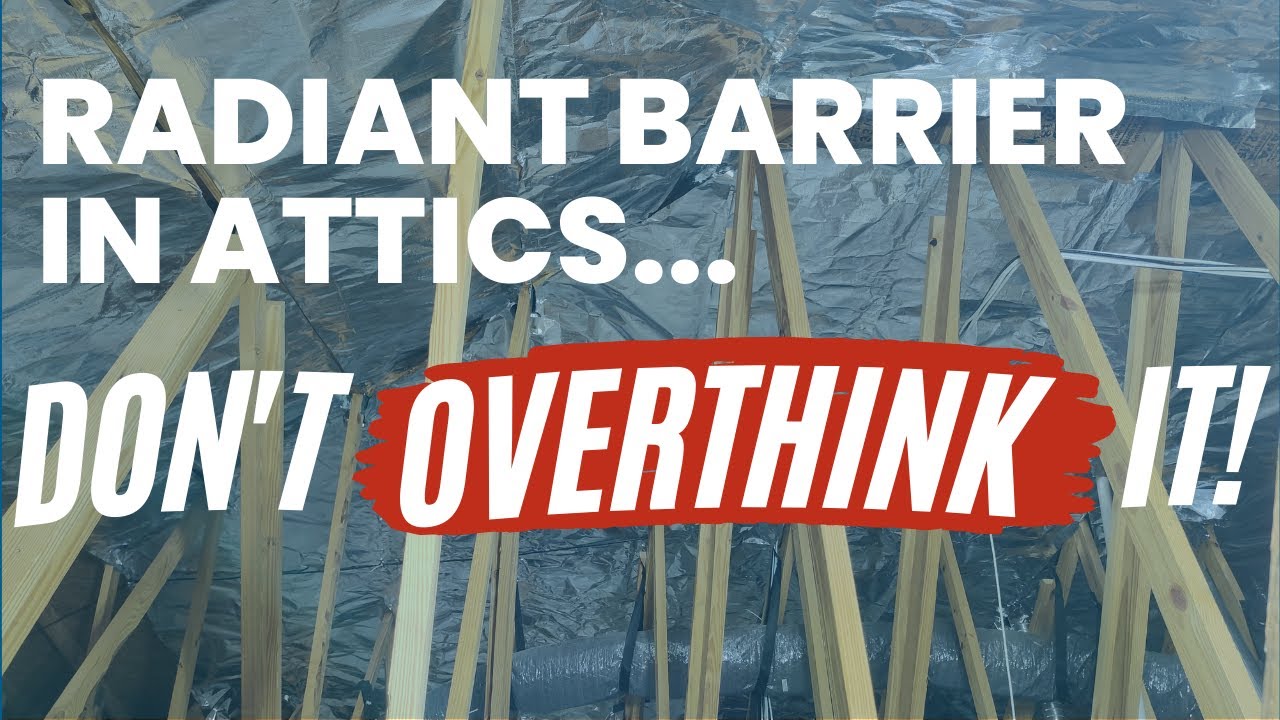
Reflective foil materials that reflect radiant heat instead of absorbing it. Usually aluminum foil laminated to paper or plastic.
R-Value Performance
No R-value. Radiant barriers don’t resist conductive heat transfer.
They block 90-97% of radiant heat transfer when installed with air space.
Effectiveness depends on temperature differential. Bigger difference = better performance.
Can reduce attic temperature by 20-30 degrees F in summer. Minimal impact in winter.
Installation Method
Staple to underside of roof rafters with reflective side facing down toward attic space.
Leave 3-inch air space at ridge and eaves for ventilation. Critical for preventing moisture buildup.
Can also drape over rafters before roof sheathing in new construction.
DIY-friendly but requires careful attention to electrical safety. Foil conducts electricity.
Perforated versions available to reduce condensation risk.
Cost Range
Materials run $0.10 to $0.50 per square foot for foil products.
Professional installation costs $0.75 to $1.50 per square foot.
Typical 1200 square foot attic: $1,000 to $3,000 installed.
Spray-on versions cost more but eliminate some installation issues.
Moisture Resistance
Impermeable foil can trap moisture if installed incorrectly.
Never install over attic floor insulation. Condensation will form on underside and wet your insulation.
Must have air space on both sides for moisture to escape.
Use perforated radiant barrier in high-humidity climates.
Fire Resistance
Aluminum foil won’t burn but the substrate might.
Most products meet Class A fire rating.
Foil is excellent electrical conductor. Keep away from electrical wires.
Best Used For
Hot southern climates where cooling costs dominate.
Attics with HVAC ducts running through them. Keeps duct temperatures more reasonable.
Supplement to existing insulation, not replacement.
Works best when attic temperatures regularly exceed 110F in summer.
Lifespan & Durability
20+ years if installed properly.
Dust accumulation on reflective surface reduces effectiveness over time. No way to clean it once installed.
Physical damage from foot traffic or storage reduces performance.
Foil doesn’t degrade but substrate backing might.
Environmental Impact
Aluminum production is energy-intensive but the material is recyclable.
Minimal material use compared to mass insulation.
Energy savings in appropriate climates offset manufacturing impact within 2-5 years.
No VOCs or off-gassing concerns.
Reflective Insulation

Multi-layer products combining reflective insulation surfaces with air spaces and sometimes bubble wrap or foam cores.
R-Value Performance
R-3 to R-17 depending on product and installation.
Performance relies on maintaining air spaces between reflective layers. Compression kills effectiveness.
Single bubble products: R-3 to R-6. Double bubble: R-8 to R-11.
Unlike radiant barriers, these products have intrinsic R-value from the air spaces and core materials.
Installation Method
Staple or fasten to create enclosed air spaces between reflective surfaces.
More complex than simple radiant barriers. Requires attention to maintaining proper air gaps.
Can be used between rafters or over attic floors if properly detailed for moisture.
Professional installation recommended for best results.
Cost Range
More expensive than simple radiant barriers.
$0.50 to $1.50 per square foot for materials depending on configuration.
Installation costs similar to radiant barriers: $1.00 to $2.00 per square foot labor.
Moisture Resistance
Depends on product. Some allow vapor transmission, others create barriers.
Multi-layer products with sealed edges can trap moisture if not properly vented.
Better than single-layer radiant barriers in humid climates due to multiple drying planes.
Fire Resistance
Class A rating for most products.
Same electrical conductivity concerns as radiant barriers.
Core materials (bubble wrap, foam) may have lower fire resistance than foil facing.
Best Used For
Pole barns and metal buildings where traditional insulation is difficult.
Temporary structures or seasonal buildings.
Applications where thin profile matters more than maximum R-value.
Not a replacement for mass insulation in residential attics in cold climates.
Lifespan & Durability
10-25 years depending on product quality and installation.
Bubble-core products can pop or compress over time, reducing air space and R-value.
Reflective surfaces accumulate dust, reducing effectiveness.
Environmental Impact
Similar to radiant barriers but more material use.
Plastic bubble cores add petroleum-based materials.
Lower recycled content than alternatives.
Energy savings depend heavily on proper installation and climate – benefits range from minimal to significant.
FAQ on Types Of Attic Insulation
What is the best type of insulation for attics?
Depends on your climate and budget. Cellulose insulation offers the best balance of cost, performance, and fire resistance for most attics. Closed-cell spray foam wins for moisture control and R-value per inch but costs 3x more. Fiberglass batts work if you need cheap and DIY-friendly.
How much does attic insulation cost per square foot?
Blown-in fiberglass runs $1.67 to $2.00 per square foot. Cellulose costs $1.70 to $2.30. Open-cell spray foam hits $1.50 to $3.50. Closed-cell spray foam reaches $2.30 to $10.50 depending on thickness. Add labor if hiring contractors. Material costs vary by region and R-value requirements.
What R-value do I need for my attic?
Climate zone determines requirements. Cold northern zones need R-49 to R-60. Southern zones require R-30 to R-38. Check Department of Energy recommendations for your ZIP code. Existing insulation depth matters too. Measure what you have and calculate the gap to code requirements.
Can I install attic insulation myself?
Fiberglass batts and blown-in materials work for DIY. Rent a blower from big-box stores. Spray foam requires professional installation due to chemical hazards and equipment needs. Mineral wool batts handle like fiberglass but cost more. Always wear protective gear regardless of material type.
Which insulation type lasts longest?
Spray foam lasts 80-100 years. Rock wool insulation hits 50+ years. Fiberglass and cellulose run 20-30 years in dry conditions. Moisture cuts lifespan significantly for all types. Proper attic ventilation and air sealing extend durability across materials.
Does spray foam insulation cause roof problems?
Closed-cell foam can trap water if leaks develop. You won’t see damage until it’s severe. Open-cell allows drying but needs separate vapor barrier. Proper roof maintenance matters more than insulation type. Check shingles annually. Fix leaks immediately regardless of what’s in your attic.
What’s the difference between batt and blown-in insulation?
Batt insulation comes in pre-cut panels. Install between joists. Gaps reduce performance 20-40% typically. Loose-fill insulation gets blown in, filling every crack and corner. Better coverage but settles over time. Both use fiberglass, cellulose, or mineral wool as base materials.
Is radiant barrier worth it in attics?
Only in hot climates. Reduces cooling costs 5-10% in southern states. Minimal benefit in northern regions. Works best with attic ductwork present. Cost runs $1,000 to $3,000 installed. Never replaces thermal insulation. Use as supplement to existing home insulation, not replacement.
Can you put new insulation over old?
Yes, if old insulation is dry and mold-free. Remove wet or damaged material first. Blown-in works great over existing fiberglass batts. Don’t compress existing insulation. Adding layers increases total R-value cumulatively. Check for proper attic ventilation before adding depth.
What insulation is most fire resistant?
Mineral wool wins. Melting point exceeds 1000°C. Won’t promote flame spread or produce toxic smoke. Cellulose treated with borate rates Class 1. Fiberglass melts but doesn’t burn. Spray foam requires thermal barrier and releases toxic fumes during fire. Building codes specify requirements by material.
Conclusion
Choosing between types of attic insulation comes down to climate, budget, and existing conditions. No single material wins every scenario.
Blown-in cellulose delivers solid thermal performance and fire resistance at reasonable cost. Fiberglass insulation saves money upfront but requires perfect installation.
Spray foam costs more but creates air barriers that other materials can’t match. Mineral wool handles moisture and fire better than anything else.
Start by checking your current insulation depth and R-value requirements for your zone. Calculate the gap between what you have and what building codes demand.
Factor in moisture control, attic ventilation, and whether you’ll DIY or hire contractors. The benefits of home insulation compound over decades through energy savings and comfort improvements.
Get quotes from multiple installers. Compare material costs, installation complexity, and long-term performance before committing thousands to your attic.